Contents:

Free test: which digital profession is right for you? Find out the answer in 15 minutes and try your hand at a new Specialties.
Learn moreWhat are pull-ups?
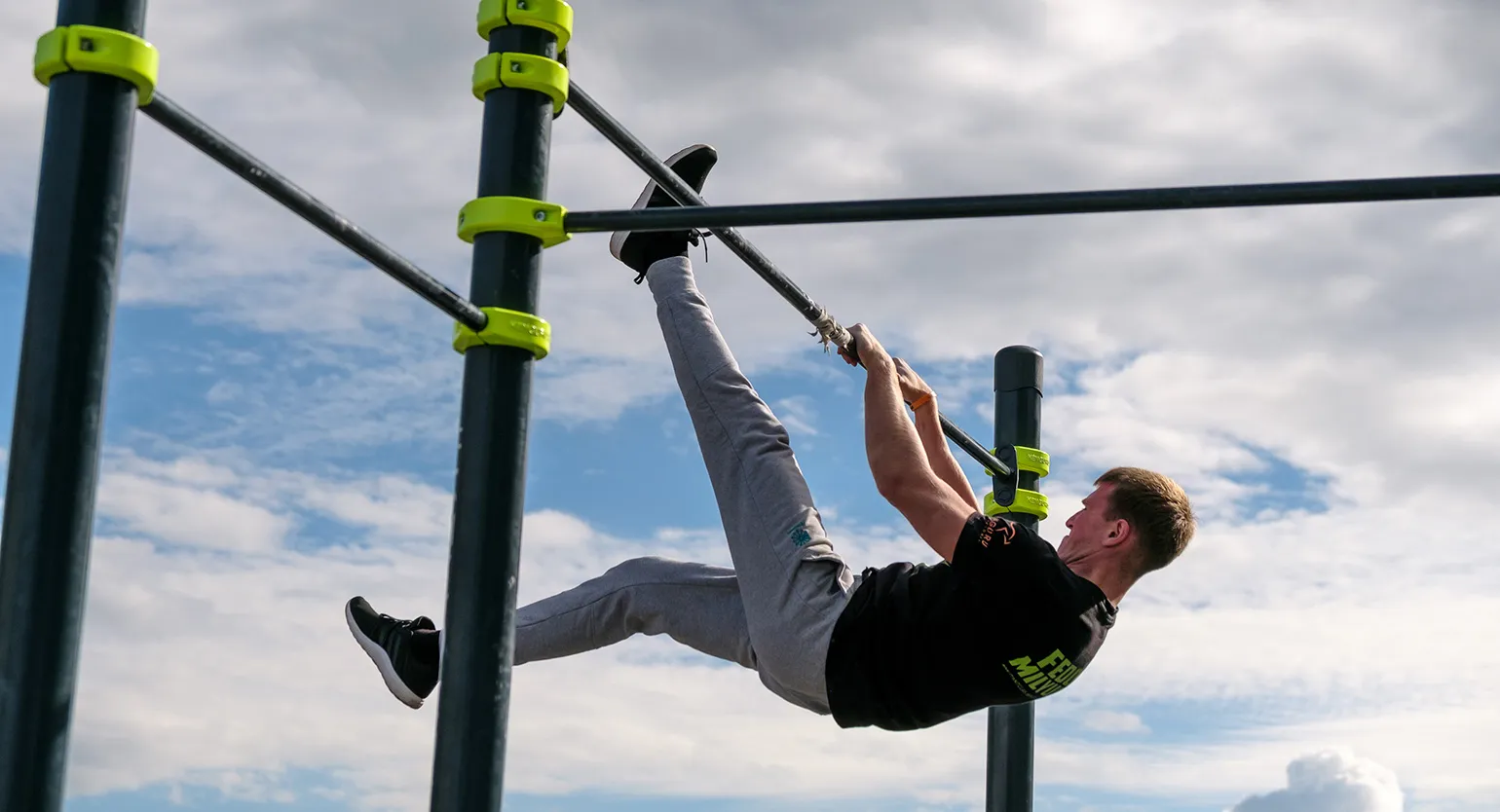
Pull-ups are a physical exercise in which you need to lift your own body upward, overcoming the force of gravity. This is one of the most effective exercises for training the upper body. The main muscles involved in pull-ups include the latissimus dorsi, biceps, trapezius muscles, and shoulder joints. Regularly performing pull-ups helps develop strength, improves posture, and helps strengthen the muscular corset. This exercise is ideal for people looking to increase muscle mass and overall physical endurance. Pull-ups can be performed with different grips, which allows you to diversify the training process and focus on different muscle groups.
- Latissimus dorsi - they are responsible for bringing the arms to the body and stabilizing the movement. In sports jargon, this pair of muscles is often called the wings.
- Biceps - during pull-ups, they actively help bend the arms.
- Trapezius muscles - work to stabilize the shoulder girdle and ensure the correct position of the shoulder blades.
- Rhomboid muscles - help bring the shoulder blades together, which is important for the correct pull-up technique and preventing unnecessary strain on the shoulders.
- Brachialis muscle - lies deeper than the biceps, helps bring the shoulder closer to the forearm.
- Forearm muscles - help grab the horizontal bar and hold it for some time.
The core muscles are actively used during pull-ups. They play an important role in stabilizing the body and maintaining the correct technique for performing the exercise, which contributes to a more effective upper body workout. Strong core muscles help prevent injuries and improve overall fitness. By focusing on strengthening your core, you can significantly improve your results in pull-ups and other exercises.

Read also:
The core muscles are a group of muscles located in the abdomen, back, and pelvis. They play a key role in maintaining stability and correct posture, as well as in protecting internal organs. Strengthening your core muscles can improve athletic performance, reduce the risk of injury, and improve overall body function.
There are many exercises for training your core muscles, but some are particularly effective. Flat planks, side planks, crunches, leg raises, burpees, and deadlifts are just a few of the best ways to develop core strength and endurance. Regular exercise will not only strengthen your core muscles but also improve your overall fitness, which is an important aspect of a healthy lifestyle.
Integrating these exercises into your workout routine will help you achieve noticeable results and increase your activity level. By focusing on strengthening your core muscles, you create a strong foundation for your body, which in turn will help you effectively perform everyday tasks and exercise.
Benefits of Pull-ups
- They can be done anywhere. You don't need specialized rooms or expensive equipment. You can do pull-ups on a playground or sports field near your home, in the garage, on a soccer goal, on a tree branch, or even on a door. All you need for pull-ups is a sturdy support.
- Pull-ups work several muscles simultaneously. This is a complex exercise that activates the muscles of the back, arms, shoulders, and even the abs. It not only works each muscle separately but also develops coordination between different muscle groups.
- Pull-ups improve muscle strength and endurance. During this simple exercise, we perform two types of load: dynamic (when we rise and lower) and static (when we try to stay on the bar).
- This is one of the best exercises for gaining muscle mass. When regular pull-ups become easy, you can use weights. It is convenient to add weight in the form of a special belt or use a backpack with weights. This can stimulate muscle growth.
- There are different pull-up variations, which helps diversify your workout. Use techniques that emphasize the back muscles or biceps, for beginners or experienced users. They differ in grip width and type [1].
8 Pull-Up Techniques
Each technique has unique features, benefits, and challenges. Understanding these characteristics allows you to choose the most suitable option for specific tasks. This knowledge can significantly increase your efficiency and improve your results. A thorough analysis of different techniques will help you avoid common mistakes and optimize your processes.
Ideal for beginners, these exercises promote overall back muscle strength. They will help strengthen your back, improve your posture, and prevent injury. Regular practice of these exercises not only promotes physical strength, but also improves overall health.
- Stand under the bar with your arms raised straight above your head.
- Jump, reach, or pull yourself up to grab the bar, wrapping your fingers around it.
- Use an overhand grip, meaning your hands are slightly wider than shoulder-width apart on the bar, with your palms facing away from you.
- Cross one leg over the other to stabilize your lower body. Bring your shoulder blades together.
- Exhale, bend your elbows and, directing them down to your sides, slowly pull your torso toward the bar.
- Continue pulling your torso until your chin is level with your hands.
- Pause briefly, then slowly lower yourself to the starting position, straightening your arms completely.
It's important to avoid chin-up posture, as this can lead to neck muscle injuries. Proper posture and head position are key to maintaining cervical spine health. Maintain a neutral neck position to prevent potential discomfort and injury. Take care of your neck to avoid future problems.
If you don't have a pull-up bar, you can use the door to perform exercises. This is a simple and effective workout that doesn't require any special equipment. Make sure the door is securely closed, and use it for pull-ups or other exercises that target your back and arm muscles. This approach allows you to maintain your fitness and add variety to your workouts, even at home.
Low bar exercises are performed with the body bent over, making them suitable for beginners and people recovering from injuries. These exercises help develop strength and coordination, and also contribute to improving overall fitness. The bent body position reduces stress on the joints and allows for safe movement, which is especially important for those just starting out in sports or undergoing rehabilitation. Regular low bar training will help strengthen the muscles of the arms, back, and shoulders, and improve endurance.
Technique is an important aspect of any activity, requiring precision and attention. To achieve optimal results, it is necessary to follow established standards and recommendations. Proper technique not only increases your efficiency but also minimizes the risk of injury and mistakes. It's important to pay attention to details such as proper body position, using the right equipment, and following the correct sequence of actions. By following these principles, you can achieve high results in any field, be it sports, art, or professional activity. Careful study and practice of technique will allow you to improve your skills and enhance the quality of your work.
- Install a low bar or use any stable support (bar or TRX straps). The bar should be approximately chest level when you lie under it.
- Lie under the bar, holding it with an overhand grip (palms facing away from you), hands slightly wider than shoulder-width apart.
- Take the starting position. Your body should be straight from your heels to your head, with your feet on the floor.
- Tighten your abs and glutes to maintain a straight body position.
- Bring your shoulder blades together, tensing your back muscles. Pull yourself towards the bar until your chest is level with it.
- Slowly lower yourself to the starting position, straightening your arms completely.
Tip: to make the pull-up process easier, it is recommended to bend your knees and help yourself a little with your legs. If you don't have access to a pull-up bar, you can use a table to perform pull-ups. This will help improve your strength and technique, even without special equipment.
When performing pull-ups with a reverse grip, your hands are placed on the bar with your palms facing you. This method ensures an even distribution of the load between your arms and back, while the emphasis is on the biceps. Reverse-grip pull-ups are an effective upper-body exercise, strengthening both the biceps and back. Regular practice of reverse-grip pull-ups improves strength and muscle tone. Technique determines the correct approach and sequence of actions when performing any task. It's important to remember that proper technique not only improves effectiveness but also minimizes the risk of errors. Key aspects include preparing the necessary equipment, following instructions, and analyzing the results. Proper technique can significantly impact the final result and ensure you achieve your goals.
- Grab the bar with an underhand grip, hands shoulder-width apart.
- Straighten your arms fully.
- Pull yourself up, bending your elbows and squeezing your biceps.
- Rise until your chin is above the bar.
- Slowly lower yourself, straightening your arms fully.
Tip: Keep your shoulders relaxed and down, focusing on contracting your biceps. This will help you perfect your technique and activate the target muscles. Proper posture and control of your movements are essential for achieving maximum results.
This pull-up variation actively trains the latissimus dorsi, also known as the "wings." This modification is suitable for experienced athletes, as it requires high muscular strength and control. Pull-ups with an emphasis on the latissimus dorsi help improve overall upper body strength, increase muscle mass, and shape your back. Regularly performing this exercise will help you achieve significant training results.
The technique requires strict adherence to established methods and principles to achieve the desired results. It is important to consider the basic steps and recommendations that will help optimize the process. Start by preparing the necessary equipment and materials to ensure effective work.
Focus on the correct sequence of actions; this will help avoid mistakes and improve the quality of the final product. Practice and regular repetition of the technique will help improve your skills and achieve mastery. Don't forget the importance of analyzing your results; this will allow you to identify weaknesses and make adjustments to the process.
By following these principles, you can significantly improve your productivity and the quality of your work.
- Grab the bar with a straight but wide grip - your palms facing away from you, hands wider than shoulder-width apart.
- Fully straighten your arms, remaining in a hanging position.
- Begin to pull yourself up, squeezing your shoulder blades together and tensing your back muscles.
- Pull yourself up until your chin is above the bar.
- Slowly lower yourself to the starting position, controlling the movement.
Tip: Avoid swinging and using momentum when performing the exercises, otherwise your back muscles will not receive the load they need for an effective workout. Proper exercise technique is important for achieving desired results and preventing injury. Focus on controlling the movements and ensuring that the load is evenly distributed across your back.
Your hands are close to each other, and your palms can be facing either towards or away from you. This exercise effectively works the central part of the back and biceps, improving their strength and tone. Regularly performing this exercise helps strengthen the muscular corset, which is important for maintaining correct posture and preventing injury.
Execution technique involves the consistent and precise execution of actions necessary to achieve a specific goal. It's important to follow the correct sequence and use the necessary tools to ensure maximum efficiency. Each step must be carefully considered and tailored to specific conditions. Attention to detail is essential, as it can significantly impact the final result. Proper execution technique improves the quality of work and reduces the risk of errors. Using proven methods and strategies also helps speed up the process and achieve the desired result with minimal time and effort.
- Grab the bar with an overhand grip, placing your palms close together, about 10 cm apart.
- Straighten your arms completely, hanging relaxed.
- Begin to pull yourself up, flexing your back muscles and biceps.
- Pull yourself up until your chin is above the bar.
- Slowly return to the starting position.
Keep your elbows close to your body and avoid excessive bending. This will help make pull-ups more effective for your back muscles, increasing their load, and will reduce the emphasis on your arms. Proper pull-up technique not only promotes back development but also prevents injury by ensuring stability and control during the exercise.
This exercise effectively simulates the real movements associated with lifting or pulling yourself up on a rope. It helps develop grip strength and strengthens your arm muscles, making it ideal for improving your physical fitness. Regular practice of this exercise will not only improve your overall endurance but also improve your coordination.
Technique is an important aspect of any physical exercise or sports discipline. Proper technique helps avoid injury and ensures maximum training effectiveness. Key elements to focus on include proper body position, breathing control, and coordination of movements.
When performing exercises, it is important to maintain good posture to avoid straining muscles and joints. Maintaining balance and coordination is also important, which contributes to improving overall fitness. Breathing control plays a key role in increasing endurance and the effectiveness of exercise.
Each exercise requires an individual approach to technique, so it is best to start with simple movements and gradually move on to more complex ones. Regular practice and technique adjustments will help achieve the desired training results. Correct exercise performance not only increases the effectiveness of your workout, but also contributes to improved overall health and fitness.
- Throw a towel or belt over the bar so that its ends hang at the same level.
- Grab the ends of the towel or belt with both hands. Hold on tight, distributing the force evenly between your arms.
- Hang with your arms extended, keeping your body straight; your legs can be bent or straight.
- Begin to pull yourself up, tensing the muscles of your back and arms, squeezing your shoulder blades together.
- Keep your elbows close to your body, and lift yourself up until your chin is level with your hands.
- Focus on contracting your lats and stabilizing your core.
- Slowly lower yourself to the starting position, straightening your arms completely.
- Control every movement, avoiding jerking.
Tip: The slight instability of a towel or belt activates the shoulder girdle and abdominal muscles, which helps improve overall coordination and body stabilization. Incorporating such elements into your workouts helps develop strength and balance, and also increases the effectiveness of the exercises.
Pull-ups with a towel at home are an effective exercise that can be performed on a door. It is important to ensure the towel is securely fastened and does not slip to prevent injury and ensure safety during the workout. Use a durable towel that can withstand the load, and choose a stable doorknob for maximum effectiveness. Regular towel pull-ups will help strengthen your upper body muscles and improve your overall fitness.
This is an advanced version of the classic pull-up, performed with straight legs raised at a 90-degree angle to the torso. This exercise effectively develops strength in the back, arms, shoulders, and core, and also helps improve coordination and balance. Keeping your legs in the air increases body control and develops stability, making this exercise a great addition to any training program.
Technique is key to success. Proper execution requires focus and precision, which helps achieve the desired result. It's important to consider basic principles such as proper hand placement, posture, and rhythm. These elements not only facilitate effective execution but also reduce the risk of injury.
Furthermore, regular practice and self-monitoring will help refine your technique, leading to improved results. Knowledge and understanding of technique play a vital role in any activity, be it sports, art, or any other field. Therefore, it is worth paying attention to learning and practicing the technique to achieve maximum success.
- Grab the bar with an overhand grip (palms away from you) at shoulder width.
- Close your legs and extend them so that they form a 90° angle with your torso.
- Keeping your legs straight, pull yourself up until your chin is above the bar.
- Keep your core tight to keep your legs parallel to the floor.
- Slowly lower yourself, maintaining control over the movement and keeping your legs in the starting position.
If you have difficulty maintaining this position, start with the bent-knee variation. This approach will help you gradually develop flexibility and strengthen your muscles, making further training easier. Regular practice will help improve your coordination and stability, which will ultimately allow you to achieve your desired results.
An eccentric contraction is the process by which muscle fibers lengthen under load. This is the opposite of a concentric contraction, in which muscles contract during active work. For example, when we slowly lower a heavy object, the muscles stretch to control and support the load. A similar mechanism occurs when performing pull-ups: when you slowly lower yourself after lifting, an eccentric contraction occurs. Eccentric pull-ups are often called negative, as the main tension in the muscles occurs during the lowering process, not during the lifting process. These exercises are effective for increasing muscle strength and mass, as well as improving motor control.
Technique is an important aspect in a variety of fields, from sports to arts and crafts. Proper technique not only ensures high-quality results but also minimizes the risk of injury or error. To achieve optimal results, it is necessary to thoroughly study the basic principles and methods of performing exercises.
First of all, you should master the basic movements and actions that form the basis for further skill development. Regular practice and attention to detail will help improve your technique. It is also important to take into account individual characteristics and adapt your approach to tasks based on your own capabilities and goals.
Feedback from experienced professionals can significantly accelerate the learning process and help avoid common mistakes. It is important to analyze your achievements and work on improving your technique to achieve increasingly higher results. Maintaining proper technique will not only increase your efficiency but also give you satisfaction from the process.
- Stand on a stable support (such as a box or chair) under the bar so that your chin is above the bar and your arms are bent.
- Slowly lower yourself down, controlling the movement, until your arms are fully straight. Try to lower yourself for 3-5 seconds.
- Stand back up on the support and repeat the exercise.
When performing negative pull-ups, it is important to focus not on the number of repetitions, but on the feeling of muscle tension. This will help improve the effectiveness of the workout and promote strength development. Negative pull-ups are a great way to strengthen your back and arms, allowing you to focus on movement control. Try to feel the work of your muscles as much as possible, which will give you better results and speed up your progress in pull-ups.
What to do if you can't do a pull-up yet
- Pull up with an assistant. Another person can push you from behind, helping you pull yourself up when your strength weakens [3].
- Do half pull-ups. If you can't do a full pull-up right away, it's important to practice the movement, so do feasible workouts.
- Perform hangs from a horizontal bar. Grasp the bar with an overhand grip, shoulder-width apart. Hang with straight arms, completely relaxing your body. Keep your legs together; you can bend them slightly at the knees so as not to touch the floor. Hold this position as long as possible, starting with 10-15 seconds and gradually increasing the time as your grip strengthens. This exercise improves grip strength and prepares the muscles for more complex movements on the bar.
If pull-ups are difficult, consider using a gravitron in the gym. This device will help you master the correct pull-up technique and gradually build the strength necessary for performing exercises on the bar. Gradually reducing the load on the gravitron facilitates a faster transition to classic pull-ups, which improves overall fitness and increases your level of training.
Helpful Tips
Before starting exercises, be sure to warm up. This will help warm up your muscles and reduce the risk of injury. Ensure your safety and the effectiveness of your workout.
- Build strength gradually. Start with Australian pull-ups or using rubber bands. Grip strength exercises, such as hangs, will help prepare your hands.
- Take breaks. Give your muscles time to recover to avoid overtraining. Do 5 pull-ups in one set. Rest for a minute and do another set. Optimally, do 3 sets in one workout.
- Don't swing your legs. Incorrect technique can lead to overload of the elbows and shoulders. Sudden movements, like a fishtail, or excessive strain can cause muscle strains and tears. It's tempting to swing your legs to use momentum and pull yourself higher than you could without the extra movement. If your goal is to develop upper-body strength, swinging your legs will only hinder an effective pull-up [4].
- Keep your neck relaxed. While attempting a pull-up, avoid overextending your neck or straining your neck muscles. Neck strain is a common problem among those perfecting pull-up technique. If you experience neck pain after a workout, consult a doctor and temporarily refrain from the exercise that caused the strain.
- Use weights. For experienced athletes looking to increase strength and muscle size, there is a variation of pull-ups with additional weights attached to your belt or legs. This exercise helps build muscle mass.
- Vary your grip. Changing your grips every few weeks prevents muscle imbalances, strengthens them, and improves endurance [1].
- Monitor your progress. Keep a training diary and increase the number of repetitions gradually.
Free test: which digital profession is right for you?
IT, design, marketing or management? Find out the answer in 15 minutes. And then try your hand at a new specialty for free.
Find out more