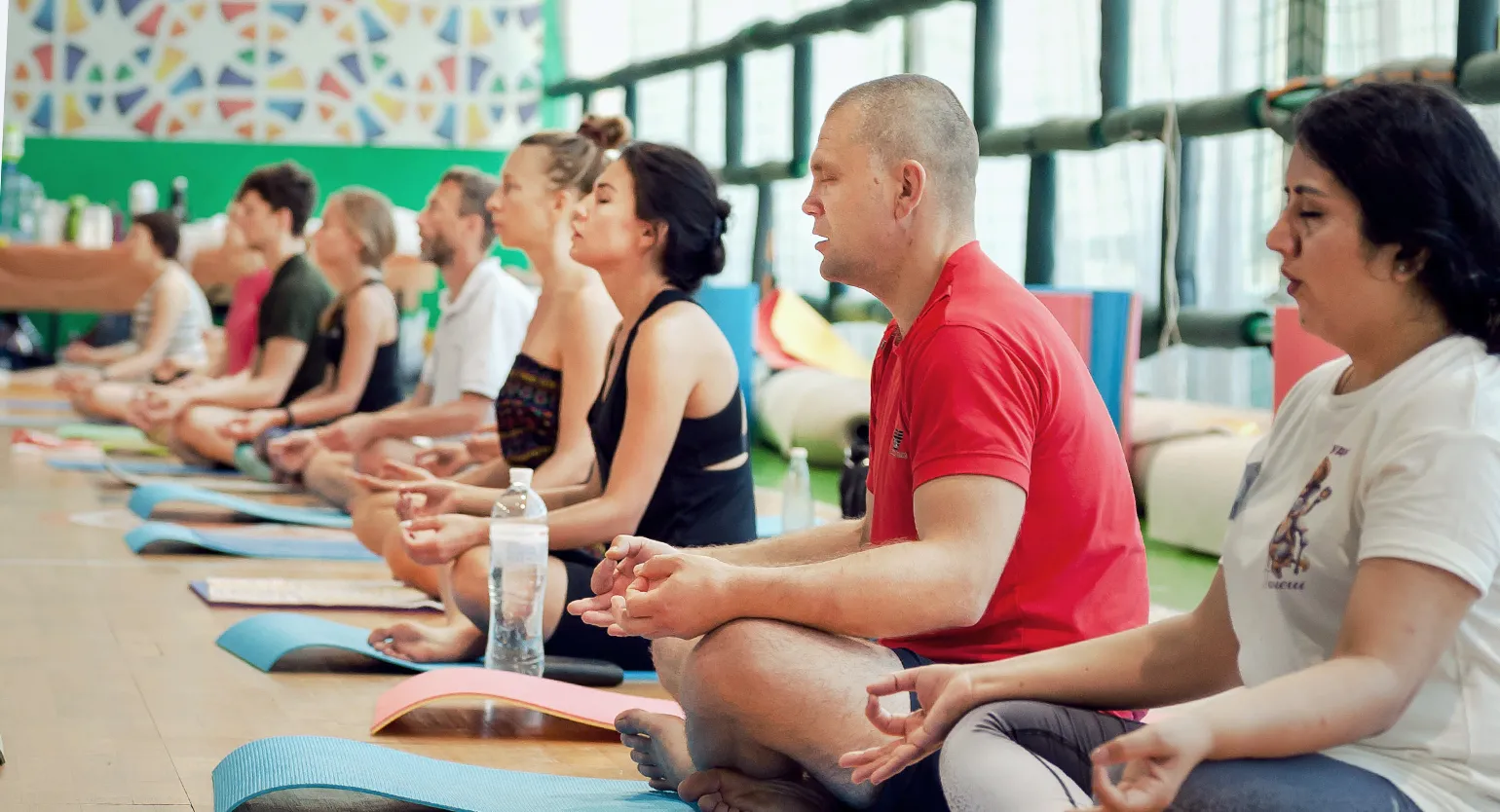
Contents:

Thinking about a new profession, but don't know where to start? Find out what suits you: IT, design, game development, management or marketing. Take a free career guidance course.
Learn moreIn this article, you will get information about…
- what is meditation in the East and West;
- what all meditation techniques have in common;
- what steps does basic meditation consist of;
- how does guided meditation work;
- what is mindfulness meditation;
- what are the benefits of the gradual muscle relaxation technique;
- what is hidden behind the term "transcendental meditation";
- how spiritual meditation differs from other techniques;
- how to do loving-kindness meditation (metta meditation);
- what science says about mediation;
- how long should meditation last.
We launched Telegram channel "How Are You?", where we share useful information on self-development, psychology, effective learning methods, and career building at any age in a convenient format. Join us to receive relevant tips and recommendations for developing personal and professional skills. Subscribe to our channel and become part of a community striving for success and self-improvement.
What is meditation in the East and the West?
Meditation is a practice aimed at training and developing the mind. It helps achieve a state of inner peace and harmony, improves concentration and awareness. Regular meditation helps reduce stress, enhance emotional balance, and improve overall well-being. This ancient technique is used by people around the world to achieve clarity of thought and deep self-understanding. Meditation is suitable for both beginners and experienced practitioners, offering a variety of approaches and techniques that can be adapted to individual needs and goals.
Meditation has been practiced for over 5,000 years and was originally reserved for monks, kung fu masters, ascetic yogis, and ochre-robed swamis. In the modern world, meditation techniques are becoming accessible to anyone seeking to develop mindfulness and improve their quality of life. Meditation helps reduce stress, increase concentration, and improve overall health. Various approaches and methods of meditation exist, each tailored to the individual needs and goals of practitioners. Thus, meditation today is an integral part of personal growth and self-improvement.
Western views of meditation differ from Eastern traditions. While Eastern practices often focus on spiritual growth and inner peace, Western approaches more often focus on mental health and stress management. These differences are shaped by the cultural, historical, and philosophical contexts in which both traditions developed. Western meditation is becoming increasingly popular as a method for improving concentration, enhancing productivity, and achieving inner peace. It's important to understand that, regardless of cultural background, meditation can be a powerful tool for personal transformation and self-development.
- In Eastern teachings, meditation is a path to personal and spiritual growth, a way to find inner peace, clarity, and deeper self-understanding.
- In the West, the word "meditation" is often associated with reflection, planning, or analyzing one's thoughts. In Western countries, meditation has evolved from a spiritual practice into a companion to cognitive behavioral therapy and has gained popularity as a method for managing stress and anxiety [4].

Reworked text:
Please pay attention to the following materials:
Stress: main signs, symptoms, causes and effective ways to overcome it
Stress is Stress is the body's physiological and psychological response to various external and internal stimuli. It can manifest itself in various forms and have a negative impact on a person's health and overall well-being. Signs of stress include anxiety, irritability, sleep problems, and physical ailments such as headaches or muscle tension.
Underlying causes of stress can be related to work, personal relationships, financial difficulties, or life changes. Understanding these factors can help you better manage your condition and prevent stress.
To effectively cope with stress, it is important to employ a variety of methods. These include regular exercise, meditation, deep breathing practices, and enjoyable hobbies. It's also helpful to connect with loved ones and seek professional help if stress becomes overwhelming.
Take care of your mental health and remember the importance of responding promptly to stressful situations.
We've launched the "How Are You?" Telegram channel, where we share useful information on self-development, psychology, and tips for effective learning and career advancement at any age in a convenient format. Join us and grow together!
Meditation Techniques
Meditation doesn't necessarily mean the classic lotus position with closed eyes and long periods of concentration. If you enjoy this approach, you can continue to practice it. However, meditation can take more dynamic and active forms, allowing you to integrate it into your daily routine. This could be as simple as becoming aware of your breathing while walking or mindfully completing household tasks. These meditation techniques can help improve your psycho-emotional state and reduce stress without requiring a significant investment of time.
Meditation is a process in which a person directs their attention to one specific object to get rid of unnecessary thoughts and focus on the present moment. There are many meditation techniques, varying depending on the object of concentration. This can be a sound, a physical sensation, a visual image, a thought, a repeated word, or a specific action. The practice of meditation helps improve mental health, reduce stress, and increase overall awareness.
By mastering meditation techniques, you can achieve a state of clarity of thought and intuitive perception, free from unnecessary worries. Regular meditation practice helps improve concentration and reduce stress, which in turn allows you to more deeply understand your emotions and reactions. This state of inner peace helps not only in everyday life but also in making more conscious decisions.
Let's explore the most common practices.
During the practice of "Conscious Breathing" meditation, it is important to carefully monitor the natural rhythm of breathing. Focus on each inhalation and exhalation, which promotes deep relaxation of both mind and body. This technique helps develop mindfulness and improve overall mental health. Regular use of Mindful Breathing meditation can reduce stress levels and promote emotional balance.

A step-by-step instruction is a structured approach to completing a task or process. To create an effective step-by-step instruction, follow these guidelines:
Define the purpose of the instruction. Clearly articulate what you want to convey to the reader. This will help focus on the main aspects and avoid unnecessary information.
Break the process into logical steps. Each stage of the task should be described separately so that the reader can easily follow your instructions.
Use simple and clear language. Avoid complex terms and technical jargon unless necessary. The more accessible the text, the more likely the reader is to successfully complete the task.
Add visual elements. If possible, use images or diagrams to illustrate key steps. They will help better understand the process and make the instruction more visual.
Proof the text for errors and inaccuracies. Errors can lead to misunderstandings and failure to complete the task. Double-check all the steps and make sure they are consistent and logical.
Conclude the instructions with a brief summary or recommendations. This will allow the reader to consolidate the information and understand what to do next.
Following these principles, you can create high-quality step-by-step instructions that will be useful and understandable to your audience.
- Eliminate all distractions: put your phone on silent mode and hang up a virtual or real "Do Not Disturb" sign. Set a timer for five minutes (if you have never meditated before, start with one minute, then you can increase the time).
- Sit comfortably: your back should be supported by the back of the chair. Place your hands on your knees or thighs. Close your eyes.
- Begin to breathe: inhale slowly through your nose and mentally say to yourself "rise." Then exhale slowly through your mouth, saying to yourself "descent."
- Focus: imagine a point in the center of your forehead and keep your attention there.
- Continue breathing: with each inhalation, mentally repeat "rise," and with each exhalation, "descent." If you hear sounds around you, do not be distracted, just ignore them and continue the practice.
- Ignore trivialities: if something itches or a random thought comes to mind, gently return your attention to your breathing and the point on your forehead.
- Completion: When the timer rings, slowly open your eyes. Take a deep breath and stretch. Stand up, stretch again, and stop for a second.
- Listen to yourself: how do you feel? Do you notice a difference in your body, thoughts, emotions?
This simple practice promotes relaxation and improves an overall state of calm. It can effectively reduce impulsive emotional behavior, which is especially important for people with impulsivity-related disorders, such as substance abuse or binge eating. Regular use of this technique can help manage negative emotions and increase resilience to stress, which is key in restoring and maintaining mental health.
Guided meditation is an effective method for beginners, as it provides the necessary support at every stage of the practice. Following the guidance of an experienced guide, you are able to focus on the meditation process. The guide's voice can be recorded, allowing you to practice at your convenience. The guide suggests visualizing calming images or places, which promotes deep relaxation. Additionally, they can lead you through mantras and breathing exercises, which help eliminate unnecessary distracting thoughts and focus on the inner state. Choosing guided meditation is an excellent start for those who want to master this practice and achieve harmony and peace.
For effective meditation, you can use specialized apps or video tutorials available online. These resources will help you master meditation techniques and improve your concentration, which promotes deep relaxation and heightens your level of awareness. Using mobile apps and online video tutorials makes it easy to integrate meditation into your daily life, making the process more accessible and convenient.
Specialists from the College of Health Solutions at Arizona State University (USA) conducted a study involving 88 students. The results showed that guided meditation using a mobile app is as effective as meditation led by a live instructor. This discovery highlights the importance of technology in the practice of meditation and its potential to improve users' psycho-emotional well-being.
This direction of mindfulness meditation was founded in 1979 by Jon Kabat-Zinn, who created a stress management clinic at the University of Massachusetts Medical School. Kabat-Zinn, a practitioner of meditation in the Zen Buddhist tradition, decided to apply his knowledge and experience to help patients cope with stress and improve their quality of life. His methodology became the basis for many modern meditation and psychotherapy practices aimed at reducing stress and improving psycho-emotional well-being. Kabat-Zinn adapted the technique of Buddhist meditation, removing its religious aspects, and developed a healing method known as mindfulness. Mindfulness is an awareness of the present moment and an understanding of what is happening to us right now. This practice helps improve overall health, reduce stress, and enhance quality of life by allowing people to be more mindful of their thoughts and emotions. Mindfulness is actively used in psychology and medicine to treat various diseases and improve psycho-emotional state.
Read also:
Mindfulness: what it is, practices and ways of development
Mindfulness is a state of complete attentive presence in the moment, which allows us to better understand our thoughts, emotions and surroundings. Mindfulness practices help people become more aware of their experiences, which can improve mental health and overall quality of life.
There are many techniques for developing mindfulness. One of the most popular is meditation, which helps focus on breathing and current sensations. Other practices include yoga, mindful eating, and mindful walks in nature. These methods train our ability to be in the present and reduce stress and anxiety.
Developing mindfulness requires regular practice and patience. You can start with a few minutes a day, gradually increasing the duration and complexity of the practices. Regular practice helps improve concentration, emotional stability, and overall well-being.
Integrating mindfulness into your daily life is an important step toward personal growth and harmony. Simple actions such as paying attention to your breathing or being aware of your emotions throughout the day can significantly improve your quality of life and promote a deeper understanding of yourself and the world around you.
The American Psychological Association emphasizes that two states are key to the practice of mindfulness meditation. These states promote the development of attentiveness and self-awareness, which in turn positively impacts mental health and overall well-being. Mindfulness helps people better cope with stress and emotional difficulties, improves concentration, and promotes inner peace. The practice of mindfulness meditation can be beneficial for both beginners and experienced practitioners seeking to deepen their knowledge and skills.
- Attention is a focus on the present moment. If your thoughts suddenly take you elsewhere—for example, into thoughts about tasks or memories—you gently return your attention to what you are focusing on: breathing, sounds, or another object.
- Acceptance is the ability to observe your thoughts and feelings without judgment. Instead of reacting to them, you simply notice them and let them go. During mindfulness meditation, you observe your thoughts the same way you would observe clouds floating across the sky. You simply notice them without trying to stop or change them.
Psychologist John Teasdale of Oxford University, together with colleagues Zindel Segal and Mark Williams, developed a mindfulness-based treatment for depression—Mindfulness-based cognitive therapy (MBCT). The team's research demonstrated that in people with severe depression, for whom traditional methods such as medication and other therapeutic approaches had proven ineffective, MBCT reduced the likelihood of relapse by half. This result is unique, as no other treatment has achieved similar success. MBST integrates mindfulness into therapy, promoting deeper understanding and management of emotional states, making this approach especially valuable for people suffering from depression.
The advantage of this technique is that it can be performed anytime and anywhere. For example, you can practice it at home, outdoors, or even in the office. This versatility makes the technique accessible to anyone who wants to improve their skills and achieve their goals.
- Brush your teeth. Feel how your feet are placed on the floor, how you hold the toothbrush in your hand, and how your arm moves up and down.
- Go to work. Add an element of focus as you walk, notice how you place your feet, count your inhalations and exhalations.
- Exercise. Instead of watching TV while running on the treadmill, try focusing on your breathing and where your feet are as you move.
- Wash the dishes. Enjoy the feel of warm water on your hands, the sight of bubbles, and the sound of pots hitting the bottom of the sink.

Getting used to mindfulness meditation takes time, but even a few minutes of practice a day can significantly reduce stress levels and improve mental health. Regular mindfulness meditation practice helps develop concentration and increase emotional resilience, which contributes to overall well-being.
Progressive Muscle Relaxation (PMR) is an effective two-step technique designed to reduce stress and improve awareness of bodily sensations. This method involves sequentially tensing and relaxing different muscle groups throughout the body. Regular practice of PMR promotes increased awareness, allowing you to gain a deeper understanding of your physical states and reduce muscle tension. Using progressive muscle relaxation can be an important tool for achieving deep relaxation and improving overall well-being.
To perform this technique correctly, you need to follow several key steps. First, define the goals you want to achieve. A clear understanding of the outcome will help you focus on the necessary actions. Second, create an action plan that includes all the steps involved in completing the task. This will allow you to organize the process and avoid omissions. Third, pay attention to details, as they can significantly impact the final result. Finally, don't forget about the ability to adjust the plan as it's being implemented, if necessary. These principles will help you complete your tasks efficiently and effectively.
- Lie on the floor or lean back in your chair.
- Place your hands on your knees or on the armrests of the chair.
- Take a few slow, even breaths.
- Focus your attention first on the muscles of your forehead, tense them, then relax.
- Squeeze your jaw muscles and relax.
- Raise your shoulders to your ears, then lower them.
- Slowly clench both hands into fists.
- Squeeze and relax the muscles of your buttocks, then your thighs and shins.
- Squeeze your toes and relax.
To perform the exercise effectively, follow two key rules: maintain muscle tension for 15 seconds and relax them slowly over 30 seconds. To avoid counting errors, it is recommended to count silently. This will help you achieve maximum results and improve control over muscle tension and relaxation.

Read also:
Progressive muscle relaxation is a method designed to reduce stress and tension in the body. It is based on sequential tension and relaxation of various muscle groups, which helps to improve the physical and psycho-emotional state. This method helps increase body awareness, calm the mind, and reduce anxiety. Progressive muscle relaxation can be beneficial for people suffering from chronic stress, insomnia, or anxiety disorders. Regular practice of this technique not only helps you relax but also improves your overall well-being, increases concentration, and restores balance in your life.
In the 1960s, a wave of interest in meditative practices emerged in the United States, which became a Western version of the Hindu tradition. This trend was introduced by Maharishi Mahesh Yogi and became known as "transcendental meditation." This technique involves repeating a mantra—a special word, phrase, or sound—both silently and out loud. By repeating a mantra, you can focus your attention, distracting yourself from intrusive thoughts and immersing yourself in the present moment. Transcendental Meditation promotes stress reduction, improved concentration, and overall psychological well-being. Instead of traditional mantras and the sound "om," you can use the words "raz" or "one" ("van"). Reading poetry and singing songs are also encouraged. These alternative practices can help you focus and achieve a state of meditation. Using different sounds and texts allows you to vary the practice and make it more personal. Transcendental Meditation promotes deep relaxation, reduced anxiety, and normalized blood pressure. Practicing this meditation not only helps improve overall well-being but also increases resilience to stress. Regular practice of Transcendental Meditation can significantly improve the quality of life, making this technique a popular choice for many people seeking inner peace and harmony.
Spiritual meditation draws on various religious and spiritual traditions. It includes practices such as prayer, chanting, focusing on the divine, or contemplating sacred texts. The primary goal of spiritual meditation is to deepen one's connection with higher powers, as well as to develop inner peace and spiritual growth. These practices help strengthen faith, improve emotional well-being, and promote harmony with the surrounding world.
Loving-kindness meditation, or metta meditation, promotes compassion and kindness for both oneself and others. This practice helps overcome indifference and criticism, fostering a more positive outlook on life. Regular metta meditation helps one learn to be more open and responsive, which positively impacts one's relationships with others. By cultivating inner kindness, we create harmony not only in our own lives, but also in the lives of those around us.
Metta meditation, or loving-kindness meditation, is a powerful practice for cultivating compassion and positive emotions. To begin practicing metta meditation, find a quiet place where you will not be disturbed. Sit comfortably, close your eyes, and focus on your breathing.
Start by directing good wishes toward yourself. Silently repeat phrases such as, "May I be happy," "May I be healthy," and "May I be safe." Allow these thoughts to fill your consciousness. Then gradually expand your wishes to include loved ones, acquaintances, and then those with whom you have difficult relationships. Ultimately, direct your good wishes to the entire world.
Practicing metta meditation requires regularity. Set aside time every day, even if it is just a few minutes. Over time, you will notice how your capacity to feel love and kindness for yourself and others will grow. Metta meditation not only promotes personal growth, but also improves your overall emotional well-being, helping you cope with stress and negative emotions.
- Sit in a comfortable and relaxed position.
- Take two or three deep breaths to center yourself - feel or imagine your breath moving through your chest, around the heart area.
- Become aware of any stress or negative feelings you may be holding on to, and work to release them.
- Choose a wish phrase for yourself. This could be something like: “I wish myself happiness. May I find peace. May I feel safe.”
- Repeat until you feel self-acceptance.
- Wish something good for others. Turn your attention to someone you love—a friend or family member. Speaking directly to them, say the same phrases out loud or in your mind: "I wish you happiness, peace, and safety." Create your own affirmations. In this practice, it's important to focus on the intention to accept and love yourself, and then transfer that love to others. Create phrases that remind you of your worth and uniqueness. This will help strengthen your inner harmony and improve your relationships with others. Use these expressions regularly to cultivate love for yourself and others. Relationship Focused Meditation is a powerful tool for personal growth. This technique involves focusing on the person with whom you are having difficulty communicating and directing kind thoughts toward them. The main goal is to transform negative emotions into feelings of compassion and understanding. This approach not only helps improve your inner state but also promotes harmonious relationships with others. Allow yourself to experience this practice to create a more positive outlook on the people in your life.

What does science say about meditation techniques?
From a neurobiological perspective, each meditation technique promotes the activation of neuroplasticity in the brain. Neuroplasticity is the brain's ability to change and adapt in response to new experiences. Meditation practice can significantly improve cognitive function and overall emotional well-being, as well as help with stress management and concentration. Regular meditation promotes the formation of new neural connections, making the brain more flexible and resilient to negative influences. Researchers at the California Institute of Behavioral Neuroscience and Psychology conducted a study on brain function during meditation. Using magnetic resonance imaging (MRI), they examined the brain activity of meditators. Scans showed that meditation activates areas of the brain responsible for emotions and cognitive processes. Regularly focusing on positive thoughts contributes to improved mental and physical health. This, in turn, slows brain aging in both young and old people, improving memory, attention, and problem-solving abilities. Research suggests that meditation can activate hidden resources in the body, such as levels of telomerase, an enzyme that plays a key role in cellular longevity. With normal telomerase function, the aging process slows down, and cells stay healthy longer.
Controlling your thoughts and emotions can significantly improve not only your mood but also your overall health. Mindfully managing your psycho-emotional state can reduce stress, improve your quality of life, and strengthen your immune system. Regularly practicing techniques such as meditation and self-reflection helps optimize your emotional state and promote harmony in life. Therefore, the ability to control your thoughts and emotions is essential for achieving physical and mental well-being.
Recommendations are an important aspect in any business and area of life. They help people make informed decisions based on the experience and opinions of others. Receiving recommendations from trusted sources can significantly increase the level of trust in a product or service.
In business, recommendations can play a key role in attracting new customers. Positive reviews and recommendations from satisfied customers not only strengthen a company's reputation but also contribute to increased sales. It's important to actively collect and publish reviews to build a positive image and increase search engine visibility.
For maximum impact, it's recommended to use various channels to distribute recommendations, such as social media, review sites, and specialized platforms. This will help reach a wide audience and attract the attention of potential customers.
In conclusion, recommendations are a powerful tool for building trust and strengthening your market position. Effective management of reviews and recommendations can significantly impact business success.
We recommend reading the book "Buddha, the Brain, and the Neurophysiology of Happiness: A Practical Guide" by the Buddhist monk Yongey Mingyur Rinpoche. This work examines in detail how scientists studied the effectiveness of meditation and presents a variety of practices that can help improve the quality of life. The book combines scientific research and practical advice, making it a valuable resource for those seeking personal growth and harmony.
How long should meditation last?
In the East, the optimal duration of meditation for beginners is 24 minutes. This time is denoted in Sanskrit by the word "ghatika," which means "water jug." In ancient and medieval India, the ghatika was used as a timekeeping tool. If a copper jug with a hole in the bottom is placed in water, it will completely sink in 24 minutes. However, meditation is not only rules but also a state of mind. Even if you have only five minutes and can turn off the internal "noise" and achieve inner peace in this short time, you have already successfully completed a meditation session. The most important thing is your state and sense of harmony, regardless of the duration of your practice.
In Elizabeth Gilbert's novel Eat, Pray, Love, Guru Ketut gives the protagonist important advice: "If you walk around with a serious face, you'll drive away all the positive energy. Meditation should be done with a smile. Smile with your face and mind—then the positive energy will come and wash away all the negativity. Let even your liver smile." This advice emphasizes the importance of inner attitude and positive thinking in the search for harmony and happiness. A smile not only improves our mood, but also attracts favorable circumstances.
Sources of information are an important element for quality content. They ensure the credibility and reliability of the data presented. When creating materials, it is necessary to use only verified and authoritative sources, such as scientific publications, books, official websites and research. This not only increases the level of trust in your content but also improves its SEO ranking, as search engines value high-quality links to sources. Make sure your sources are relevant and on-topic to provide maximum value and usefulness to readers.
Levine G. N., Lange R. A., Bairey-Merz C. N., and other authors published a scientific statement from the American Heart Association on the effect of meditation on reducing cardiovascular risks. The article, published in the Journal of the American Heart Association in September 2017, emphasizes the importance of meditation as a method for improving cardiovascular health. The study demonstrates that regular meditation practice can lead to reduced stress levels, lower blood pressure, and improved overall cardiovascular health. These results highlight the need to integrate meditation into heart disease prevention strategies. DOI: 10.1161/JAHA.117.002218.
The Guardian offers a complete guide to mindfulness for beginners. Mindfulness is a practice that helps you focus on the present moment and become more aware of your thoughts and feelings. This can lead to reduced stress and improved overall well-being. For those just beginning their journey in the world of mindfulness, it is important to understand the basic principles of this practice. Start with simple exercises, such as breathing meditation, to develop mindfulness. Regular practice, even just a few minutes a day, can significantly impact your life. Gradually, you will be able to integrate mindfulness into your daily activities, which will help improve your quality of life and learn to better cope with difficult situations.
In his book "How to Turn on Mindfulness: Techniques for Effective Practices and Meditations in the Modern World," R. Ganatilake offers readers effective methods for developing mindfulness in everyday life. Published in 2019 by Eksmo, this book covers relevant meditation techniques and practices that help improve the quality of life. The author shares simple and accessible tools that allow anyone to master the art of mindful living in the moment and reduce stress. This book will be a useful guide for those seeking to integrate mindfulness into their lives and learn to manage their thoughts and emotions.
In their book "Meditation" (Moscow, 1991), Everly J.S. and Rosenfeld R. examine various aspects of meditative practice. They delve into theoretical and practical approaches to meditation, emphasizing its impact on mental and physical health. The book is intended for both beginners and experienced practitioners, offering useful tips and techniques for improving concentration and inner peace. Learning meditation can be an important step towards harmony and self-knowledge.
Pozuelos J.P., Mead B.R., Rueda M.R. and Malinowski P. in their study, published in the journal Prog Brain Res in 2019, analyzed the effect of short-term mindfulness training on the breathing process. The results showed that such practice contributes to the improvement of inhibitory control and response monitoring. This finding underscores the importance of mindfulness practices for enhancing cognitive function and attention management. DOI: 10.1016/bs.pbr.2018.10.019.
Basso J. C., McHale A., Ende V., Oberlin D. J., and Suzuki W. A. conducted a study that examined the effects of brief daily meditation on attention, memory, mood, and emotional regulation in people with no experience meditating. The results of their work, published in the journal Behavioral Brain Research in 2019, show that even short meditation sessions can significantly improve cognitive function and emotional state. DOI: 10.1016/j.bbr.2018.08.023. A consistent meditation practice can be an effective tool for improving overall psycho-emotional well-being and quality of life.
Huberty J., Green J., Glissmann C., Larkey L., Puzia M., Lee C. conducted a study on the effectiveness of the mobile meditation app "Calm" in reducing stress levels in college students. A randomized controlled trial, published in the journal JMIR Mhealth Uhealth in June 2019, showed that this app can be a useful tool for stress management among young people. The article is available at DOI: 10.2196/14273.
You can expand a list with simple actions. This process allows you to access additional information hidden behind the heading. To expand a list, simply click on the corresponding button or link. This is especially useful for improving information perception and ease of navigation on a web page. By expanding a list, users can quickly find the data they need and also reduce the visual clutter of the page. Using expandable lists in web design promotes a more structured presentation of content, which has a positive impact on SEO. Properly designed and implemented expandable lists can improve user experience and increase time spent on a website, which also impacts search engine rankings. Jon Kabat-Zinn presents the book "Wherever You Go, There You Are," which explores the concept of mindful meditation and its application to everyday life. Published in 2019 by Eksmo-Press, the 256-page book offers readers effective methods for achieving inner peace and awareness. It is a valuable resource for those seeking to improve their quality of life through the practice of meditation and mindfulness. It is suitable for both beginners and experienced practitioners wishing to deepen their knowledge and skills in the field of mindfulness. In 2021, Olga Leonidovna Gaidukova presented a paper on Mindfulness programs as a modern tool for psychocorrection and the prevention of deviant behavior in the US prison system. The article, published in the collection "Interdisciplinary Research: Past Experience, Present Possibilities, Future Strategies," examines the methods and strategies used within Mindfulness for working with prisoners. The author analyzes the effectiveness of these programs and their impact on reducing deviant behavior. The study emphasizes the importance of psychocorrectional interventions in modern conditions, making it relevant for specialists in psychology and criminology. DOI: 10.24412/cl-35983-2021-1-218-231.
D. Goleman and R. Davidson, in their book "Altered Traits: How Meditation Transforms Your Mind, Brain, and Body," explore the impact of meditation on personality changes and cognitive processes. Published in 2018 by the Moscow publishing house Mann, Ivanov, and Ferber, the 336-page book offers readers a profound understanding of how meditation practice can transform not only one's thinking but also one's physical well-being. This book is an essential resource for those interested in psychology and neuroscience, as well as for anyone seeking to improve their quality of life through mindfulness and meditation. Sweet K. offers a unique book, "Meditation for Busy People," dedicated to restoring inner harmony in the modern fast-paced world. Published in Moscow in 2014 under the Alpina Digital brand, this practical guide will help readers find peace and balance in any situation. The book includes meditation techniques accessible even to those who are constantly busy. Readers will learn how to easily integrate meditation into their daily lives, which contributes to improved psycho-emotional well-being and increased overall productivity. Research from the American Psychological Association confirms that mindfulness meditation is an effective method for stress reduction. This practice helps improve mental health, increases concentration, and promotes emotional well-being. Mindfulness meditation helps develop awareness, which in turn helps manage stress and improve overall quality of life. Regular use of meditation techniques can be an important tool in managing everyday stressors. The National Institutes of Health provides information on the health benefits of mindfulness practice. Mindfulness, which involves living in the present moment, promotes overall well-being, reduced stress, and a higher quality of life. Research shows that regular mindfulness practice can lead to improved mental health, reduced anxiety and depression, and increased concentration and attentiveness. Incorporating mindfulness techniques into daily life helps people better cope with emotional and physical stress, which in turn promotes health and well-being. The United States Department of Veterans Affairs published "Progressive Muscle Relaxation," authored by Shilagh A. Mirgain, PhD, and Janice Singles, PsyD. Originally released in 2016, the content was updated in 2023 to reflect the latest research and practices in stress management and relaxation techniques. This guide provides valuable insights into the benefits of progressive muscle relaxation for enhancing mental well-being and reducing anxiety among veterans and civilians alike. By incorporating this effective method into daily routines, individuals can experience improved relaxation, reduced muscle tension, and overall better health. Explore research on transcendental meditation and its effects on lowering blood pressure. Systematic reviews and meta-analyses conducted by scientists S. L. 10oi, M. Giovino, and S. C. Pak examine various aspects of this practice and its effectiveness. An article published in the journal Complementary Therapies in Medicine in 2017 emphasizes that transcendental meditation can have a positive effect on blood pressure levels. The study provides valuable data and conclusions useful for those seeking alternative methods of managing their health. For more details, please see the original publication at DOI: 10.1016/j.ctim.2017.07.008.
Burke A., Lam C. N., Stussman B., and others examined the prevalence and patterns of use of mantra, mindfulness, and spiritual meditation among adults in the United States. Their findings were published in the journal BMC Complementary and Alternative Medicine in 2017. Study number 17, article 316, is available at DOI: 10.1186/s12906-017-1827-8. This study provides valuable data on how different meditation methods are used in the daily lives of Americans and may be useful for further research on the effects of meditation on mental health and well-being.
Rinpoche Yongey Mingyur in his book «Buddha, the Brain, and the Neuroscience of Happiness» offers readers a unique practical guide to changing their lives for the better. Published in Moscow in 2022 by Orientalia, the 368-page book is packed with valuable insights into the connections between Buddhism, neuroscience, and emotional well-being. The author shares methods for developing inner peace and achieving happiness, drawing on scientific research and Buddhist practices. This book will be an indispensable resource for anyone seeking to improve their quality of life and find harmony in the modern world. In the article "Meditation and Its Mental and Physical Benefits in 2023," published in the journal Cureus, authors Jamil A., Gutlapalli S. D., Ali M., and others explore the impact of meditation on health. A study published on June 19, 2023, covers various aspects related to the practice of meditation, including its positive effects on mental health, stress reduction, and improved overall well-being. Meditation is becoming an increasingly popular tool for maintaining health and well-being, making it an important topic for further study and application in everyday life. DOI of the study: 10.7759/cureus.40650.
Wallace Alan B. presents the book "The Incredible Power of Your Subconscious: Meditation", published in St. Petersburg in 2007. This practical guide spans 352 pages, revealing methods for using meditation to activate and strengthen the powers of the subconscious. The book offers readers valuable techniques and tips to help them gain a deeper understanding of their inner resources and use them to achieve personal goals. By studying this work, you will be able to master meditation as a powerful tool for life transformation and improving the quality of your existence.
In her book "Eat, Pray, Love," Elizabeth Gilbert offers readers a unique journey to self-discovery and inner harmony. Published in 2006 by RIPOL Classic, this 460-page work is full of sincere reflections on life, love, and the search for happiness. The book recounts the author's personal experience, as she goes through a crisis and decides to travel through Italy, India, and Indonesia in search of the true meaning of life. This bestseller inspires many to change their lives and seek new horizons. "Eat, Pray, Love" has become a true guide for those who strive for harmony in their personal lives and self-realization.
Fitness Instructor Profession
You will learn how to create effective programs for beginners and professionals of any age and any body type. You can work as a personal trainer, connect your life with sports and fitness clubs, and teach healthy eating techniques. You will understand how to build a personal brand and monetize your skills.
Find out more