Contents:
- What is the lotus position
- Benefits of the lotus position
- How to sit in the lotus position
- Variations of the lotus position for beginners
- Difficult variations of the lotus position
- What prevents you from performing the lotus position
- How to easily sit in the lotus position if you can't
- Who should not perform the lotus position

Free test: which one Is a digital profession right for you? Find out the answer in 15 minutes and try your hand at a new specialty.
Learn moreWhat is the Lotus Pose?
The Lotus Pose, known in Sanskrit as Padmasana, is a seated pose in which the right foot is placed on the left thigh and the left foot on the right. This asana is considered one of the fundamental poses in yoga and symbolizes harmony and tranquility. Padmasana helps develop flexibility, improves posture, and promotes meditation, creating conditions for deep relaxation and focus. Practicing this pose can be beneficial for both beginners and experienced yogis, as it promotes not only physical but also spiritual development. Regularly practicing Padmasana can improve blood circulation and relieve tension in the hips and knees.
In the East, the lotus symbolizes a person's desire for enlightenment, a way out of darkness and ignorance into light. Richard Rosen, director of the Piedmont Yoga Studio in Oakland, explains this metaphor: "The lotus's roots are buried in mud, but a magnificent flower blossoms from them. Likewise, when a person begins to practice yoga, they rise from ordinary life, revealing their inner potential." Yoga helps a person transform their life, moving from ignorance to self-knowledge and harmony.
Benefits of the Lotus Pose
The lotus pose is often considered a preparatory exercise for yoga practice, but it has many independent benefits. In the ancient treatise "Hatha Yoga Pradipika," the lotus pose is singled out as one of the four key asanas and called the "destroyer of disease." This is due to its ability to improve flexibility, strengthen the leg muscles, and promote relaxation. In addition, regular practice of the lotus pose helps harmonize breathing and improve concentration, which makes it an important element not only for beginners, but also for experienced yoga practitioners.
- relaxes the body;
- calms the mind;
- restores strength;
- stimulates appetite;
- improves blood flow to the spine, abdomen, pelvis and bladder, thus stimulating their work;
- effectively stretches the ankles, opens the knee and hip joints;
- relieves menstrual pain;
- promotes easier childbirth;
- reduces the fat layer on the hips;
- straightens the spine.
How to sit in the pose Lotus
Choose a comfortable place where you will not be distracted. If it is a room, ventilate it beforehand and do a damp cleaning to avoid distractions from dust. Wear loose clothing, such as athletic leggings and a T-shirt. It is also useful to have a yoga mat and blanket handy. This will help create a comfortable environment for practice.
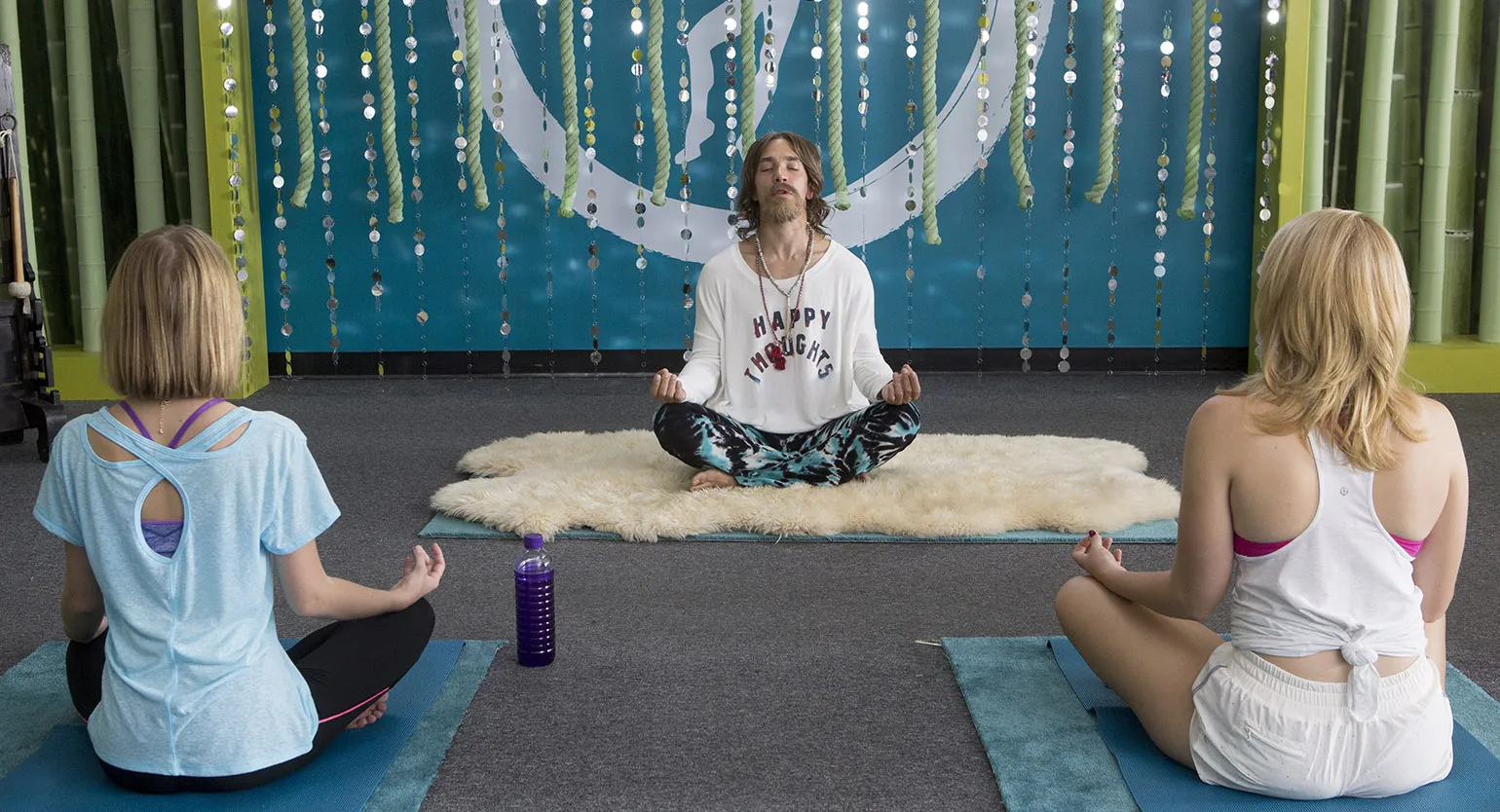
Perform the lotus pose by following these simple steps. Sit cross-legged on the floor. Make sure your back is straight and your shoulders are relaxed. Place your feet on the thighs of the opposite leg to create a comfortable position. If you are a beginner, you can start with a simplified version, placing one foot on the thigh of the other. Close your eyes and focus on your breathing, allowing your mind to calm. The lotus pose helps improve flexibility, develops concentration, and promotes meditation. Practice this asana regularly to reap the maximum benefits for your body and mind.
- Sit on the floor with your legs straight, keeping your back straight.
- Bend your right leg and cross it over your left thigh so that your right knee touches the floor and your right foot rests on the top of your left thigh. Do the same with your left leg, placing it on top of your right.
- Keep your back straight and do not bend your ankles.
- Take slow, deep breaths and stay in this pose for as long as you feel comfortable [1], [2], [4], [5].
While practicing the lotus pose, you may feel tension in your joints, which is normal, as your ligaments are being stretched. To ease the strain on your knees, it is recommended to place a blanket under them. If you begin to experience knee pain, this will be a signal to stop practicing the lotus pose. Proper technique and attention to your body's signals will help avoid injury and make your practice more comfortable.
Lotus Pose Variations for Beginners
Padmasana, or lotus pose, has many nuances that must be taken into account for proper execution. This asana requires a certain amount of flexibility and preparation. If you can't immediately sit in the lotus pose, don't despair. Start with simpler asanas that will help develop the necessary flexibility and prepare your body for padmasana. Gradually, you will be able to achieve the desired result and comfortably remain in this pose.
This pose is known as the Turkish pose. It is performed as follows:
- Bend your left leg, pressing your foot to the inner surface of your right thigh.
- Bend your right leg and place it parallel to your left.
- Spread your knees wide, trying to lower them to the floor.
This pose helps achieve deep relaxation and improves concentration. Correct body position helps relieve tension and allows you to focus on the tasks at hand. Using this pose in your daily practice can significantly increase your productivity and improve your overall well-being.
Half Lotus is a pose in which one leg is positioned as in the full lotus, and the other leg is in a more comfortable position. This asana is ideal for beginners, as it promotes gentle hip opening and is an excellent preparatory pose for mastering the full lotus. Regular practice of the half lotus helps improve flexibility and strengthen muscles, making it easier to perform complex yoga poses. Technique is key to the success of any exercise. Proper execution ensures not only the quality of the result but also the safety of the process. To achieve the best results, it is important to follow established guidelines and use effective techniques. Up-to-date knowledge and appropriate practice will help you master the technique at a high level, which, in turn, will positively impact your productivity and professionalism. It is also important to take into account individual characteristics, which will allow you to adapt the technique to specific conditions and tasks.
- Sit on the floor with your legs extended in front of you.
- Bend your left leg at the knee and pull it closer to your right thigh.
- Then bend your right leg and place your right foot on your left thigh.
- Your back should be straight, and your hands should be on your knees.
Don't rush to change legs. Hold the pose as long as you feel comfortable. This will allow your body to adapt and get the most benefit from the exercise. Pay attention to how you feel and try to avoid discomfort. Proper technique will help improve results and prevent injury.
Advanced Lotus Pose Variations
Once you've mastered the Lotus Pose, you can take your yoga practice to the next level and explore two additional variations of this pose.
In yoga, the asana known as Baddha Padmasana translates as "bound lotus pose." This pose promotes a deep stretch in the shoulder girdle and chest, which positively impacts posture and improves concentration. Regular practice of Baddha Padmasana helps develop flexibility and strengthen the back, making it beneficial for all levels of yogis.
Technique is an important aspect that affects the effectiveness and safety of exercise. Correct technique allows you to not only achieve maximum results but also minimize the risk of injury. When performing any physical exercise, it is necessary to pay attention to the correct body position, breathing, and sequence of movements. The basic principles of technique include control over the position of the joints, even distribution of the load, and awareness of your sensations during training. Regular practice and attention to detail will help improve technique and make your workouts more productive.
- Sit in the lotus position.
- Cross your arms behind your back.
- With your left hand, grab the big toe of your left foot.
- Similarly, with your right hand, grab the big toe of your right foot.
Yoga Mudrasana, known as the pose of mental unity, is performed from the bound lotus position. This asana not only helps calm the mind but also improves the flexibility of the spine and effectively stretches the back muscles. Regular practice of Mudrasana helps achieve harmony between body and mind, making it a valuable element in yoga practice.
The technique is performed with an emphasis on correctness and efficiency. Following the sequence of actions and paying attention to detail are essential. Begin by preparing the necessary equipment and materials. Ensure all tools are in good working order.
Then proceed to the task, following the established procedures. Pay attention to posture and body position to prevent strain and injury. While working, try to maintain concentration to avoid errors and ensure high quality performance.
After completing the work, analyze the results to identify any shortcomings and improve the technique in the future. Proper technique is the key to successful results and long-term effectiveness.
- Take the bound lotus pose.
- Tilt your head back and breathe deeply.
- As you exhale, slowly bend forward, trying to touch your forehead or chin to the floor.
What prevents you from performing the lotus pose
Why can some people sit in the lotus pose, while others cannot? To understand this, you need to understand the biomechanics of this pose. The lotus pose requires flexibility in the joints, especially in the hips and knees. The level of stretch and mobility of these joints varies from person to person depending on genetic factors, physical activity, and habits.
It is also important to consider the anatomical features of the body, such as the shape of the pelvis and the length of the limbs. People with more flexible muscles and ligaments are more likely to sit comfortably in the lotus pose. Regular yoga or other stretching practices can significantly improve the body's capabilities, allowing more people to master this pose.
Thus, both individual anatomical features and fitness level influence the ability to sit in the lotus pose.
The lotus pose requires specific movements in the hip joints. To successfully perform the pose, it is necessary to ensure flexibility and mobility in the hips. This is achieved by gently abducting the hips and rotating the knees outward. Correct leg positioning promotes stability and balance, making the practice more comfortable. Regular yoga practice will help improve flexibility and prepare the hip joints for the lotus pose. When working on this pose, it is important to listen to your body and not overexert yourself, which will help you avoid injury and achieve the desired result.
- External rotation - the hip should rotate outward so that the foot can rest on the opposite thigh.
- Flexion - the hip should be flexed to bring the shin closer to the torso.
- Slight abduction - the hip should be slightly abducted to the side to create space for the foot to rest on the thigh [6].
These exercises are easy to perform if you have sufficient flexibility in your muscles and ligaments, which also depends on the anatomical features of your hip joints. The hip joints are the places where the head of the femur connects to the acetabulum of the pelvic bone. Correct execution of the movements helps improve flexibility and mobility, and reduces the risk of injury. Pay attention to your individual anatomical features to most effectively integrate these exercises into the training process.

Yoga International experts claim that freedom of external hip rotation depends on the angle of the acetabulum and the length of the femoral neck. People with lateral acetabulums have an advantage when performing the lotus pose, as it's easier for them to achieve the desired position. However, if the acetabulums are directed forward, performing the lotus pose can be more challenging.
How to easily get into the lotus pose if you can't
It's impossible to change the shape of the bones, but we can effectively stretch the muscles and ligaments. If the hips are tight, this leads to increased stress on the knees, making it difficult to remain in the lotus pose for a long time. Therefore, before assuming the lotus pose, it is recommended to begin with stretching. This will help prepare the body, improve flexibility, and reduce the risk of injury. Regular stretching exercises not only make the pose easier to perform, but also contribute to overall physical well-being.
- Take a blanket or yoga blocks.
- Kneel down with your knees together (or slightly apart, if more comfortable).
- Spread your feet slightly wider than your hips, pointing your toes back.
- Slowly lower your pelvis toward the floor. If you don't have enough space, place a block or blanket underneath you.
- Stay in this pose for up to 30 seconds, focusing on your breathing.
- Return to the starting position - sitting on the floor with your legs straight.
- Bend your knees, drawing your feet toward your groin, and touching the soles of your feet.
- Relax your hips, allowing them to sink toward the floor under their weight.
- Stay in this pose for up to 30 seconds, focusing on your breathing [8].
Keeping your breath in mind is extremely important in any yoga pose. By concentrating on your inhalation and exhalation, you can slow down, become more aware of your emotions, and feel the state of your body. The sound of your breath helps maintain awareness, especially in difficult asanas, and is an indicator of your physical capabilities. If you notice your breathing becoming labored, it's time to come out of the lotus pose. Regularly practicing mindful breathing not only deepens your yoga practice but also helps improve your overall well-being and emotional state.
Who Shouldn't Practice the Lotus Pose?
While there are no strict contraindications for practicing the lotus pose, yoga instructors advise caution if you have lumbosacral radiculopathy. This condition is associated with compression or irritation of the spinal nerve roots in the lumbar and sacral regions, which can cause sharp pain radiating down the leg. Therefore, it is recommended to consult a doctor or an experienced yoga instructor before practicing this asana.
People with knee, hip, or ankle conditions may experience discomfort in the lotus pose. Therefore, it is important to consult a doctor before beginning the practice. Those without medical contraindications are advised to gradually transition to this pose, allowing the ligaments to develop and become more flexible. This will help avoid injury and improve the overall effectiveness of the practice.
Finally, it should be noted that consistency is essential for achieving results in yoga practice. Try to set aside time for practice at the same time every day. Don't look for excuses: just 15-20 minutes a day is enough to perform the lotus pose. Practice yoga in the morning, during your lunch break before meals, or in the evening. Regular classes will help improve your physical and mental well-being, as well as deepen your understanding of the practice.
Free test: which digital profession is right for you?
IT, design, marketing or management? Find out the answer in 15 minutes. And then try your hand at a new specialty for free.
Find out more