
Contents:

Thinking about a new career but don't know where to start? Find out what's right for you: IT, design, game development, management, or marketing. Take a free career guidance course.
Learn moreThis article will provide you with up-to-date information on the topic. We'll cover key aspects and provide helpful tips to help you better understand the subject. Our recommendations will help you effectively put your acquired knowledge into practice. Read on to learn more.
- What are sleep phases and what types are there?
- How sleep works and what happens in the first phase;
- How does the second phase proceed and how long does the third last?
- When does the fourth phase of sleep begin?
- How many cycles does healthy sleep consist of?
We launched the "How are you?" Telegram channel, where we share useful information on self-development, psychology, effective learning, and career growth at any age in a convenient format. Subscribe to receive relevant tips and recommendations for a successful life.
What are sleep phases?
Sleep phases are the different stages that the brain goes through during a night's rest. During these stages, important physiological and psychological changes occur that affect the quality of sleep and overall health. Each sleep stage plays a unique role in restoring the body, maintaining cognitive function, and emotional well-being. Understanding these stages helps us better appreciate the importance of adequate sleep for maintaining health and productivity in everyday life.
Professor of physiology Nathaniel Kleitman, who is considered the founder of sleep science, significantly expanded our understanding of circadian rhythms and developed a classification of sleep stages that remains relevant to this day. His research made important contributions to the study of sleep, helping to better understand the mechanisms that control our state during sleep and wakefulness. Kleitman became a pioneer in the field of sleep science, which helped lay the foundation for further discoveries and the development of sleep science.
What are the stages of sleep?
The journey through the kingdom of Morpheus includes two main stages. The first stage is falling asleep, when the body begins to transition to a state of rest. At this point, the heart rate slows, body temperature drops, and recovery mechanisms are activated. The second stage is sleep, which is divided into different phases, including light and deep sleep, as well as REM sleep, when dreaming occurs. Each of these stages plays an important role in maintaining physical and mental health, promoting energy restoration and improving cognitive function. Understanding these stages can help you better organize your sleep schedule and improve its quality.
- Slow-wave sleep (NREM). It takes up 75-85% of a night's rest and consists of three stages: falling asleep, light sleep, and deep sleep.
- REM sleep (rapid eye movement phase). We spend only 15-25% of the time in this phase.
How sleep works
The change in sleep phases is a cyclical process called the sleep cycle. The brain cycles through all phases of sleep approximately an hour and a half after falling asleep and then begins this "route" again. Sleep cycles include different stages, such as light sleep, deep sleep, and REM sleep, each of which plays an important role in restoring the body and maintaining mental health. Understanding these phases helps improve sleep quality and promotes overall well-being. The first sleep cycle goes through several key stages, each of which plays an important role in restoring the body. This cycle begins with the light stage of sleep, where brain activity begins to decline and the body begins to relax. This is followed by the slow-wave sleep stage, during which deep tissue repair and a strengthening of the immune system occur. The next stage is REM sleep, characterized by rapid eye movements, when active brain activity associated with dreaming occurs. This first sleep cycle typically lasts about 90 minutes and serves as the foundation for subsequent cycles, ensuring complete rest and restoration. Understanding your sleep structure can help improve your quality of rest and overall health.
- The first phase of NREM — falling asleep;
- The second phase of NREM — light sleep;
- The third phase of NREM — deep sleep;
- Returning to the second phase of NREM — light sleep;
- REM sleep.
Sleep cycles repeat several times a night, without the stage of falling asleep. Each new cycle differs in the duration of the stages. During the first half of the night, we are mostly in deep sleep, which is characterized by the third phase of slow-wave sleep. As morning approaches, the phases of light sleep, corresponding to the second phase of slow-wave sleep, as well as the rapid eye movement (REM) phase, become more pronounced.
The percentage of sleep phases for the entire period spent in bed can be represented as follows:
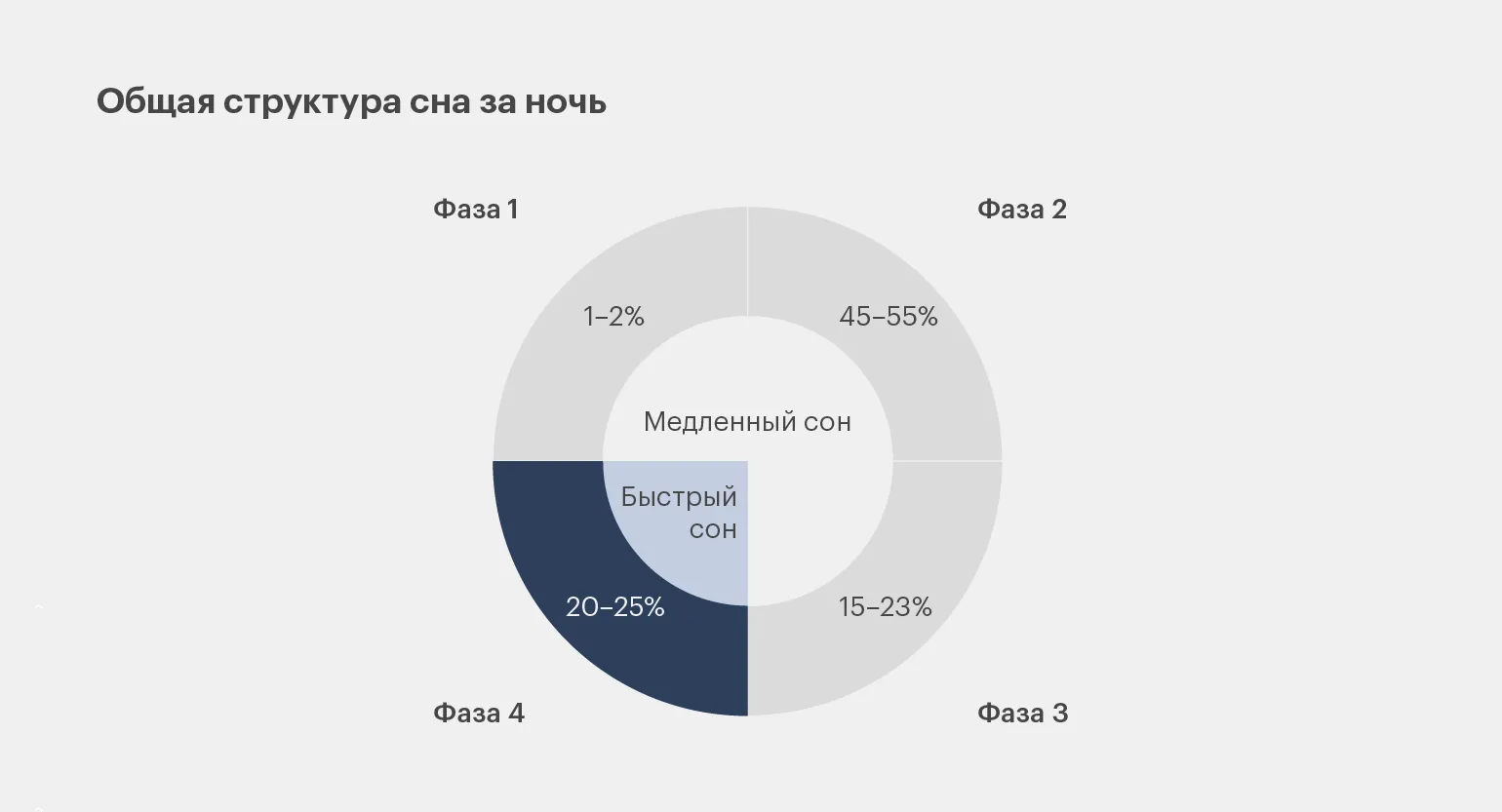
Each phase performs certain tasks and affects our condition.
The first phase of sleep - falling asleep
At the first stage During sleep, there is a transition from a state of wakefulness to sleep. At this moment, we begin to feel light drowsiness, which is the first step to falling asleep.

Pay attention to the following materials:
How to fall asleep quickly: 9 effective tips
Sleep plays a crucial role in our health and well-being. Quality rest is essential for maintaining physical and mental activity. If you have trouble falling asleep, try these proven methods to help you fall asleep quickly.
The first thing to do is create a comfortable sleep environment. Make sure your bedroom is dark, quiet, and cool. Use curtains to block out light, and choose comfortable bedding.
The second tip is to stick to a regular sleep schedule. Go to bed and wake up at the same time every day, even on weekends. This will help your body develop a stable rhythm, making it easier to fall asleep.
The third tip is to limit your use of electronic devices before bed. The blue light emitted by screens can suppress the production of melatonin, the hormone responsible for sleep. Try turning off gadgets an hour before bed.
The fourth tip is to practice relaxation. Practicing meditation, deep breathing, or gentle stretching can help reduce stress and prepare your body for rest.
The fifth tip is to avoid heavy foods and caffeine before bed. Eating these foods can disrupt your sleep. Instead, choose light snacks like yogurt or a banana.
The sixth tip is to be physically active. Regular exercise can help improve sleep. However, try not to exercise right before bed.
The seventh tip is to use aromatherapy. Essential oils like lavender or chamomile can help you relax and create a sleepy atmosphere.
The eighth tip is to practice journaling. Writing down your thoughts before bed can help clear your head and calm your mind.
Finally, the ninth tip is to stay in bed if you can't sleep. Get up and do something calm until you feel tired.
By following these simple recommendations, you can improve the quality of your sleep and fall asleep faster. Remember that good sleep is the foundation of health and well-being.
A person remains in this state for 5 to 10 minutes and is acutely responsive to surrounding sounds, making them easily awakened. After this state, a transition to deeper levels of sleep occurs.
- mental activity decreases;
- heart rate, breathing, and eye movements decrease;
- muscle relaxation occurs.
The body prepares itself for proper rest. This process includes a number of physiological changes that promote relaxation and recovery. Properly preparing the body for rest plays a key role in maintaining health and energy balance. Maintaining sleep quality and creating a comfortable environment will help improve recovery processes, which in turn will increase overall productivity and vitality.
The Second Stage of Sleep – Light Sleep
During the second stage of slow-wave sleep, which lasts from 10 to 25 minutes during the first sleep cycle, the duration increases with each subsequent cycle. This phase plays an important role in the body's recovery. During the second stage, sleep deepens, the heart rate slows, and body temperature decreases. This promotes muscle relaxation and prepares the body for deeper stages of sleep. In addition, the processes responsible for strengthening memory and learning are activated during the second stage. Improved cognitive function and overall well-being are associated with high-quality recovery in this phase.
- heart rate and breathing continue to slow down;
- muscles continue to relax;
- body temperature drops;
- eyes "freeze";
- thinking speed continues to slow.

Rework the text, preserving its core content. Optimize it for search engines by adding keywords and phrases relevant to the topic. Provide a logical and consistent presentation, avoiding unnecessary information. Make sure the text is easy to read, but still contains all the necessary facts and data. Maintain a focus on the main topic so that readers can easily perceive and find the information they need.
Brain Hacking: Recommendations from Dave Asprey's Book
Dave Asprey's book on brain biohacking offers effective methods for improving cognitive function and increasing overall productivity. Asprey shares practical tips to help optimize brain function and reach new heights in learning and work.
The focus is on diet, physical activity, and mental exercises. A proper diet rich in nutrients helps improve concentration and memory. Regular physical activity not only maintains health but also activates mental activity.
Asprey also emphasizes the importance of sleep for brain recovery. Quality sleep is key to improving cognitive function and emotional well-being.
Meditation and mindfulness practices help reduce stress and improve focus. These techniques promote clarity of thought and enhance creativity.
By following Dave Asprey's recommendations, you can not only improve your brain function, but also significantly improve your overall quality of life.
During the light sleep phase, important processes occur in the brain, such as the formation of K-complexes and sleep spindles. These phenomena indicate that consciousness begins to "switch off", but key functions, such as memory formation, continue. Light sleep plays a significant role in processing information and consolidating knowledge, which makes it an integral part of good rest and recovery.
The third stage of sleep is deep sleep
This phase plays a key role in restoring our strength and allows us to feel a surge of energy in the morning. Proper recovery contributes to an improvement in overall well-being and increases productivity throughout the day.
Deep sleep, which lasts approximately 20-40 minutes in the first half of the night, plays an important role in the body's recovery. During this period, active tissue regeneration, strengthening of the immune system, and memory consolidation occur. During deep sleep, the heart rate and breathing slow down, and the level of cortisol, the stress hormone, decreases. This is the time when the brain processes information received during the day and forms new neural connections, which helps improve cognitive function. Deep sleep also helps regulate hormones responsible for appetite and metabolism, which is important for maintaining a healthy weight. Uninterrupted deep sleep is essential for overall physical and mental well-being, as its deficiency can lead to various disorders, including increased fatigue, decreased concentration, and a worsening mood.
- heart rate and breathing decrease to minimal levels;
- muscle tension completely disappears;
- brain waves become calmer and more even.
During the deep sleep stage, a person is in a state of intense rest, which makes it difficult to awaken. Deep sleep plays a vital role in the body's recovery, and it is during this period that key processes occur that contribute to improved physical and mental well-being.
The fourth stage of sleep is rapid eye movement (REM) sleep.
Seventy to ninety minutes after falling asleep, the brain enters rapid eye movement (REM) sleep, during which dreaming occurs. This stage of sleep plays a key role in information processing and emotional state. Dreams that occur during REM sleep can be vivid and memorable, reflecting our thoughts, experiences, and desires. Understanding this stage of sleep helps you better understand the importance of adequate rest for your health and psycho-emotional state.

Rework your text to meet SEO standards and stay on-topic. Make sure the information remains relevant and informative. Don't add anything unnecessary and avoid using emojis or special characters. Avoid using numbered or bulleted lists; focus on creating clean text.
Read also:
Dreams, from a psychological perspective, are a complex and multifaceted phenomenon. They can be interpreted as a reflection of subconscious processes, emotional states, and life experiences. Psychologists believe that dreams help us process information, assimilate experience, and cope with internal conflicts.
Dreams often reflect our fears, desires, and unresolved issues, thereby providing an opportunity for self-knowledge and personal growth. Many psychologists, including Sigmund Freud and Carl Jung, paid attention to dreams, considering them key to understanding the human psyche. Freud focused on sexual and aggressive impulses, while Jung emphasized the importance of archetypes and the collective unconscious.
The study of dreams also has practical value. Understanding your dreams can help solve psychological problems, improve your emotional state, and enhance your quality of life. Furthermore, becoming aware of your dreams can foster creativity and intuition. Thus, dreams are not only a reflection of our inner world but also a valuable tool for self-development and psychotherapy. The duration of REM sleep in the first cycle ranges from one to five minutes and gradually increases with each cycle. Important processes occur physically during this period. During REM sleep, brain activation is observed, which is associated with intensive information processing and dreaming. This stage of sleep plays a key role in strengthening memory and emotional regulation. Furthermore, during REM sleep, muscle tone decreases, which prevents dreams from becoming reality. REM sleep gradually increases in duration, reaching 20-30 minutes in later cycles, emphasizing its importance for overall health and psychoemotional well-being.
- rapid eye movement under closed eyelids;
- brain activity approaches a state of wakefulness;
- twitching of the limbs and eyelids;
- acceleration of breathing and heartbeat.
During sleep, the muscles of the legs and arms are in a state of "deactivation". This allows us to freely jump with a parachute, dance, or run after pigeons in dreams, while our body remains motionless in the real world. This blocking by the mind serves as protection for our body, preventing possible injuries that can occur due to involuntary movements. This phenomenon, known as paradoxical sleep, or REM sleep, demonstrates how the brain controls our physical responses during the active sleep phase.
After visiting all four "stops," the body is ready to repeat the cycle, as one "pass" is not enough to fully restore and achieve optimal results.
How many cycles does healthy sleep consist of?
Optimal nighttime sleep includes about five cycles, with deep sleep predominating at the beginning, and light sleep and the REM phase occurring closer to the morning. Proper distribution of sleep stages and the number of repetitions are the basis for a complete and restorative night's rest. Following these cycles helps improve overall well-being and increase productivity throughout the day.

Reading is an important part of our lives. It not only enriches our vocabulary but also develops critical thinking. A good book can be a source of inspiration and new ideas. Regular reading helps improve concentration and memory, and also helps reduce stress levels. It's important to choose a variety of genres and authors to expand your horizons and gain new experiences. By immersing ourselves in the world of literature, we not only entertain ourselves but also learn, making reading an integral part of personal growth.
Healthy Sleep: Duration and Methods to Improve
Healthy sleep plays a key role in maintaining physical and mental health. The optimal duration of sleep for most adults is 7 to 9 hours per night. Lack of sleep can lead to various problems, such as poor concentration, decreased immune function, and the development of chronic diseases.
To establish healthy sleep, follow a few simple guidelines. First, establish a regular sleep routine, going to bed and waking up at the same time every day. This will help your body develop its own internal biological rhythm. Second, create a comfortable sleep environment: make sure your bedroom is dark, quiet, and cool. Avoid using electronic devices before bed, as blue light can disrupt melatonin production and make it difficult to fall asleep.
You should also pay attention to your diet. Avoid heavy meals and caffeine a few hours before bed to avoid overstimulating your body. Regular physical activity during the day can improve sleep quality, but try to avoid exercising immediately before bed.
By establishing a sleep routine and creating a favorable environment, you can significantly improve the quality of your rest and overall well-being. Healthy sleep is the key to productivity and a good mood every day.
When the quantity and quality of sleep cycles are disrupted, a person develops sleep disorders. For example, you may have difficulty falling asleep or, conversely, constant sleepiness during the day, despite achieving the recommended nighttime sleep, which averages seven hours. Lack of adequate rest at night can lead to serious consequences, such as decreased concentration, decreased productivity, and exacerbation of chronic diseases. An improper sleep schedule can also negatively impact mental health, causing stress and anxiety. It's important to understand that quality sleep plays a key role in overall well-being and health.
- Rapid fatigue;
- Low productivity;
- Problems with the cardiovascular and central nervous systems.
For timely detection of sleep disorders, it's important to consult a somnologist. This specialist will diagnose sleep disorders and assess the risk of developing associated conditions. Regular consultations with a somnologist can help prevent serious sleep problems and improve your overall health.

Revised text:
We recommend that you read additional materials.
A somnologist is a medical specialist who diagnoses and treats sleep disorders. Their primary goal is to identify the causes of various disorders, such as insomnia, sleep apnea, narcolepsy, and other sleep-related issues. Somnologists use modern research methods, including polysomnography and questionnaires, to understand the individual characteristics of patients and offer effective treatment strategies. A consultation with a somnologist may include recommendations for improving sleep hygiene, as well as medication or behavioral treatment. Consulting a somnologist can significantly improve quality of life by improving not only sleep but also overall well-being. Sleep is an important and complex process necessary for the normal functioning of the body. The quality of our nighttime rest directly impacts our performance and cognitive abilities. If you frequently wake up before your alarm and feel tired and groggy in the morning, it is recommended to consult a doctor. Sleep problems can indicate various disorders that require attention and treatment. Take care of your sleep to stay healthy and active throughout the day.
Free career guidance
Take a short test and find out which profession is right for you, and then try your hand at your chosen specialty. At the end of the course, you will have a session with a career guidance specialist. It will help you decide on your career path.
Find out more