Contents:

Thinking about a new profession, but don't know where to start? Find out what suits you: IT, design, game development, management or marketing. Take a free career guidance course.
Learn MoreThis article will introduce you to key aspects of the topic to help you better understand the subject matter. We'll cover key ideas, present relevant data, and share helpful recommendations. Read on to get a full understanding of this issue and its implications for your practice.
- What are chronotypes and is it true that "owls" and "larks" are wired differently?
- Are there other variations in this avian hierarchy?
- Why is being a "night owl" difficult?
- Can "owls" become "early birds?"
Do "owls" and "larks" exist?
Yes, such creatures do exist.
Owls and larks are terms that denote different chronotypes. Chronotype, derived from the Greek word "chronos," meaning "time," is a system of biological predispositions. This system determines a person's optimal hours of sleep and wakefulness. Understanding your chronotype can help improve quality of life, increase productivity, and optimize sleep patterns.
Chronotype functions within a more complex system—circadian rhythms. These daily activity cycles influence when a person wakes up and falls asleep most easily, and also determine optimal times for eating, working, exercising, and generating ideas. Understanding your chronotype allows you to more effectively plan your daily tasks and improve your quality of life, as synchronizing with circadian rhythms promotes increased productivity and well-being.
Some believe that the term "night owl" is used as an excuse for lazy people who don't want to get up early and explain their lateness to school and work. However, circadian rhythms and chronotypes have a scientific basis and do influence a person's lifestyle and cognitive activity levels throughout the day. While this doesn't excuse irresponsibility and unpunctuality, understanding your chronotypes can help optimize your daily routine and improve productivity. Circadian rhythms significantly influence physiological processes in the body. These rhythms determine such indicators as body temperature and appetite throughout the day. Furthermore, circadian rhythms influence blood pressure and the speed of reactions to external stimuli. Maintaining harmony in circadian rhythms contributes to improved overall health and a higher quality of life. Circadian rhythms function through hormonal mechanisms, among which melatonin plays a key role. This hormone is responsible for regulating sleep and wakefulness, and its levels vary depending on the time of day. A person's chronotype is shaped by various factors, including genetic predisposition, work schedules such as night shifts and frequent travel across time zones, climate conditions, and dietary habits. These factors collectively influence circadian rhythms, determining when a person feels most energetic or tired. Understanding these processes can help optimize sleep patterns and improve overall well-being.

Read also:
Circadian rhythms: understanding and their impact on health
Circadian rhythms are biological processes that follow a cycle of about 24 hours, determining when we sleep, wake up, eat, and perform other vital functions. These rhythms are regulated by the body's internal clock and are sensitive to changes in the environment, such as light and temperature. Understanding circadian rhythms is important, as they have a significant impact on our physical and mental health.
To optimize circadian rhythms, it is necessary to monitor your sleep schedule, avoid bright light before bed, and pay attention to your diet. Regular physical activity also helps maintain biological rhythms. By following these simple tips, you can improve the quality of sleep and overall well-being, which, in turn, will positively impact your productivity and energy levels throughout the day.
Taking care of your circadian rhythms will not only improve your health but also enhance your overall quality of life.
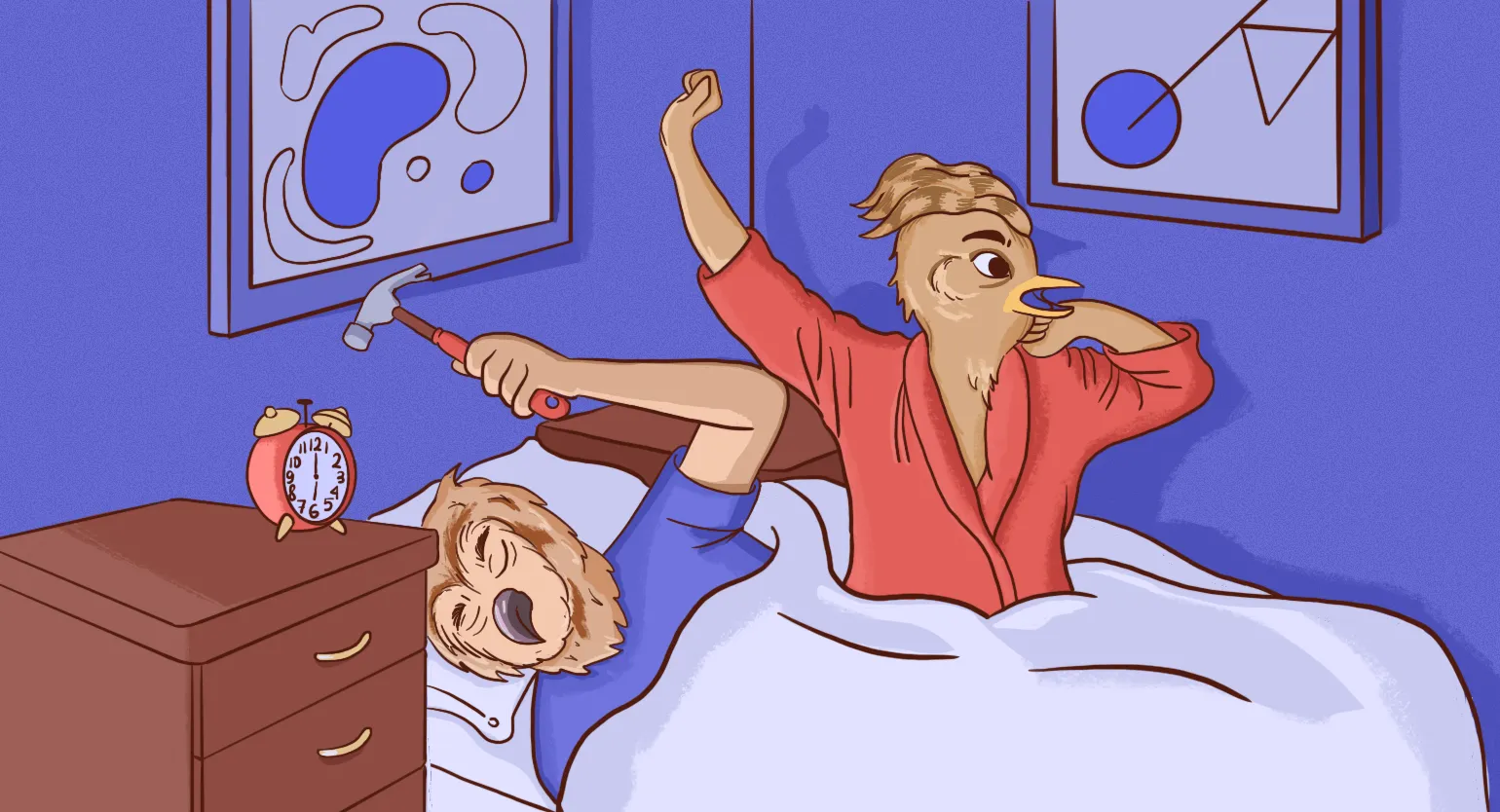
In the chronotype system, "larks" refer to people whose peak productivity occurs in the morning hours. These people typically rise early and start their day actively. In contrast, there are "night owls"—those who prefer to wake up and go to bed later, being active primarily in the evening hours. Understanding these chronotypes helps optimize daily routines and improve quality of life, taking into account individual biorhythms.
What other chronotypes are there?
Scientists at the Department of Biomedical Sciences at the University of Milan in the field of health distinguish three main chronotypes. Chronotypes are biological rhythms that influence a person's preferences for sleep and wakefulness. These types help understand how individual characteristics can affect health and daily activity. Correctly identifying your chronotype can help improve quality of life, increase productivity, and optimize sleep patterns. Different chronotypes may require an individualized approach to daily routine and diet, which is especially important for maintaining overall health. Understanding these aspects can help people plan their tasks more effectively and improve the quality of their sleep.
- morning (M-type);
- evening (E-type);
- indeterminate (N-type).
Up to 60% of the world's population does not have clearly defined circadian preferences. These people can simultaneously exhibit characteristics of both M-types and E-types. The remaining 40% are distributed between morning and evening chronotypes, which can be either extreme or moderate. Extreme chronotypes are characterized by pronounced preferences, while moderate chronotypes exhibit less noticeable circadian rhythms. Understanding these types helps to better match biorhythms with lifestyle and improve sleep quality and productivity.
People with a pronounced evening chronotype are called night owls, while those who prefer the early morning hours are usually called larks. Chronotype determines the time of day a person feels most active and productive. Understanding your chronotype can help improve your quality of life, optimize your sleep and work patterns, and increase your overall efficiency in everyday life. The biological difference between late and early risers lies in the production of melatonin, a hormone synthesized by the pineal gland. The pineal gland, located in the midbrain and weighing just one-tenth of a gram, plays a vital role in regulating wakefulness and sleep quality. Melatonin is responsible for circadian rhythms, influencing our well-being and energy levels throughout the day. Understanding these biological processes can help people optimize their sleep-wake patterns, improving overall health and effectiveness in daily life.

Rework the text, keeping the main topic. Do not add anything unnecessary. Optimize the content for SEO and, if necessary, supplement the text. Exclude emojis and unnecessary characters. Do not use sections such as 1. 2. 3. or *. Provide only plain text.
Read also:
Healthy Sleep: Duration and Recommendations for Improving It
Healthy sleep plays a key role in maintaining physical and mental health. The optimal duration of sleep for adults is 7 to 9 hours. Lack of sleep can lead to various problems, including decreased performance, poor mood, and a weakened immune system.
To establish healthy sleep, you should follow a few simple recommendations. First, establish a regular sleep routine, going to bed and waking up at the same time every day. This will help your body adapt and improve the quality of sleep. Second, create a comfortable environment in the bedroom: maintain an optimal temperature, use blackout curtains, and minimize noise.
It is also important to avoid caffeine and heavy foods a few hours before bed, as they can interfere with sleep. Physical activity during the day can also promote better sleep, but try to avoid intense exercise right before bed.
Using these tips will help you establish healthy sleep and significantly improve your overall well-being.
Melatonin promotes vasodilation and lowers body temperature, which facilitates sleep. This hormone is produced according to a specific rhythm: melatonin levels remain low during the day, then begin to rise with the onset of darkness, and reach a peak in the early morning hours. Proper melatonin levels play a key role in regulating sleep and maintaining the body's biorhythms.
Andrew Reiter, PhD, researches chronotypes and their impact on everyday life in his dissertation. He notes that morning and evening chronotypes differ in the time at which melatonin production begins in low-light conditions. The faster the pineal gland responds to darkness, the earlier the desire to sleep arises. These differences can significantly impact sleep and wake patterns, as well as overall productivity and well-being. Understanding your chronotype can help optimize daily activities and improve quality of life.
According to research, chronotype influences more than just the frequency of yawns during the day. For example, Italian scientists led by Angela Montarulli found that people who prefer early rising exhibit greater conscientiousness and goal-oriented learning. This underscores the importance of taking individual biological rhythms into account to optimize the learning process and achieve better results.
The study, conducted by the scientists, involved 423 students. The results showed that students with a morning chronotype, on average, demonstrate higher grades on both theoretical and practical exams, compared to those with an evening and neutral chronotype. This confirms the importance of considering individual biological rhythms when organizing the learning process to improve academic performance.
The reason is that class schedules are adapted for people who are used to waking up early. Those who are "night owls" often have to disrupt their circadian rhythms to keep up with school, work, and important meetings. As a result, those with the E chronotype accumulate sleep debt on weekdays and compensate for it on weekends. This can negatively impact their health and overall well-being. Understanding your biological clock and adapting your schedule to your individual needs can help improve your quality of life and increase productivity.
Forced resistance to one's natural rhythms leads to additional psychological and physical stress. Research among Chinese students shows that "night people" have higher rates of depression compared to neutral and morning chronotypes. American scientists have reached similar conclusions, noting that "night owls" are more prone to anxiety, aggression, and substance abuse. Experts from Korea and Japan also warn that staying up late in the evenings negatively impacts performance in professional sports. Maintaining harmony between internal rhythms and the external environment becomes important for mental and physical health, as well as for increasing productivity in various areas of life.

Read also:
The main problem faced by adults who begin to play sports is lack of time. In such conditions, a professional trainer becomes a necessity. He will help effectively organize training, adapting it to individual needs and schedule. With the support of a trainer, you can not only optimize your time at the gym but also achieve better results.
Don't be too upset by the nature and social discrimination against evening "birds." In an experiment with Italian students, they demonstrated a higher level of intelligence compared to their "morning" classmates. Psychologists at the University of Warsaw share this opinion, confirming that being a night owl has certain advantages. It's important to understand that each type of person has their own strengths and abilities, which can manifest themselves at different times of the day.
How do I know if I'm a night owl or a morning person?
A simple and effective way to learn more about your skills and knowledge is to take a specialized test. This will allow you to receive an objective assessment and identify areas in which you can improve. Testing will not only help you validate your current knowledge but also identify areas for further learning and development.
Another way is to observe your own state. On free weekends, when you don't need to go to meetings or do everyday tasks, allow yourself to go to bed whenever you feel like it and wake up without an alarm. This experiment is especially useful on vacation to avoid the influence of the habit of catching up on lost sleep after a busy workweek. This will help you better understand your biorhythms and restore balance.
If you regularly wake up earlier than everyone else after parties and family gatherings, and find it difficult to catch up on extra sleep on weekends, you may be a morning person or a moderate morning person. People of this type typically feel energetic and rested immediately after waking up, prefer to eat breakfast right away, and concentrate well even during early meetings and conferences.
People who are night owls, as well as those who prefer evening activities, often feel sleep-deprived in the morning. They have a hard time starting the day: they have no appetite, and their productivity leaves much to be desired. For such night owls, it takes time to adapt and get started.
Sleep quality is an important indicator of health. Research conducted by Ilona Merikanto and her team from the National Institute for Health and Welfare, Finland, showed that people with an evening chronotype are more likely to experience insomnia and nightmares. If you notice such problems, it is recommended to consult a sleep specialist to adjust your internal clock. Improving your sleep patterns can significantly improve your overall well-being and quality of life.

Read also:
Sleep paralysis is a condition in which a person is temporarily unable to move or speak while in between states of sleep and wakefulness. This phenomenon occurs when the brain awakens, but the body remains in a sleep state. It is usually accompanied by hallucinations and a feeling of fear. Sleep paralysis can occur when a person experiences stress, lack of sleep, or an irregular sleep schedule.
To manage sleep paralysis, it's important to follow a few recommendations. First, establish a regular sleep schedule to ensure your body gets the rest it needs. Second, avoid stressful situations before bed, as they can increase the likelihood of this condition occurring. It's also helpful to create a comfortable sleep environment: monitor the lighting, noise, and temperature in the room.
If sleep paralysis occurs frequently and causes significant discomfort, it's worth consulting a specialist. A psychologist or neurologist can help identify the causes of this condition and suggest treatment options. Understanding sleep paralysis and its causes can help you better manage it and minimize its impact on your quality of life.
Is it possible to transform from a night owl into a morning person?
Research conducted in 2017 by a group of American scientists and doctors confirmed that chronotypes have a genetic basis and are inherited. This discovery emphasizes that a predisposition to certain biorhythms is determined by nature, making it impossible to change one's chronotype at will. Therefore, understanding the genetic factors that influence chronotypes can help optimize sleep-wake patterns to improve quality of life.
Chronotype cannot be chosen; however, as an element of circadian rhythms, it can change over time. With age, the need for sleep decreases, and preferred sleep and wake times also change. These changes can impact quality of life and overall well-being. Understanding your chronotype helps you optimize your sleep and wake patterns, which is important for maintaining health and productivity.
At different stages of life, changes in the production of sex hormones occur, which can significantly impact a person's biorhythms. These changes can lead to a shift in internal rhythms, so children and the elderly typically prefer morning activity, while young adults and teenagers tend to be more active in the evening. Understanding these physiological transformations can help optimize your daily routine and improve your overall well-being.

Reworked text:
Also explore other materials on this topic.
Friendship in teenagers: why it is more important than studies
Friendship in adolescence plays a key role in the formation of personality and social skills. During this period, young people strive to find their place in society and develop emotional connections. Friends become a support system during difficult times, helping to cope with problems and stress.
It is important to note that friendship promotes the development of communication, empathy, and cooperation skills. These qualities are necessary not only in personal life but also in future professional activities. The support of friends helps adolescents build self-confidence and develop self-esteem.
While studying is an integral part of adolescent life, friendships often have a more significant impact on their emotional state. By supporting each other, adolescents can cope with academic workload and find a balance between study and personal life.
Thus, friendship during adolescence is more important than studying, as it helps form strong social connections, develops personality, and promotes emotional well-being.
A change in circadian focus is a natural process that occurs for physiological reasons. However, attempting to change circadian rhythms and chronotype on your own can have negative health consequences. Circadian rhythm disruptions are associated with an increased risk of developing conditions such as obesity, diabetes, and cancer. Maintaining a natural sleep-wake rhythm is important for overall health and the prevention of chronic diseases. Unfortunately, most aspects of life are geared toward early birds, which creates certain challenges for night owls. Waking up early in the evening can be a challenge for those who wake up tired, and maintaining productivity during the workday can be difficult when waking up is accompanied by fatigue. In such circumstances, it may be wiser to consider adapting your work routine rather than trying to change your chronotype. For example, switching to remote work with a flexible schedule can significantly improve your quality of life and increase your productivity. If you're dissatisfied with your daily routine, it's worth taking a look at your habits and making some changes. Here are some effective ways to optimize your internal schedule: First, start by analyzing your current daily routine. Identify areas where you need improvement and where you're wasting time. Write down your daily tasks and prioritize them to focus on what's most important.
Second, set clear sleep and wake-up times. A regular schedule helps improve sleep quality and boost productivity throughout the day.
Third, introduce short breaks during work hours. This will allow you to recharge and improve your concentration. For example, take breaks every 60-90 minutes for some light physical activity or rest.
It's also important to monitor your nutrition. A healthy and balanced diet helps maintain energy throughout the day.
Finally, consider keeping a journal to track your progress and reflect on your day. This will help you better understand your habits and make any necessary adjustments.
By following these recommendations, you can significantly improve your daily routine and increase your overall productivity.
- Get rid of thick curtains and let light wake you up in the morning to regulate melatonin production;
- Avoid smoking, coffee, and alcohol before bed;
- Try to move more and engage in physical activity during the day;
- Develop pleasant morning rituals that will help you feel happier when you get up early;
- Try to go to bed at the same time every day.
You can use melatonin as an additional means of improving sleep. Preparations containing this hormone promote rapid falling asleep, restoration of routine, and facilitate adaptation to time zone changes. However, it is important to remember that interfering with the body's natural processes should only be carried out after consulting a doctor. This will help avoid possible side effects and ensure the safe use of melatonin to improve sleep quality.
Free career guidance
Take a short test and find out which profession is right for you, and then try your hand at your chosen specialty. At the end of the course, you will have a session with a career guidance specialist. It will help you decide on your career path.
Find out more