
Contents:
- Augmented Reality: Immersion in the Digital World
- Comparison of Augmented Reality (AR) and Virtual Reality (VR)
- How Augmented Reality Technology Works
- Using Augmented Reality (AR) Technologies in Business
- Prices for Creating AR Projects for Business
- Key Aspects of Implementing AR into Business Processes
- The Evolution of Augmented Reality: From Its Origins to the Present Day
- What You Need to Know About Augmented Reality: 5 Key aspects

Excel and Google Sheets: Free Course with 4 Practice Problems
Learn MoreAugmented Reality: Immersive Digital Experience
Augmented reality (AR) is an advanced technology that combines virtual elements with the real world. This improves the perception of information and user interaction with the environment. AR is used in a variety of fields, including education, entertainment, medicine, and marketing, providing new opportunities for learning, visualization, and interaction with products. Using AR devices, users can see and interact with digital objects, making their experience more immersive and informative. This technology continues to evolve, opening new horizons for innovation and improving quality of life.
Augmented reality (AR) works by using a device's camera to capture an image of the surrounding world, after which special software integrates virtual objects into this image. As a result, the user sees an altered reality on the device screen, where, for example, a tiger may appear on the table, and a dog underneath it. AR technology opens new horizons for interaction with virtual elements, expanding the boundaries of perception of reality and providing unique opportunities for education, entertainment and business.

Various devices are used to effectively interact with augmented reality, with smartphones being the most popular. However, there are also specialized devices, including AR glasses and virtual reality headsets, that offer a more immersive experience. In the future, AR lenses are expected to provide a more natural and convenient interaction with augmented reality, expanding user capabilities and improving information perception. These technologies open new horizons for the use of augmented reality in education, entertainment, and everyday life.
At first glance, augmented reality (AR) may seem like a complex and unusual technology. However, many users are already actively using it in their daily lives. Examples include masks on social networks, games with AR elements, online interior design services, virtual clothing try-ons, and apps for recognizing star constellations. This technology is becoming increasingly accessible and integrated into various aspects of our lives, significantly expanding the possibilities of interaction with the surrounding world.
In the next section, we will study in detail the operating principle of augmented reality and analyze its differences from virtual reality.
Comparison of Augmented Reality (AR) and Virtual Reality (VR)
Augmented reality (AR) and virtual reality (VR) are advanced technologies that provide users with unique immersive experiences in artificially created worlds. Despite the general operating principles and the use of similar development tools, these two areas have significant differences. AR adds digital elements to the real world, enhancing the perception of the surrounding reality, while VR completely replaces the real environment with a virtual one, allowing users to interact with it. Understanding these differences is important for choosing the right technology based on your goals and objectives, whether in education, entertainment, or business.
The main difference between augmented reality (AR) and virtual reality (VR) is that VR creates a completely artificial world in which the user is immersed, while AR overlays virtual elements on the existing real world. This creates a unique mixed environment where real objects interact with digital ones. Virtual reality allows users to explore new spaces and scenarios, while augmented reality enhances the perception of the surrounding reality by adding interactive elements and information.
I will supplement the text and correct it for SEO.
The main differences between augmented reality (AR) and virtual reality (VR) lie in the ways they interact with digital content. First, augmented reality overlays digital elements on the real world, allowing users to see and interact with virtual objects in their surroundings. Secondly, virtual reality creates a fully immersive experience, where users find themselves in a completely digital space, isolated from the real world. Thirdly, AR usually requires the use of smartphones or special glasses, while VR requires special headsets and controllers for full interaction. These differences determine the areas of application of the technologies, where AR is more often used in training and marketing, and VR finds its application in games and simulations.
- Development Complexity: Augmented reality projects are usually easier to implement compared to VR, as VR requires more powerful hardware and complex software to create and process the virtual environment.
- User Equipment: Virtual reality requires special equipment, such as VR glasses or helmets, while a regular smartphone is enough to access AR, making it more accessible.
- Scope of application: Interaction with VR allows the use of both hands freely, while in AR the user often uses one hand to hold the device. This difference affects the areas of application of the technologies: AR is less commonly used in education, gaming, and sports, but this may change with the advent of more affordable AR glasses.
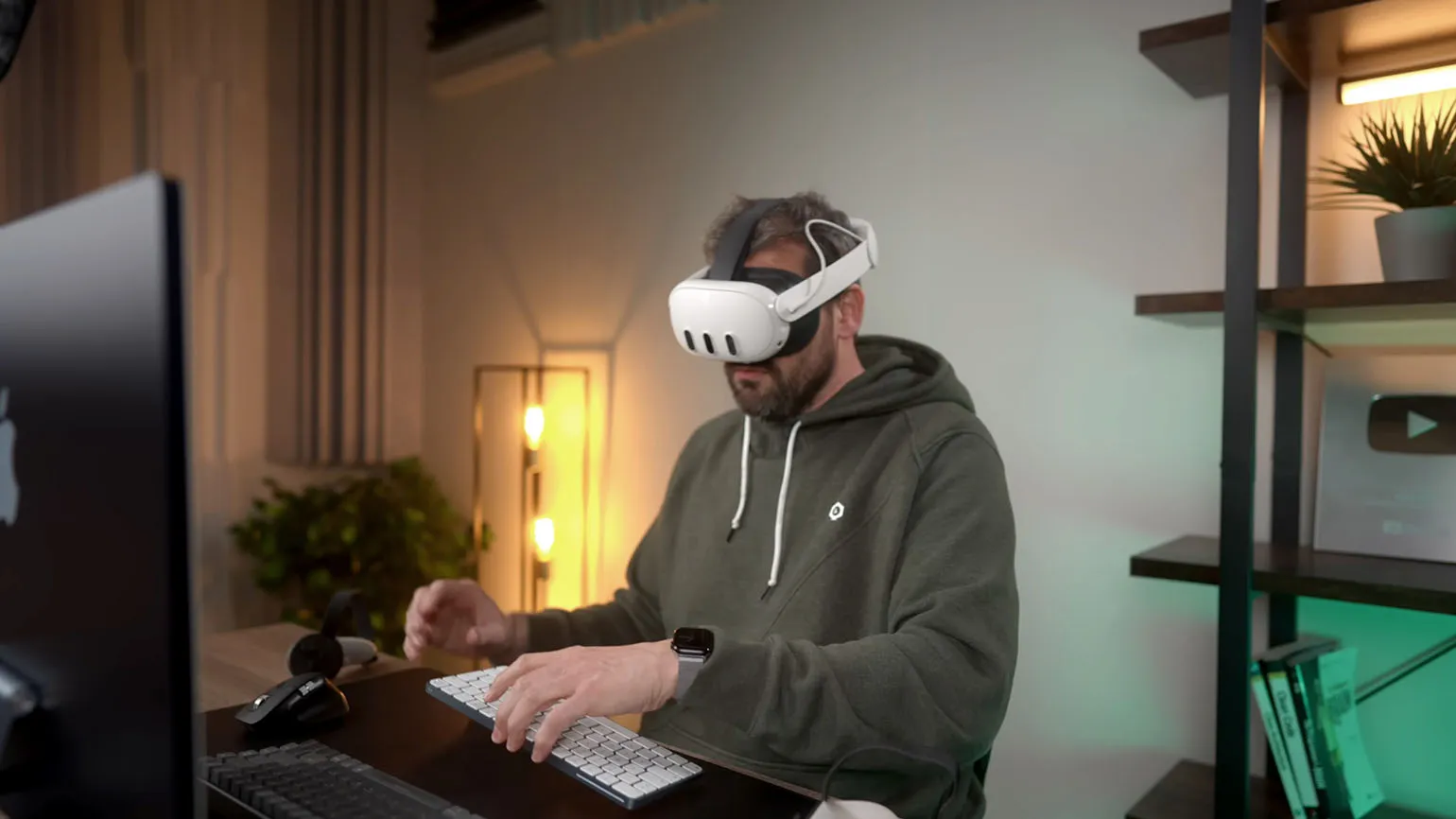
Currently, developers are actively implementing augmented and virtual reality technologies. Modern VR glasses, such as the Meta Quest 3 mixed reality headset, presented in the fall of 2023, already support augmented reality mode. This innovation significantly improves the user experience, allowing horror games, for example, the Hauntify AR mode, to be adapted to real-life room conditions. Players can immerse themselves in the atmosphere, turning their surroundings into an exciting zombie battlefield, which makes the gaming process more interactive and engaging.
How Augmented Reality Technology Works
Modern augmented reality (AR) is radically changing the way we perceive interaction with digital content. The smartphone becomes a "window" into 3D space, allowing users to observe and interact with virtual 3D objects that seamlessly integrate into the real world. This technology opens new horizons for education, entertainment, and business, providing unique opportunities for visualizing information and enhancing the user experience. The use of AR contributes to a deeper understanding of objects and processes, which makes it an indispensable tool in various areas of life.


Additional content created using augmented reality (AR) technology can include a variety of elements, from virtual characters like Pokémon to complex 3D models. These models can be useful in various fields, such as interior design, where they help visualize spaces, and in education, where they allow for detailed examination of production equipment. AR technology opens up new possibilities for interacting with information and improves the learning and design process.
There are two main approaches to implementing augmented reality (AR) technology: marker-based and markerless. The marker-based approach uses special markers that are read by devices, allowing digital objects to be superimposed on real images. The markerless approach, on the other hand, does not require physical markers and relies on environmental recognition, allowing for a more dynamic and interactive experience. Both methods have their advantages and disadvantages, and the choice between them depends on the specific tasks and goals of the augmented reality project.
Marker-based augmented reality (AR) is based on the use of special markers, such as images or geometric shapes, that can be recognized by the device's camera. When a marker is captured, the system activates a virtual model that is combined with the real environment. This process allows for the creation of an interactive experience where digital elements are seamlessly integrated into the physical world, which is used in education, marketing, and entertainment. Marker-based AR opens up new possibilities for user interaction with content and improves information comprehension.
Markers can represent not only images but also human faces or bodies, as demonstrated by filters on social media. However, this method has certain limitations, as it requires close proximity to the marker, making interaction with large objects difficult. This limitation is important to consider when developing applications using augmented reality technologies, as it can impact the user experience and the ability to integrate with the real world.
Markerless augmented reality (AR) does not require the use of special markers and can be activated on any surface. The device's camera scans the surrounding space, identifying surfaces on which virtual objects can be placed. This method is more versatile and flexible, but it requires powerful software for effective data analysis and interaction with the real world. Markerless AR opens up new possibilities for creating interactive applications and improves user experiences in various fields, including education, marketing, and entertainment.
For applications that require anchoring to specific materials, such as books, packaging, or invitations, marker-based augmented reality (AR) is the optimal choice. This method enables precise anchoring of virtual content to physical objects. However, in situations where such anchoring is not critical, a markerless approach to AR may be more effective. It enables the creation of more flexible and adaptive solutions that do not require specific markers.
Application of Augmented Reality (AR) Technologies in Business
Today, augmented reality (AR) is widely used in various business areas, including B2C and B2B marketing, as well as in entertainment and education. AR is fundamentally changing the approach to customer interaction, allowing for more interactive and memorable experiences. This technology improves user experience, increases customer engagement, and improves the efficiency of business processes. Thanks to AR, companies can demonstrate their products in real time, providing the opportunity to virtually "try on" or "test" before purchasing. This not only simplifies the decision-making process for customers but also significantly increases conversion. Integrating augmented reality into marketing strategies is becoming an important tool for attracting and retaining customers in a highly competitive environment.
AR technologies in B2C marketing significantly increase conversion rates. They allow brands to offer unique solutions that differentiate them from competitors and enhance consumer engagement with their products. Using augmented reality helps create interactive experiences that attract and retain customers, while also increasing the likelihood of purchase. By using AR, companies can showcase their products more effectively, which helps build a positive image and strengthen consumer loyalty.
A successful example of using augmented reality (AR) is virtual clothing try-ons. Apps based on this technology allow customers to see how their chosen item will look on their body. In the cosmetics industry, the Magnit chain offers customers the opportunity to try on various makeup looks using smart mirrors powered by E-Visage technology. These innovative solutions not only improve the shopping experience, but also help increase sales by allowing customers to make more informed decisions when choosing products.
Augmented reality (AR) actively influences impulse purchases by creating a sense of surprise in users. A striking example is the Australian wine company Treasury Wine Estates, which offers a series of wines called 19 Crimes. By pointing the camera at the bottle, customers can hear the fascinating story of a convict sent to Australia in the 19th century. This approach not only attracts buyers' attention but also creates a unique experience that helps increase sales and consumer engagement. The use of AR in marketing opens up new horizons for brands, allowing them to stand out from the competition and improve customer engagement.
Augmented reality (AR) technology significantly increases LTV (Lifetime Value)—a metric that reflects the overall profit a customer brings to a company throughout their entire interaction. Brands can create AR games that engage users in interactive tasks with virtual characters. This not only promotes long-term engagement but also strengthens customer loyalty. Incorporating AR into marketing strategies allows companies to effectively retain customers and increase their business value.
In the B2B sector, augmented reality (AR) technologies are actively used, particularly in the pharmaceutical industry. Pharmaceutical companies are implementing AR to interactively demonstrate their drugs to doctors. This allows for the visualization of the drug's effects on the body and its chemical composition, significantly improving comprehension compared to traditional handouts. The use of AR in pharmaceuticals not only improves communication with healthcare professionals but also promotes more effective training and increased trust in products. The implementation of such technologies can become a competitive advantage for companies seeking to improve their market position.

Companies are actively using augmented reality (AR) to create unique user experiences in the entertainment industry. For example, before the premiere of Rogue One: A Star Wars Story, the Magnit chain partnered with Walt Disney to run a promotion that allowed customers to take photos and record videos with AR characters from the Star Wars universe. Using AR photo zones at exhibitions and forums not only draws attention to products but also helps differentiate a brand from competitors, creating a memorable customer experience. The implementation of such technologies helps increase audience engagement and strengthen the company's image.

Modern companies are actively using microlearning—a method that involves regularly delivering short training sessions through short videos and instructions. This approach allows employees to quickly master new skills and improve their skills. Augmented reality (AR)-based solutions are ideal for microlearning, as they allow for the creation of interactive instructions and workflow simulations. The use of AR technologies makes training more engaging and effective, which contributes to better information retention and increased productivity. Microlearning combined with AR solutions is becoming an essential tool for companies seeking innovation and employee development.
Augmented reality (AR) can be effectively used to train employees, demonstrating how to properly perform tasks in conditions that require high precision, such as when working with dangerous equipment. AR systems can simulate various workflow scenarios, creating a safe environment for employee training. This helps minimize risks and improve the quality of training, providing a better understanding of processes and reducing errors in production. Incorporating AR into employee training not only enhances their skills but also improves overall workplace safety.
Augmented reality (AR) training methods are becoming especially important in the medical sector. They allow for the visualization of surgical procedures, significantly improving the training of future doctors. Using AR in medical education helps students better understand anatomy and complex procedures, which contributes to a higher level of specialist training.
Prices for Creating AR Projects for Business
The cost of developing augmented reality (AR) varies significantly: from several hundred thousand to millions of rubles. For example, creating a large-scale AR game similar to Pokemon Go and covering an entire city area can require an investment of tens of millions of dollars. At the same time, developing simpler solutions, such as AR photo zones, can cost between 140,000 and 200,000 rubles. Such a wide range of prices is due to various factors, including the complexity of the project, the technologies used in development, and the level of user interaction.
Currently, there are many ready-made AR solutions, the cost of which can range from 200,000 rubles. These technologies can significantly improve the efficiency of business processes and improve customer interaction. Investing in such solutions opens up new opportunities for marketing, sales, and training, making them a profitable choice for companies seeking innovation.
Several years ago, when augmented reality (AR) technologies were just beginning to develop, creating AR projects was significantly more expensive than video production. As a result, only large companies could afford to integrate augmented reality into their strategies. With the increasing availability of AR technologies, the cost of developing such projects has dropped significantly, opening up new opportunities for businesses of all sizes. Now, even small companies can integrate AR into their marketing strategies and improve customer engagement, making this technology more accessible and attractive.
The situation in the augmented reality (AR) development field has undergone significant changes. Today, extensive experience has accumulated in this field, and the number of qualified IT specialists continues to grow. The emergence of no-code and low-code solutions has significantly simplified and made the process of implementing AR technologies more accessible. As a result, creating an effective AR project has become only slightly more expensive than producing high-quality video. This opens up new opportunities for businesses, allowing them to integrate AR into marketing strategies and improve user experiences at minimal cost. The cost of AR solutions depends on several key factors. First, development complexity is an important consideration. The more complex and interactive the elements, the higher the development costs. Second, the platform the AR solution will be targeting must be considered. Development for mobile devices, tablets, or desktop computers can vary significantly in cost. Third, the level of graphics and content quality also impact the price. High-quality 3D graphics and detailed models require more time and resources. Furthermore, integration with existing systems and software can add additional costs. Finally, the market and region in which development takes place also influence the cost of AR solutions. Understanding these factors will help you more accurately estimate the budget for an AR project.
- Duration of experience - the longer the augmented reality video, the higher the cost of the project.
- Visualization quality - creating high-quality graphics will require more time and skills from a 3D designer, which also increases the price.
- Interactivity - the more user interaction elements and complex game mechanics, the higher the development cost.
- Deadlines - the need for urgent development also affects the price.
Available solutions can bring significant business value if they are developed with the company's strategic goals in mind. In the next section, we will take a closer look at how to effectively design AR solutions to achieve the best results.
Key aspects of implementing AR in business processes
Implementing augmented reality (AR) in business requires careful preparation and deep understanding. Before starting implementation, there are several important aspects to consider. First of all, it is important to define the goals of using AR: how this technology will help improve customer experience or optimize internal processes. You should also analyze the target audience to understand how AR can meet their needs. Finally, you need to assess the technical capabilities and resources required to successfully integrate augmented reality into business processes. These steps will help ensure the effective and efficient implementation of AR in your company.
- What specific business problems do you plan to solve with AR?
- What team of specialists is required for the successful implementation of the project?
- What quality of the final product do you expect?
Let's consider each of these aspects in more detail.
The implementation of augmented reality (AR) in business is not just a fashionable trend, but an effective tool that can solve a variety of specific problems. However, AR is not a one-size-fits-all solution. It is important to carefully analyze the needs of your company and evaluate how feasible it is to use this technology in the specific conditions of your business. This will not only optimize your processes but also increase your competitiveness in the market.
Building a team for a successful AR project requires the involvement of highly qualified specialists. Depending on the scale and complexity of the project, your team may include a variety of experts. These may include software developers, 3D designers, user interface specialists, as well as marketers and project managers. Each of these professionals brings unique contributions, ensuring high-quality and effective implementation of augmented reality. Selecting the right team plays a key role in achieving your goals and successfully implementing your AR project.
- A scriptwriter or creator develops the visualization concept. In small projects, such as AR photo zones, one of these specialists may be sufficient.
- Designer or illustrator — responsible for creating visual content and project design.
- Methodologist(s) — provide textures and content, may act as a client.
- 3D modeler(s) — create three-dimensional models of objects to be used in AR.
- Front-end and back-end developer(s) — program the project interfaces and databases.
- Project manager — oversees the execution of tasks and process management.
- Technical director — manages the project team and ensures technical implementation.
AR applications continue to be at the cutting edge of technology, and their development can be a more complex task compared to the creation of landing pages or video projects. It is important to choose contractors carefully, as high-quality solutions require significant financial investments. Understanding this aspect will help you avoid pitfalls and ensure the successful implementation of your augmented reality project.
The quality of AR project implementation plays a key role in its success. Reducing the project budget can negatively impact the user experience and the effectiveness of the solution. Even well-thought-out concepts may fail to achieve the desired results due to insufficient execution. Therefore, it is important to maintain a balance between cost and quality, which is the foundation of a successful AR solution. Budget optimization should not come at the expense of quality, as this can lead to poor reviews and decreased user interest.
Every year, the augmented reality (AR) industry evolves rapidly, offering new solutions and ways to integrate them into various business sectors. Implementing AR technologies requires a clear understanding of the tasks at hand, the available technologies, and the necessary resources. With the right approach, investing in augmented reality can bring significant benefits, improving customer interactions and streamlining business processes. Using AR allows companies to stand out from the competition by creating a unique user experience and increasing engagement.
The Evolution of Augmented Reality: From Its Origins to Today
Augmented reality (AR) is a cutting-edge technology that has the potential to change our perception of the world around us. The first devices supporting AR began appearing in the late 20th century. In the 1990s, this innovation found application in various fields, such as military affairs, space exploration, and scientific experiments. Today, augmented reality is actively used in education, medicine, and entertainment, allowing users to interact with digital objects in real time. This technology continues to evolve, opening up new possibilities for business and everyday life.
In the early 2010s, augmented reality (AR) became accessible to a wide range of users thanks to the widespread use of smartphones. In 2014, a technological breakthrough occurred with the release of Google Glass, which spurred the rapid advancement of AR. This era was pivotal for the technology, which began to gain popularity among a mass audience and opened new horizons for interacting with digital content. By augmenting the real world with virtual elements, AR has radically changed the approach to education, entertainment, and commerce.
In 2016, the world saw the AR game Pokemon Go, which attracted the attention of millions of users around the globe. In the first week after its launch, the game reached 50 million installs on Google Play, and its revenue exceeded $500 million in just two months. This phenomenal success demonstrated the enormous potential of augmented reality in the gaming industry, opening new horizons for developers and players. Pokemon Go has not only changed the approach to mobile games, but also became an example of how technology can integrate into everyday life, creating a unique gaming experience.

In 2017, Google and Apple introduced their augmented reality app development platforms, ARCore and ARKit. These tools significantly simplified the process of creating AR apps, providing developers with powerful tools for implementing innovative solutions. The emergence of ARCore and ARKit opened up new business opportunities, allowing augmented reality to be integrated into various fields, such as education, gaming, and marketing. Thanks to these platforms, developers can create more interactive and engaging user experiences, which contributes to the growing popularity of augmented reality technologies in the market.
Despite initial achievements, augmented reality (AR) could not compete with the rapidly developing virtual reality (VR) until 2019–2020. Virtual reality was updated annually with new headset models, which contributed to its growth and popularity. As a result, augmented reality lagged in both market size and user interest.
The early 2020s saw significant changes in the field of augmented reality (AR). The increase in the number of smartphone users released after 2017, as well as the availability of AR without the need for additional devices, made this technology more appealing to a wider audience. Users can now easily enjoy the capabilities of augmented reality simply by pulling out their smartphone. This has opened up new horizons for app developers and businesses, allowing them to create innovative solutions and improve customer engagement. The rise in AR popularity has also fueled interest in education and entertainment, providing users with unique and immersive experiences.
One of the key advances in technology is WebAR, which allows users to interact with augmented reality without the need to install special apps. Simply open a link in a mobile browser, and access to AR experiences is just one click away. WebAR opens up new possibilities for marketing, education, and entertainment, making interaction with augmented reality more accessible and easier for a wide range of users.
Modern users are increasingly using augmented reality (AR) technologies in their everyday lives. This includes the use of filters and masks on social media, as well as improved navigation features in geo-services and AR games. Brands are actively integrating augmented reality into their marketing strategies and employee training processes, allowing them to improve customer interactions and increase operational efficiency. The use of AR opens new horizons for businesses, allowing them to create unique user experiences and stand out from the competition.
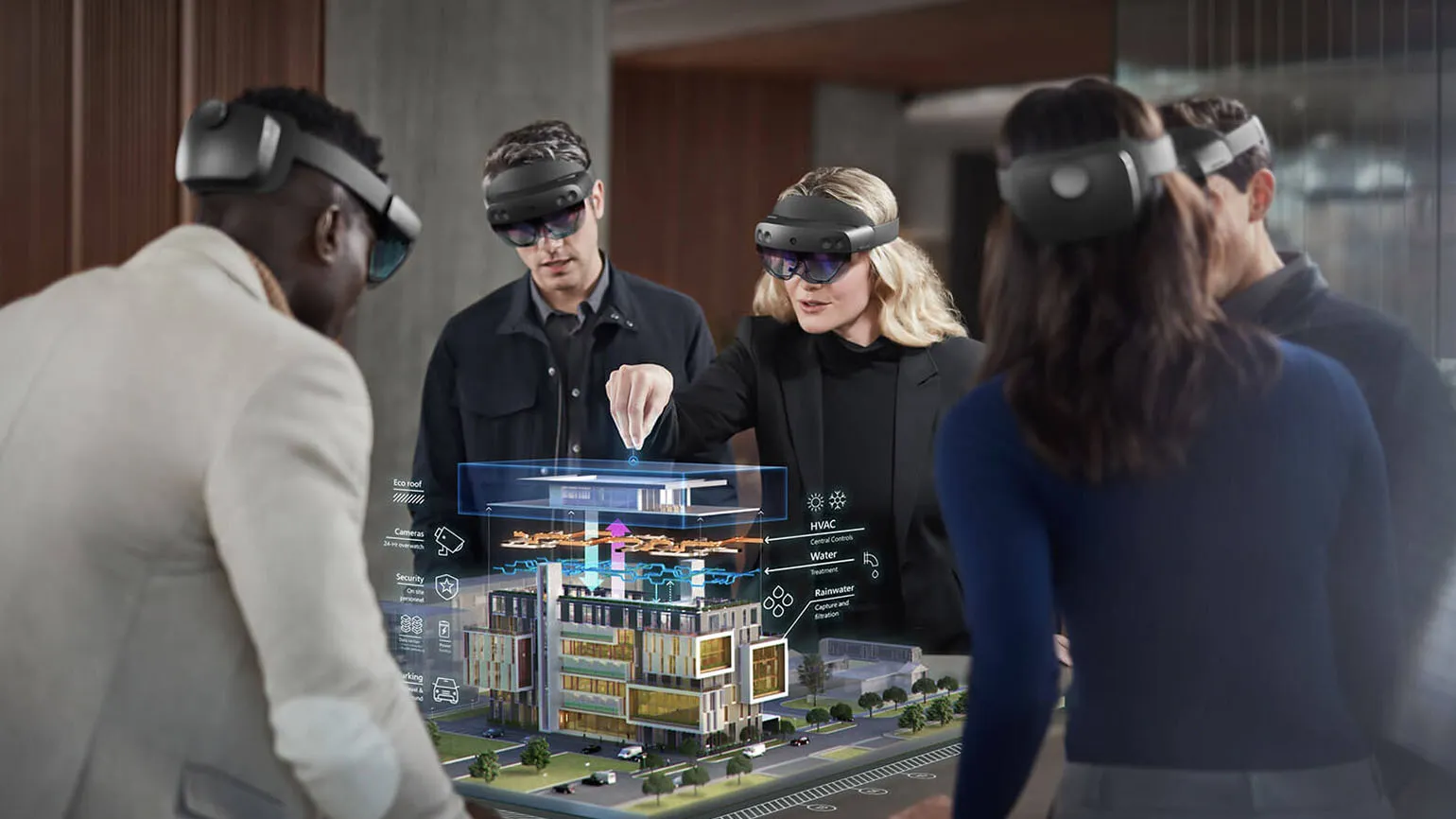
In recent years, there has been rapid development of augmented and virtual reality technologies, including AR helmets such as the Meta Quest 3 and Pico 4. These devices are finding application in a variety of fields, including education, medicine, and entertainment. Also worth noting are mixed reality glasses, such as the Microsoft HoloLens 2, which are becoming increasingly popular due to their ability to integrate virtual objects with the real world. The development of these technologies opens new horizons for businesses and users, offering innovative solutions and improving interaction with digital content.

During the COVID-19 pandemic in Russia, medical workers began using AR glasses to remotely examine patients. Doctors in the "red zone" were able to transmit images to the "clean zone", which significantly reduced the risk of infection and increased the safety of medical personnel. The use of augmented reality in medical practices has become an important step in the fight against the virus, allowing consultations and diagnostics without endangering the health of doctors and patients. AR technologies have proven their effectiveness and have become an indispensable tool in conditions of limited contact.
2024 will be remembered for the launch of the Apple Vision Pro mixed reality headset. This event, according to experts, could mark the beginning of the mass adoption of augmented reality glasses. In the future, it is possible that every second person will use such devices, which will radically change our approach to technology and interaction with the digital world.
What you need to know about augmented reality: 5 key aspects
- Augmented reality (AR) is an innovative technology that integrates virtual elements into our everyday experience. Unlike virtual reality, AR augments the real world rather than replacing it, allowing users to interact with both their real-world environment and digital objects simultaneously.
- There are two main methods of AR: marker-based and markerless. The marker-based approach requires a special marker, which is recognized by the device's camera, to activate augmented reality. The markerless method, in contrast, uses computer vision to analyze and scan the environment, allowing virtual objects to be added without the need for markers.
- Augmented reality technologies have wide-ranging applications in business, including B2C and B2B marketing, employee training, and improving customer engagement. For example, AR can be used to create interactive advertising campaigns or for virtual product demonstrations.
- To effectively integrate AR into your business processes, it is important to clearly define the goals and objectives you want to achieve with this technology. It's also necessary to assemble a team of professionals who can implement the project to the required level of quality.
- Prices for augmented reality projects can vary significantly—from several hundred thousand rubles to millions of dollars. Factors affecting cost include the duration of AR use, the quality of visualization, the number of user interaction points, and the project deadline.
Project Manager: How to Become an Indispensable Specialist in 6 Months
Want to become a successful project manager? Find out how to help businesses and start earning in just six months!
Find out more