Contents:

Free Excel and Google Sheets Course Learn the basic features of spreadsheets to work faster and make fewer mistakes. Practice your skills with 4 practical tasks.
Learn moreGamification is the application of game mechanics in a non-game context. In short, it's a method used to increase engagement and motivation in areas such as employee training, business management, and marketing. Gamification helps create interactive experiences that attract users to new products and services and facilitate more effective information absorption.
Computer game creators focus on attracting and retaining players, which is a key factor in their popularity. Effective gameplay mechanics, interesting storylines, and thoughtful level design contribute to an immersive gaming experience. It is thanks to these elements that computer games continue to attract the attention of millions of users worldwide.
Gamification in various fields has the main goal of engaging users, employees, or students in the process, similar to how computer games do. The use of game elements helps increase interest and activity, making learning and work more engaging and motivating. Gamification promotes the creation of an interactive environment in which participants can achieve goals, receive feedback, and enjoy the process. This makes it an effective tool for increasing productivity and improving results across a wide range of areas.
Game mechanics are actively used to attract new users, build loyalty among existing customers, and promote brand awareness. Companies may have various goals, which leads to the use of a variety of engagement mechanics. Let's look at several examples that have become popular over the past decade.
Red Quest is an engaging game designed for users of the MTS Red Energy tariff. During the game, participants solve exciting quests and "protect the planet" by answering a variety of questions. This is not only entertainment but also an opportunity to test their knowledge in an engaging and interactive way. Join Red Quest to test your skills and contribute to the protection of our planet.
Gamification is aimed at actively engaging users, improving recognition of the MTS Red Energy tariff, and stimulating its sales. Incorporating game elements into the process of interacting with the tariff will help generate interest and increase customer loyalty. This not only increases interest in the plan but also boosts its market popularity. Gamification creates a unique user experience that attracts attention and motivates action, thereby increasing sales and strengthening the MTS brand.
For 2.5 months, program participants were given two tasks daily. The tasks varied between online and offline formats. Points were awarded for successfully completing the tasks. During the game, participants received special offers from the operator and information about tariff options. Using these offers also earned additional bonus points.
The campaign results showed that the website attracted more than 3,500,000 unique visitors, and the number of registered game participants exceeded 1,040,000. Tariff plan recognition among the target audience reached 83%. During the promotion, sales of this tariff plan increased by 20%, while another 20% of the target audience switched to MTS Red Energy from other tariffs. These figures confirm the success of the marketing strategy and the high user interest in the product.
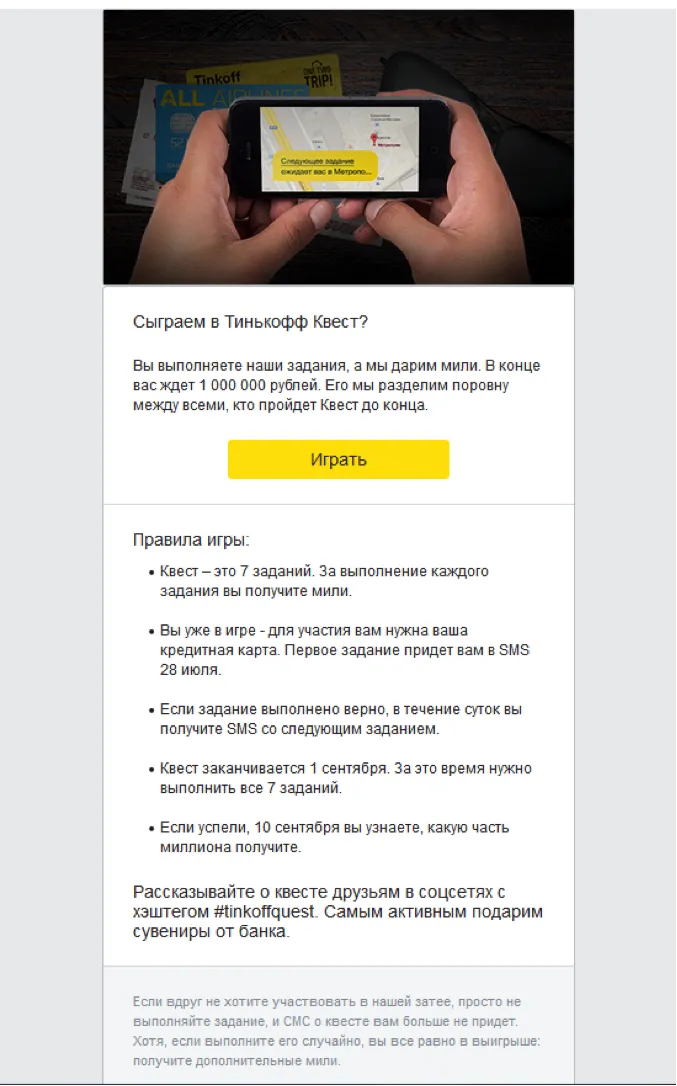
This quest is for holders of the bank's co-branded cards, such as ALL Airlines, OneTwoTrip, and eBay. Participants are invited to complete 7 tasks within 35 days, which will allow them not only to have fun but also to receive unique benefits and rewards. By participating in this quest, users can improve their skills, expand their knowledge of co-branded offers, and enjoy exclusive offers from partners.
Gamification is aimed at increasing the activity of co-branded card users. The use of game elements in this context helps attract more customers and increase their engagement. The introduction of gamification mechanics, such as points, levels, and rewards, helps create a more engaging card experience. This not only encourages users to use their co-branded cards more frequently but also builds brand loyalty. Optimizing this process can significantly improve the effectiveness of marketing strategies and increase overall profitability.
The competition mechanics required cardholders to complete specific actions. Participants were asked to pay at selected restaurants, donate funds to charities, and complete other tasks. Miles and cash rewards were awarded for each successfully completed transaction. The grand prize of the competition was one million rubles, making participation even more attractive for cardholders.
Over 15,000 people took part in the quest. The number of transactions using co-branded cards increased by 20%, and among participants, this figure increased by 40%. This demonstrates high activity and interest in the event, which has a positive impact on the development of the loyalty program and the attraction of new customers.
This is an online game, designed in an antique style, designed for users, in which players must assemble a coffee cup made of shards. Players are immersed in an engaging process where attention to detail and strategic thinking play a key role in achieving the goal.
Gamification is aimed at attracting new customers and improving engagement with existing ones. It creates an engaging experience that increases interest and brand loyalty. By incorporating game elements, companies can make their content more appealing, which in turn increases user engagement and encourages repeat visits. Gamification not only entertains the audience but also effectively communicates information about a product or service, helping to increase sales and strengthen market positions.
The event involved completing tasks for which participants received points. Each completed task earned one glass fragment. Participants who collected a full glass received branded T-shirts with the bank's logo. Prizes, including several MacBook Pros, an iPhone 7, and AirPods, were also raffled off among those who successfully completed the tasks.
Over 150,000 people from across Russia participated in the game. The number of subscribers to the bank's VKontakte group tripled. Users left over 70,000 comments on social media, which contributed to the bank's acquisition of 10,000 new clients.
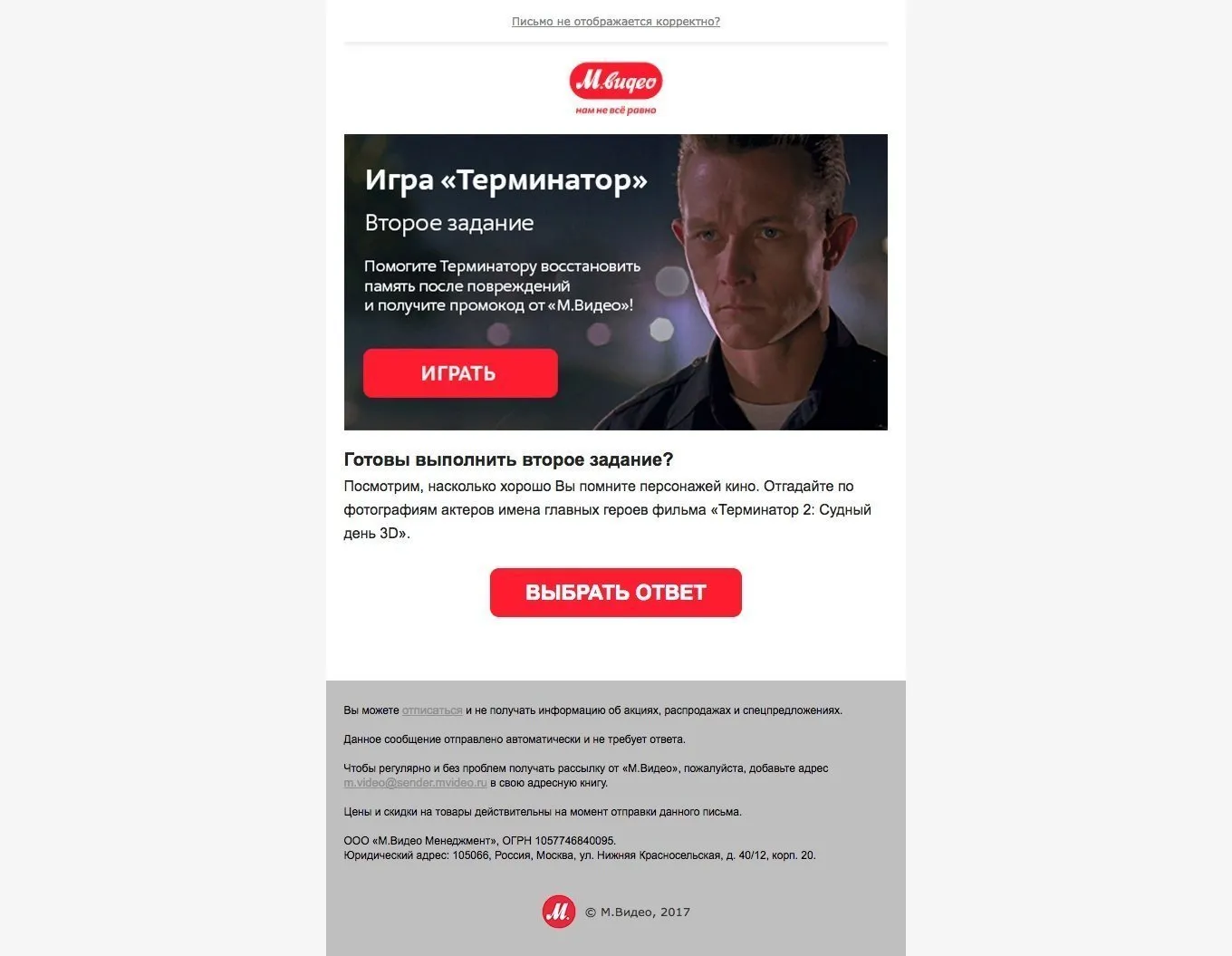
The game is based on the film "Terminator 2: Judgment Day" and was created in conjunction with its release in 3D. This project allows fans of the film to immerse themselves in a world where technology and humanity are on the brink of conflict. Players can experience exciting moments inspired by iconic scenes and become part of the legendary story of the struggle for survival.
Gamification is aimed at attracting new clients and increasing the loyalty of existing ones. This method helps increase the number of newsletter subscribers by making interactions with the brand more engaging and interactive. Using game elements in marketing strategies helps create a deeper connection with the audience, which in turn contributes to customer growth and improves the company's image.
To participate in the game, it was necessary to register on the M.Video website. After registration, each participant received tasks via email. Over the course of four weeks, participants had to complete three tasks to receive promotional codes for discounts on products from the online store. As the tasks were completed, the discount size increased, which motivated the participants to actively participate in the game.
The result is 25% of new subscribers who made purchases in the store. This indicates the high effectiveness of marketing strategies and the attractiveness of the products offered. An increase in subscriber numbers is directly linked to improved conversion rates, confirming the success of advertising campaigns and content marketing. Thus, attracting new customers becomes an important step in business development and increasing profitability. An online quest for users of the "Vkusomania" app, developed by the Azbuka Vkusa chain. By participating in this exciting quest, you can not only test your knowledge of products and recipes but also receive unique offers and discounts on products. Join our online quest to discover new shopping opportunities and learn more about the world of gastronomy with Azbuka Vkusa.
Gamification is aimed at increasing customer loyalty at the Azbuka Vkusa chain and promoting MINI vehicles as part of a partnership with the Avtodom holding company. The project's primary objective is to create an engaging and interactive user experience, thereby fostering a positive brand image and strengthening their market position.
Participants were required to take part in an online game, upload a photo of their supermarket purchase, and complete a quiz. The grand prize was a car provided by a game partner. Participation in the game provided the opportunity to win a valuable prize, stimulating interest and activity among players.
In less than a month, the quest page was visited by over 10,000 users. This indicates high interest in the event and effective content promotion. Such impressive traffic demonstrates the successful engagement strategies employed to attract visitors and highlights the appeal of the quest.
The Azbuka Vkusa game is timed to coincide with the start of the truffle season in Italy. The Vkusomania mobile app has added a new section where users care for a wild boar, ensuring it is fed regularly. This update not only allows users to enjoy engaging gameplay but also learn more about the culture of Italian cuisine and the nuances of truffle harvesting.
Gamification is aimed at attracting customers from offline to online. By using game elements, companies can create a more engaging and interactive experience for users, increasing their engagement and loyalty. Effective gamification strategies help transform traditional purchases into engaging interactions, which drives online sales and improves customer service. Implementing gamification will not only attract new customers but also retain the interest of existing ones, an important aspect of successful business in today's digital economy.
Participants in the Azbuka Vkusa promotion had the opportunity to purchase truffle-infused products and receive "virtual boar food" in a special app. This Tamagotchi-like interactive element allows users to watch their pig grow and receive gifts from the brand for active participation. The promotion creates a unique experience of interaction with products, simultaneously increasing interest in truffles and stimulating purchases.
Project Manager Profession
You will become an indispensable specialist for any business. Learn how to help companies in times of crisis, increase revenue, and save them from bankruptcy. Build a portfolio and start earning within six months of starting the course.
Find out more