Contents:
- Definition of the HR Profession
- The Role of HR in Personnel Management
- The Role and Responsibilities of an HR Specialist
- HR Training and Career Opportunities
- Necessary Knowledge and Skills for Success in HR Accounting
- Necessary Tools for Effective HR Accounting
- HR Specialist Salaries: What You Need to Know
- How to Become a Successful HR Specialist
- Key Aspects HR Specialist Professions
- How to Deepen Your Knowledge in HR Management and Personnel Records
- Additional HR Resources from Skillbox Media

Career in HR: Free course from scratch in 4 weeks
Find out moreDefinition of the HR profession
A HR specialist, or personnel records specialist, plays an important role in any company where employees work. Their primary function is to prepare and maintain documentation related to labor relations, as well as prepare reports for government agencies. A qualified HR specialist is essential for effective personnel management and compliance with labor laws. They ensure the proper execution of employment contracts, maintain time records, calculate wages, and ensure employee rights are respected. Having an experienced HR specialist not only enhances a business's legitimacy but also enhances its competitiveness in the marketplace.
The term "HR specialist" encompasses a wide range of positions, including "HR specialist," "HR inspector," and "HR administration specialist." The titles and functions of these positions may vary depending on the structure and needs of a specific company. HR specialists play a key role in human resources management, ensuring effective personnel records management, compliance with labor laws, and employee support. Understanding the various aspects of an HR professional's work helps companies optimize HR processes and improve employee satisfaction. HR professionals play a key role in HR management, performing such important functions as onboarding new employees, maintaining timesheets, and preparing documents for employees on leave. These tasks contribute to the effective management of human resources within an organization, ensuring compliance with labor laws and streamlining timekeeping processes. Effective performance of HR responsibilities improves internal communications and creates a comfortable working environment for employees. HR records are mandatory for all organizations with at least one full-time employee. According to current legislation, maintaining HR records is the responsibility of companies and sole proprietors. Incorrect document processing and non-compliance with regulations can lead to significant fines, which can reach 500,000 rubles. Therefore, it is important to ensure the accuracy and timeliness of all HR records to avoid negative consequences for the business. HR records organization depends on the size of the company and the specifics of its activities. For effective HR management, it is necessary to study the key aspects of HR. HR management encompasses more than just employee registration, but also performance analysis, labor relations management, and corporate culture. Understanding the fundamentals of HR will enable companies to optimize processes and improve team performance.
The Role of HR in Personnel Management
HR (Human Resources) encompasses a variety of functions that go beyond simply maintaining personnel records. Key HR management tasks include employee recruitment and onboarding, competency development, performance evaluation, corporate culture management, and incentive programs. These functions not only help effectively manage human resources but also create a positive work environment, which, in turn, contributes to increased company productivity. Optimizing HR processes is key to successful organizational development and talent retention.
- Recruitment — searching for and hiring new employees;
- Adaptation — supporting new employees as they integrate into the team;
- Compensation and benefits — working with a motivation and rewards system;
- Training and development — improving employee qualifications;
- Evaluation and development — developing professional skills within the company.
Large organizations typically have a separate HR department, in which various functions are distributed among several specialists. This approach allows each employee to focus on their area of responsibility, which significantly improves the overall efficiency of the department. Optimizing HR management processes helps improve interactions with employees, increase their satisfaction, and, ultimately, strengthen corporate culture. Thus, a clear division of tasks and responsibilities within the HR department plays a key role in successful human resources management.
In small companies, HR functions are often performed by a single HR manager or a small HR department. In such organizations, an HR specialist often takes on additional responsibilities, including recruitment. This allows for effective human resources management and the adaptation of HR policies to the unique needs of the business. Having a universal HR manager facilitates more efficient resolution of issues related to recruitment and employee development, which is especially important for small companies striving for growth and development.
HR specialists play a vital role in various organizations, especially in companies with a large number of employees. Their professional activities contribute to compliance with legislation and the maintenance of order in labor relations. HR experts ensure the proper execution of employment contracts, time tracking, payroll calculation, and the maintenance of necessary documentation, which are key aspects of effective HR management. With the increase in labor disputes and government audits, the demand for qualified HR professionals continues to grow.
The Role and Responsibilities of an HR Specialist
An HR specialist is a vital link in a company's human resources management. Their functions may vary depending on the size and specifics of the organization, but the basic tasks remain constant. The primary responsibilities of an HR specialist include recruiting, training, and developing employees, as well as managing labor relations and ensuring compliance with labor laws. Effective performance of these tasks helps to create a productive and motivated work environment, which, in turn, improves the overall performance of the company.
The main areas of activity of HR specialists cover many aspects of human resources management. The key tasks of HR specialists include finding and selecting talented employees, developing and implementing effective onboarding programs for new employees, and managing the training and development of personnel. Maintaining labor relations and compliance with labor laws is also an important area of focus, including drafting employment contracts and monitoring compliance with labor obligations. HR specialists also develop incentive systems and evaluate employee performance, which helps increase productivity and reduce turnover. A key aspect of their work is reporting and document management, which ensures transparency and organization within the company. These areas help create a comfortable work environment and contribute to the achievement of the organization's strategic goals.
- Employee onboarding. This includes creating employment contracts, job descriptions, and other necessary documents, such as those for transfers or dismissals.
- Personnel records management. This specialist is responsible for processing vacation pay, creating a staffing schedule, and maintaining employee workbooks and personal files.
- Issuing certificates and documents. HR specialists prepare income certificates and copies of hiring orders.
- Transferring data for calculating financial compensation. Timesheets are used to generate accounting information on hours worked and bonuses.
- Preparing documents for employee training and professional development is essential for their professional growth.
- Preparing reports for government agencies, including the Federal Tax Service and Rosstat, requires attention to detail and accuracy.
HR specialists not only perform their primary duties but also provide consulting services to employees on various document processing matters, including name changes. These consultations help employees correctly prepare and submit the necessary documents, which helps simplify the process and minimize errors. Qualified support from HR specialists in document management matters helps create a comfortable working atmosphere and increase employee satisfaction.
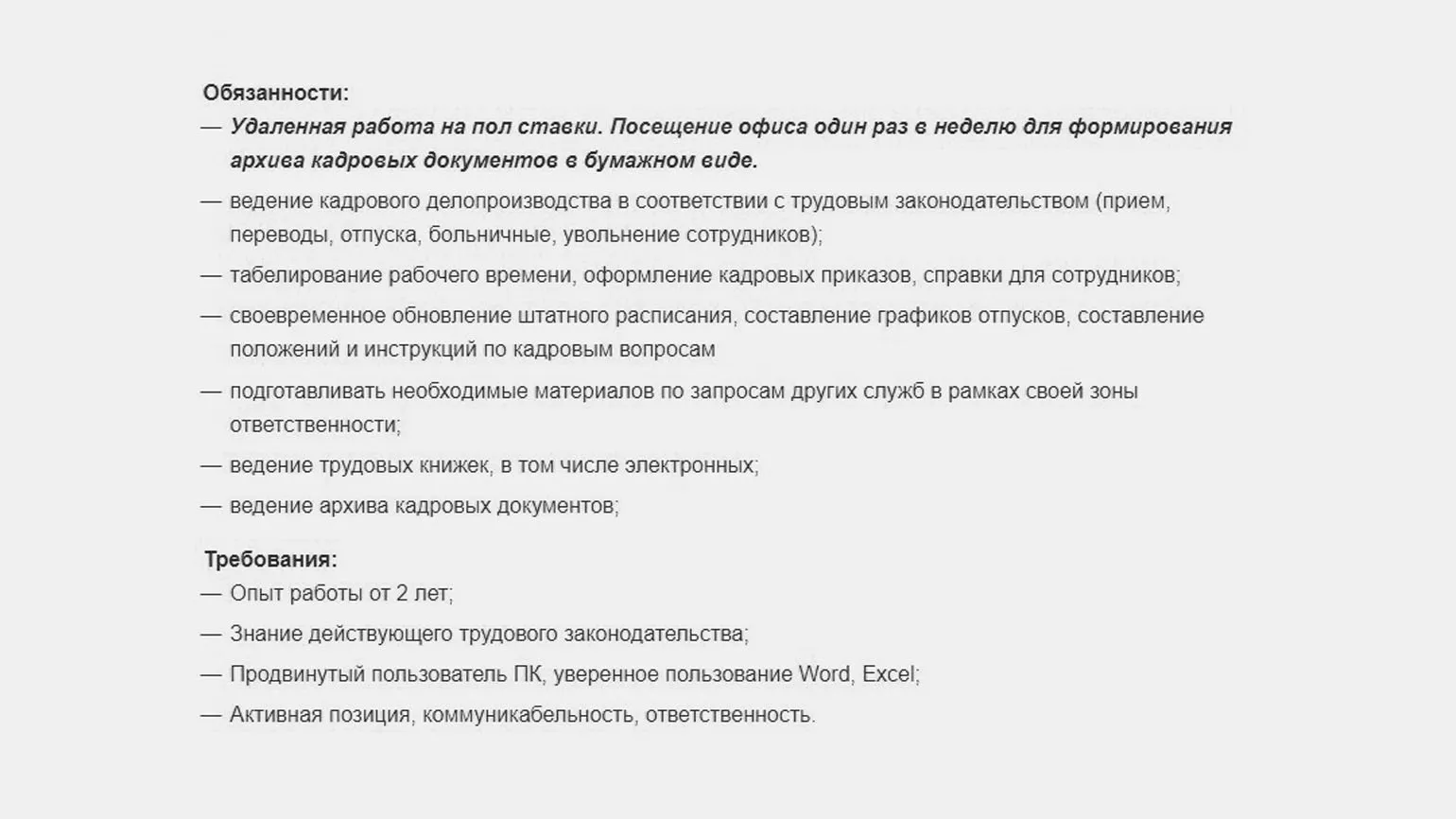
In large companies, HR specialists may focus on specific areas of their work, such as preparing reports for government agencies. In contrast, in mid-sized companies, HR specialists typically assume a full range of responsibilities, including recruiting, training, and personnel management. This allows them to more flexibly respond to business needs and effectively address HR issues.
HR specialists in small businesses are highly versatile, as they often perform additional functions, such as accounting or legal support. This creates excellent opportunities for professionals from related fields looking to transition into HR. In a small business, such specialists can significantly expand their skills and contribute to the company's development.
HR Training and Career Opportunities
For those looking to develop a career in HR, Skillbox offers unique educational programs tailored to today's market demands. These courses will help you master the key competencies necessary for successful work in HR. Skillbox offers access to up-to-date knowledge and practical skills, allowing you to confidently move towards your professional goals in HR management.
- "HR Simulator: Full Immersion in the Profession" is a course that allows you to master HR functions and choose the appropriate specialization.
- "HR Manager" is a program that deepens knowledge in HR analytics and team management to increase salaries.
Necessary Knowledge and Skills for Success in HR Accounting
In today's world, HR accounting occupies a central place in HR management, and an HR specialist must possess a wide range of skills and knowledge. The most important aspect of their work is a deep understanding of the Labor Code of the Russian Federation, as well as the fundamentals of HR administration. Effective HR management is impossible without knowledge of current regulations and rules, which allows not only to comply with legislation but also to optimize processes within the organization. A specialist must understand the issues of drafting employment contracts, maintaining personnel documents, and recording working hours. In addition, it is important to be able to analyze HR statistics and apply them to improve the company's operations. With this knowledge, an HR specialist can significantly improve the effectiveness of human resources management. Employers have strict requirements for HR specialists. Key aspects include knowledge of: the necessary documents for maintaining HR records and the deadlines for their preparation; sources where templates for preparing HR documents can be found; deadlines and places for submitting documentation. A lack of necessary knowledge can lead to significant time expenditures on studying the law. This also increases the risk of errors, which can lead to fines for the company. Ensuring an understanding of current standards and regulations helps avoid financial losses and minimize legal risks. Knowledge of labor discipline rules is a key aspect of an HR specialist's work. This knowledge helps maintain order within the team and effectively assist managers in managing employees who violate discipline. A specialist must be able to properly issue warnings and reprimands, and in cases of serious violations, initiate the dismissal of unreliable employees. This not only contributes to a healthy working atmosphere but also improves overall team productivity. Proper application of labor discipline helps avoid conflicts and promotes more effective personnel management. Communication skills are one of the most important qualities for an HR specialist, as they must constantly interact with employees. HR specialists must be able to clearly and understandably explain complex HR issues, given that many employees lack sufficient knowledge in this area. Effective communication helps create a trusting atmosphere and fosters a better understanding of HR processes, which in turn increases employee satisfaction and optimizes company performance.
Necessary Tools for Effective HR Records Management
HR records management is a crucial aspect of HR management. To ensure its effective management, specialists use a variety of tools. Key tools include standardized document forms and specialized software that simplifies the employee records management process, allows for data systematization, and ensures compliance with legal requirements. Properly organized HR records management contributes to increased HR efficiency and improved employee engagement.
Standardized forms form the basis for the preparation of numerous documents. The HR specialist must be familiar with the main orders, which include:
- Order on hiring — form T-1;
- Order on transfer to another position — form T-5;
- Order on granting leave — form T-6;
- Order on termination of an employment contract (dismissal) — form T-8;
- Order on sending on a business trip — form T-9;
- Order on incentives — form T-11.
There are various standardized forms of documents, such as form T-3, which is used for the staffing table. However, for a number of HR documents there are no standardized forms, and in such cases the HR specialist must develop them independently, taking into account the requirements of the current legislation. This ensures documentation complies with current standards and regulations.
Modern technologies significantly simplify HR management, automating employee performance calculations, generating reports for government agencies, and creating necessary documents. Effective software solutions such as 1C: ZUP, BukhSoft: Salary and Personnel, Personnel Plus, Enterprise Employees, SAP HCM, and Microsoft Dynamics NAV are becoming indispensable tools for organizations. These systems help optimize HR management, reduce data processing time, and minimize the likelihood of errors, ultimately leading to increased overall business efficiency. Integrating such solutions into HR processes allows businesses to focus on strategic development and improving service quality.
HR specialists are required to have a high level of proficiency in spreadsheet programs such as Excel and Google Sheets. These tools play a key role in creating reports, organizing and storing data, and performing various HR operations. The ability to effectively use spreadsheet programs significantly facilitates workflows and increases productivity in HR management.
Depending on the company's chosen record-keeping system, a specialist may need to be able to work with various journals. Such journals include the employment contract registration journal, the work record book book, and employee personal files. These skills are important for ensuring proper document accounting and storage, which facilitates effective HR management and compliance with labor laws. Proper record-keeping helps avoid legal risks and facilitates the audit process.
HR Specialist Salaries: What You Need to Know
HR specialist salaries depend on factors such as region, skill level, and work experience. In this article, we'll take a detailed look at the income potential of both entry-level and experienced HR professionals. We'll also explore career growth prospects for HR professionals, allowing us to better understand the potential of this profession and the potential for salary increases.
Entry-level HR professionals can earn salaries starting at 30,000 rubles in the regions. In Moscow, the minimum salary for newcomers reaches approximately 50,000 rubles. This is due to the required skills, including a strong command of Microsoft Office and knowledge of current labor relations and HR legislation. It is also important to consider that experience and additional qualifications can significantly increase wages and career prospects in this field.
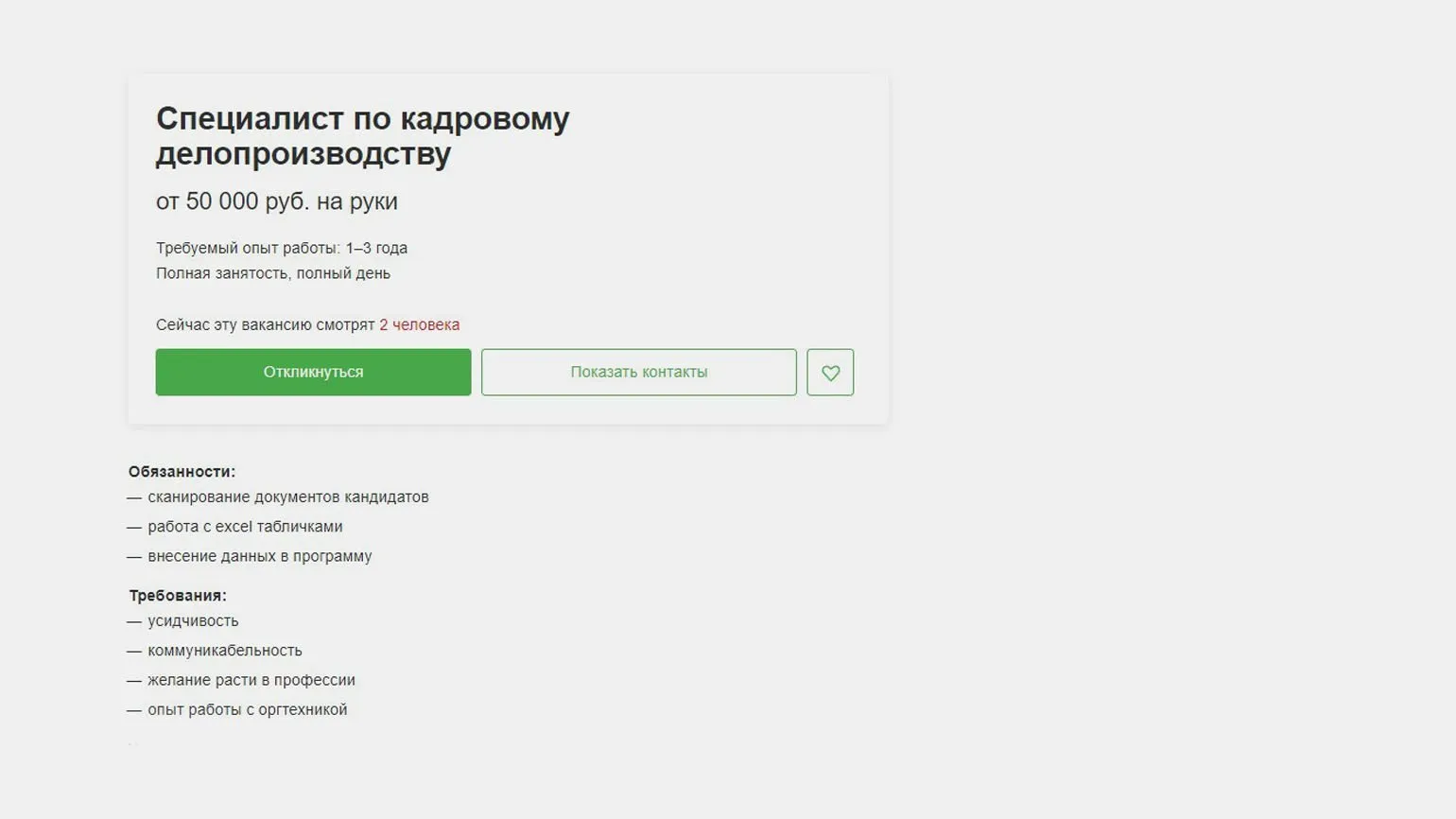
HR specialists with 3 to 5 years of experience can earn a salary of up to 80,000 rubles in the regions and up to 160,000 rubles in Moscow. Income depends directly on the scope of tasks and additional responsibilities the specialist performs. The experience and qualifications of an HR specialist play a key role in determining wages, as well as in career advancement opportunities in HR management.
Experienced HR specialists must have a thorough knowledge of the Labor Code of the Russian Federation. Another important aspect is the ability to work with specialized software, which allows for effective personnel records management. These skills are key to successfully performing tasks related to HR management and ensuring compliance with labor laws.
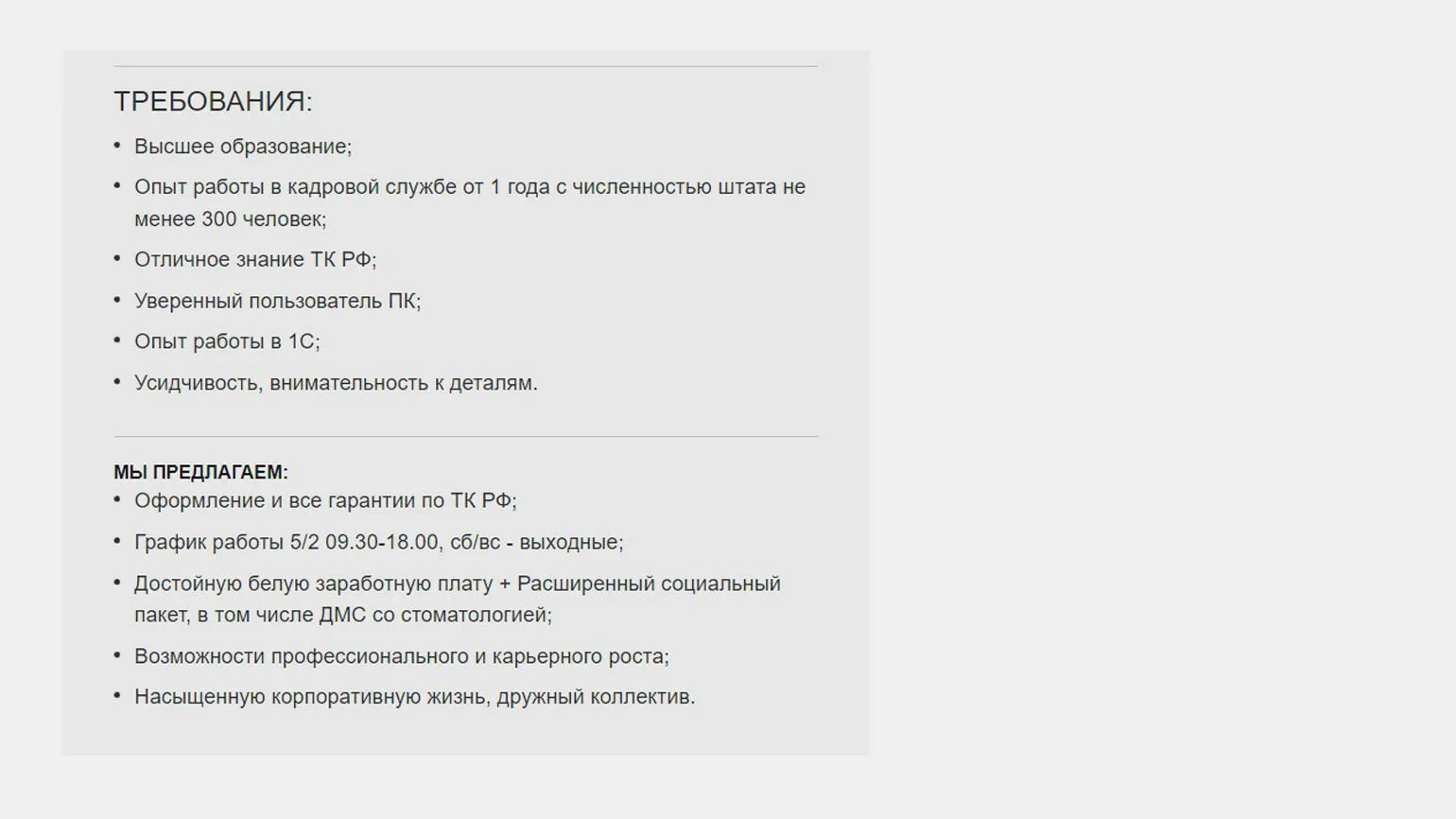
HR specialists with one to three years of experience have the opportunity to advance to department managers or leading HR specialists. In Moscow, starting salaries for these positions start at 150,000 rubles. When considering career prospects in HR, it's worth noting that companies value young professionals for their fresh perspective and willingness to implement new approaches.
HR specialists have the opportunity to develop in various areas of HR management. They can focus on aspects such as recruiting, onboarding, training, and employee development. There is also the opportunity to transfer to related departments, such as occupational safety or accounting. These areas allow specialists to expand their skills and improve their competitiveness in the labor market.
To achieve successful career growth, it is important for specialists to develop additional skills. Those aspiring to a management position should consider studying management. This can be accomplished by taking specialized courses or continuing education programs. Mastering such skills will not only improve your professional competencies but also increase your chances of securing senior positions within the company.
How to Become a Successful HR Specialist
Entering the HR profession is possible through various paths, including internships and specialized courses. Although specialized education is not mandatory, having one significantly improves career prospects in the field of human resources management. Professionals with a university degree in this field are more likely to have access to more senior positions and receive competitive salaries. Therefore, despite the lack of strict requirements, investing in education and professional development can be a key factor in a successful career in HR.
Many companies require a university degree for candidates for management positions. If you plan to develop a career in HR, obtaining a degree can be a key step along the way. Higher education not only opens doors to new opportunities but also allows you to develop the necessary skills and knowledge to effectively manage a team. Given the competitive labor market, having a diploma can be an advantage when looking for a job and advancing your career.
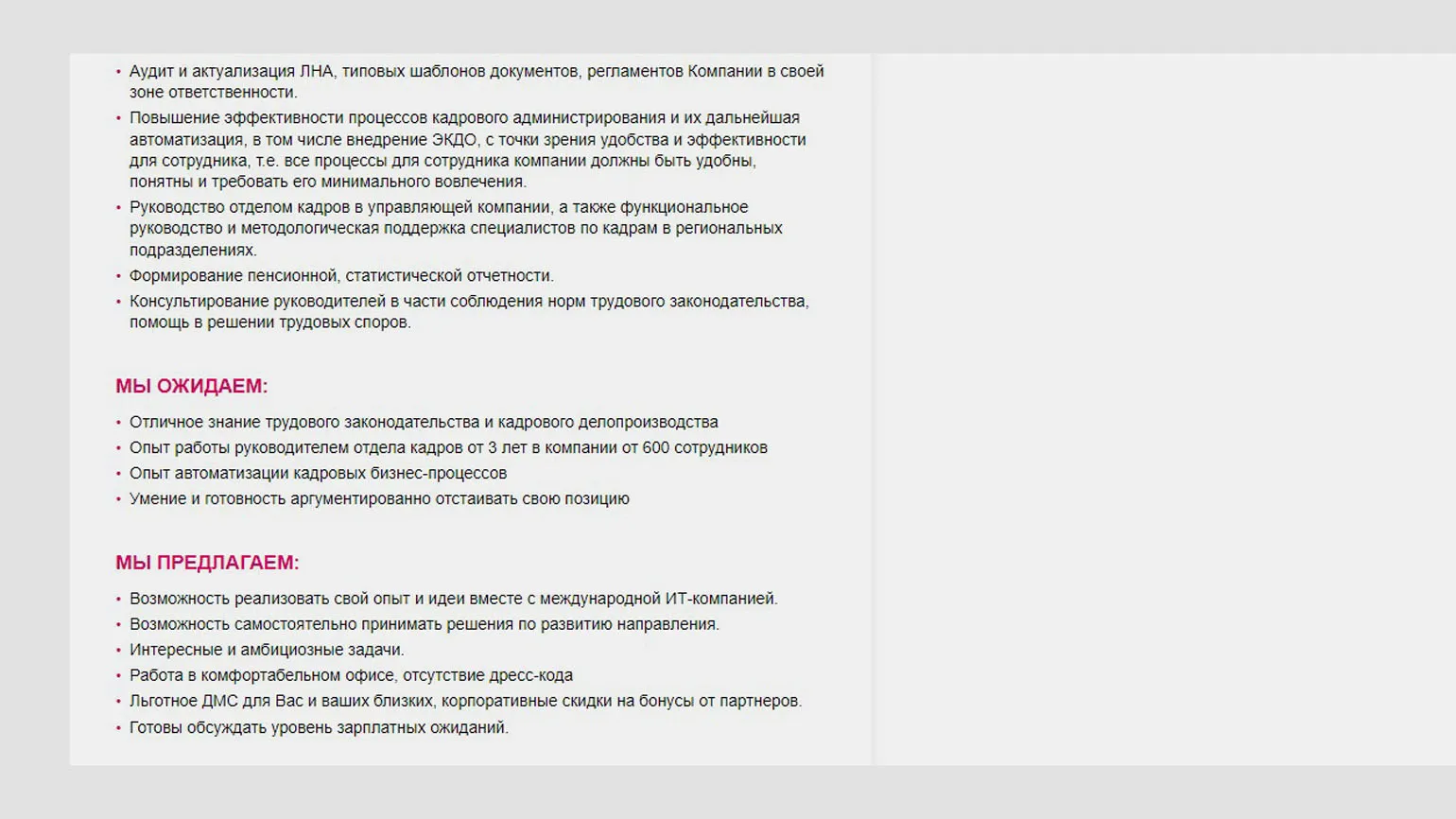
The specialty "Human Resources Management" occupies a key place in the field of HR and is in demand among HR professionals. This discipline is most often studied in the faculties of "Economics" or "Economics and Management." Also suitable are the fields of "Psychology," "Sociology," and "Jurisprudence." HR professionals play a key role in optimizing organizations' performance, ensuring effective interaction between employees and management. Studying this specialty allows you to develop the skills necessary to successfully solve problems related to recruitment, training, and development.
University training takes at least four years. Full-time courses focus on theoretical knowledge, while part-time courses allow students to combine their studies with practical work. This combination of theory and practice is an important aspect contributing to the successful career development of graduates.
You can begin a career in HR management in positions such as an intern, assistant, or junior specialist. Although the salary may be low at the initial stages, the experience and practical skills gained are important steps towards advancement to the HR specialist level. These entry-level positions allow you to gain a deeper understanding of HR processes, develop professional competencies, and build a network of contacts in the industry, which subsequently facilitates career advancement.
Numerous employers actively seek inexperienced employees who are willing to learn and develop. However, having experience in fields such as HR, accounting, or law can significantly increase your chances of successful employment and improved compensation. Experience in these fields is often highly valued, as it demonstrates your ability to quickly absorb information and apply it in practice.

HR management courses offer both theoretical knowledge and practical skills. When choosing a program, it's important to focus on courses that emphasize practical assignments and interaction with experienced HR professionals. This will not only help you master key HR management concepts but also gain real-world experience that will help you apply your knowledge in practice.
HR management courses take less time than traditional university education. After completing them, you have the opportunity to take a position as an HR specialist or HR manager, which often offers a higher salary than an intern. Intensive courses provide practical knowledge and skills in demand in the labor market, allowing you to quickly adapt to the professional environment and increase your competitiveness. These training programs help develop the necessary competencies for a successful career in HR management.
Skillbox offers the "HR Manager" program, which covers not only the basics of labor legislation and personnel records, but also key elements of HR. The training focuses on such important aspects as talent management, employee selection and adaptation, corporate culture development, and modern approaches to motivation and retention. The program will help develop the necessary skills for a successful career in HR management and provide knowledge that is in demand in the labor market.
- candidate selection and interviews;
- assistance in the adaptation of new employees;
- staff training and development;
- development of corporate culture and company values;
- use of HR analytics to optimize processes.
Theoretical knowledge acquired in the courses is consolidated through practical assignments. These assignments are reviewed by experienced HR consultants and managers, ensuring thorough learning and preparation for real-world work. This approach allows students to not only study theory but also apply it in practice, which contributes to a deeper understanding of the subject and increases competitiveness in the labor market.
Upon completion of the course, you will have the opportunity to apply for a position as an HR specialist or HR manager, which will open new career horizons in the field of HR. You will be able to develop your skills, improve your qualifications, and build a successful career in HR.
Key Aspects of the HR Specialist Profession
- An HR specialist, or HR manager, is a professional responsible for maintaining HR records and managing personnel. Key responsibilities include preparing employment contracts, the dismissal process, issuing certificates, and maintaining timesheets. HR specialists also prepare instructions and report to government agencies.
- Effective work in HR accounting requires a thorough knowledge of labor legislation, the ability to use document templates, and proficiency in specialized programs such as 1C: ZUP. Communication skills and knowledge of work discipline principles also play a key role in the success of an HR specialist.
- The salary of an entry-level HR specialist ranges from 30,000 rubles, but experienced professionals in this field can earn 160,000 rubles and above, especially with a successful career and additional qualifications.
- The path to this profession can begin as an intern or through specialized courses. Higher education is not required, but having a diploma can increase the chances of successful employment. This training course provides the necessary theoretical foundation and practical skills for working in this field.
How to Deepen Your Knowledge in HR Management and HR Accounting
Looking for ways to improve your HR skills? Skillbox Media provides a wide range of resources for in-depth study of HR management and HR accounting. We offer up-to-date courses and materials to help you master key HR concepts and tools. Develop your knowledge and skills to successfully meet modern challenges in human resources management.
- On the Skillbox Media website, you'll find a detailed guide to HR records management, which will help you understand how HR administration is organized in various companies, what documents need to be completed, and where to submit them.
- If you're interested in HR, we recommend reading our article on HR management, where we discuss in detail who is responsible for various HR functions and how HR performance is assessed.
- For those considering a career in HR, we've prepared an overview of the HR manager profession. In this article, you'll learn which companies need HR managers, whether it's possible to work freelance in this field, and what salaries specialists can expect.
- The Skillbox course "HR Simulator: Full Immersion in the Profession" is ideal for beginners looking to start a career in HR. The program covers all aspects of HR work—from personnel records to HR analytics—allowing you to apply for any position in the HR department upon completion.
- In addition, Skillbox offers an "HR Manager" course, suitable for those who want to master this profession from scratch. The course includes both theoretical lessons and practical assignments, including an internship. For 40 days, participants will interact with Skillbox's recruiting department, going through the recruiting process from application submission to offer preparation. For each filled vacancy, participants will receive a reward of 30,000 rubles, and at the end of the internship, they will be given recommendations for employers.
Additional HR resources from Skillbox Media
If you want to deepen your knowledge in the field of HR, we recommend checking out additional materials from Skillbox Media. This is a great way to improve your skills and expand your professional horizons.
- "We will recruit based on the ad!" — Learn how the recruitment process works and what skills recruiters need.
- A dress code isn't enough: learn what corporate culture is and why your company needs it.
- How to give constructive feedback — ready-made templates and recommendations for motivating and developing employees.
- What is employee turnover, when should you be wary, and what measures to take if employees frequently quit.
- The basics of employee motivation: how motivation systems function and why monetary incentives aren't always effective.
HR Manager: 5 Steps to Success in Working with Personnel
Want to become a successful HR manager? Learn 5 key skills for working with employees! Read the article.
Find out more