Contents:

Become a Songwriter: A Practical Course for Successful Creativity
Learn MoreWhat is an Ishikawa Diagram?
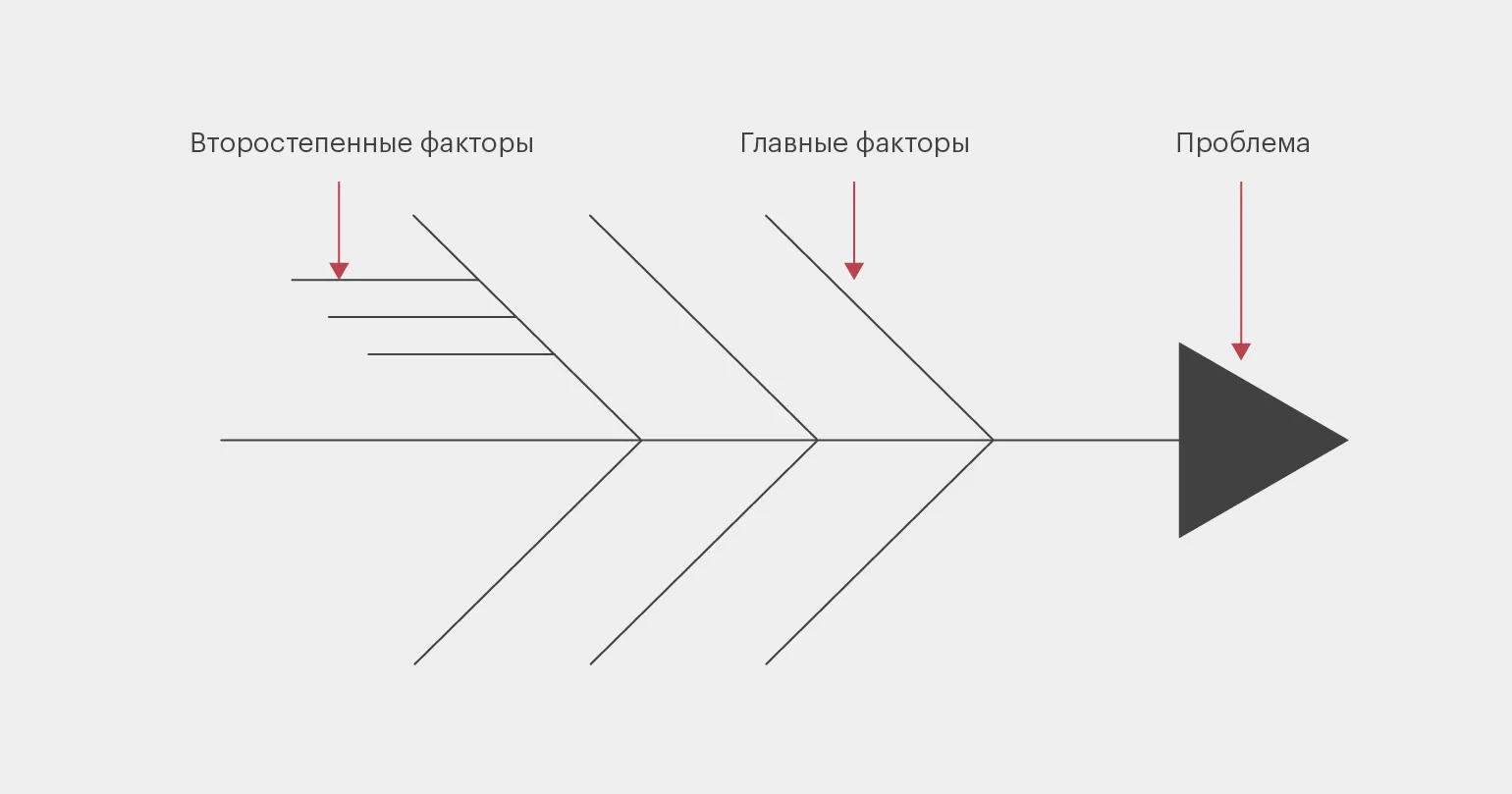
The Ishikawa diagram, often called a "fishbone", is a powerful tool for analyzing Cause-and-effect relationships that contribute to a specific problem. This method visualizes complex interactions as a diagram resembling the skeleton of a fish. The "head" of the diagram represents the main problem, while the "bones" indicate the factors that contribute to its occurrence. Using an Ishikawa diagram helps identify the root causes of problems and facilitates more effective problem solving. This tool is particularly useful in quality management and project management, as it helps teams focus on the important aspects that need to be addressed to achieve goals.
The diagram presents different levels of factors, with the main causes located on the major "bones" and secondary causes displayed on the smaller "bones." In some cases, additional levels can be added, which facilitates a more in-depth analysis of the situation and the identification of hidden causes. This approach allows us to comprehensively assess the problem and develop effective strategies for solving it.
A method developed by Japanese organizational theorist and University of Tokyo professor Kaoru Ishikawa formed the basis for the diagram known as the Ishikawa diagram. It was first used in 1952 at the Kawasaki Steel Works for product quality management. Since then, this tool has found wide application in various industries, including manufacturing, services, and healthcare. The Ishikawa diagram helps visualize and analyze the causes of problems, which contributes to process improvement and quality enhancement.
The tool not only identifies the root causes of problems but also finds effective solutions, which helps improve business processes and reduce risks in management decision-making. The Ishikawa diagram is an essential element in the development of quality management programs, making it an indispensable tool for managers and analysts. Using this diagram helps structure cause-and-effect analysis, leading to more informed and thoughtful decisions within the organization.
There are many tools for creating an Ishikawa diagram, ranging from simple hand-drawn sketches on a large sheet of paper or a whiteboard to online designers such as Canva and Miro. Microsoft Word and Excel, which offer convenient features for working with graphic elements and diagrams, can also be used to visualize the diagram. The choice of tool depends on your preferences and goals, allowing you to effectively create and analyze cause-and-effect relationships in various areas.
Effective Search for Root Causes of Problems: The "Why?" Methodology
The "Why?" method is an effective tool for identifying the root causes of business problems. It is often used in conjunction with an Ishikawa diagram, which clearly demonstrates the relationships between various factors. Involving specialists with knowledge of the company's processes, such as engineers, workers, and managers, significantly improves the results of the brainstorming session. This approach facilitates deeper analysis and helps find sustainable solutions for optimizing business processes, thereby improving the overall performance of the company.
The brainstorming process is organized as follows: the group defines a specific problem and begins asking the question "Why did this happen?" All proposed answers become key factors, which can be classified as first-level causes. This method allows for a deeper understanding of the roots of the problem and identifies the root causes, which facilitates a more effective search for solutions. Brainstorming is an important tool for teamwork and creative thinking, allowing participants to freely share ideas and build on the proposed concepts.
Each of the key factors requires an answer to the question "why?" These answers become second-level causes. An example of such an analysis could be presented as follows:
- Why are our sales declining?
- Because managers lack incentive to increase sales.
- Why are they not motivated?
- Because of the established "ceiling": when a certain sales volume is exceeded, the percentage of compensation decreases.
It is important to continue asking "why?" questions for each of the detailing factors in order to identify even the most minor causes. A cause-and-effect diagram can expand to the fourth or fifth level, but most often it is limited to two levels: main factors and detailing factors. This approach allows for a deeper understanding of the problem and identification of its root causes, which contributes to more effective problem solving and process improvement.
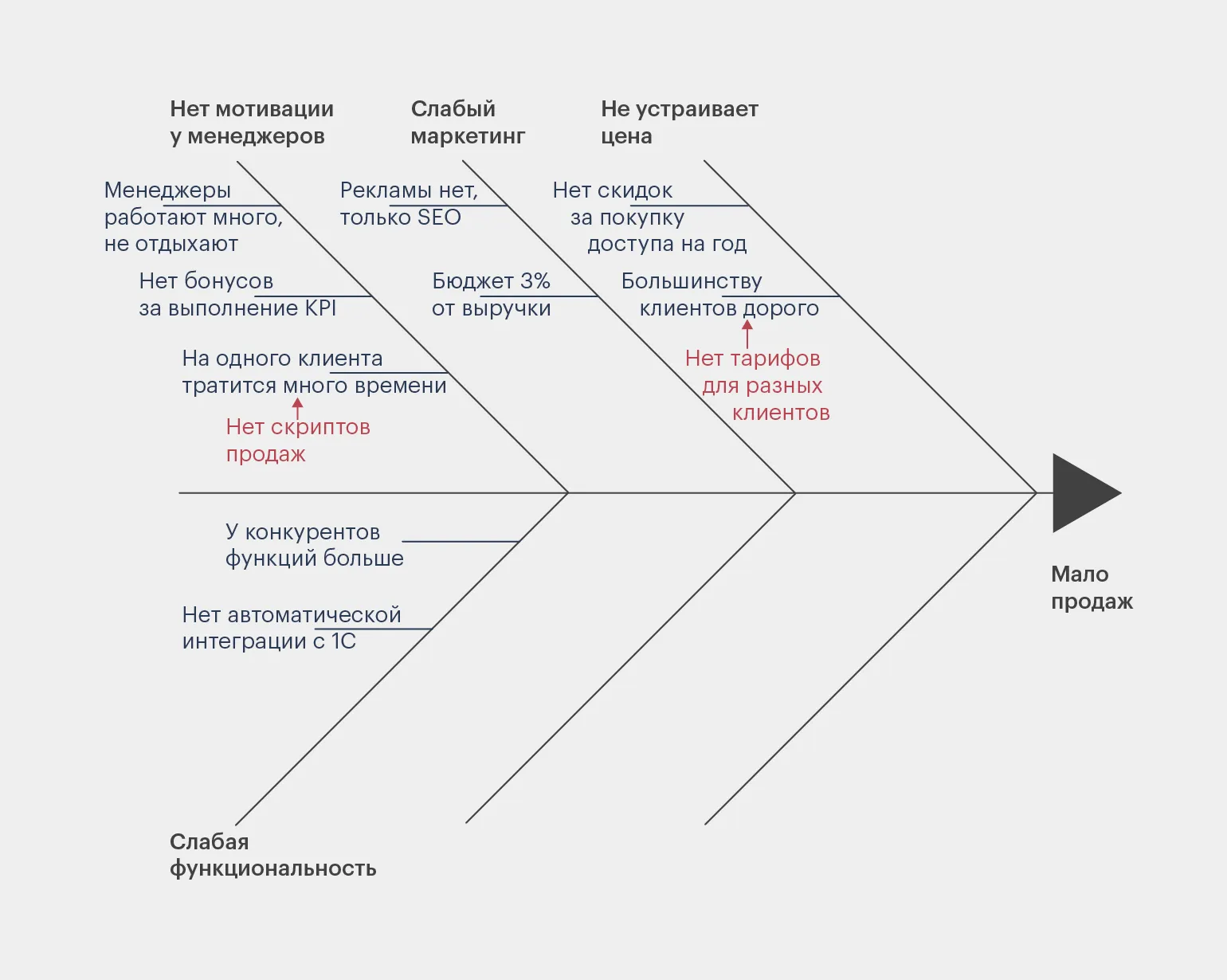
The Ishikawa diagram, presented for the fictitious company "Successful Store", demonstrates a visual representation of the relationships between various factors. This tool helps identify the causes of problems and improve processes, which is especially important for business development. Using the Ishikawa diagram allows teams to analyze and solve problems more effectively, increasing overall productivity and competitiveness. Applying this technique at Successful Store can significantly improve customer service and optimize internal processes.
If you have difficulty identifying key factors, it is useful to study the experience of competitors. Common problems that they describe in their diagrams include:
- Methods - technologies and approaches to management;
- Equipment and software - tools used to achieve results;
- Personnel - qualifications, motivation, and competencies of employees;
- Materials - raw materials and components involved in the production process;
- Control systems - mechanisms for checking the quality and efficiency of processes;
- External environment - conditions affecting the company's operations, such as legislation and consumer demands.
This list serves as the basis for creating a unique diagram appropriate to each specific situation. For example, if a problem with poor learning performance arises, the key factors may include teaching methods, the quality of educational materials, and student motivation. In the case of product quality issues, factors influencing the situation may include production technologies and working conditions. This approach allows for a more accurate identification of key problems and the development of effective solutions.
The number of key causes should not be excessive, and experts recommend limiting it to four to six key factors. It should be noted that truly significant causes are usually few. This approach is supported by the Pareto principle, which is also used in the Ishikawa method. Isolating a limited number of factors allows for focusing on the most critical aspects, which facilitates a more in-depth analysis and effective problem solving.
Ishikawa argues that in any activity, there are many factors influencing the outcome. However, controlling all of these factors is virtually impossible, and such work often becomes economically unprofitable. Therefore, it is important to focus on the key aspects that truly affect the effectiveness of the process. By prioritizing and focusing on the most significant causes, you can optimize results and reduce costs.
The ideas presented in Kaoru Ishikawa's book, "Japanese Quality Management Methods," are based on his extensive experience and unique approaches to quality improvement. The author shares practical methods and strategies that help improve processes and increase the effectiveness of quality management. These methods can be applied in various fields of activity to achieve sustainable results and increase the competitiveness of organizations.
Effective Problem Solving: How to Prevent Them from Recurring
To effectively solve a problem, it is important to identify its roots. Quality management expert Kaoru Ishikawa notes that it is necessary to focus on the root causes that play a key role in the emergence of difficulties. By analyzing even the most minor aspects, you can significantly reduce the risk of repeating mistakes in the future. Paying attention to detail allows you to better understand problems and develop sustainable solutions, which is necessary to improve the quality and efficiency of processes.
Troubleshooting becomes challenging when trying to address multiple causes simultaneously. The optimal approach is to implement changes sequentially. Start by identifying the factors your company can influence. Then, prioritize them, identifying the causes that will have the greatest impact. This approach will allow you to manage the process more effectively and achieve the desired results.
One of the main problems is the lack of a bonus system for managers, which leads to a decrease in their motivation and productivity. Without additional incentives, managers see no opportunity for income growth, which negatively impacts their work. At the same time, the lack of variety in customer pricing also creates difficulties. Customers tend to choose competitors who offer more attractive and favorable terms. It is important to focus on creating an effective bonus system for managers and developing competitive pricing plans to increase employee motivation and attract more customers.
Each identified problem requires the development of a clear action plan. It is important to create a pay scale and implement a bonus system that will reward managers for meeting and exceeding sales plans. This not only motivates employees but also contributes to overall business performance.
The Ishikawa diagram, also known as the "fishbone," is an effective tool for analyzing complex problems in organizations. It helps identify the root causes of problems and develop a change strategy that can be implemented over several years. Using this diagram allows for a systematic approach to problem solving and improve processes within the company.
Studying materials from Skillbox Media is an excellent way to deepen your knowledge of business strategy. The platform offers a variety of resources to help you master the key aspects of effective management and strategy development for successful business. Check out the available courses and articles to help you stay up to date with current business trends and methods.
- An article on business models: how to use them to manage a startup or save a company from collapse
- A detailed guide to the Scrum methodology - agile product development
- Analysis: what are the differences between management standards and methodologies
- Material on the Agile methodology - flexible project management in any field
- Learning the Kanban methodology: how visualization helps effectively manage teams and projects
5 key soft skills for successful work in a crisis
Do you want to become a confident leader? Learn 5 soft skills for productive work in difficult times!
Learn more