
Contents:
- What is an MBA degree?
- Training at Skillbox for executives
- What does MBA programs include?
- How does an MBA degree affect career growth?
- Signs you need an MBA: When is it time to act?
- Variety of MBA programs: key differences
- Teaching methods for Masters of Business Administration: modern approaches
- What is important to know about the MBA program
- Resources for career development in Management
- Additional materials for managers and entrepreneurs

28 free career courses: start earning already Today!
Learn MoreWhat is an MBA?
A Master of Business Administration (MBA) is one of the most sought-after qualifications in business management. Students earn it through specialized programs offered by accredited business schools around the world. An MBA opens new career opportunities and helps develop management skills and strategic thinking, making it attractive to professionals in a variety of industries. Earning an MBA can significantly increase competitiveness in the job market and lead to higher earnings.
An MBA program lasts one to two years and is designed for professionals, including executives and entrepreneurs, who want to improve their skills and advance their careers. The MBA program provides participants with unique opportunities to develop leadership, strategic thinking, and management skills, enabling them to successfully navigate the challenges of modern business.
The MBA program offers students a deep understanding of core management disciplines. It includes strategic management, financial analysis, marketing, human resources, and operations management. Students acquire the skills necessary for effective business decision-making, while also developing leadership qualities and critical thinking abilities. The MBA program also provides opportunities to network with industry professionals, which can significantly expand graduates' career prospects.
- Students study key aspects of management, including marketing, operations management, and human resources.
- MBA graduates gain a holistic understanding of business processes and the interrelations between various company functions.
- The program helps systematize students' practical experience and management skills.
- The MBA facilitates the transition from tactical to strategic management.
The MBA is especially relevant for professionals who have reached a certain level in their careers, especially in marketing. When a professional becomes a marketing director or deputy general manager, new challenges open up for them. They need an in-depth understanding of corporate finance and organizational structure, which allows them to effectively make strategic decisions and manage a team. The MBA program provides the necessary knowledge and skills to develop leadership skills and improve management abilities, which are critical for a successful career in senior positions. An MBA program won't make a marketer a financier, but it will provide important knowledge that will help them effectively interact with financial professionals and business owners. This education develops the skills necessary to understand financial processes and make informed marketing decisions. Unlike a traditional university, an MBA program emphasizes the practical application of skills and knowledge, which is especially important for working managers seeking career advancement. This education is designed for those who want to develop their management abilities and gain relevant tools for solving real-world business problems. The MBA program helps develop strategic thinking and leadership skills, which are key to a successful career in the modern world. MBA programs are often taught by faculty with extensive practical experience, giving students the opportunity to immediately implement the tools and strategies they learn in their companies. This practical application of knowledge promotes a deeper understanding of the subject and increases the effectiveness of the learning process. Students can adapt the acquired skills to real business situations, which makes the training as relevant and useful as possible.

Training in Skillbox for Executives
- "Financial Director" — mastering business financial management to achieve the position of CFO.
- "Head of Sales" — increasing income and career growth.
- "Operations Manager" — improving business process management skills for career growth.
- "Team Management" — developing relationships with a team and effectively managing employees.
What does MBA programs include?
In Russia, MBA programs are considered additional professional education, but their content is not strictly regulated by law. At the same time, there are recommendations from the National Association of Specialists in Business Education (NASDOBR) and international organizations, such as the Association of MBAs (AMBA). These recommendations help shape core curricula and standards, ensuring high-quality training for business specialists. MBA programs in Russia are aimed at developing management skills and strategic thinking, which makes them in demand among professionals seeking career growth and increased competitiveness in the labor market.
- financial management
- financial reporting
- marketing
- economics
- leadership
- operations management
- strategic planning
- HR management
- organizational behavior
Business schools can expand standard training modules, taking into account the specifics of their program. This allows them to adapt courses to current business trends and market requirements. This approach helps prepare specialists who meet modern challenges and business needs. Adapting the educational process to real conditions helps increase the competitiveness of graduates in the labor market.
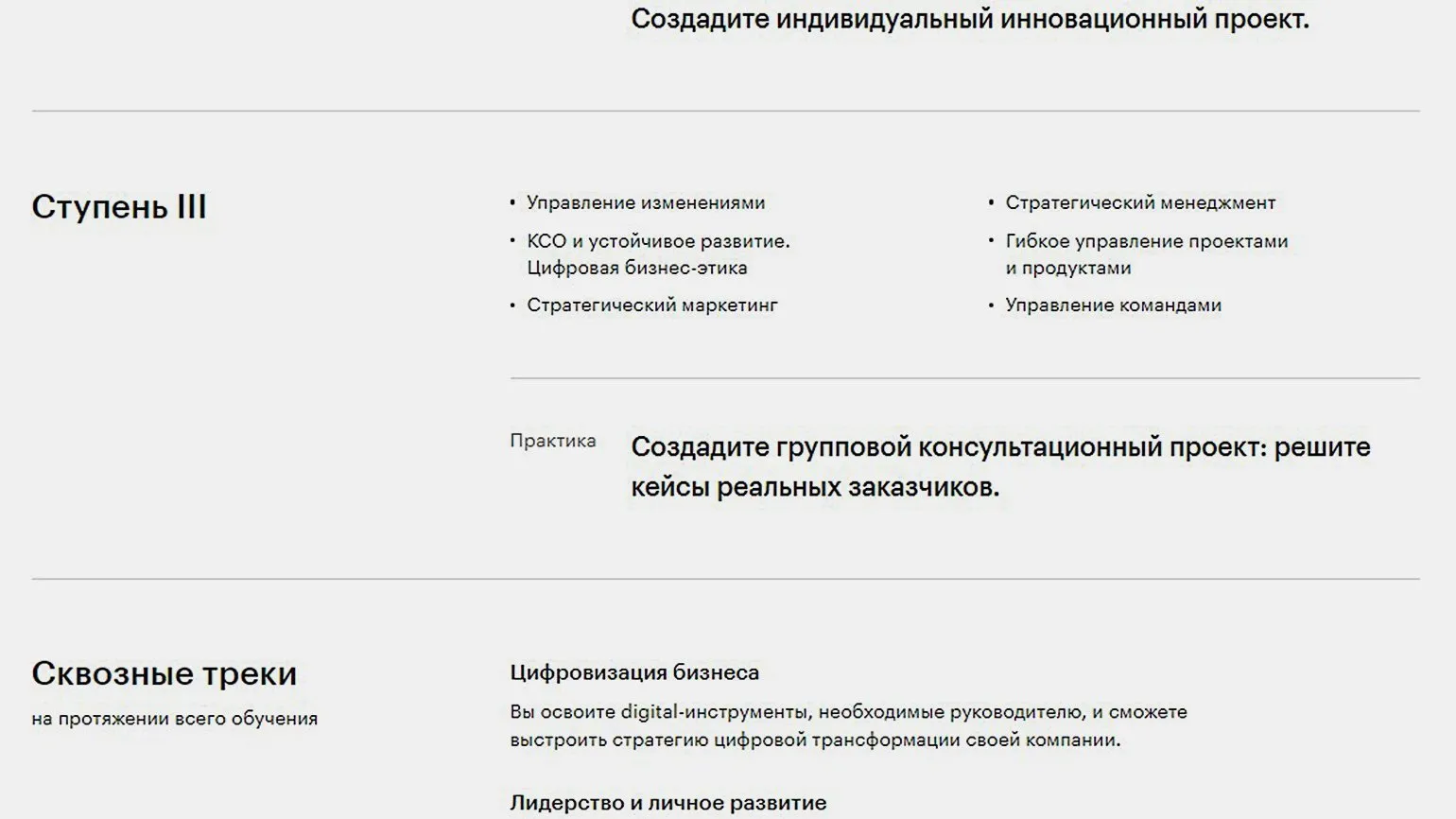
The Change Leaders MBA program provides in-depth study of key disciplines such as Enterprise Architecture, Product Management, Innovation Management, Corporate Social Responsibility and Sustainability, and Business Modeling. In addition to the core courses, three specialized tracks are offered: Business Digitalization, Leadership and Personal Development, and Business Thinking. This variety of learning formats facilitates deeper understanding of the material and an emphasis on practical skills, making the program particularly attractive to professionals seeking career advancement and the implementation of innovative solutions within their organizations.
One of the key advantages of the MBA programs is the opportunity to expand professional networking. Participants have a unique opportunity to interact with colleagues from various fields, share experiences, and establish useful business contacts. After completing their studies, graduates become part of professional communities, which opens new opportunities for career growth and joint projects. Participating in such programs not only fosters personal connections but also creates a platform for exchanging ideas and resources, which is essential for a successful career in today's business.
How does an MBA degree impact career advancement?
In today's business, an MBA degree plays a key role in selecting candidates for leadership positions. Research shows that employers tend to offer higher salaries to managers with this qualification. On average, the income of such professionals can increase by 50% or more in the first few years after receiving their degree. Obtaining an MBA degree opens new career opportunities and increases competitiveness in the labor market, making it a valuable asset for professional growth.
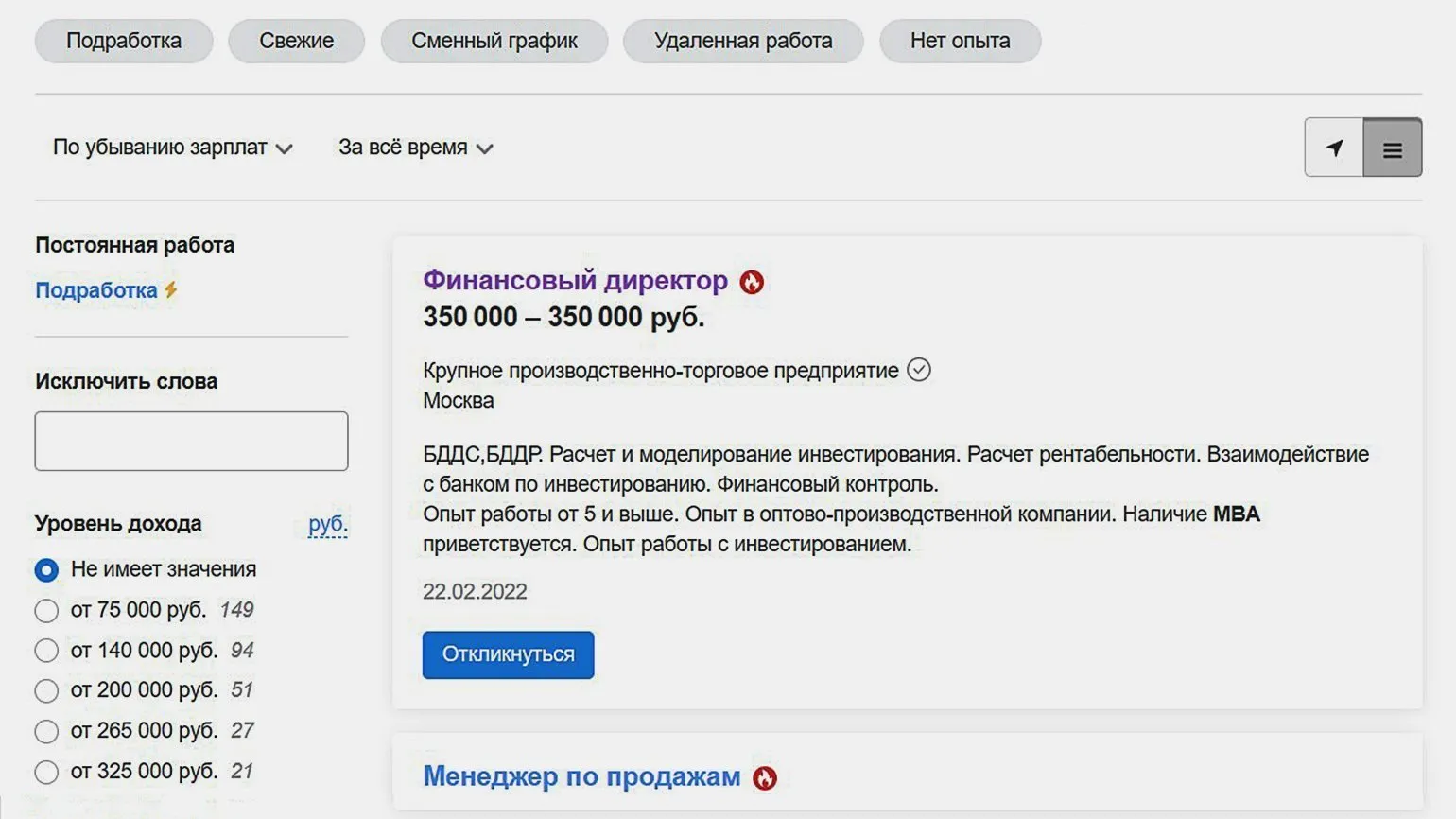
According to a study conducted by the MBA.su portal, MBA graduates can expect a significant increase in income in the range of 90-128% within 2-4 years after completion. Earnings directly depend on the reputation of the business school and the specifics of the chosen educational program. Investing in an MBA can significantly improve the career prospects and financial well-being of professionals.
Increased income is often associated with a promotion, a change of employer, or starting their own business. However, even managers working in the same positions can expect a salary increase. This is confirmed by the results of various studies showing that professional growth and skill development can contribute to increased income, even without changing jobs. It is important to actively develop your competencies and seek out opportunities to increase your value in the labor market.
Employers highly value MBA degrees for several reasons. Professionals with this qualification demonstrate the ability to effectively manage business processes and make informed decisions. An MBA diploma is evidence of a highly qualified manager who possesses strategic thinking, entrepreneurial skills, and leadership qualities. An MBA program provides in-depth knowledge in management, finance, marketing, and operations management, which allows graduates to successfully cope with the challenges of modern business. Companies seek to hire such specialists, as they can lead to increased efficiency and improved financial results.
Signs You Need an MBA: When is the Time to Act?
If you've reached significant heights in your career and are looking for further development, an MBA may be your next step. There are many reasons why professionals choose the Change Leaders MBA program. This program will help you develop management skills, deepen your business knowledge, and learn how to make informed decisions in complex situations. The Change Leaders MBA also provides unique opportunities to network and share experiences with like-minded individuals, which promotes personal and professional growth. Participation in this program can significantly improve your competitiveness in the labor market and open new horizons for career advancement.
- Strive for career advancement but face a glass ceiling;
- Lack a clear plan for business development in an uncertain environment;
- Eager to master key management skills to create a new business;
- Want to confidently navigate the digital space;
- Want to free up time, as routine tasks absorb too many resources and do not allow them to focus on strategic development.
MBA programs provide important cross-disciplinary knowledge and practical tools that help fill existing gaps in education and skills. MBA graduates demonstrate greater management competencies, make informed strategic decisions, and achieve career advancement faster. An MBA program develops leadership skills and critical thinking, making them more competitive in the job market.
If you've achieved significant success in your career and are seeking the next level of management, this may be an excellent opportunity to consider an MBA program. An MBA program will help you develop management skills, broaden your professional horizons, and strengthen your leadership skills. An MBA program provides a unique opportunity to immerse yourself in relevant business strategies and practical knowledge that will help you effectively address the challenges of modern business. Admission to an MBA can be a key step in your career and open new prospects for professional growth.
Not all candidates can successfully enroll in an MBA program. Most business schools require at least one year of management experience. In some cases, these requirements may be more stringent, including a mandatory university degree and at least three years of experience in a managerial position. This ensures a high level of student preparation and creates a more productive learning environment.
When reviewing applications, business schools pay special attention to whether candidates match the program's target profile. This approach helps attract motivated students who can enrich the educational process and create an active atmosphere for all group members. Thus, a thorough evaluation of applications contributes to the formation of a high-quality educational environment, where each student can contribute to the overall learning dynamics.
Variety of MBA Programs: Key Differences
MBA programs have a variety of formats and areas, which allows each student to choose the best option in accordance with their career goals. Training is available both in Russia and abroad, which significantly expands the prospects for professional growth and development. Choosing an MBA program allows you not only to deepen your knowledge in the field of business but also to create useful contacts in the international environment, which is an important aspect in the modern world.
The main difference between MBA programs lies in their industry specificity and delivery format. There are two main types: the General MBA and specialized industry programs. The General MBA offers a broad range of knowledge and skills suitable for various business areas, allowing graduates to work in a wide variety of industries. In contrast, specialized MBA programs focus on specific areas, such as finance, marketing, or project management, providing in-depth knowledge and unique skills in demand in certain sectors. The choice between these program types depends on students' career goals and preferences, as well as labor market demands.
- The General MBA provides universal knowledge that is relevant to managers regardless of their chosen field. Graduates of such programs are free to change fields of work, making them in demand in the labor market.
- Specialized programs focus on management in a specific industry, for example, pharmaceuticals, logistics, or IT. They are ideal for those planning to pursue a career in a narrow field.

The format of the training is key when choosing an MBA program. There are three main types: full-time, part-time, and blended. Each offers unique benefits and is suitable for different types of students, depending on their professional and personal circumstances. Full-time allows for a focused, immersive learning experience, part-time offers flexibility for working professionals, and blended programs combine elements of both approaches, making them ideal for students who want to combine work and study. Choosing the right study format will help you maximize your time and resources and achieve your career goals.
- Full-time programs have a busy schedule, requiring full dedication to your studies. While such formats are rarely found in Russia, they are still popular abroad.
- Part-time, or modular, programs allow students to study part-time, coming to the business school for just a few days a month. This is a convenient solution for working professionals.
- The Blended MBA combines online learning and in-person classes, making it especially popular among students seeking to combine study with work.
The differences between Russian and international MBA programs lie in the specifics of the knowledge provided and the networking opportunities available. Programs in Russia are focused on the local market and mentality, which is an important aspect for those planning a career in the country. Studying at a foreign business school, in turn, provides access to international management standards and current trends, which can significantly expand career horizons. The choice between these programs depends on the student's goals and ambitions, as well as their desire to integrate into the global business environment.
Customized MBA programs, designed specifically for corporate clients, are tailored to the unique needs of companies. These specialized courses are intended exclusively for employees of the organizations that initiate the training. This approach allows organizations to effectively develop the skills and competencies of their employees, which in turn contributes to increased productivity and competitiveness in the marketplace.
Choosing the right MBA program plays a key role in achieving a student's career goals. For professionals seeking to expand their knowledge and skills, the General MBA is an ideal option. At the same time, for those who have already decided on a professional path, it is advisable to consider specialized courses that allow you to delve deeper into a specific area. If your career is connected with working in Russia, local programs can offer the most relevant knowledge and connections. For those intending to develop abroad, international MBA programs provide unique opportunities and international experience, which can significantly increase competitiveness in the global labor market.
MBA Teaching Methods: Modern Approaches
MBA training varies depending on the program and business school. Primary learning formats include traditional lectures, on-site events, and online classes, ensuring flexibility and accessibility. These approaches allow students to choose the format that best suits their needs, promoting more effective knowledge acquisition. Importantly, high-quality business administration education develops the necessary skills for a successful career in business, including project management, strategic planning, and leadership.
Modern business schools actively employ innovative learning formats aimed at developing students' practical skills. One such popular method is case analysis, which has become a standard feature of the curriculum. Through this method, students study real-world business situations, collaboratively develop solutions, and apply theoretical knowledge in practice. This approach not only deepens understanding of the subject but also develops critical thinking and teamwork skills, which are important for a successful career in business.
There are a number of popular learning formats, including online courses, webinars, seminars, master classes, individual lessons, and group training. Each of these formats has its own characteristics and advantages, allowing students to choose the most appropriate method for learning. Online courses provide flexibility and accessibility, webinars allow for real-time interaction with experts, and master classes offer practical application of theory. The choice of training format depends on the individual preferences, goals, and learning style of each person.
- Flipped classroom method: students study theory independently and consolidate their knowledge through practical assignments in class.
- Entrepreneurial and consulting projects: under the guidance of mentors, students create real projects for companies.
- Presentation by professionals: business practitioners share their experiences, answer questions, and give advice.
Off-site events include internships and study trips to companies, where students have the opportunity to observe real business processes and apply their theoretical knowledge in practice. These formats help deepen their understanding of the profession and develop the skills necessary for a successful career. Participation in such events contributes not only to learning but also to establishing contacts with potential employers, which is an important aspect of professional growth.
International academic mobility programs are considered off-site. Students have the opportunity to attend various business schools and study specific courses or modules. This promotes the exchange of experiences, broadening horizons, and deepening business knowledge. Participation in such programs allows students not only to gain new experience but also to establish international connections, an important aspect in today's business environment.
Some educational programs offer unique tools for in-depth learning. For example, the MBA program "Leading Change" has implemented a reflective journal and a diagnostic project. These elements help students effectively connect theoretical knowledge with real-world practice, significantly improving the quality of learning and promoting professional development. This approach allows students not only to analyze their actions but also to apply their acquired knowledge in real-world situations, making learning more practically oriented.
The reflective journal, used during the learning process, is a tool with guiding questions that help students record their emotions and track their progress. It promotes a more conscious setting and achievement of learning goals, which in turn improves the quality of the educational process. Regularly completing such a journal allows students to more deeply understand their strengths and weaknesses and identify areas for further development.
The diagnostic project is completed upon completion of the core courses. During this project, students systematize key theories and tools, applying them to their company. This approach allows for the development of individualized recommendations and an expert perspective on the current situation. This is an important stage in their education, helping students deepen their knowledge and prepare for real-world business challenges.
What is important to know about the MBA program
The MBA (Master of Business Administration) is not only an additional education but also a comprehensive program designed to prepare highly qualified managers. MBA graduates gain in-depth knowledge in key management disciplines and develop the ability to identify the interrelations between various aspects of business. This program covers such important topics as strategic planning, financial analysis, marketing, and human resource management. The MBA promotes the development of decision-making and leadership skills, making graduates in demand in the labor market and prepared for the challenges of modern business. Earning an MBA degree opens new horizons for career advancement and professional development, making it a valuable investment for the future.
MBA programs offer a variety of disciplines that align with the recommendations of international organizations. Core courses include financial management, financial reporting, marketing, economics, leadership, operations management, strategy, as well as HR management and organizational behavior. Depending on the specific program, additional courses may be offered, allowing students to tailor their studies to their individual career goals and market needs. An MBA program promotes the development of critical thinking and decision-making skills, which are essential for a successful career in business.
Managers choose an MBA for a variety of reasons, including the opportunity to expand professional networks and a significant increase in income. Research shows that some business school graduates achieve income growth of 100% or more within a few years of completing the program. This makes the MBA an attractive choice for those seeking career advancement and financial improvement. A successful career after an MBA often includes not only financial benefits but also access to new opportunities and networks that can significantly impact your future professional development. An MBA is typically chosen by people seeking career advancement and reaching new levels of professionalism. However, not everyone can become an MBA student, as business schools conduct rigorous candidate selection processes. At least one year of management experience is often required, highlighting the importance of practical business experience for admission to an MBA program.

There are many MBA programs that can be classified into several categories: general and specialized, as well as Full-time, part-time, and blended MBA programs, both domestic and international, are available. Choosing the right program depends on your career goals. If you don't plan to change fields, consider specialized programs. If you want to gain cross-disciplinary knowledge, consider general MBA programs. For a successful career abroad, it's recommended to obtain an MBA in the country where you plan to work. This will help you better understand local business practices and labor market requirements. MBA programs offer a wide range of opportunities, including case studies, lectures by practitioners, internships, and company visits. Group work and networking are important aspects of the educational process. These elements contribute not only to deepening knowledge but also to developing the skills necessary for a successful career in business. Practical application of theoretical knowledge in real-world situations allows students to better prepare for the challenges of today's marketplace.
Resources for Career Development in Management
- If you're just starting out in management, check out the material on C-level positions, which describes the roles of CFO, CEO, COO, and other managers.
- Skillbox Media offers an article on the necessary qualities for a successful manager. Find out what skills will help you in your career and how to develop them.
- Missing skills can be acquired through Skillbox courses. The Operations Manager Profession program will allow you to improve your business process management, and the Team Management course will help you learn how to set goals and motivate employees.
- Skillbox also offers programs for managers in various fields: Financial Director, Head of Sales, and HR Business Partner Profession.
Additional materials for managers and entrepreneurs
- An article about Boolean search and X-Ray for searching for candidates using operators.
- Material about why some corporations continue to follow outdated ideas about a person.
- An article about turquoise companies and their adaptation in Russia.
- A guide on how managers can cope with the psychological problems of their employees.
- An article on the correct delegation of tasks from Daan, a coach and serial entrepreneur.
Weight loss in a month: 5 proven tips
Want to lose weight without stress? Find out 5 proven methods in the article!
Find out more