
Contents:

Project Management: A Free Course for Beginners
Learn MoreWhat is a WBS and How Does it Help in Project Management?
A WBS, or work breakdown structure, is a hierarchical organization of tasks that allows you to break down large projects into smaller, more manageable elements. This effective planning tool is based on the principle that complex tasks are easier to solve if they are divided into components. The use of a WBS is widespread not only in project management, but also in such areas as software development, construction, and personal time management. Proper use of a WBS helps to increase process transparency, improve team communication, and more precisely control over task execution.
A WBS (Work Breakdown Structure) is a powerful tool for effectively dividing complex projects into simpler, more manageable components. Using a WBS, a project can be broken down into key blocks, which are then further detailed down to the level of specific tasks and subtasks. This creates a hierarchical structure that allows for a clear overview of all project stages. Using a WBS not only helps with planning and organizing tasks, but also with more accurate resource allocation and timeline management. Thus, the WBS significantly increases the chances of successfully completing the project on time and within budget.
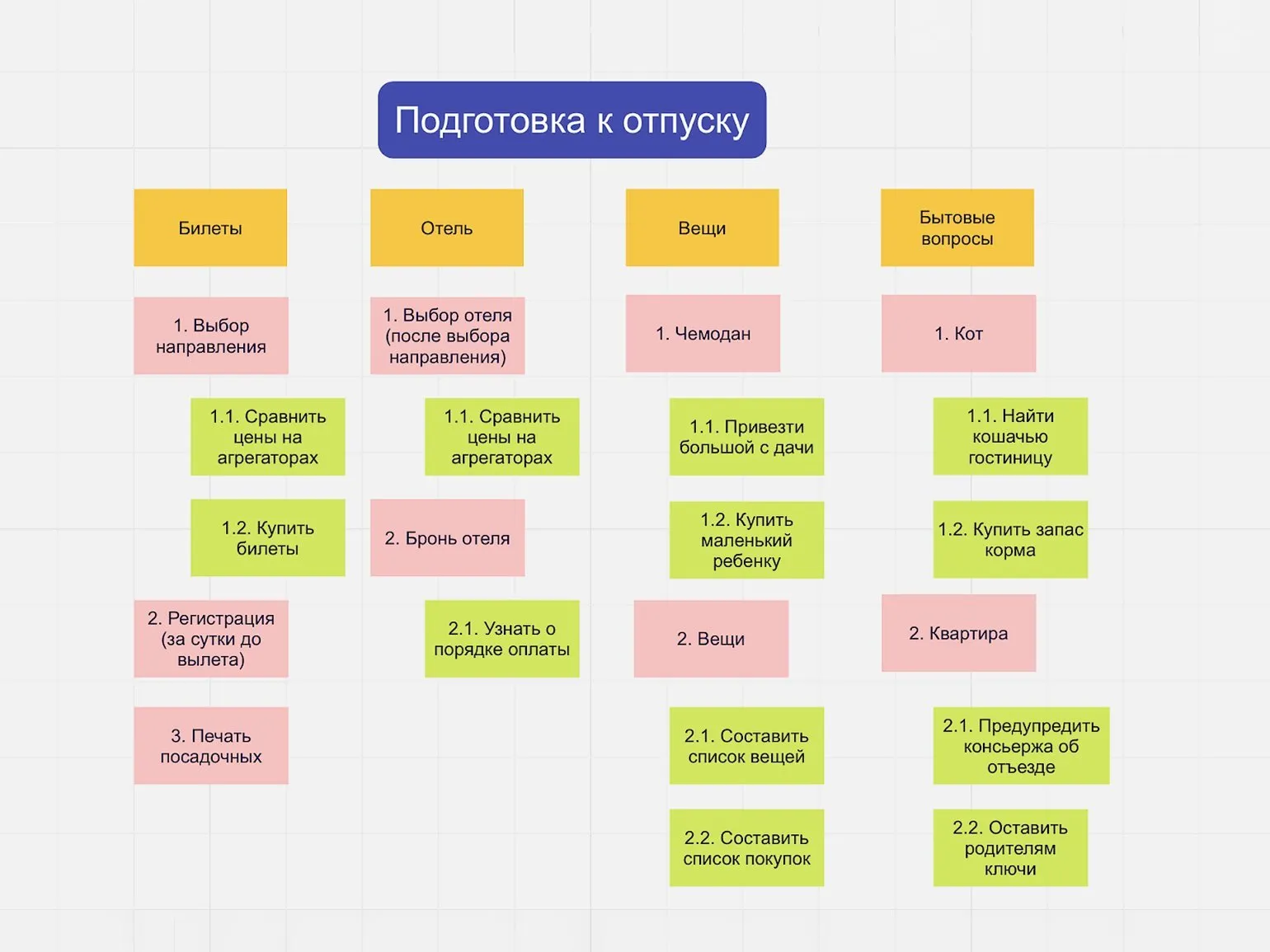
The Work Breakdown Structure is an effective tool for quickly estimating the scope of work, which is essential for accurately assessing the timing, effort, and cost of a project. The data obtained plays a key role in preparing presentations for clients and management, allowing you to substantiate the choice of approaches and methods for project implementation. Correct application of the Work Breakdown Structure contributes to a deeper understanding of the tasks, facilitating the process of project planning and management.
The WBS offers a number of significant benefits, such as:
— Improved project planning due to a clear structure of tasks and subtasks.
— Increased process transparency, which allows project participants to better understand their roles and responsibilities.
— Simplification of resource management, allowing you to more effectively distribute the team's time and effort.
— English: Reducing risks through early identification of problems and potential bottlenecks in the project.
— Increasing the chances of successful completion of the project on time and within budget due to detailed control of task execution.
Using WBS helps to create a more organized and efficient workflow, which ultimately leads to higher quality of the final product.
- Determining project milestones and expected deliverables;
- Forecasting additional costs, such as service subscriptions or purchasing software;
- Analyzing the interrelationships between tasks and correctly distributing priorities;
- Determining the required number of employees or contractors and distributing tasks between them;
- Assigning persons responsible for each stage and improving team communication;
- Advancing the identification of potential difficulties and minimizing risks, such as the need for additional resources.
The hierarchical structure plays a key role in developing a project strategy. It allows you to clearly define the sequence of work, set deadlines for task completion, and assign responsibility. This approach not only simplifies project management but also facilitates the effective allocation of resources and improves communication between team members. A proper hierarchy ensures clarity of project objectives and helps avoid potential errors at all stages of implementation.
To improve your project management skills, we recommend taking Skillbox courses. These courses will help you master modern methodologies and approaches in the field of project management, which will enable you to effectively organize and control projects, increasing their success.
- The course "Profession Project Manager" - study of agile methodologies and management of deadlines and budgets;
- The course "Project Management" - launching projects in various niches, from IT to retail;
- The course "Profession Product Manager" - study of product management, from mobile applications to cars.
Basic principles of the WBS breakdown structure
The structured breakdown, or WBS (Work Breakdown Structure), is an important tool in project management. There are many methods for creating a WBS, but we will highlight five basic principles that will help you effectively organize your project. A proper work breakdown structure breaks a project down into manageable chunks, facilitating planning, monitoring, and progress evaluation. Using a WBS facilitates more accurate resource and timeline allocation and helps identify potential risks early in the project's implementation. Implementing these principles into your project management practices will significantly increase your chances of successful completion.
The main principle of successful project management is complete coverage of all its stages. Even the most minor details can significantly impact the final result. Ignoring or skipping any stage can cause unexpected complications, which in turn will negatively impact the project's completion on time and within budget. Therefore, it is important to carefully approach every aspect and ensure full compliance with all work stages.
The second principle is maintaining a clear hierarchy. Each WBS (Work Breakdown Structure) element should have a single "parent", which prevents duplication of tasks and reduces the likelihood of confusion. This hierarchical structure helps organize the project and simplifies its management. Proper organization of tasks allows the team to focus on their responsibilities and improve work efficiency.
The third principle implies that the upper levels of the structure should be equal and autonomous. Each key stage should have its own data sources and clearly defined measurable results. This ensures the ability to effectively monitor progress at each stage. This approach promotes a more structured and organized process, which in turn improves the overall efficiency of the project.
The fourth principle is to carefully consider each element of the work. Stages should be divided into simple tasks that can be performed or controlled by individual employees. If a task requires the participation of several people, it should be broken down into subtasks to improve efficiency and ease of management. This approach ensures clarity in the distribution of responsibilities and contributes to higher-quality project implementation.
The fifth principle of the WBS is the absence of ambiguities. For each task, it is important to create a clear description, identify the person responsible, set deadlines, and describe the expected results. This approach minimizes the risk of questions and misunderstandings among project participants, which contributes to more effective teamwork and the successful implementation of the project.
Project Breakdown Structure: Steps to Success in Project Management
The project breakdown structure process can be carried out either by the manager independently or with the participation of the team. To develop a clear task breakdown structure, it's important to consistently complete seven key steps. This methodology allows for the effective allocation of responsibilities, improved planning, and greater control over project execution. Proper decomposition helps identify all necessary elements and reduce project risks.
The first step in any project is a clear task definition. It's important to define the end result you're striving for. It's recommended to set specific project goals in advance. For example, you could formulate a goal like "creating a corporate website with a product catalog and online shopping cart functionality." Clearly defining the goal will allow you to more effectively plan work stages and allocate resources.
In the second step, it's important to identify the deliverables that contribute to achieving the stated goals. These are key steps necessary for a successful website launch. For example, you should analyze the target audience, develop a content strategy, optimize the site structure for search engines, and set up analytics systems to monitor performance. In addition, it is important to ensure high-quality website content and test its functionality to guarantee a positive user experience.
- Collect information and prepare content;
- Conduct competitor and market analysis;
- Draft technical specifications;
- Develop a user interface;
- Choose a technology stack and write code;
- Perform page layout;
- Conduct functionality and security testing.
The third step includes a detailed listing of all work blocks defined in the previous stage. For each block, it is necessary to specify the expected result. For example, at the stage of developing technical specifications, it is important to obtain a document that clearly and accurately describes the requirements for the site. This will help ensure understanding of the objectives and goals of the project, and also simplify further work on it. Clearly formulated results for each block contribute to more effective project management and minimize the risks of misunderstanding.
At the fourth stage, a detailed breakdown of the blocks into specific tasks occurs. Each task should have a clear deadline, allowing for precise timing of each block and the entire project. This approach facilitates more effective time and resource management and helps avoid delays during project implementation. Clear task planning is key to successfully completing the project on time.
The fifth step involves effectively distributing tasks among team members. It is important to analyze labor costs and the current workload of employees to optimize task allocation. If the team is unable to complete the work within the established deadlines, it is worth considering the option of engaging contractors and assigning responsibilities for monitoring their activities. This approach will improve overall team productivity and ensure on-time project delivery.
The sixth stage of the project is budgeting. At this stage, it is important to determine the cost of specialists and contractors, as well as calculate the total project cost. Potential additional expenses, including software costs and other resources that may be needed during implementation, must be taken into account. Proper budgeting will help avoid unexpected financial difficulties and ensure the efficient implementation of the project within the established timeframe and resources.
Creating milestones is the seventh stage of the project. Decomposition allows for a more detailed project, reducing the need to control each individual task. However, it is important to establish milestones—key stages whose results must be agreed upon with the client. Milestones typically correspond to the main building blocks defined in the previous stage. This helps ensure that client expectations and actual project results are aligned, contributing to its successful implementation.

Additional study resources can be an important tool for deepening your knowledge in a particular area. Take advantage of online courses, webinars, and specialized articles to expand your skills and understand current trends. Also, pay attention to books and scientific publications that can offer a deeper understanding of the topic. Don't forget about forums and communities where you can share experiences and get advice from professionals. Use these resources to improve your skills and advance your career.
My path from engineer to project manager: how to maintain a career in a crisis
In the context of the economic crisis, many specialists are looking for ways to adapt and maintain their careers. My path from engineer to project manager has become an important stage in my professional growth. I can share my experience that will help others overcome difficulties and achieve success in their careers.
The first step in my development was the realization of the need to expand my competencies. I began studying project management and mastered methods that allow you to effectively plan, organize, and control work processes. This knowledge became the basis for increasing my value as a specialist.
The second step was active participation in team projects. I strove to take on more responsibility and demonstrate leadership qualities. This allowed me not only to improve my skills but also to gain the trust of my colleagues and management. I realized that a successful project manager must be able to not only manage tasks but also inspire a team.
The third important aspect was developing networking. I began actively communicating with professionals in my field, attending conferences and seminars. This gave me the opportunity to share experiences, find new partners, and receive up-to-date information on market trends.
In a crisis, it is important to remain flexible and ready for change. I learned to adapt to new conditions, which helped me not only keep my job but also advance my career. My transition from engineer to project manager was made possible by ongoing training, active participation in the team, and developing professional connections.
Ultimately, the crisis became not only a challenge for me but also an opportunity for growth. I hope that my experience will inspire other professionals to find new avenues for development and successfully overcome challenges in their careers.
Effective Ways to Visualize the WBS
Every project needs a clear visualization of the results of the work breakdown structure, which allows the team to better understand the hierarchy of tasks. In this article, we will consider four of the most effective methods of visualizing the WBS (Work Breakdown Structure) that will help you optimize project management. Correct application of these methods will ensure higher productivity and clarity in the distribution of tasks, which in turn contributes to the successful implementation of projects.
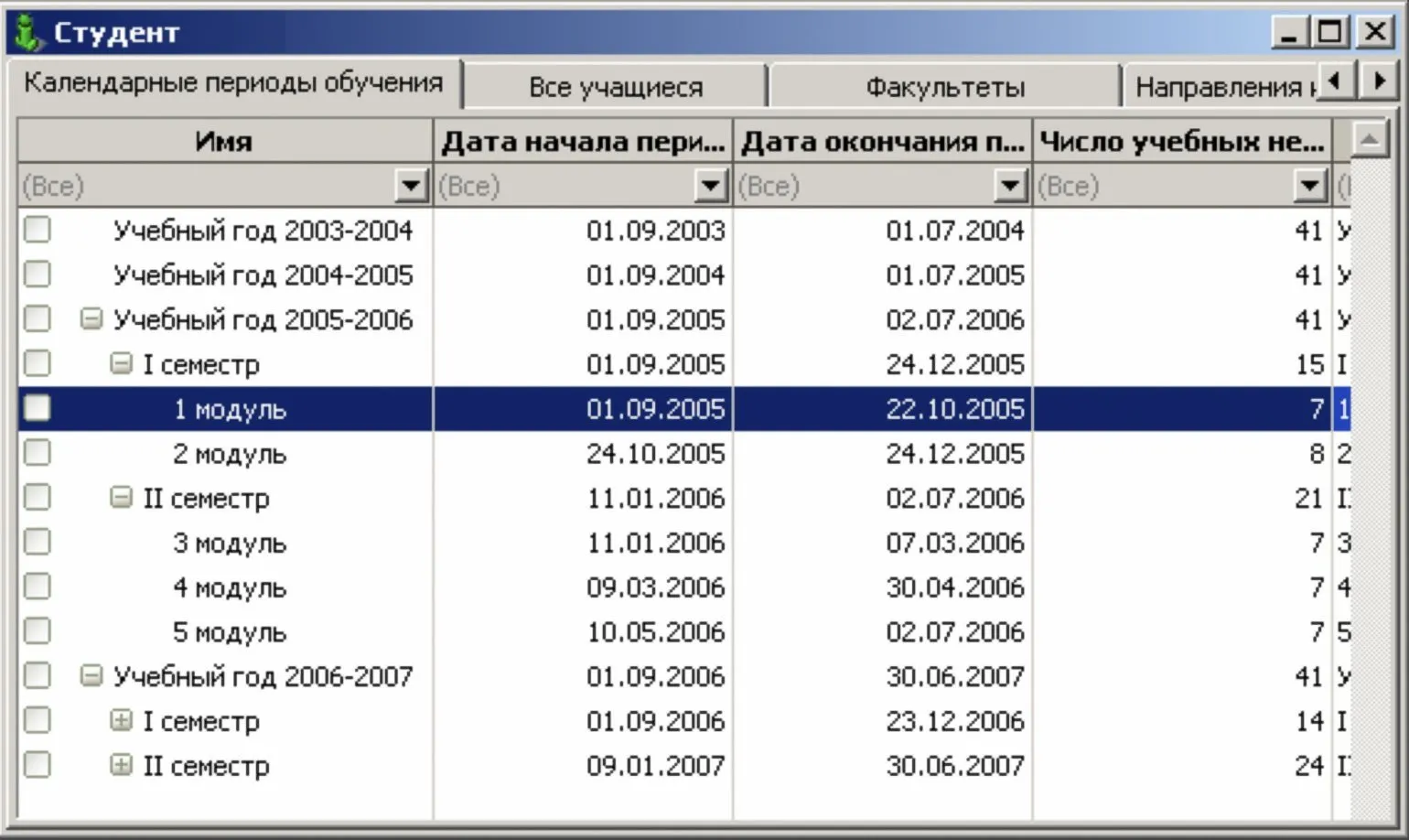
A hierarchical table is an effective tool for organizing a list of tasks in a table format. The first column contains the names of blocks, tasks, and subtasks, and the subsequent columns indicate the start and end dates, time spent, names of responsible employees, and other important information. This format provides visibility and simplifies the management of linear processes, allowing you to quickly track task status and allocate resources.
Create a hierarchical table using popular applications such as Excel and Google Sheets. These tools offer convenient data management features and allow you to effectively organize information in a hierarchical format. Using Excel or Google Sheets will give you access to powerful data analysis and visualization tools, making you more productive.
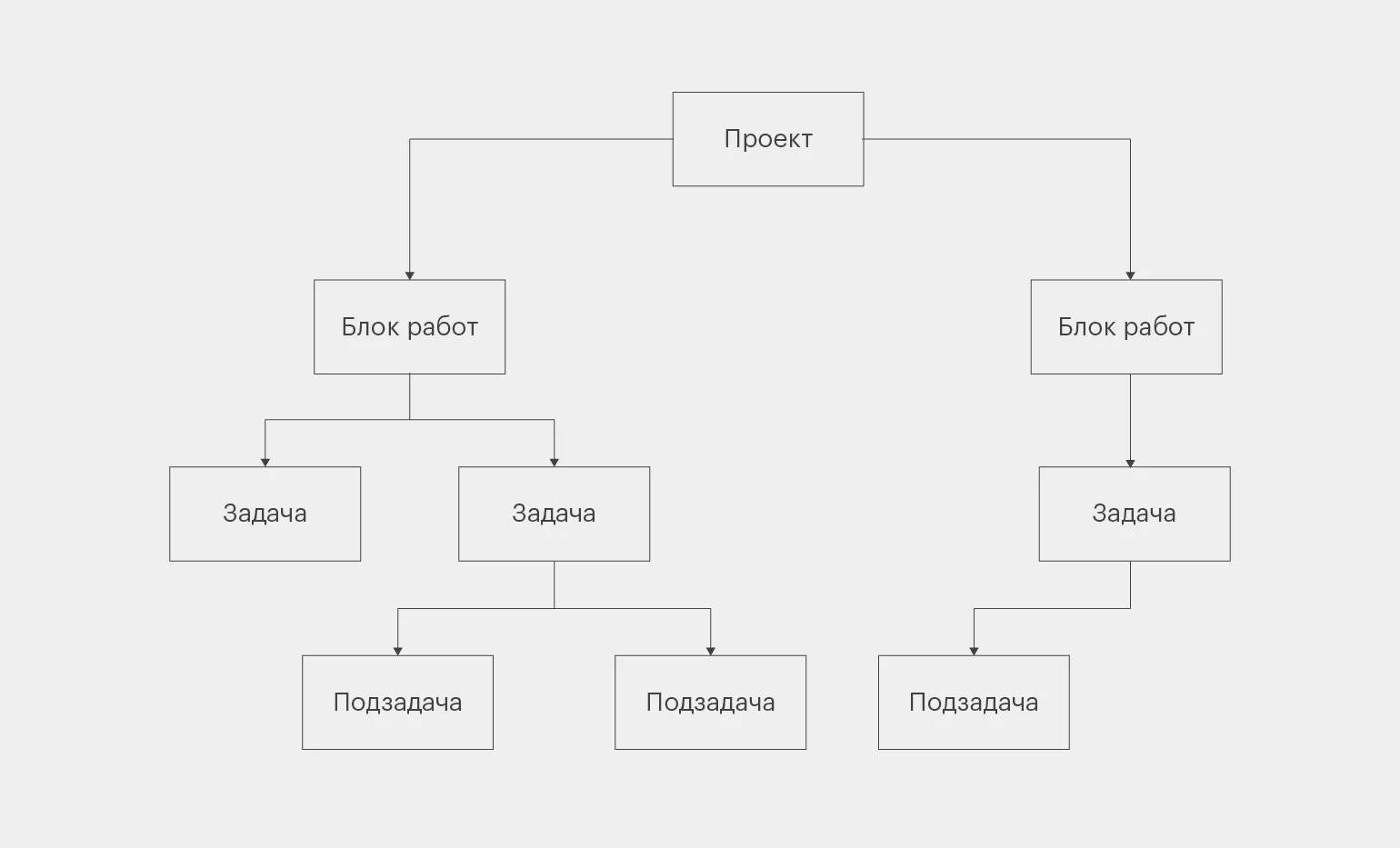
A tree structure is a visualization of a hierarchical table in the form of an inverted tree. In this format, the root of the tree represents the project name, and the branches represent tasks and subtasks. A tree structure is one of the most intuitive methods of presenting information, making projects easier to understand and manage. Using this approach, you can clearly see the relationships between tasks and their priority, which facilitates more effective planning and organization of the workflow.
You can create a tree structure either manually or using online services. We recommend using tools such as Creately, Draw.io, Microsoft Visio, or Octopus.do. Octopus.do is especially convenient for creating sitemaps and can be adapted for developing a work breakdown structure (WBS). These platforms offer a variety of features for visualizing information, which allows you to effectively organize data and simplify the design process.
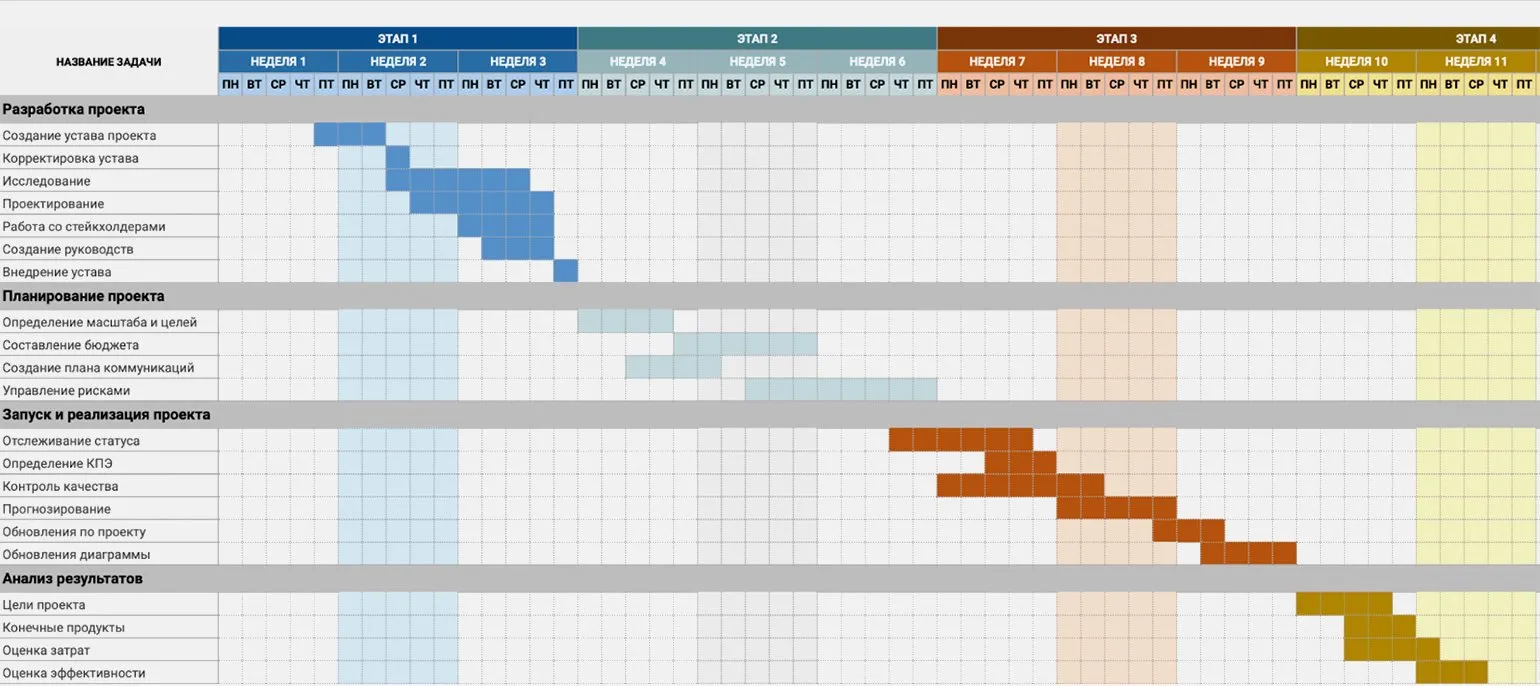
A Gantt chart is an effective tool for visualizing project schedules. It consists of a set of horizontal bars along a time axis, where each bar corresponds to a separate task or project phase. This visual approach makes it easy to track task completion timelines and estimate the amount of time spent on each. Using a Gantt chart promotes more effective project management, improves planning, and helps teams stay organized as they complete tasks.
Gantt charts can be created using standard spreadsheets like Excel or specialized online services like GanttPro and TeamGantt. While Excel allows you to quickly visualize project stages and deadlines, specialized tools offer more comprehensive project management capabilities, including automatic updates and collaborative editing. The choice between these options depends on your needs and preferences in project management.
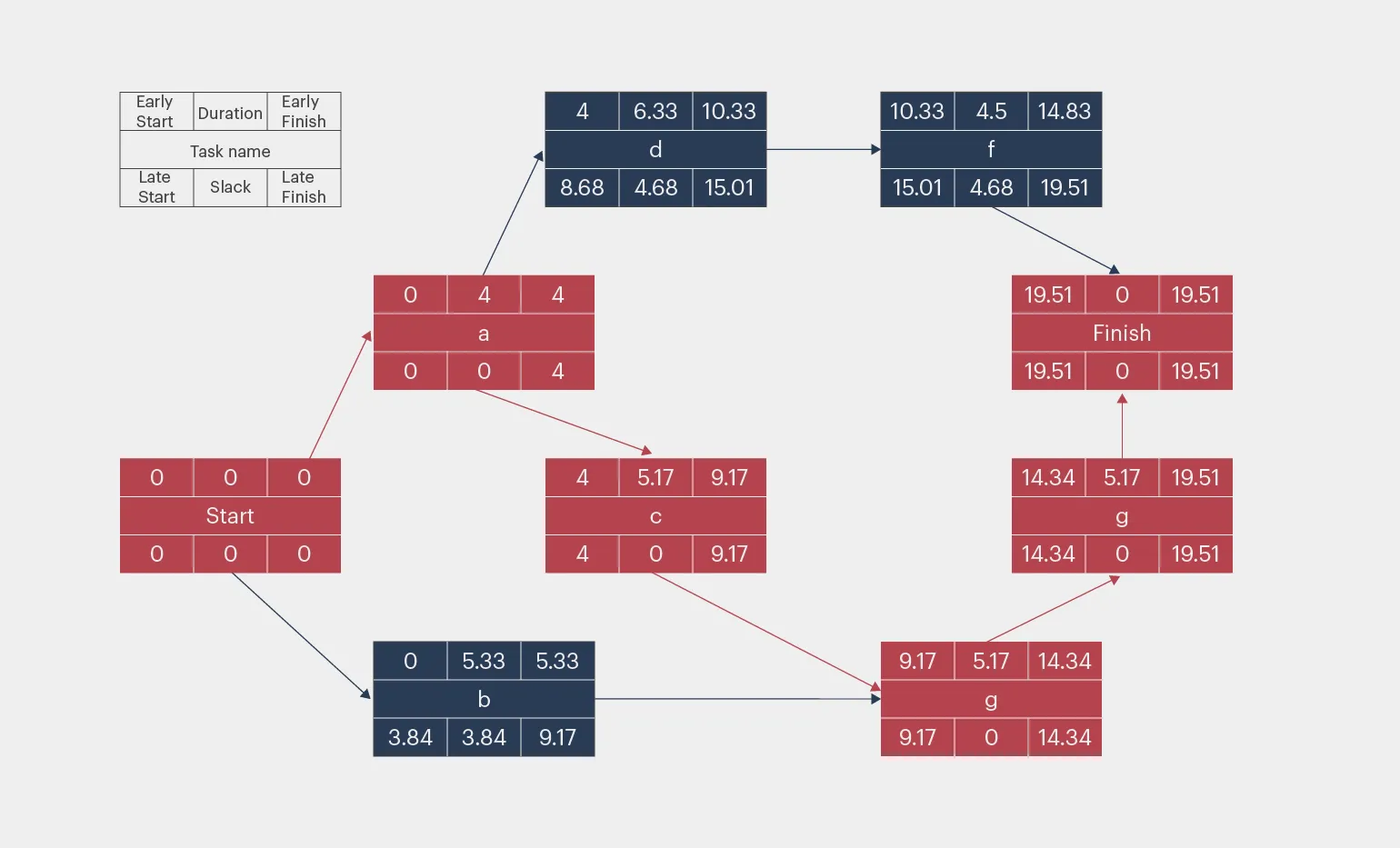
A PERT (Program Evaluation and Review Technique) chart offers a detailed representation of project tasks, including start and end dates, duration, and remaining time. It visualizes the relationships between tasks, making it especially useful for managing small projects or individual phases. Using a PERT chart allows you to effectively plan and control task execution, ensuring better coordination and minimizing project risks.
To create a PERT chart, we recommend using online services such as SmartDraw, Visme, and Edraw Max. These tools offer convenient features for project visualization and timeline management, significantly improving task planning and organization. By choosing the right service, you can easily create and customize PERT charts, adapting them to your needs and requirements.
Conclusion
The choice of a work breakdown structure (WBS) visualization method depends on the specifics of your project and the preferences of your team. We recommend using the proposed tools to optimize project management and increase their efficiency. Proper WBS visualization allows for a better understanding of tasks, improves communication between participants, and increases the likelihood of successful project completion.
Deepening our knowledge of project management
- A project is a temporary endeavor aimed at achieving a unique result. Skillbox Media offers comprehensive material that examines this term in detail and explains the key differences between a project and a process.
- Project management is a broad and independent area of management, encompassing a variety of methods, principles, and practices. You can start learning about project management with this article, which offers basic concepts and approaches.
- Decomposition is one of the most useful tools in a project manager's arsenal. In his book, "The Project Manager's Handbook," Vladimir Zavertailov shares many other tools and nuances that a manager may encounter in the course of their work.
- A project manager is a specialist responsible for achieving the final result. To succeed, it is necessary to effectively manage time, budget, and team. The Skillbox course, "Profession Project Manager," provides universal knowledge and deepens your understanding of the specifics of project management.
Additional resources from Skillbox Media will help you deepen your knowledge and skills. We offer a variety of materials that promote development in various areas. These resources include articles, video tutorials, and webinars that will help you stay up to date with the latest trends and technologies. Explore our extensive library to find information that matches your interests and professional goals. Skillbox Media is committed to supporting your success by providing relevant and valuable knowledge.
- How to Create a Project Structure in Seven Steps: A Practical Guide with Examples
- Project Risk Management: Methods for Identifying, Assessing, and Minimizing Risks
- Effective Project Budget Management: A Step-by-Step Guide
- Project Communications Guide: How to Organize Interaction for Project Success
- Completing a Project on Time Using the Critical Path Method: A Step-by-Step Guide
Project Manager: 5 Steps to a Successful Career
Do you want to become an indispensable specialist? Find out how to change your life and increase your income in six months!
Find out more