
Contents:

18 marketing courses for 0 ₽Courses for beginners and professionals. Learn new things, find yourself, and increase your income.
Learn moreIn June 2021, Yandex.Metrica introduced free end-to-end analytics, which was a significant step in the field of digital marketing. Users can now integrate the service with CRM systems, allowing them to collect cost and revenue data from various advertising channels in one place. Previously, this task required paid solutions such as Owox, Calltouch, or Roistat. The new Yandex.Metrica feature simplifies the process of analyzing advertising campaign performance and helps optimize budgets, making it a valuable tool for businesses.
Some believe that subscription-based end-to-end analytics services have lost their value. However, when implementing end-to-end analytics, it's important to consider a variety of options rather than relying solely on a standard solution like Metrica. We consulted with experts from eLama, Calltouch, Owox, and Roistat to find out what aspects to consider when choosing a service. Choosing the right analytics tool can significantly improve the effectiveness of advertising campaigns and enhance your understanding of customer behavior.
Of course, I'll help you with editing the text. Please provide the text itself that needs to be revised.
- We're looking at how end-to-end analytics works in Metrica;
- What the market thinks: We interview experts and representatives of alternative services.
This material is intended for marketers interested in setting up end-to-end analytics using low-code services. End-to-end analytics allows you to effectively track and analyze data at all stages of the marketing funnel, which is an important tool for optimizing business processes. If you want to deepen your knowledge of end-to-end analytics and its importance for business, we recommend reading the detailed guide on the Skillbox Media platform.
How end-to-end analytics works in Metrica: a detailed analysis
To create end-to-end business analytics, Metrica combines three key data groups. The first group includes information about traffic coming from advertising channels. It is important to supplement this data with information about user behavior on the advertiser's website. At the final stage, it is necessary to integrate all collected information with data from the CRM system, which contains information about purchases and other customer actions outside the website. This will provide a complete picture of the customer journey and improve the effectiveness of marketing strategies. Without end-to-end analytics, Yandex.Metrica only provides data on the number of requests and other target actions from various traffic sources. New system features will allow for a more detailed analysis of sales generated by various marketing channels, such as Direct, AdWords, targeted advertising on VKontakte, and display advertising in popular media. This will enable marketers to more effectively allocate budgets and optimize advertising campaigns based on real results.
Since 2017, Metrica has offered a prototype for end-to-end analytics using the "offline conversion" tool, which allowed for uploading sales data. Now, this process has become significantly simpler: end-to-end analytics automatically collects data on both sales and advertising campaigns. This simplifies marketing effectiveness analysis and allows for faster, more informed decision-making based on the collected information. Automating the process helps avoid errors associated with manual data entry and saves significant time.
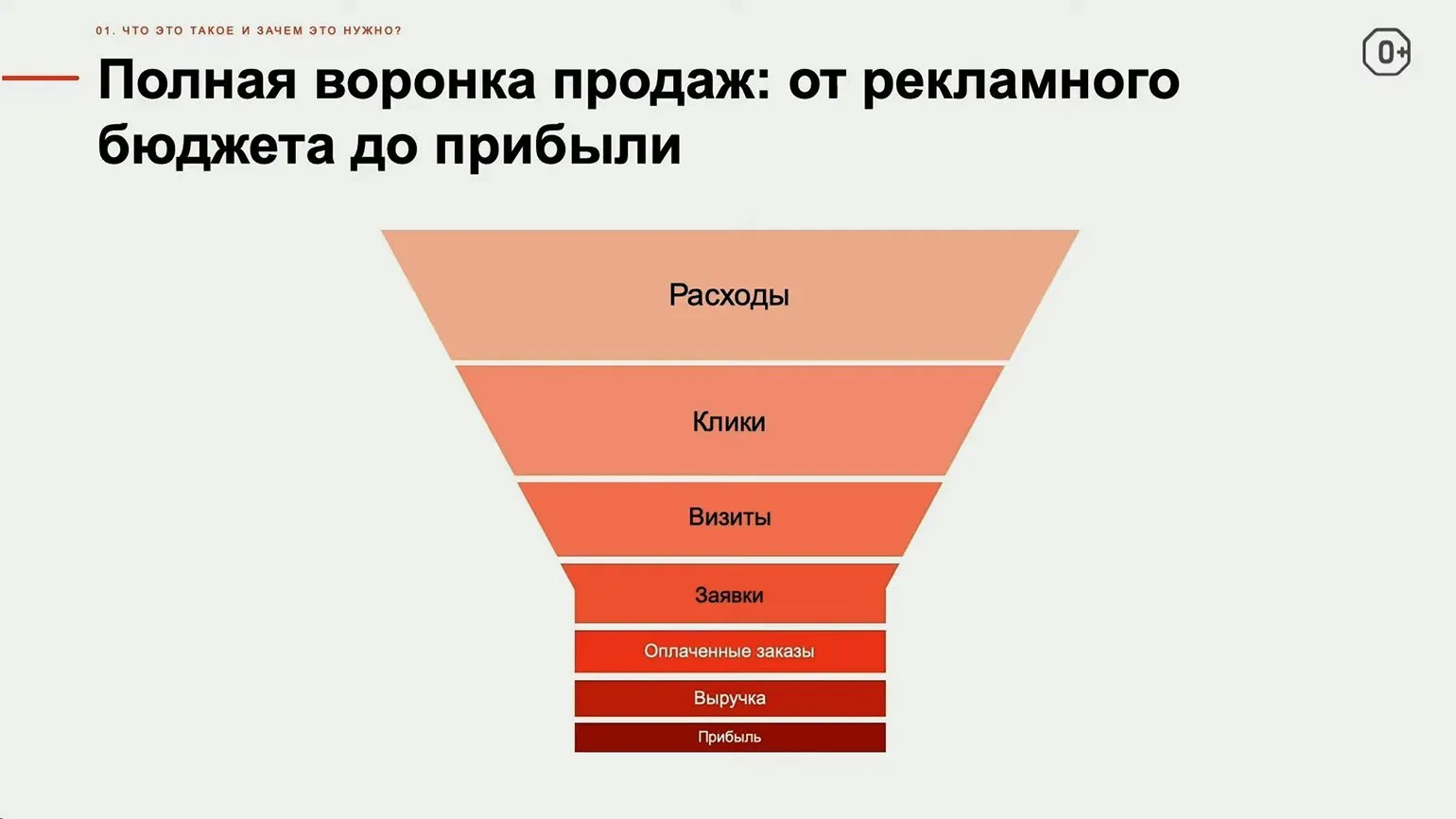
Sending data on advertising channels to Metrica requires certain actions. Data from Yandex.Direct and Yandex.Market is automatically transferred to Metrica, simplifying the process of analyzing the effectiveness of these sources. However, other advertising channels require configuration to ensure accurate data transfer. This will allow you to gain a complete understanding of the results of your marketing campaigns and optimize your advertising efforts.
In order for Yandex.Metrica to track the channel from which a specific user came, you must use UTM tags to mark your advertising links. A detailed guide on creating and configuring UTM tags is available in Skillbox Media. Proper use of UTM tags will help you effectively analyze traffic sources and optimize your marketing campaigns.
The next step is to transfer cost data from your advertising channels to Yandex.Metrica. This can be done quickly and easily using special connectors. Free connectors from Yandex allow you to integrate Facebook and Google Ads. To connect other advertising systems, use third-party connectors, a list of which is available in the Metrica interface. Properly setting up data transfer will help you more effectively analyze the effectiveness of advertising campaigns and optimize your budget. Costs that cannot be automatically linked using connectors require manual uploading. These costs include email campaigns, blogger ads, and placements in Telegram channels or VKontakte public pages. To track these costs, create an Excel file in the required format and upload it as a CSV file to Metrica. A detailed description of the file format can be found in the Yandex help information.
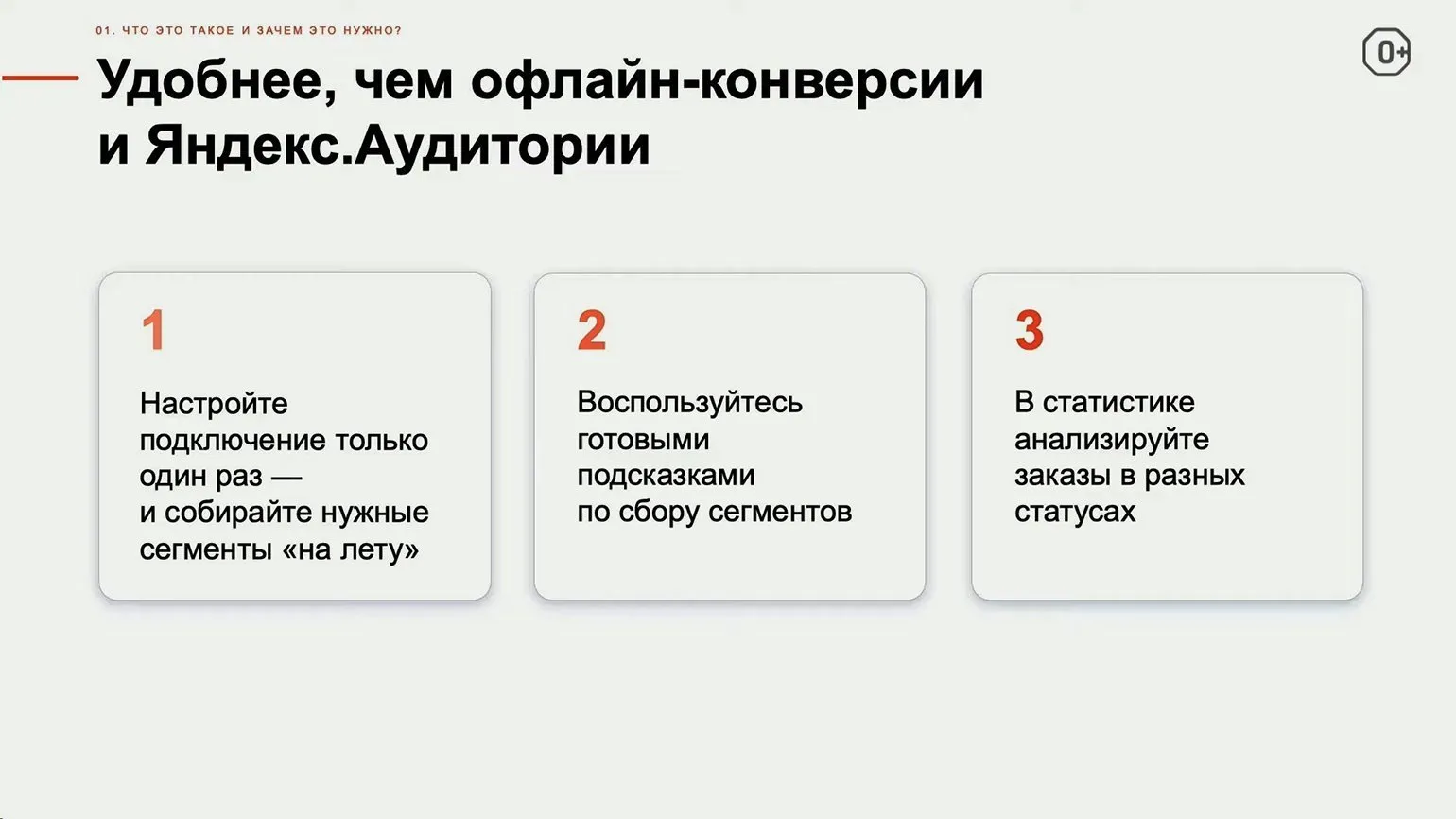
Sending sales data to Yandex.Metrica is an important step in analyzing business performance. This information is typically stored in a CRM system. To optimize the integration process, we recommend following the two-step approach suggested by Yandex experts. First, you need to set up the transfer of sales data from your CRM to Metrica. Then, it is important to ensure that all data is correctly displayed and analyzed in the system. This approach will help you obtain more accurate analytics and improve the quality of your sales performance evaluation.
The first step is to check that the ClientID is being transferred to the website in the CRM. The ClientID is a unique identifier that allows you to accurately identify the customer, track their path to the website, and analyze their actions on the platform.
When a user submits a request, the website transfers data to the CRM to process the order. To ensure effective end-to-end analytics, the website must also send the ClientID to the CRM when creating a request. This will allow you to track user interactions and improve data analysis.
Many content management systems automatically transfer ClientID to CRM after integration is complete. It is important to clarify this point with the developers of your specific system. Likewise, call tracking systems should also ensure that ClientID data is transferred to CRM. This will improve customer interaction tracking and increase the effectiveness of marketing campaigns.
The second step is to integrate your CRM with Yandex.Metrica. As of October 2021, this is only possible for amoCRM without the need for a developer, as a ready-made connector has been developed for this system. This integration will allow you to effectively track and analyze data on customer interactions with your business, which in turn will help optimize marketing strategies and increase sales.
Connection to other CRM systems is accomplished via an API. This typically requires the involvement of a programmer to help set up the integration. Setting up API data transfer is possible even for custom, in-house systems. This allows for effective interaction between various software solutions and optimized business processes.
To track the results of advertising campaigns, use the "End-to-End Analytics" and "Visitors and Clients" tabs. After setting up end-to-end analytics in Metrica, you will be able to see the entire sales funnel. The report will present data on revenue, expenses, profit, and ROI across various channels and sources. The basic report includes key metrics to help you evaluate the effectiveness of your marketing efforts and optimize strategies for better results.
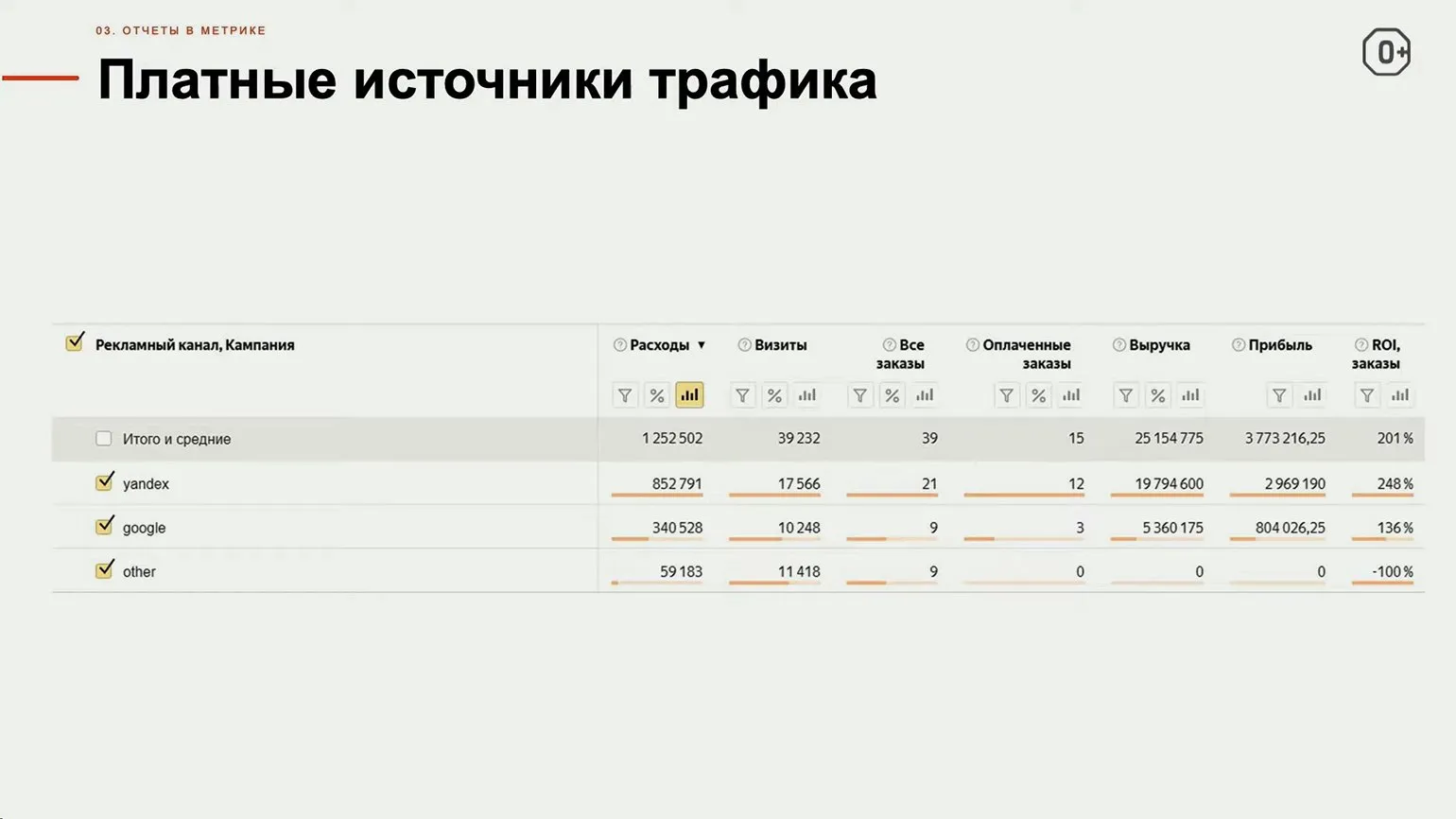
For transaction data to be associated with a campaign or source, the user must perform an action on the site within 21 days of the visit. The information required to update transactions in Yandex.Metrica is stored for 90 days.
The developers intend to extend this period, which will have a positive impact on companies with long transaction cycles. If a business currently requires more than 90 days, it is recommended to break transactions into several intermediate stages, such as making an advance payment and signing a contract. This will allow for more efficient process management and reduce the risks associated with long transaction cycles.
Profitability can be analyzed at the level of each individual ad or specific blog post. The level of analysis detail depends on the accuracy of the UTM tags. The more carefully you configure the tags, the clearer the picture of the profitability of your advertising campaigns will be. Setting up UTM tags allows you to not only track effectiveness, but also optimize future actions based on the data received.
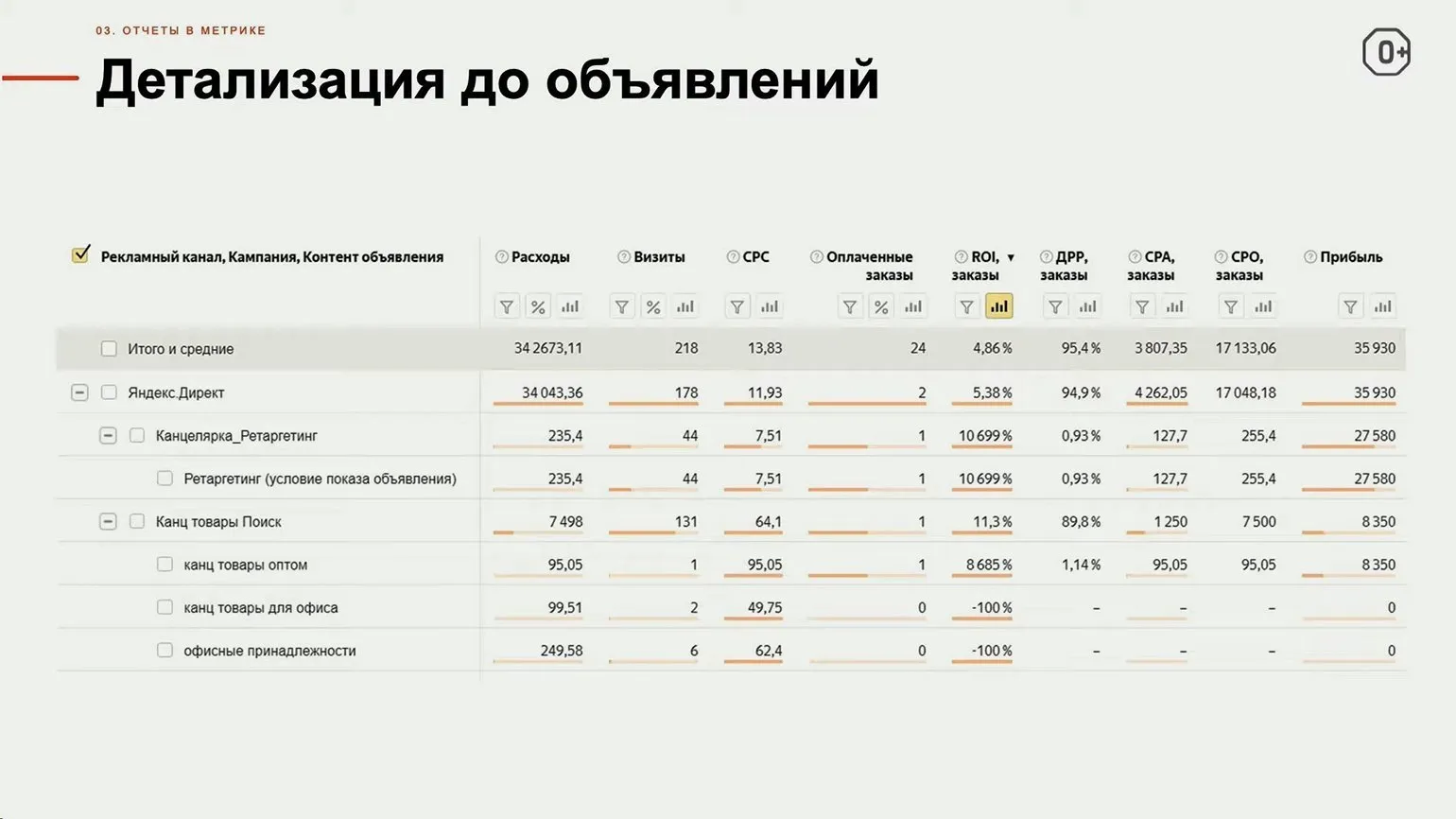
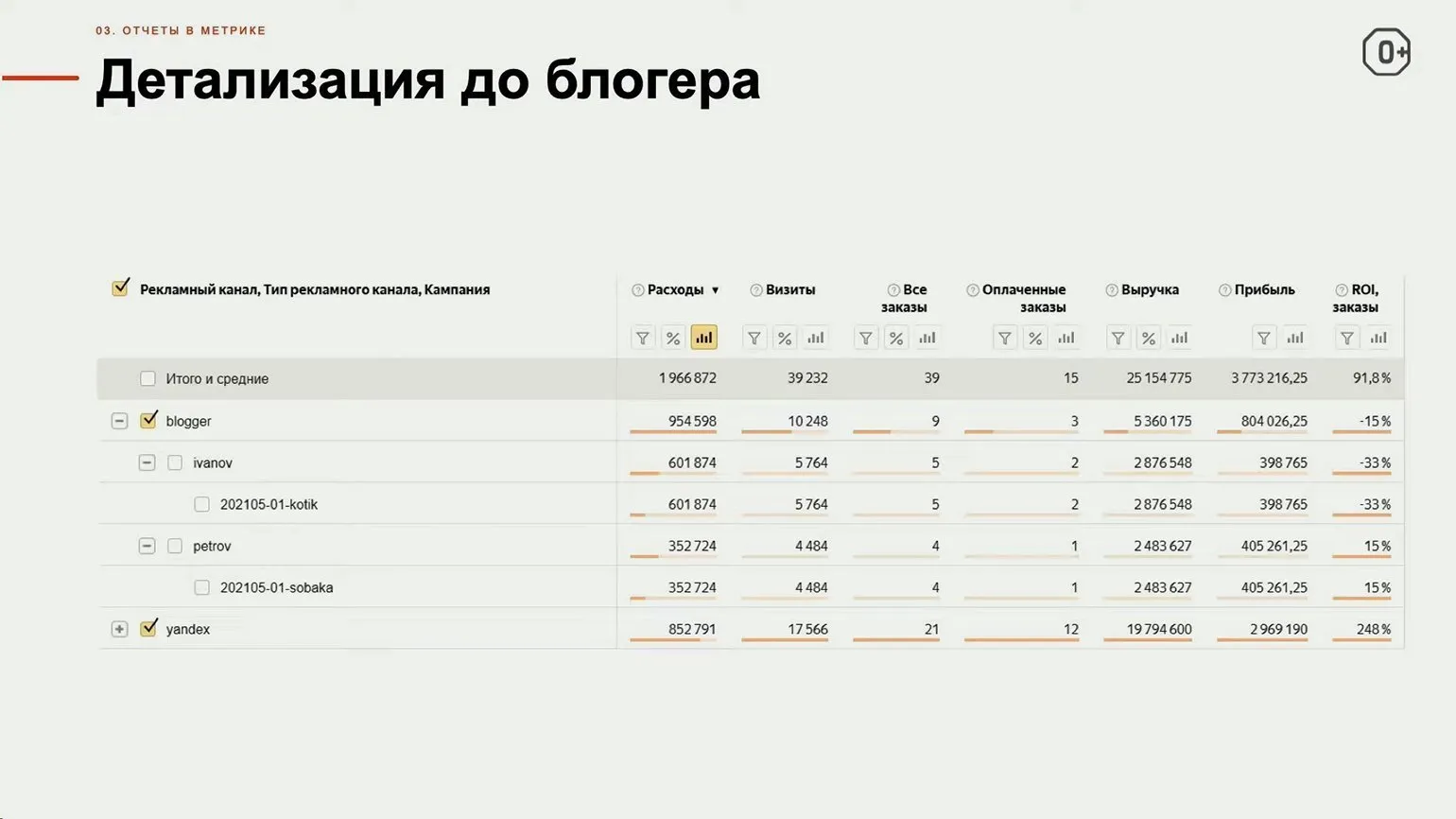
Data can be analyzed across various aspects, including devices (personal computers, mobile phones), regions, and landing pages. These segments correspond to the standard features provided in Metrica. This analysis allows you to more deeply understand user behavior and optimize your web resource to improve audience engagement.
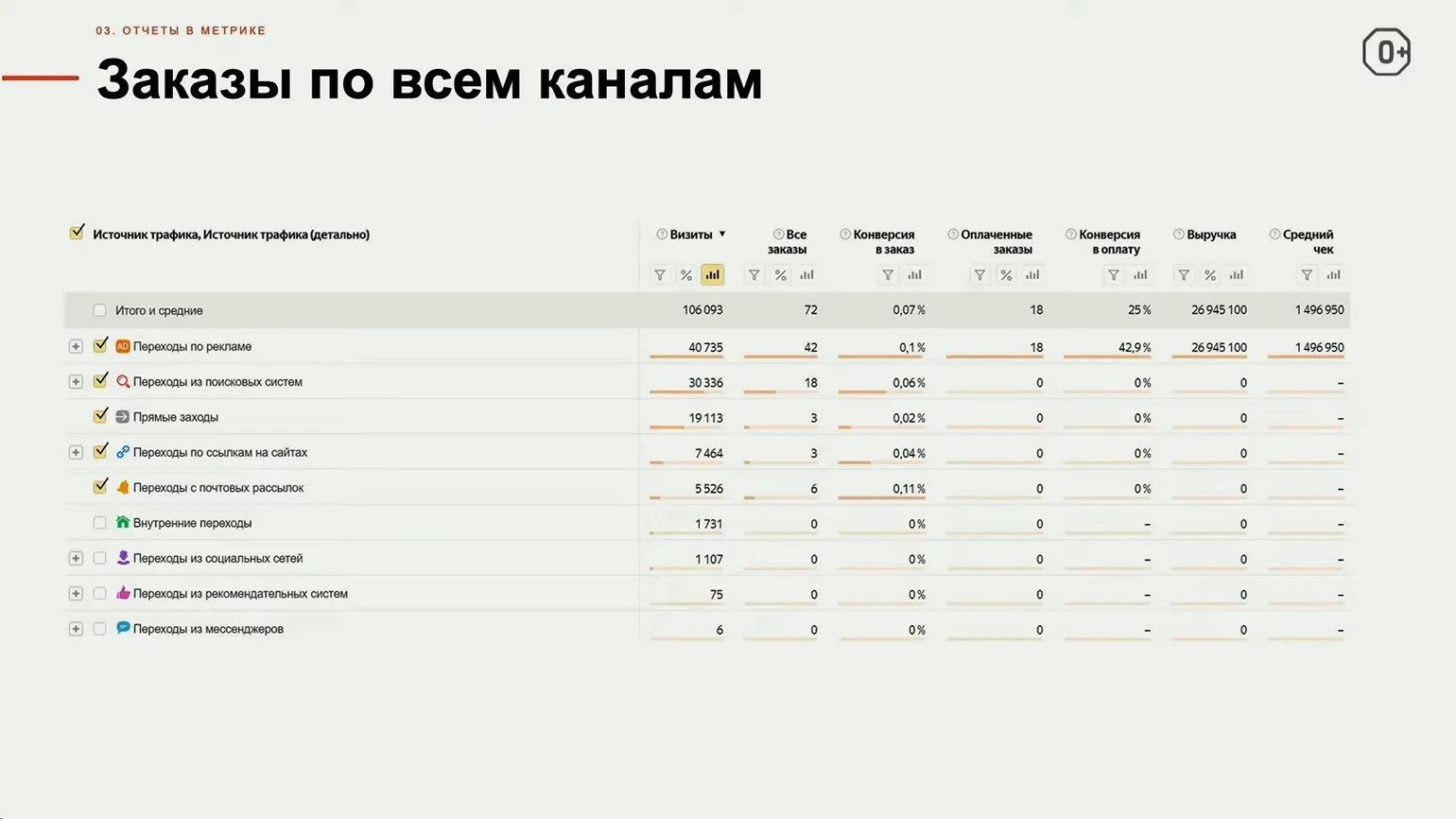
You can analyze data not only by advertising channels but also by sources without incurring additional costs. For example, you can find out the number of orders received from organic search and your company's social media. Information is also available on the number of orders received from forums where your company was mentioned or from sites with which you have jointly run promotions. This approach allows you to more accurately evaluate the effectiveness of various traffic sources and optimize marketing strategies.
End-to-end analytics in Yandex.Direct allows you to manage advertising campaigns more effectively thanks to the integration of data from your CRM with Yandex.Metrica. Once you've started transferring customer data, you can use it for targeting and optimizing advertising costs.
First, use information about purchases and customer interactions with your business to create more precise audience segments. This will allow you to target those users who are most likely to make a purchase.
Second, analyze the customer's journey from ad click to purchase. This will help identify bottlenecks in the sales funnel and adjust advertising messages to increase conversion.
Third, set up bid automation in Yandex.Direct based on advertising campaign profitability data. This will allow you to optimize your budget and increase advertising revenue.
Using end-to-end analytics, you can not only improve the effectiveness of your advertising campaigns in Yandex.Direct but also improve your overall understanding of customer behavior, which in turn will lead to more informed business decisions.
- Create segments and target them. For example, you can offer a discount or promotion to those who submitted an application but for some reason did not purchase. This is not classic retargeting: the tool is aimed at those who submitted an application, and not just those who visited your website.
- Optimize the campaign by funnel status. For example, show ads to customers with the "commercial proposal sent" status. Or you can advertise a service to users who have previously ordered it.
- Set up a campaign with the "Conversion Optimization" strategy, specifying statuses from your CRM as goals. After you set up data transfer from your CRM system to Metrica, two new goals will appear: "Order Created" and "Order Paid." You can select the "Conversion Optimization" strategy and specify one of these goals. Now, advertising algorithms will select ads and keywords that will lead to sales, rather than empty website inquiries.
- Set up a campaign with the "Profitability Optimization" strategy, specifying the target ROI. Technically, you need to do almost the same as in the previous step.
Yandex.Metrica offers many advantages that make it one of the best web analytics tools. First, it provides detailed statistics about your website visitors, including their behavior, traffic source, and demographic data. This allows you to more accurately understand your audience and tailor content to their needs.
Secondly, Yandex.Metrica has a user-friendly interface that allows you to easily customize reports and visualizations. This makes data analysis accessible even to users without in-depth technical knowledge.
Also worth noting is the ability to integrate with other Yandex services, which expands functionality and simplifies working with data. For example, you can link data from Yandex.Direct and Yandex.Metrica, allowing you to manage advertising campaigns more effectively.
Furthermore, Yandex.Metrica offers unique tools, such as web visor and heatmaps, that allow you to see how users interact with your website. This will help identify problem areas and improve the user experience.
All these arguments confirm that Yandex.Metrica is a powerful tool for analyzing and optimizing web resources. Use its capabilities to improve the performance of your website and achieve your business goals.
- Yandex.Direct uses the same algorithm as Metrica to determine gender, age, region, and device. Bid adjustments based on Yandex.Metrica data will be more accurate than adjustments based on data from third-party systems.
- Metrica has a large volume of information about internet users—this data can then be used to improve the effectiveness of advertising and analytics.
- You can use automatic strategies in Yandex.Direct that will attract customers based on goals set in your CRM.
- Extensive analysis capabilities, including various attribution models and associated conversions. Metrica understands that the same person visited from different devices. Does a customer come from an ad, but later buy after receiving an email newsletter? If you set up "first-click" attribution, the system will consider the customer to have come from an ad.
Yandex.Metrica offers a wide range of end-to-end analytics capabilities and fully meets business needs. This free tool allows you to track and analyze data on traffic, traffic sources, and user behavior. However, there are situations when using alternatives may be more appropriate. We discussed this issue with representatives of various analytics services and traffic management experts. Alternative solutions may offer unique features that help deepen data analysis, integrate with other platforms, or better suit the specifics of a particular industry. Therefore, it is important to consider various options for optimizing analytical processes and achieving business goals.
What do representatives of alternative platforms think about the service?

eLama Evangelist is an expert in the field of paid traffic and internet marketing. He has deep knowledge and experience in managing advertising campaigns, allowing him to effectively engage target audiences and increase conversions. eLama's specialist develops strategies to optimize advertising spend and maximize return on investment. With his help, companies can significantly improve their online promotion results and increase market visibility.
A photo from Nikita Kravchenko's personal page on VKontakte demonstrates his style and personality. This image showcases not only his appearance but also the atmosphere he creates around himself. Nikita Kravchenko's personal page reflects his interests and hobbies, allowing fans and friends to better understand his personality. It is important to note that social media plays a significant role in the lives of modern people, providing a platform for self-expression and interaction.
End-to-end analytics from Yandex.Metrica transforms the methods of managing advertising campaigns and evaluating their performance. This is especially relevant for small companies that don't have the budget for paid tools such as Roistat, Calltouch, CoMagic, and Alytics. Using Yandex.Metrica allows you to effectively track the customer journey from first contact to completion of purchase, significantly simplifying the analysis of advertising effectiveness. Thanks to this system, small and medium businesses can optimize their advertising costs and improve results without investing in expensive solutions. Implementing end-to-end analytics is a key step toward increasing competitiveness and sustainable growth in the market. Yandex Analytics now offers the ability to integrate data from your CRM, allowing marketers to work not only with information about advertising campaigns and the website, but also with real transaction data. This expanded functionality allows for a more accurate assessment of the effectiveness of various traffic sources and advertising tools. Based on the collected data, informed decisions can be made on budget reallocation, helping optimize advertising strategies in Yandex.Direct. Furthermore, order information allows you to build complex audience segments for retargeting and lookalikes, significantly increasing your chances of conversions and improving the overall effectiveness of your marketing efforts.
Free end-to-end analytics from Metrica will meet the needs of most advertisers. Although the tool is still in its infancy and cannot yet be said to completely replace paid services, it's worth noting that the Metrica team is actively working on improving it. Significant updates and expanded functionality can be expected in the future, making this tool even more attractive to users.
Metrica's drawbacks include a lack of transaction status detail, the inability to click through to your CRM system to check status, and limited customization options for reports and dashboards with the convenient visualizations available in paid services. Integrating Metrica's end-to-end analytics may require developer assistance, especially if your CRM doesn't have a direct connector. Difficulties may also arise with transferring Client ID to CRM, which complicates the data analysis process.
Paid services provide the ability to monitor and analyze the effectiveness of traffic sources in one convenient interface. This simplifies the process of tracking and optimizing advertising campaigns, allowing users to get a complete picture of their performance.

An expert in the field of end-to-end analytics, Calltouch provides professional solutions for optimizing business processes. End-to-end analytics allows you to track and analyze the effectiveness of marketing channels, which contributes to more accurate budget allocation and improved ROI. Implementing Calltouch tools helps companies gain a complete understanding of the customer journey, from initial contact to purchase. This approach provides a more detailed understanding of customer behavior and enables informed decisions based on collected data. A Calltouch expert will help your business increase competitiveness and reach new heights in digital marketing.
Pavel Mrykin is active on Instagram, where he shares personal moments and achievements. His page attracts numerous followers interested in his life and work. Here you can find photos reflecting his hobbies and professional successes. Pavel uses Instagram not only to communicate with fans but also as a platform for promoting his projects. Followers can follow his updates and find inspiration from his content.
The expected product development has become a reality. The integration of expenses from various advertising systems made transaction import an inevitable step. I am confident that this service will find its niche in the market, especially targeting small businesses. This opens up new opportunities for effective advertising cost management and increased competitiveness among small businesses.
Paid services offer significantly broader functionality than free alternatives. End-to-end analytics is more than just reports; it's a comprehensive service that includes assistance with system setup. Many businesses face the need to integrate various CMS and CRM systems, which requires a competent approach and setup. End-to-end analytics from Metrica is available in a basic version, but paid support is required to receive the full service and solve more complex problems.
End-to-end analytics is an important tool for establishing the connection between marketing costs and revenue. Currently, automatic cost data integration is only available for Yandex.Direct, Yandex.Market, Google Ads, and Facebook. Costs from other advertising platforms can only be integrated using paid services, via an API, or manually. This limitation makes it important to select the right tools for fully analyzing the effectiveness of marketing campaigns and optimizing budgets.
To determine the source of a deal's traffic, it is necessary to integrate the Client ID directly into the deal itself. However, this is not always possible and often requires additional modifications. Paid services, unlike Yandex, record the traffic source when the request is submitted and also use dynamic call tracking to track calls through spoofed numbers. Both methods provide contact information, which is just as important as the deal information itself.
Clients often require flexible deal data, especially in terms of statuses and tags. Metrica has a limit on the number of stages that can be created. Available statuses include:
- in progress;
- paid;
- cancelled;
- spam orders.
These statuses can cover various aspects, and transitions between them can be caused by a variety of reasons. Detailed statuses allow for a more accurate assessment of transaction costs. Furthermore, Metrica does not provide the ability to create custom columns, which complicates the calculation of individual metrics. This limitation may negatively impact analytics and business decision-making.

Owox Russia is led by a team of professionals with deep knowledge of data analytics and marketing. The company offers solutions for optimizing business processes, enabling clients to effectively manage their data and make informed decisions. Owox's primary goal is to help organizations improve their competitiveness in the marketplace through the use of advanced technologies and analytical tools. Thanks to the team's experience and expertise, Owox Russia is a reliable partner for businesses striving for innovation and growth. Stills from videos on the YouTube platform from PromoPt attract viewers with their quality and content. YouTube videos are becoming an important tool for promoting brands and products. Effective use of visual content allows for deeper engagement with the audience, increasing engagement and interest. Visual elements such as stills play a key role in creating engaging videos that drive views and subscribers. To achieve maximum impact, it is essential to optimize video content: use relevant keywords, create high-quality previews, and pay attention to descriptions. This will help improve video visibility in search engines and attract new audiences. Yandex actively promotes the development of analytics, making end-to-end performance assessment more accessible to users. Previously, the company focused on goals, but now the focus is shifting to analyzing conversions into actual purchases. It is believed that end-to-end transactions can be used by Yandex to optimize its algorithms, particularly within the Market and other company projects. This allows not only to improve internal processes but also to increase the overall effectiveness of advertising, which, in turn, benefits users and partners.
At Owox, we believe that two key aspects are the foundation of end-to-end analytics: data processing speed and trust in that data. Fast data processing allows employees to easily and effectively ask questions based on the collected information. In this context, Yandex's solution becomes especially relevant and useful.
The second key aspect is trust in the data, which is directly related to its relevance to the business context. KPIs can include specific metrics that are missing in systems such as Yandex. For example, a marketer's KPIs might include not just total revenue, but revenue from new online customers only. This allows for a more accurate assessment of the effectiveness of marketing strategies and informed decision-making.
Yandex.Metrica can serve as a useful auxiliary tool, but it shouldn't be considered the primary source of analytics. For businesses focused on individual context and the relevance of decision-making, finding solutions beyond standard reports will be essential. Effective analytics requires flexibility and the ability to adapt to a company's unique conditions and requirements.

The Marketing Director at Roistat is responsible for strategic planning and implementation of marketing initiatives aimed at increasing brand awareness and attracting customers. His responsibilities include analyzing market trends, developing effective advertising campaigns, and managing a team of specialists. The Marketing Director also monitors the results of implemented activities and makes adjustments to achieve the best results. It is important that the candidate has a deep knowledge of digital marketing and the ability to work with analytical tools to optimize processes and increase profitability. Experience in project management and strategic thinking is key to successfully fulfilling the tasks of this position.
Photo provided by the Roistat blog.
We highly appreciate the growth of the end-to-end analytics market and are pleased that Yandex is actively participating in this process. Today, many companies do not use end-to-end analytics, which leads to ineffective advertising spending. Furthermore, a significant number of organizations do not implement CRM systems, which also impacts their performance. It is important to understand that the use of end-to-end analytics and CRM can significantly improve marketing efficiency and optimize costs.
End-to-end analytics in free web analytics tools may seem accessible, but this is not entirely true. Only interfaces for viewing reports, such as tables and graphs, are free. In reality, the foundation of end-to-end analytics lies in collecting and digitizing data. Full functionality requires connecting to multiple paid services, which can ultimately be more expensive than installing a single, dedicated solution. Therefore, when choosing end-to-end analytics tools, it's important to consider not only the initial costs but also the overall cost of maintenance to avoid unexpected expenses.
Many companies use online consultants, a phone number, email, a callback form, and other methods for receiving inquiries on their websites. However, the free version of end-to-end analytics requires an additional fee for these features. As a result, a free reporting interface can result in additional costs for related services, their integration, and configuration. This is worth considering when choosing analytics tools for your business.
Dedicated end-to-end analytics services provide all the necessary tools initially and at no additional cost. These solutions already include over 200 ready-made integrations with external tools, simplifying the workflow. Users can easily upload costs from various advertising channels without the need for programmers or third-party services. Additionally, over 50 integrations with popular CRM systems are available, eliminating the complexities associated with API integration or external developers. Google Sheets can also be used as a CRM alternative, making data management even more accessible and convenient. Paid services offer easy integration of end-to-end analytics with various tools, such as widgets, website builders, PBX, call tracking services, and messengers. This can be done in just a few clicks thanks to over 200 integrations. Data is updated in near real time, which is critical for prompt business decision-making. Paid services offer over 80 built-in metrics, as well as the ability to add custom metrics that will be calculated automatically. These features significantly distinguish paid services from Yandex.Metrica, providing more in-depth analytics and flexibility in using data.
Internet Marketer Profession
You will learn how to launch advertising on different platforms and achieve results. Learn targeting, context, analytics, and advertising strategies. You'll apply your knowledge to real-world challenges, potentially finding a new career and pursuing exciting projects.
Find out more