
Contents:
- Why is it important to evaluate the effectiveness of PR campaigns?
- Analyzed indicators in PR: what is important to know
- Analysis of the number of publications: what is important to know?
- Understanding the cost of publications: PR Value and its significance
- Evaluating the reach of a PR campaign and publications
- Analysis of the number of contacts in PR
- Analysis of the reach of a PR team: key performance indicators
- The PR Points Method: How to evaluate effectiveness PR activities

4 Professions in Internet Marketing: Free Mini-Course
Learn MoreWhy is it Important to Evaluate the Effectiveness of PR Campaigns?
Evaluating the effectiveness of PR campaigns plays a vital role in modern business. It allows you to clearly demonstrate to clients and management the results of investments in PR, as well as demonstrate the impact of these efforts on the overall business. In-depth analysis of the results helps to identify both the strengths and weaknesses of the campaigns. This, in turn, contributes to the optimization and improvement of future PR strategies, which leads to more successful interaction with the target audience and an enhanced brand reputation. Effective evaluation also helps in making informed decisions and adjusting marketing approaches, which is a key factor in achieving business goals.
PR does not exist in isolation from other aspects of business; It is closely linked to marketing and various advertising tools. A successful PR campaign not only increases sales but also creates new business connections. It attracts the attention of journalists, partners, investors, and qualified professionals, helping to build a brand's reputation over the long term. However, building such a reputation takes time, and its impact is often difficult to assess in the short term. An effective PR strategy plays a key role in strengthening a company's market position and increasing its visibility among target audiences. In modern business, both executives and clients expect specific figures, making it essential to link key performance indicators (KPIs) to PR results. Analyzing past activities allows not only to assess the current situation but also to develop an effective strategy for the future. Without such analysis, it becomes difficult to promptly respond to new challenges and strengthen PR. Setting clear KPIs helps track progress, optimize resources, and improve the overall effectiveness of PR campaigns, which ultimately contributes to the achievement of business goals.
Treating PR as a mere formality can lead to decreased effectiveness. Achieving a successful PR strategy requires conscious and strategic planning. It is important to understand that PR is not just an add-on to business, but a vital component that influences a company's image and reputation. A comprehensive approach to PR allows you not only to inform your target audience, but also to build trust, strengthen relationships with clients and partners, and increase competitiveness in the market. An effective PR strategy includes target audience analysis, media monitoring, and the use of various communication channels to achieve your goals.
Analyzed PR Metrics: What You Need to Know
The PRNEWS.IO team actively handles sponsored publications in Russian and international media. We also develop our own PR initiatives, which include providing expert commentary, organizing webinars, and publishing free materials such as press releases, ratings, surveys, and checklists. Our goal is to help clients effectively promote their brands and increase their visibility in the media space. We strive for high-quality interaction with the audience and ensure maximum return on PR campaigns.
To effectively evaluate our activities, we focus on several important metrics. These metrics allow us to accurately measure results and identify areas for improvement. We strive for transparency and a high level of service, which is reflected in our approach to performance evaluation. Each of these key indicators helps us maintain high standards and achieve our goals.
- Number of publications. Although this is the most frequently used metric, its effectiveness increases only when analyzed in conjunction with other metrics.
- Cost of publications. In this context, we consider not only the costs of media placement, but also the time, resources, and funds spent on creating high-quality content.
- Overall reach of a campaign or individual material. This metric shows how many users have seen your content.
- Number of contacts or Media Impressions. This figure reflects the number of media visits per month and helps determine how many people have seen your material.
- Efficiency of PR tasks. Here, we analyze the number of media in which the material was published, the number of articles posted, the number of experts involved, and other important aspects.
- PR Points metrics. We have developed a unique evaluation system where each metric is assigned points according to pre-established criteria.
Through practical experience, we have come to the realization that not all metrics can be easily measured. However, most of them require in-depth analysis and a careful approach. This highlights the importance of systematically monitoring and evaluating data to achieve optimal results.
In the next section, we will analyze each of these metrics in detail, discuss their advantages and disadvantages, and provide recommendations on how to optimize them for best results.
Analyzing the Number of Publications: What You Need to Know?
The number of publications is a popular indicator of the effectiveness of PR activities. However, relying on this parameter alone is inappropriate, as it does not provide a complete picture of the results of PR activities. It is important to consider other aspects, such as the quality of the content, the target audience, and the impact on public opinion. These factors play a key role in assessing the success of PR strategies and their impact on the company's image.
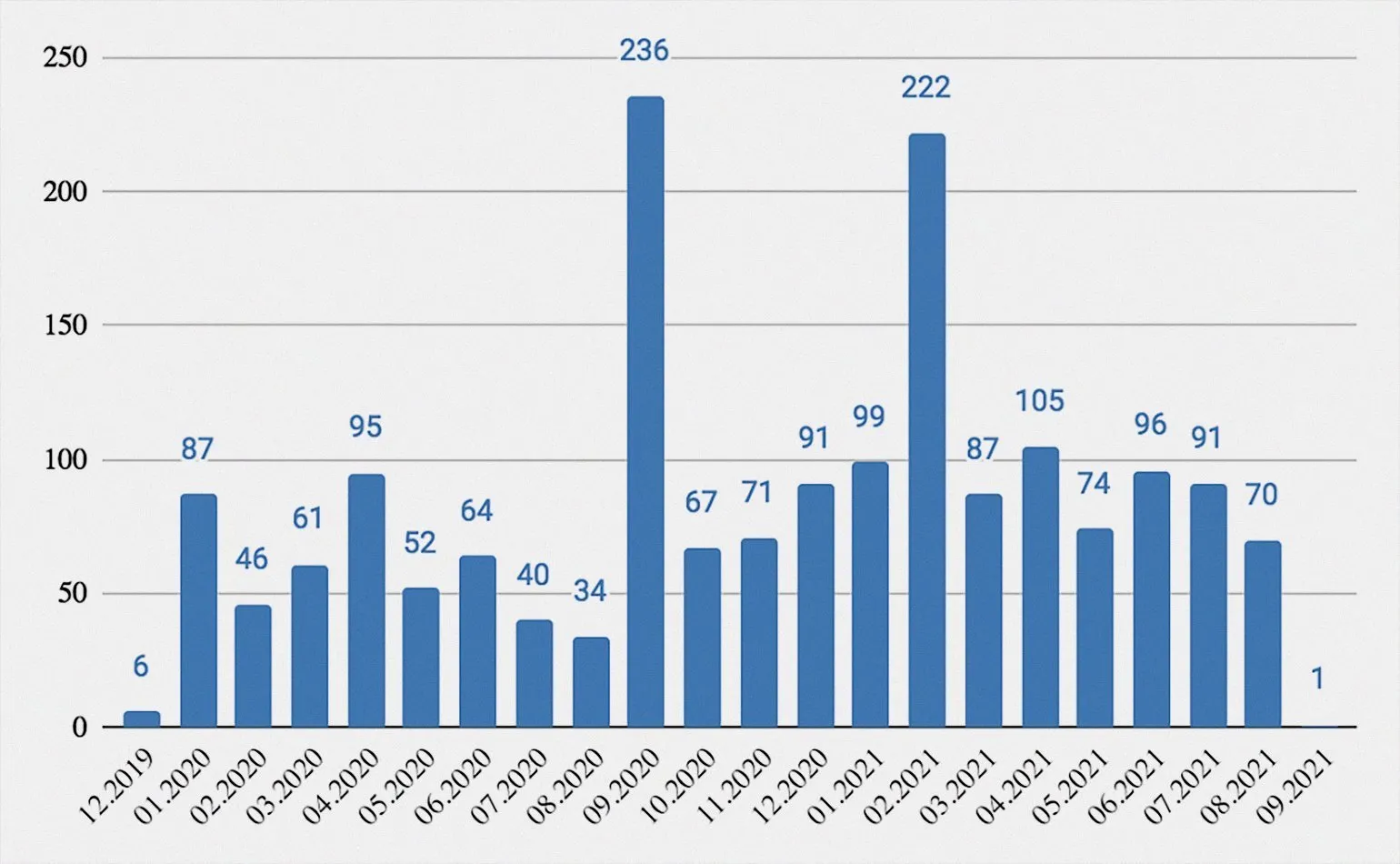
This metric reflects the total number of mentions of your brand or product in the media. However, the principle "the more, the better" is not always applicable. The quality of media, as well as its reach, are crucial in shaping public opinion of your business. It's not just the number of mentions that matters, but also the context in which they appear. Positive or negative reviews, as well as the credibility of sources, can significantly impact your brand's reputation. Therefore, it's important to pay attention not only to the quantitative but also to the qualitative aspects of your media presence.
Reputable publications play a key role in digital marketing. A strong reputation and extensive online audience significantly increase the likelihood that your expertise, product, or service will be noticed by your target audience. This, in turn, can lead to increased customer traffic and increased trust in your brand. Publications on such platforms not only increase visibility but also contribute to a positive image in the eyes of consumers, which is an important aspect of a successful business strategy.
Based on PRNEWS's experience, we recommend against chasing publication numbers for the sake of achieving them. It's important to carefully select content platforms, analyze your audience and topics, and align them with the interests of your target audience. This approach contributes to the effective development of your community, attracting the attention of journalists, and expanding your customer base. By focusing on content quality and relevance, you can improve your brand's visibility and increase its authority in the industry.
Understanding the Cost of Publications: PR Value and Its Importance
PR Value, or Advertising Value Equivalency (AVE), is a valuation method that allows you to determine the cost of PR publications based on their advertising equivalent. This indicator is calculated based on the amount of costs that could be used to place a similar advertisement. PR Value is becoming an important tool for analyzing the effectiveness of PR campaigns and helps companies understand the value of their PR activities. Thus, using PR Value can significantly simplify the process of budget planning and evaluating the return on investment in public communications.
The cost of placing an article is $2,000, which corresponds to the PR Value. However, many PR professionals criticize this method, noting its lack of accuracy. They argue that it is more focused on advertising aspects than on actual public relations efforts. This highlights the need for more accurate and comprehensive approaches to evaluating PR activities that consider not only financial investments but also the impact on a brand's image and reputation.
According to the Barcelona Principles, the AVE method is not suitable for assessing the effectiveness of PR campaigns. The document emphasizes that social media should be assessed alongside other media channels. This is especially important since many social platforms offer free placement opportunities, resulting in a zero score according to the PR Value method. Effective evaluation of PR campaigns requires a comprehensive approach that considers all communication channels, including social media, where audience interaction and engagement play a key role.
Modern research confirms that the use of comprehensive methods for assessing the effectiveness of PR campaigns, including engagement and reach analysis, provides more accurate data on their impact. In a rapidly changing communications landscape, it is necessary to take into account that PR requires new approaches to measuring results. This includes both traditional methods and modern digital channels, which allows for a complete understanding of the effectiveness of communications strategies. Integrating various approaches to assessing PR effectiveness helps generate more accurate conclusions and optimize future campaigns.
Evaluating the Reach of a PR Campaign and Publications
When assessing the effectiveness of a PR campaign, a key factor is reach—the number of users who have viewed the materials presented. This metric serves as an important indicator of success and, as a rule, becomes the first object of analysis by the media. Increased reach indicates increased interest in the brand, as well as the possibility of attracting a new audience. Therefore, it is important to regularly monitor this metric to optimize PR strategies and improve campaign results.
Access to data on video views, article reading, or audio file listening depends on the type of media. In some cases, statistics are available to all users, while in others, special requests must be submitted to obtain information. This can impact the analysis of content popularity and understanding of audience interests.
We recommend requesting data from the media. The resulting figures help not only optimize current strategies but also select the most appropriate media outlets that align with your business goals. Analyzing media statistics and metrics allows you to more precisely tailor advertising campaigns and improve engagement with your target audience.
A PR strategy should be focused on the target audience, which includes current and potential clients, business partners, and investors. Only then should the focus be on internal employees. This approach ensures effective engagement with external stakeholders, thereby strengthening the company's reputation and image. A successful PR strategy fosters trust and loyalty, which in turn contributes to the achievement of business goals.
Adequate and accurate assessment of publication reach and the entire PR campaign is critical to achieving successful results. Effective PR activities cannot be achieved without clearly defined goals and a clear understanding of the strategy. A "let it be" approach should be avoided, as it does not contribute to the desired results. Careful analysis and planning ensure maximum return on PR activities.
Analyzing Media Impressions in PR
Media impressions, also known as media impressions, is a key metric in PR and marketing. This metric shows the total number of views of materials, including articles, press releases, and news stories, published in the media over a given period, usually a month. Media impressions allow you to assess audience reach and the effectiveness of communication strategies, making it an essential tool for analyzing the results of PR campaigns and optimizing marketing efforts. Given that each publication can reach a significant number of readers, understanding this metric helps businesses better plan their PR activities and increase brand visibility.
Publishing a piece on The Times website, which receives an average of 39 million visits per month, might give the impression that Media Impressions equals this figure. However, this is just the beginning. In reality, Media Impressions includes various factors, such as audience reach, content engagement, and social media distribution. These aspects significantly increase the overall number of interactions with a piece of content, making Media Impressions assessments more comprehensive. Therefore, it's important to consider not only the number of visits but also the level of audience engagement and their reaction to the published content.
Modern methods for assessing the effectiveness of PR campaigns require a new approach. At PRNEWS, we believe that the actual number of contacts with the audience is significantly lower than the stated figures. Statistics are often used as a tool for manipulation, especially by those unfamiliar with the specifics of this industry or trying to conceal the low effectiveness of their efforts. We advocate for transparency and accuracy in evaluating results, which allows for a more accurate analysis of the successes and shortcomings of PR strategies.
A Press Releases section on a website with 10,000 visitors doesn't guarantee that every single one of them will read your material. Actual reader interest depends on many factors, including the placement of other publications and the availability of more relevant news at a given time. To increase audience engagement, it's important to optimize press release placement and keep your content current. This will attract more attention to your materials and increase their readability.
To increase the actual number of contacts, it's important to position your news correctly. We recommend placing the material on the publication's homepage, which will ensure maximum visibility. It's also worth considering promotion through announcements on social media and teaser platforms, which will attract an additional audience and increase interest in your content. A proper news placement and promotion strategy will significantly increase the chances of successful engagement with readers.
PR Team Reach Analysis: Key Performance Indicators
To evaluate the effectiveness of a PR team, it is necessary to analyze the ratio of campaign costs to achieved results. This approach allows us to determine how efficiently resources are being used and what results have been achieved in line with the set goals. It is important to consider key metrics that will aid in this assessment. Effective analysis will not only identify the strengths and weaknesses of a PR strategy but also optimize future campaigns, increasing their effectiveness.
- Number of media sources that published materials about the company;
- Number of publications that appeared on the main pages of news sites or in the most popular sections;
- Number of experts and opinion leaders involved in content creation.
Additional metrics should be considered to help more accurately assess the achievement of business objectives. An important aspect is monitoring audience engagement and developing the company's reputation in the media space. These metrics allow you to not only analyze current results but also adjust your customer engagement strategy, which in turn helps strengthen your brand's position in the market.
PR Points Method: How to Evaluate the Effectiveness of PR Activities
The PR Points methodology used at PRNEWS.IO is a modern tool for evaluating the effectiveness of PR activities. The main goal of this system is to assign quantitative points to each activity, which enables a more detailed analysis of the results of PR campaigns and strategies. Using PR Points allows public relations professionals not only to measure the success of their initiatives but also to optimize future actions based on the data obtained. This approach helps increase the transparency and effectiveness of PR activities, which is an important aspect in a competitive environment.
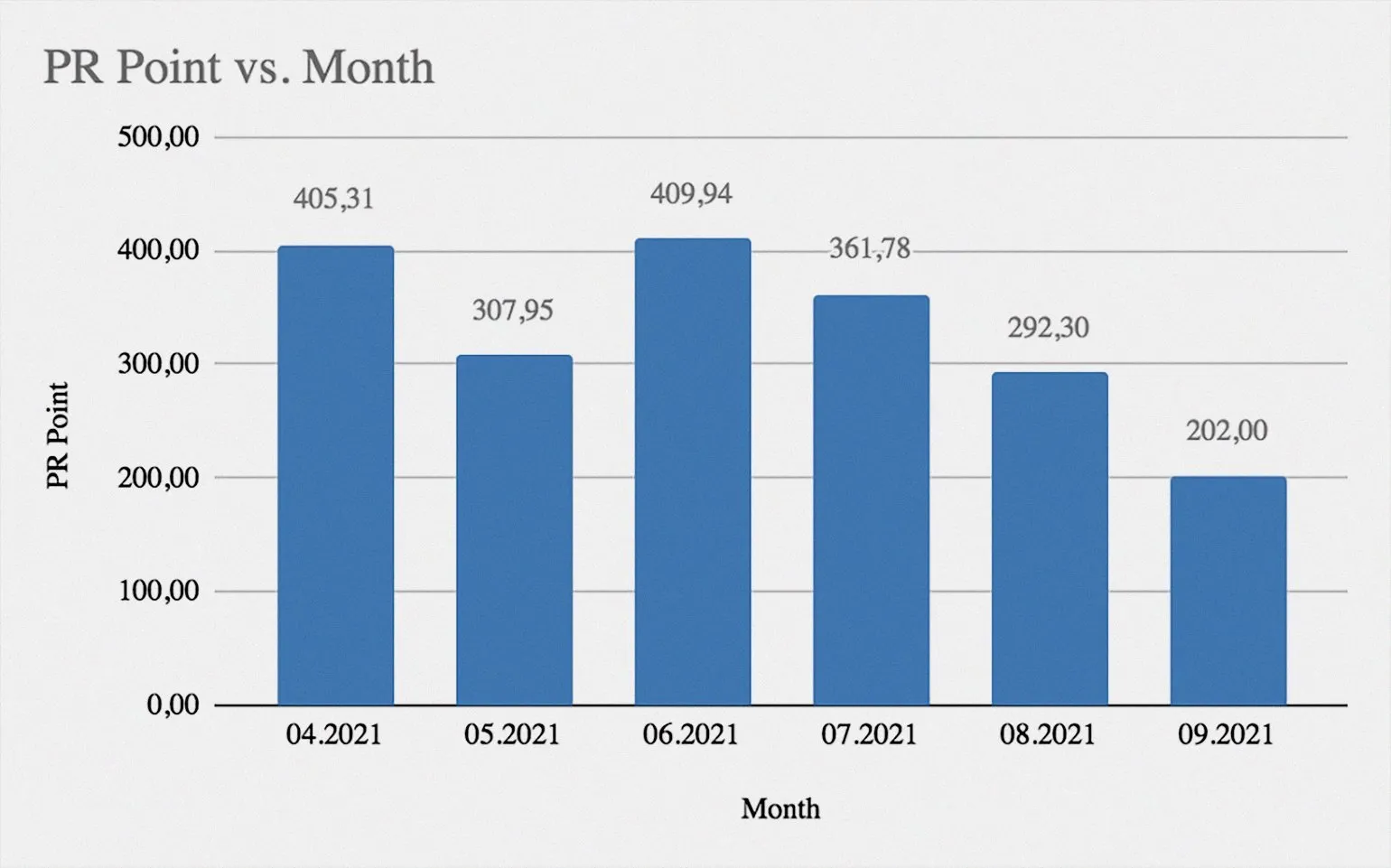
PR Points are calculated using a simple formula. This process helps determine the effectiveness and popularity of content, as well as its impact on search engine optimization. Correctly calculating PR Points helps in analyzing the quality of materials and their subsequent optimization to increase visibility in search engines. By ensuring an accurate calculation, you can better understand how to improve your content so that it meets SEO requirements and attracts more users.
The PR Point formula is used to calculate the PR indicator, which helps evaluate the effectiveness of resources and materials. In this formula, the PR Point is defined as the product of a multiplier including the DR value, MQI, and the number N. The DR value, divided by 100, makes an adjustment, allowing you to take into account the influence of various factors on the overall score. MQI is the Material Quality Index, and N denotes the total number of units involved in the calculation. This formula can be useful for analyzing and optimizing processes related to resource management.
Where is your ideal vacation spot? When choosing a suitable destination, consider the climate, natural beauty, accessibility, and amenities. Whether you prefer mountain resorts, beach hotels, or cultural capitals, it's important to find a place that suits your interests and needs. Explore different options to find the perfect combination of comfort and adventure. Don't forget about the local culture and cuisine, which can make your vacation unforgettable. Choosing the right vacation spot will help you recharge and gain new experiences.
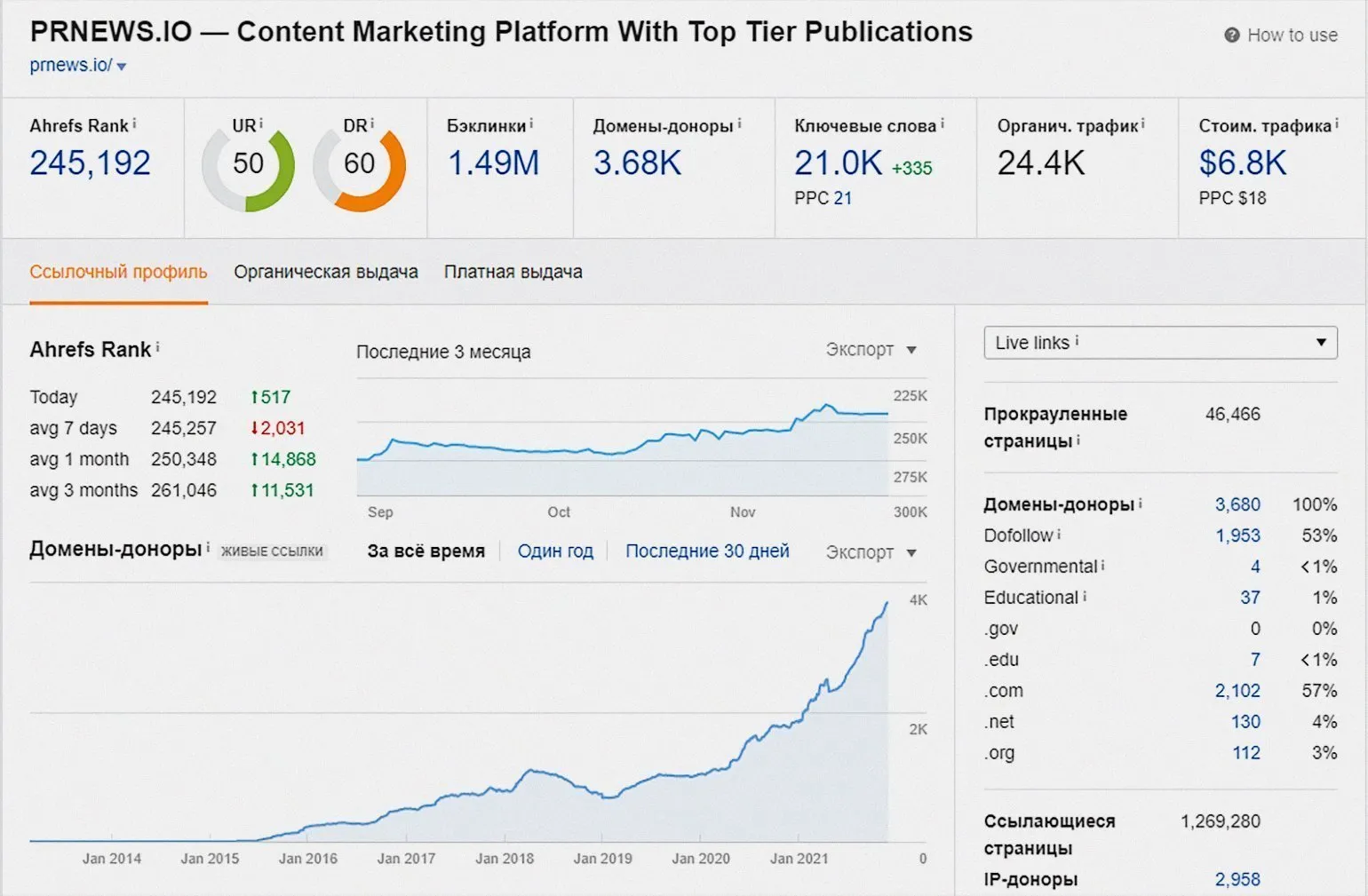
- DR (Domain Rating) is an important criterion calculated by Ahrefs for SEO analysis, taking into account incoming links and the overall popularity of a resource. You can learn more about DR on the Ahrefs website.
- MQI is the Media Quality Index, which is based on many individual criteria, which we will discuss below.
- N stands for the novelty of the material. This indicator will be higher for new publications.
You control the formation of the base for calculating the MQI and include various parameters. One key criterion is your initiative in posting content. If we independently initiate the publication of high-quality material, such activity receives more points, which positively affects the overall rating.
You can set coefficients for evaluating outreach publications, assigning them, for example, 1.5 points. For paid article placement, it is advisable to use a lower coefficient, such as 1.0 or 0.5. This will allow you to more accurately evaluate the effectiveness of different types of publications and optimize your content marketing strategy.
An important aspect of the content quality index (MQI) is the visibility of the article. The coefficient increases if the publication is easy to find in search engines and social networks. Our team uses a coefficient of 0.2 for materials that are difficult to find without a direct link. Search engine optimization and active social media promotion improve the visibility and reach of your content, which directly impacts its effectiveness and audience reach.
Consider your brand's level of engagement with the content you create. If the material is related to your brand or product, set a higher engagement rate. Otherwise, use a lower rate. This will help you better assess the effectiveness of your post and its impact on your target audience.
Regularly monitor likes, comments, and shares on social media, as they play a key role in increasing the reach of your content. By analyzing interaction with your content, you can better understand your audience and optimize your posts for increased effectiveness.
To obtain the final MQI coefficient, all the coefficients involved must be multiplied together. This process ensures the accuracy and reliability of the calculations, which is important for analysis and evaluation. Each value in the formula plays a key role, and their correct multiplication guarantees a correct result.
The novelty of a publication is an important criterion for content evaluation. We assign a score of 1.0 for a publication on a new resource and 0.5 if the material has already been published on a given resource more than three times. Maintaining the relevance and freshness of content helps improve visibility in search engines and attract a larger target audience.
We record the calculation results in a table and update it regularly. This allows us to maintain the relevance of the data and effectively analyze the results. Regularly updating the table facilitates more accurate monitoring of changes and improves the decision-making process.
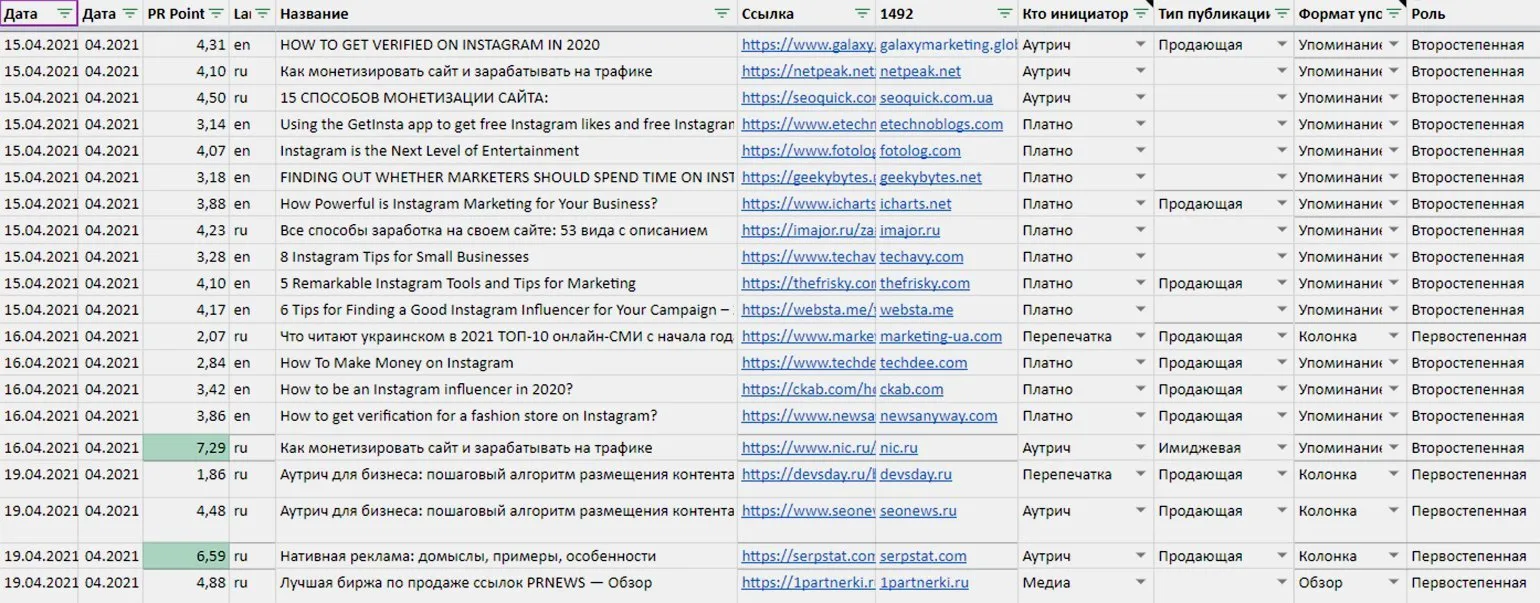
We use specific parameters to calculate PR Points. You can customize the formula PR Points = (1 + DR ÷ 100) ∗ MQI ∗ N to develop your own scoring system. This formula takes into account Domain Reputation (DR), Content Quality Index (MQI), and the number of links (N), making the calculation more accurate and tailored to your requirements.
DR, or Domain Rating from Ahrefs, is an important indicator of domain authority. The MQI (Market Quality Index) considers several key indicators that help evaluate the overall quality and competitiveness of a website. These indicators include both internal and external factors, such as the number and quality of backlinks, traffic, and user activity. All of these elements combined help create a more accurate picture of a website's status and market position. The F format is a specific standard used in various fields, such as data processing, programming, and web development. This format provides a structured presentation of information, enabling efficient organization and exchange of data. While the F format can vary depending on the context of application, its primary purpose is to simplify data processing, improve readability, and enhance processing performance. Using the F format also promotes process standardization, which is critical for teamwork and the integration of various systems. Implementing this format into workflows can significantly reduce information processing time and the likelihood of errors.
Thus, the F format is an essential tool for developers and data professionals, ensuring efficiency and reliability in information management.
- 1.5 — a detailed case study about us;
- 1.2 — an interview, column, or research;
- 0.5 — a comment;
- 0.2 — a mention.
I is an initiative aimed at creating new opportunities and improving existing processes. It focuses on drawing attention to important issues and finding effective solutions. Our goal is to combine efforts and resources to achieve meaningful results. We strive to actively engage with stakeholders to ensure sustainable development and prosperity. Participation in this initiative opens doors to collaboration and the exchange of ideas, which facilitates an innovative approach and project implementation. Join us to create positive change and achieve your goals.
- 1.5 — outreach;
- 1.2 — contributors, media;
- 1 — paid;
- 0.2 — reprint.
Mentions play an important role in various contexts, whether in marketing, social media, or other areas. This can apply to both brands and individuals, depending on the situation. Mentions help create a connection between content and the audience, increasing engagement and interest. For example, mentions on blogs or forums can draw attention to a specific product or service, which in turn can lead to increased sales. It is important to remember that an effective mention should be organic and relevant to avoid causing a negative reaction from users. Proper use of citations can not only improve search engine visibility but also strengthen brand image.
- 1 — clear mention with company credentials;
- 0.5 — mention of PRNEWS.IO;
- 0.3 — no mention (link to blog).
Novelty is a key aspect that is important in various fields, including technology, science, and business. It denotes the introduction of new ideas, products, or methods that can lead to significant changes and improvements. In today's world, novelty is becoming an important factor in competitiveness, as companies and organizations strive to offer something unique to attract consumer attention and enhance their reputation in the marketplace. Innovations based on novelty contribute to increased efficiency and the creation of new opportunities for development. It is important to remember that the assessment of novelty is not limited to external signs alone but also includes the impact on existing processes and modes of interaction. Thus, novelty is an integral part of progress and successful development in any industry.
- 1.3 - new media;
- 1 - already contacted (1-5 publications);
- 0.7 - constant mentions, more than five joint publications.
All presented metrics are relative and may vary depending on the specifics of your company. This data is based on the experience and practice of the PRNEWS.IO team, which confirms its relevance and reliability. When considering these metrics, it is important to consider the unique aspects of your business for more accurate analysis and evaluation.
The values assigned to the parameters can be customized to suit your needs. For example, instead of traditional ratings, you can use symbols such as stars or hearts if they are more understandable to you. This allows you to more accurately analyze the effectiveness of a PR campaign and draw informed conclusions. Customizing parameters to your preferences improves the perception of data and increases its value for evaluating results.
Internet Marketer: 5 Steps to a Successful Career
Want to become an internet marketer? Learn 5 steps to launching advertising and achieving results! Read the article.
Find out more