
The Use of Photomontage for Political Purposes
John Heartfield, whose real name was Helmut Herzfeld, was born in 1891 in Berlin. His father, a poet and anarchist, was accused of blasphemous remarks, which forced him to flee Germany for Austria under the threat of imprisonment. Helmut's parents died when he was only eight years old, and he was raised by a farmer who was the mayor of the village where the Herzfeld family lived in a forest cabin. Helmut's education was limited to elementary school.
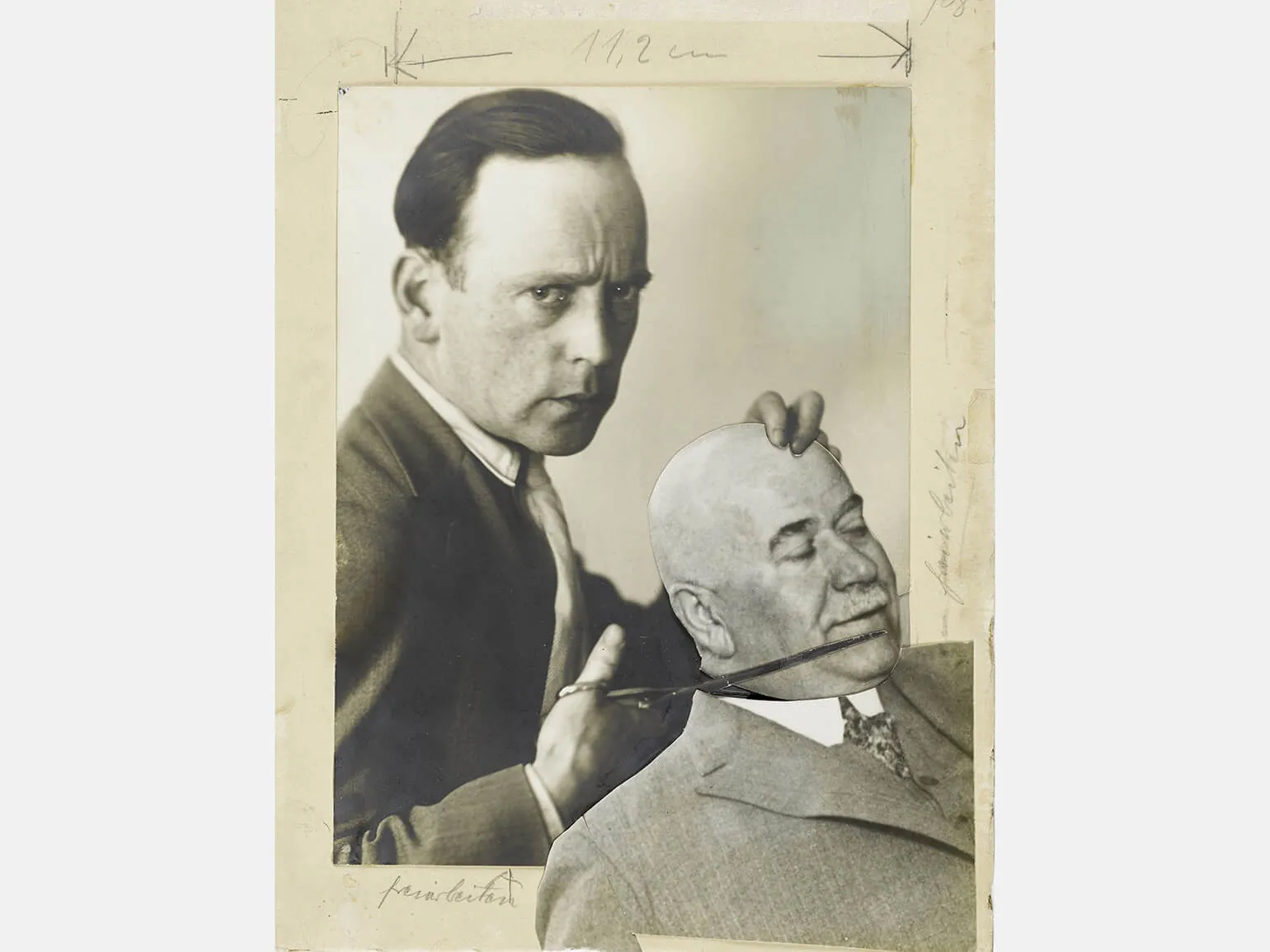
Young Helmut got a job in his relative's bookstore, after which, through his own efforts, He enrolled in art school in Munich. There, he quickly realized that fine art had become an anachronism. In protest against German patriotism, which had intensified during the war, he changed his surname to the English one – Heartfield. In 1916, together with his brother Wieland, he founded a magazine that reflected the views of dissenting leftists. Together with George Grosz, Heartfield developed the technique of photomontage, while Raoul Hausmann also claims to have contributed to this invention.
In 1918, Heartfield became one of the founders of the Communist Party of Germany. In 1920, he played a key role in organizing the "First International Dada Fair in Berlin." From 1918 to 1924, Heartfield was active in film and theater. He later turned to graphics, creating propaganda materials for the German communist press. Between 1927 and 1937, Heartfield gained international recognition for his witty and expressive photomontage posters and caricatures, which became an important part of the visual culture of the time.
After the war, Heartfield settled in East Berlin and remained a devoted communist for the rest of his life. He died in 1968. The second half of his life did not produce works comparable in originality and passion to his best work, created between 1927 and 1937. These last works became a rare example, even outside the USSR, of an artist wholly devoting his imagination to the cause of mass political struggle during the revolutionary era.
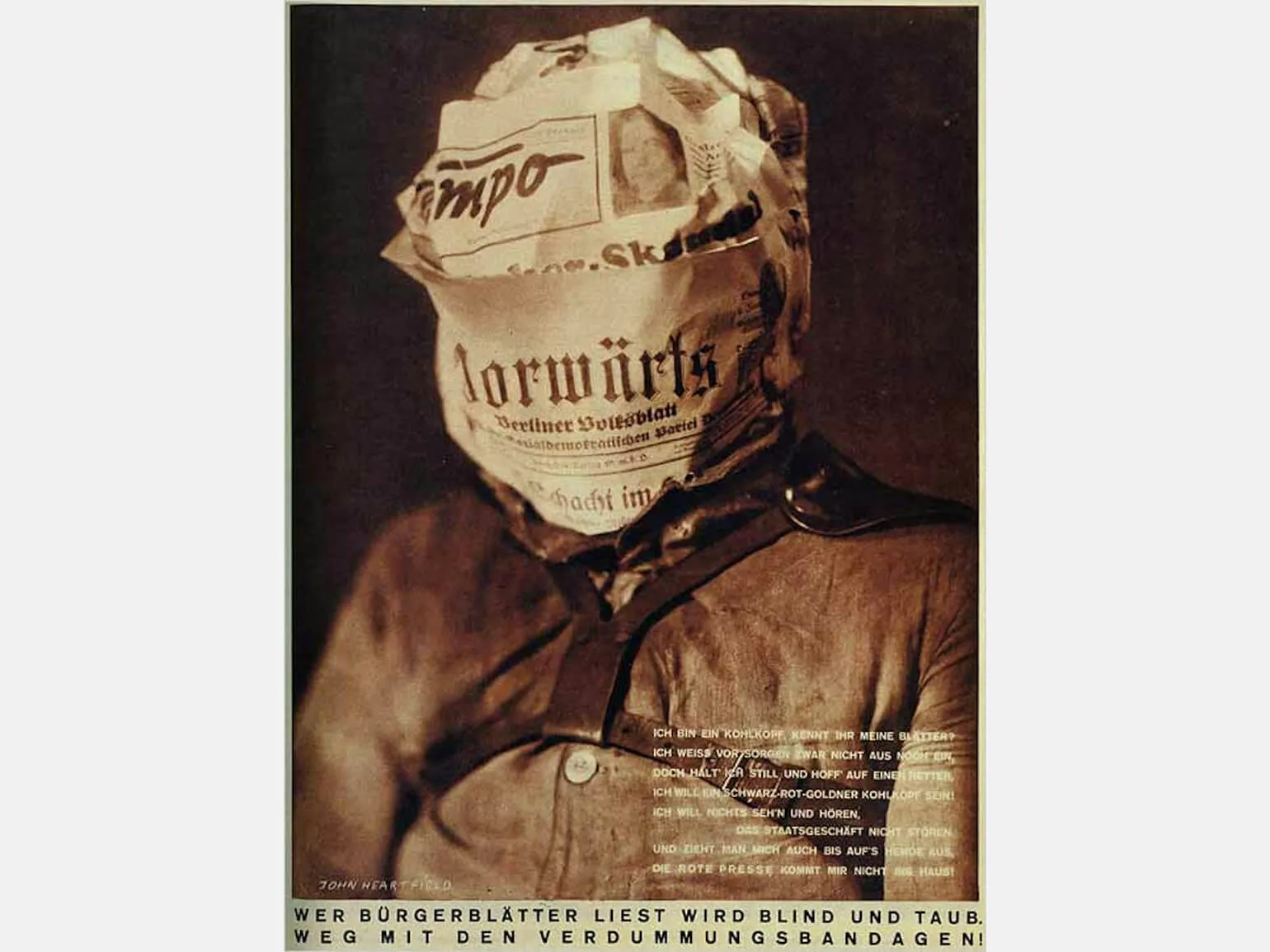
Works in this area have a number of characteristic features that allow us to draw certain conclusions. First of all, it is worth paying attention to their overall quality. These characteristics determine not only the effectiveness of task performance, but also the impact on the final result. Therefore, understanding these properties is key to further analysis and evaluation of work in this area.
Hartfield's cartoon depicts Streicher standing on the sidewalk next to the motionless body of a beaten Jew. The caption reads: "The Universal German." Streicher, dressed in a Nazi uniform, with his hands clasped behind his back, looks ahead. His facial expression neither approves nor condemns what is happening at his feet, which emphasizes his indifference to the tragedy. Streicher's uniform is adorned with several barely noticeable stains. These could be traces of blood or dirt, but their small size does not allow charges to be brought against him. In other circumstances, these stains might seem insignificant, but here they merely highlight the subtle dirtiness of the uniforms, symbolizing moral decay and indifference to the suffering of others.
At Heartfield's best critical work, there is a sense of pervasive pollution, though, as with the Streicher cartoon, it is difficult to pinpoint the exact causes and mechanisms of this phenomenon. The grayness conveyed by the photographs, as well as the color palette and textures of the gray clothing, create an atmosphere of hopelessness. The outlines of frozen gestures, the penumbra on pale faces, and the texture of street walls, medical uniforms, and black silk hats reinforce this feeling. The horror lies not only in the subject matter, but in the very quality of the photographs—they not only demonstrate squalor, but also evoke disgust at their own state.
Modern political cartoons often evoke physical revulsion that remains relevant even after time. To create this effect, it is not necessary to rely on historical examples like Nazi Germany. A striking example is the work of Honoré Daumier, whose caricatures express profound and universal reactions to political reality. Understanding these reactions is important for analyzing contemporary political processes and their impact on society.
Today's political power, in the hands of a few individuals, exhibits a squalor that is repulsive. This phenomenon does not simply confirm the abstract moral assertion that power corrupts. It represents a concrete historical and political phenomenon. Such squalor could not arise in a theocratic or stable feudal society. Under modern conditions, political power generates and exacerbates social and moral problems that require profound analysis and reflection.
It was necessary to await the principle of modern democracy and then confront the cynical manipulation of this principle. This phenomenon is widespread in bourgeois politics and developed capitalism, but is not limited to them. The basis of such manipulation is the gap between the declared goals of politicians and the real actions to which they are already actually prepared.
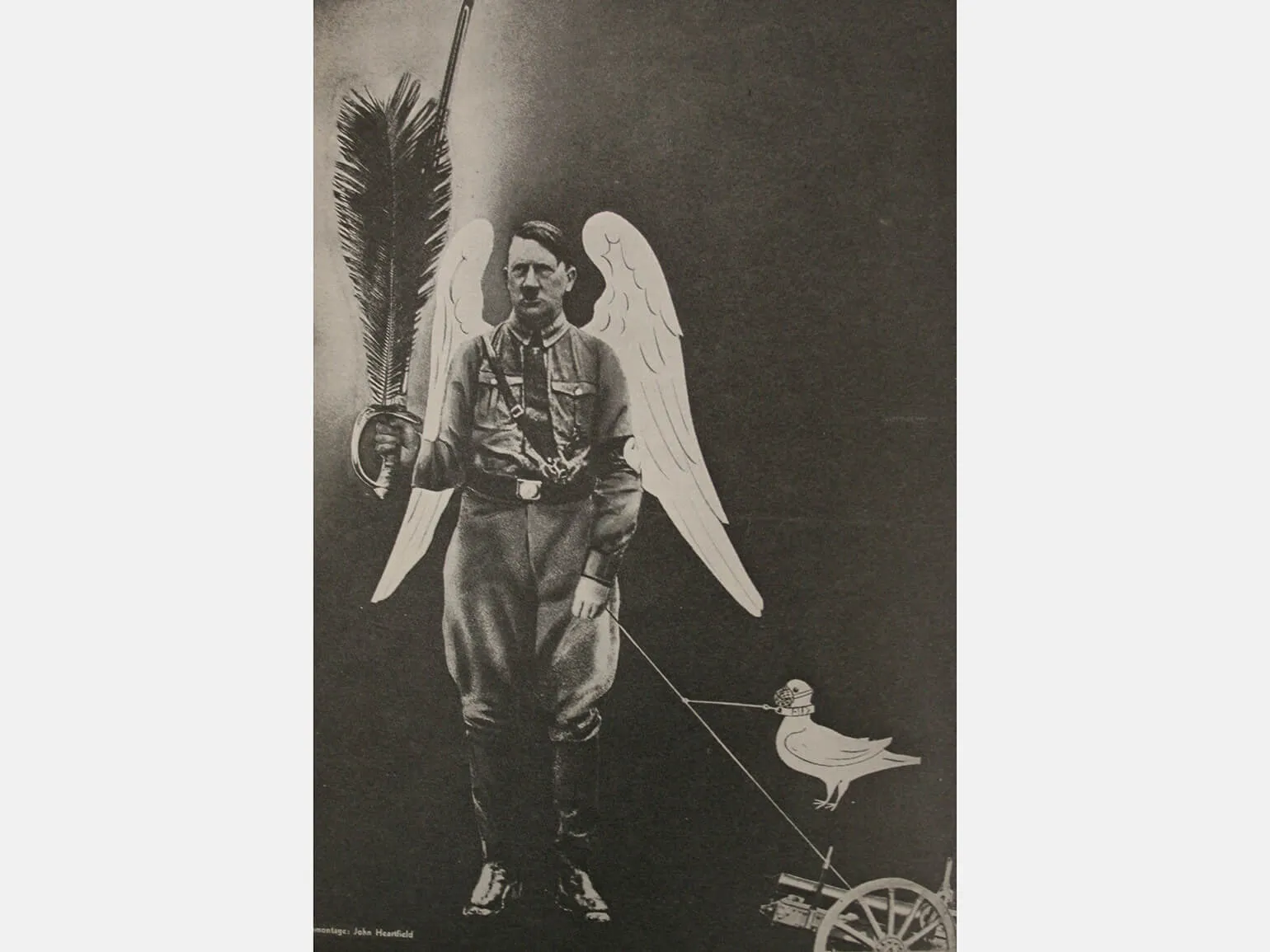
This phenomenon is not associated with personal dishonesty or hypocrisy. It stems from the manipulator's confidence and indifference to the apparent contradiction between words and actions, as well as between noble intentions and everyday practice. It is based on a complacent belief in the hidden, undemocratic power of the state.
Before each public speech, he recognizes that his words are intended only for those who are ready to listen and be convinced. Those who are unpersuaded should be approached differently. Consider this the next time you watch a political program devoted to a particular party. By analyzing such programs, you can notice how the manipulation of words and rhetoric influences the audience's perception.
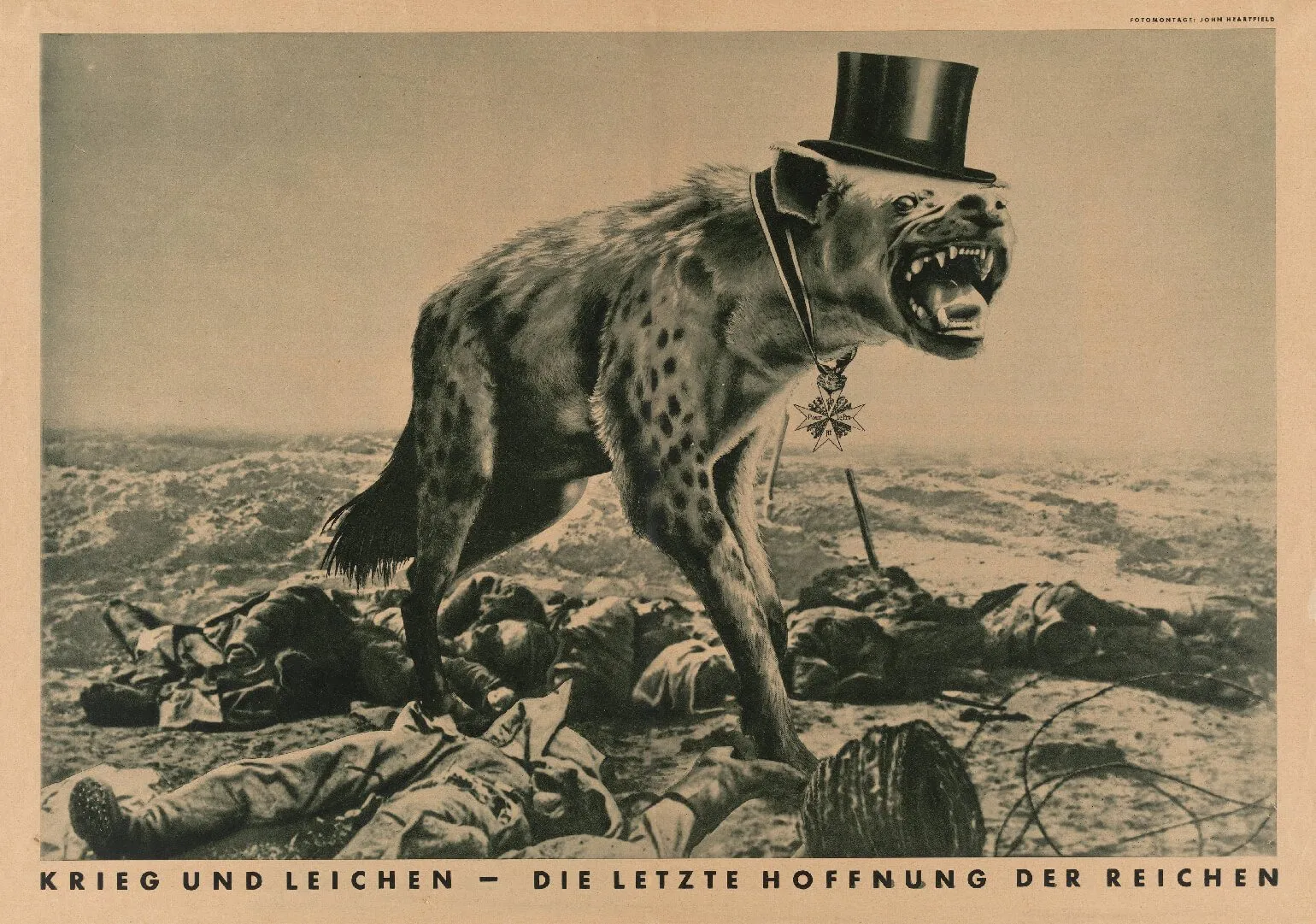
A characteristic of Heartfield's best work is the original and appropriate use of photomontage. In Heartfield's hands, this technique becomes a powerful tool for political and Marxist education. His ability to combine visual elements allows him not only to attract attention but also to convey profound ideas and social commentary. In his works, photomontage serves not simply as an aesthetic technique, but as an important means of developing critical thinking in viewers, encouraging them to reflect on social and political issues.
Using scissors, the artist cuts events and objects out of their original context. He then places them in a new, unexpected scene, stripped of their integrity, to make a political statement. For example, parliament might appear in a wooden coffin. However, such ideas can also be expressed through drawing or verbal slogans, emphasizing the diversity of artistic expression.
Photomontage has a unique advantage: all cut-out elements retain their familiar photographic appearance. This means that viewers first perceive the visual objects and then pay attention to the symbolism. The use of photomontage allows for the creation of striking compositions in which each element fits harmoniously into the overall picture. This approach opens up new horizons for creativity and visual storytelling, allowing you to communicate ideas and emotions more effectively.
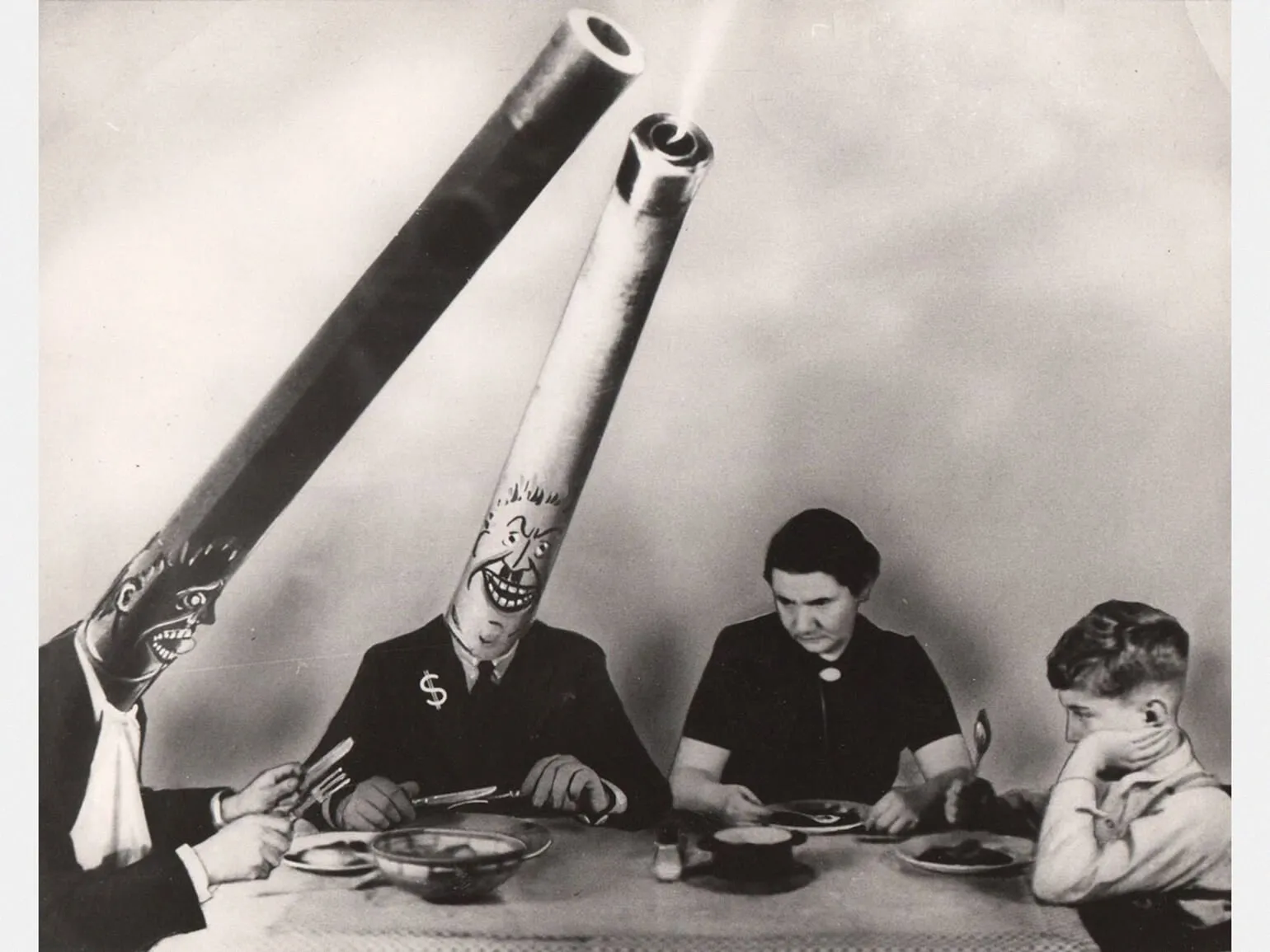
Moving objects disrupts their natural integrity, which evokes awareness of their arbitrariness conventional meaning in a holistic context. When these objects are arranged in unexpected ways, the viewer begins to realize that their conventional meaning, which merges with their physical appearance, is in fact only a mask. This mask, concealing the true nature of the objects, is suddenly torn away, revealing the deception they have been creating. Thus, the external appearance of objects becomes a tool for demonstrating manipulation, forcing us to reconsider our usual ideas about them.
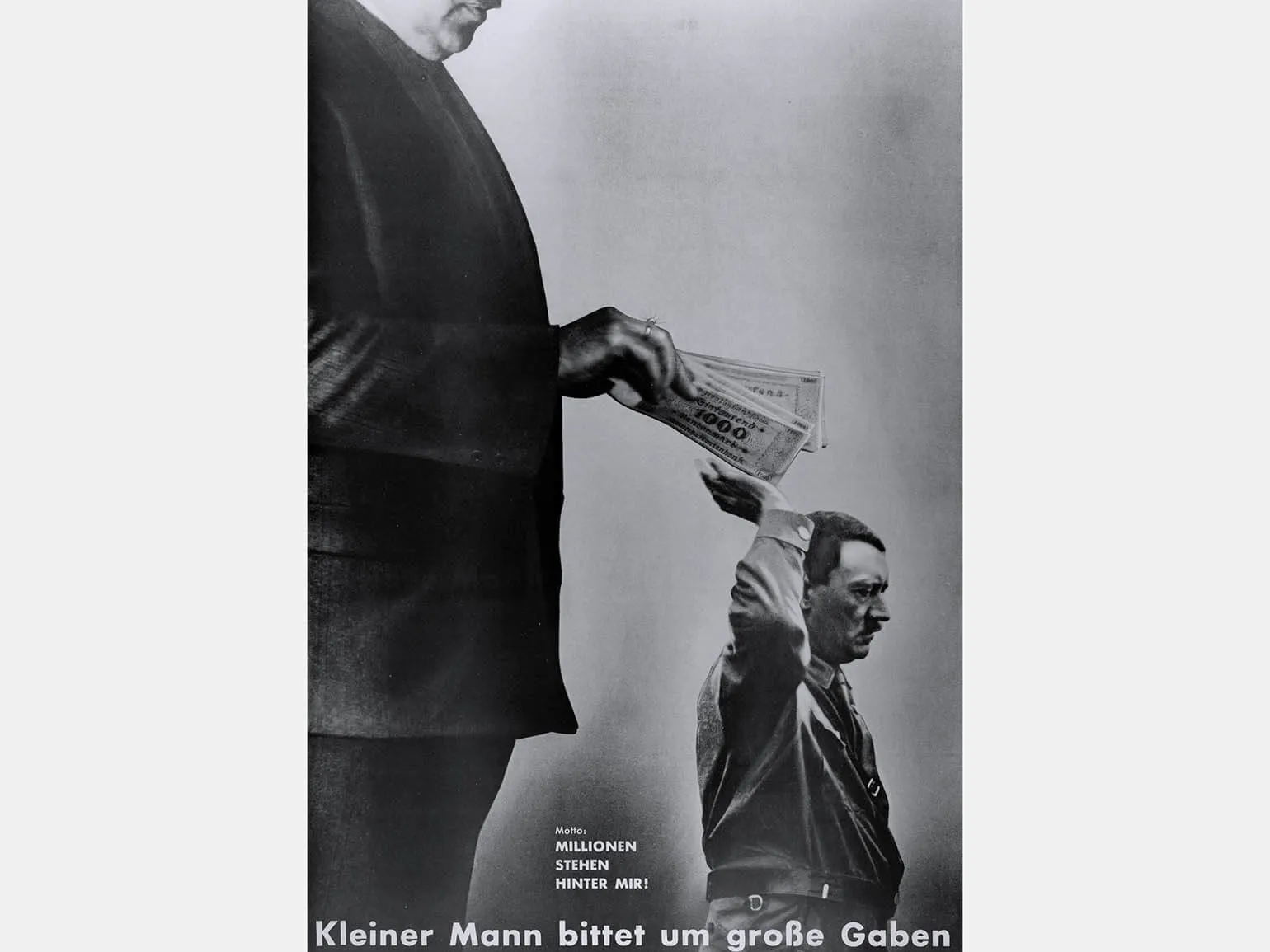
Here are two simple examples that illustrate complex ideas. One photograph depicts Hitler giving a Nazi salute in response to the salute of participants in a mass rally, who are not visible. In the background, significantly larger than him, is a faceless figure of a man. This man carefully places a wad of banknotes into Hitler's hand, which is raised above his head. The message of the cartoon, created in October 1932, is that Hitler is supported and financed by large industrialists. However, there is a more subtle subtext: Hitler's charismatic gesture loses its true meaning, emphasizing that his popularity and influence depend on financial injections.
Cartoon created a month after the fighting, depicts two distorted skeletons lying in a mud-filled crater on the Western Front. Viewed from above, it's clear that nothing is intact around them except for the hobnailed boots still attached to the skeletons' feet. Despite the mud, the boots appear to be in relatively good condition. The caption reads, "One more time?" At the bottom of the cartoon, a dialogue unfolds between the fallen soldiers, who notice others already lining up to take their places. This artwork challenges power and masculinity—concepts traditionally associated with military symbolism and boots in Germany.
Photomontage as a didactic tool for social and political commentary presents a unique opportunity for further experimentation. This technique has the ability to demystify complex concepts and phenomena, making it particularly valuable in the contemporary context. Heartfield's genius was to unlock this potential, opening new horizons for visual communication and critical understanding of reality. Using photomontage, one can effectively convey ideas, provoke discussion, and inspire social change.
Photomontage loses its power when it becomes purely symbolic and uses its own means to reinforce rhetorical mystification. Heartfield's work does not always avoid this problem. This weakness highlights the deep political contradictions that can be found in his work. An effective photomontage should not only convey visual ideas but also provoke critical reflection on the context in which it is created.
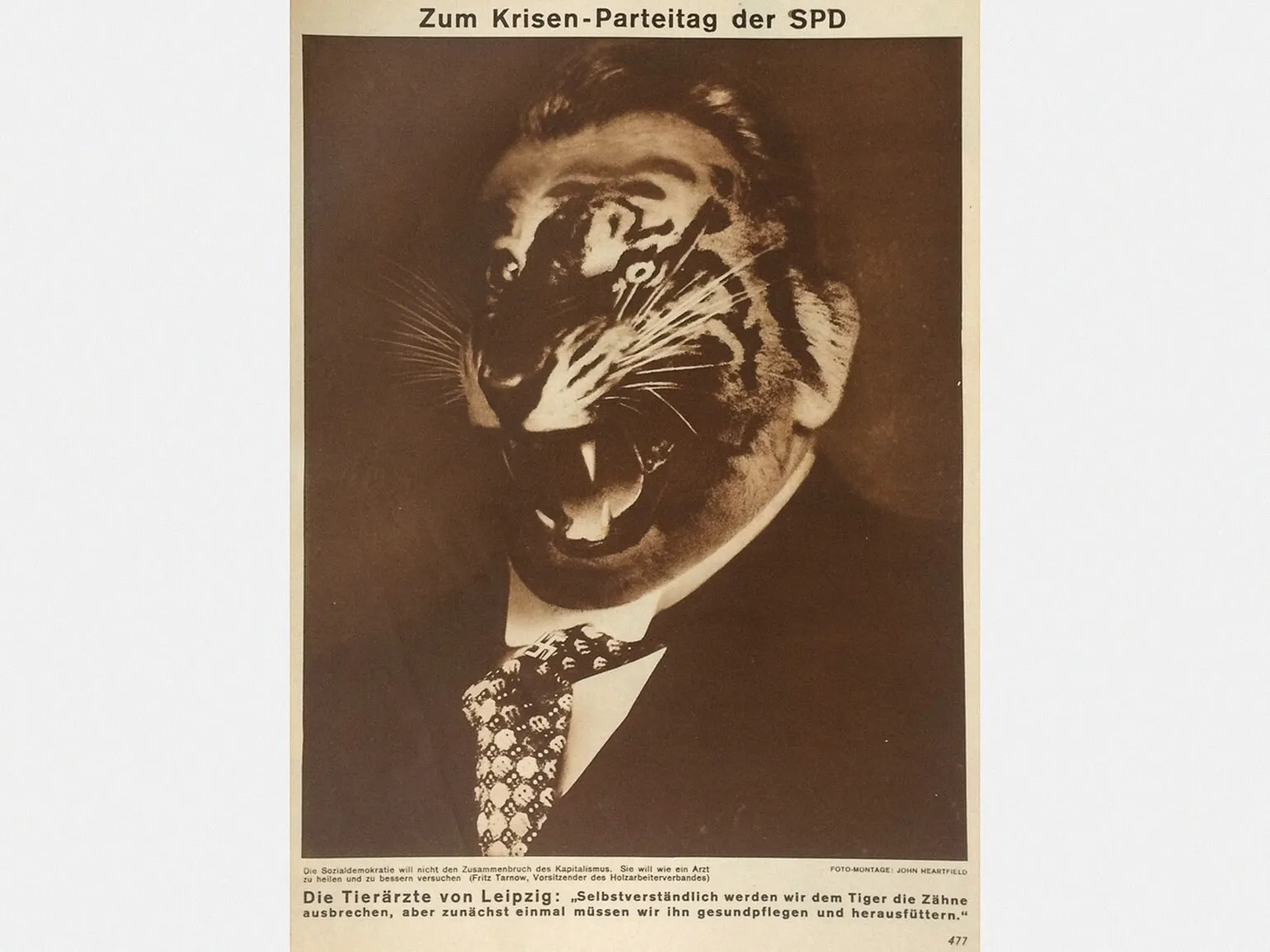
Until 1933, communist policy towards the Nazis and German The Social Democrats' position was unclear and arbitrary. In 1928, after Bukharin's fall and under pressure from Stalin, the Comintern began calling all Social Democrats "social fascists." In 1931, the artist Heartfield created a cartoon depicting the leader of the German Social Democratic Party with the face of a snarling tiger. This approach highlights the conflict between communists and social democrats, which significantly influenced the political situation in Germany at the time.
As a result of the arbitrary and schematic patronizing approach imposed by Moscow in the context of local contradictory facts, the German communists lost the opportunity to engage with the nine million voters who supported the Social Democratic Party (SPD). The majority of these voters were workers, potentially opposed to Nazism. If the German working class had chosen a different strategy, Hitler's rise to power might have been prevented.
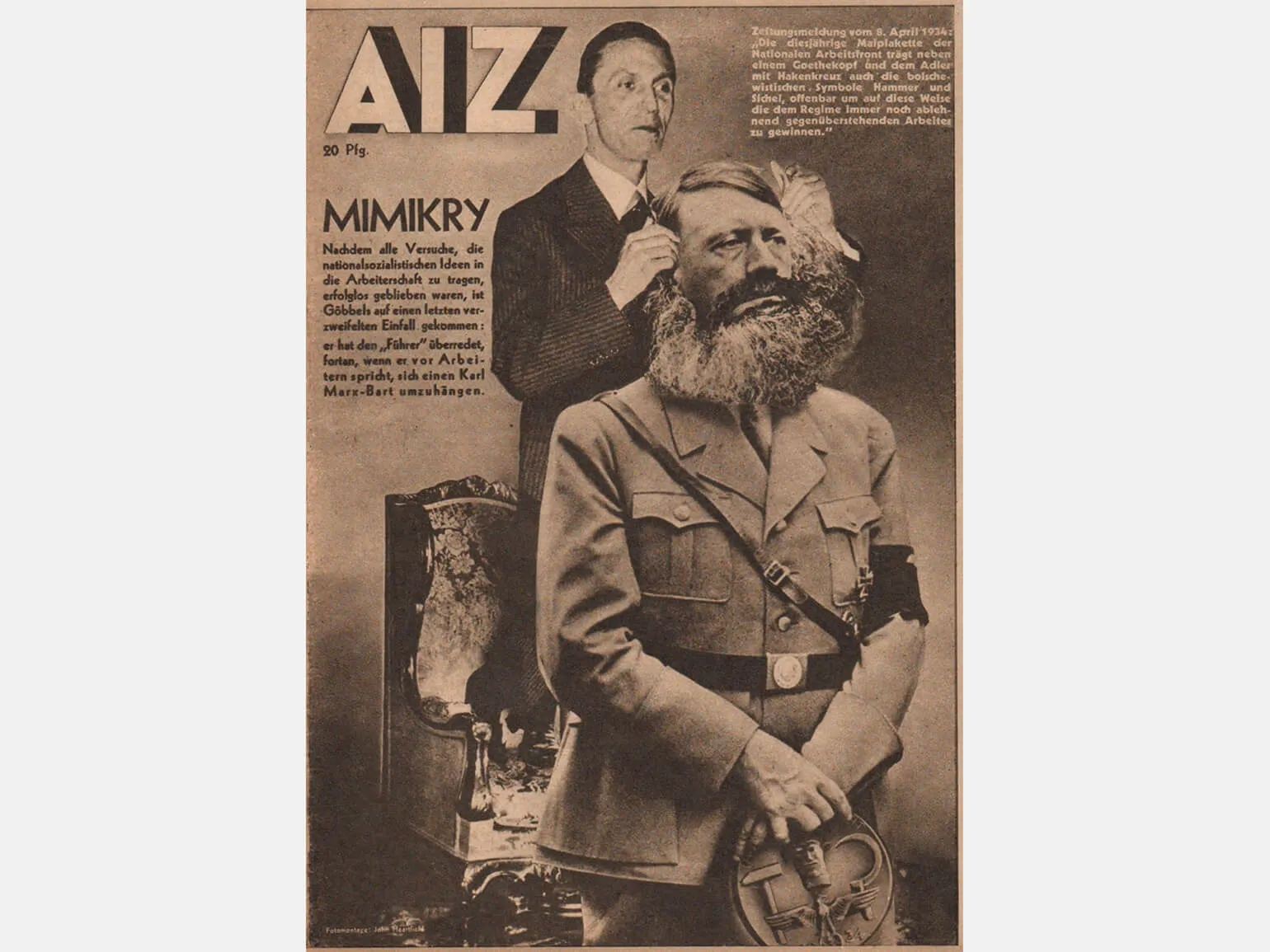
Hartfield accepted the party line without any preconceived misgivings. However, his statements clearly distinguish between words intended to demystify and those suited to sermons based on simplified moral rhetoric. The demystification concerns the rise of Nazism in Germany—a socio-historical phenomenon that Heartfield knew in minute detail; the sermons, on the other hand, are broad generalizations he inherited from others. It's important to understand that this distinction helps us better understand the complexity of historical processes and their impact on modern society.
In 1935, a cartoon was created depicting a miniature Goebbels standing on a copy of "Mein Kampf." This image symbolizes his disdain for the ideas contained in the work. "Mein Kampf" is included on the Federal List of Extremist Materials in Russia, underscoring its dangerous and destructive nature. The cartoon serves as a striking example of criticism of the ideology propagated by the Nazi regime and illustrates the absurdity of some of its representatives.
Goebbels declared at Nuremberg: "We have no use for these degenerate, subhuman creatures." In his speech, the Red Army soldiers standing with their rifles at the ready appear like giants, making his gesture absurd and pitiful. This caricatured interpretation could have only one effect on anyone but the most devoted communists: it confirmed Nazi propaganda that the USSR posed a threat to Germany. In the context of ideological confrontations, the difference between thesis and antithesis turns out to be insignificant: a single bright moment can change perception, turning black into white.
A May Day poster from 1937 reflects the ideals of the French Popular Front. It depicts a hand holding a red flag and branches of cherry blossoms. The background raises questions: clouds, sea waves, or mountains? At the bottom is a quote from "La Marseillaise": "Liberté, liberté chérie, combats with tes défenseurs!" This poster is filled with symbolism that will soon be refuted by political falsehood, highlighting the contradictions of the era.
We cannot pass moral judgment on Heartfield's integrity, for to do so requires understanding and experiencing the pressure he faced over a decade—a time of increasing threat and terrible betrayals. However, thanks to his example, and that of other artists such as Mayakovsky and Tatlin, we now understand certain issues better than ever before. This allows us to appreciate their work and the circumstances in which it was created in greater depth.
This question touches on a key aspect of the moral pressure exerted on dedicated artists and propagandists to suppress or distort the original impulses of their imagination. This is not a question of intimidation, but of the moral and political arguments sometimes advanced by artists themselves against their own creative thinking. This phenomenon highlights the internal conflicts that arise during creative work when external factors impact individuality and creativity.
An artist's moral leverage arises when they begin to reflect on their own usefulness and effectiveness. Questions about whether his work is sufficiently useful and how effective it is become relevant. These considerations are linked to the belief that both artwork and propaganda can serve as tools of political struggle. It is important to recognize that every creative activity has the potential to influence public consciousness and shape political reality. The fruits of the imagination exert significant influence on the political and social spheres. Artists who act as revolutionaries strive to use their works as a tool in mass struggle. However, it is impossible to predict how their work will impact society—either for the artists themselves or for those who evaluate their work. In this context, it becomes clear that comparing art to weapons is a risky and far-fetched metaphor. Art can inspire, provoke change, and spark debate, but its impact is always unpredictable.
The effectiveness of a weapon can be quantified because its characteristics are clearly are defined and can be reproduced. Weapons are selected depending on the specific situation and conditions of use. In contrast, the effectiveness of a figment of the imagination cannot be quantified. Its characteristics cannot be isolated and reproduced, as they depend on circumstances and context. A figment of the imagination changes depending on the situation, creating unique conditions and opportunities.
There is no clear numerical correlation between the quality of a figment of the imagination and its effectiveness. This is due to the very nature of imagination, which functions in the realm of subjective interactions. These interactions can neither be stopped nor measured, which emphasizes the uniqueness of the creative process. A figment of the imagination, being the result of the inner world and personal experience, defies standard methods of evaluation, which makes it valuable in various aspects of life and creativity.
I do not seek to ascribe indefinable value to art, but I do want to emphasize that imagination, based on a true impulse, constantly questions existing categories of usefulness. It outpaces that part of the social self that attempts to understand this issue.
To be truly useful, art must be able to deny its own boundaries. This denial became an argument for revolutionary artists, convincing them of the need to compromise. However, such steps, as demonstrated by the example of John Heartfield, often proved ineffective.
A lie can be considered both useful and useless, depending on the context. Its essence is determined by what remains hidden. The usefulness of a lie can be assessed through the prism of the facts and emotions that are not voiced. The truth always appears in the open and requires honesty to reveal it.
Profession Photographer
You will learn to take professional photos from scratch. You will learn how to organize shoots, process frames, manage models and a team. Find your style, build an impressive portfolio, and start making money doing what you love.
Find out more