Contents:
Natalia Ershova, artist and author of a course on self-promotion for photographers, shares her experience and opinion on the meaning of an Artist Statement. This document plays an important role in the life of every artist, allowing them to express their ideas, intentions, and artistic vision. An Artist Statement not only helps them better understand their work but also communicate effectively with audiences, galleries, and potential buyers. A properly written Artist Statement can significantly increase their chances of successful advancement in the art world.
What is an Artist Statement
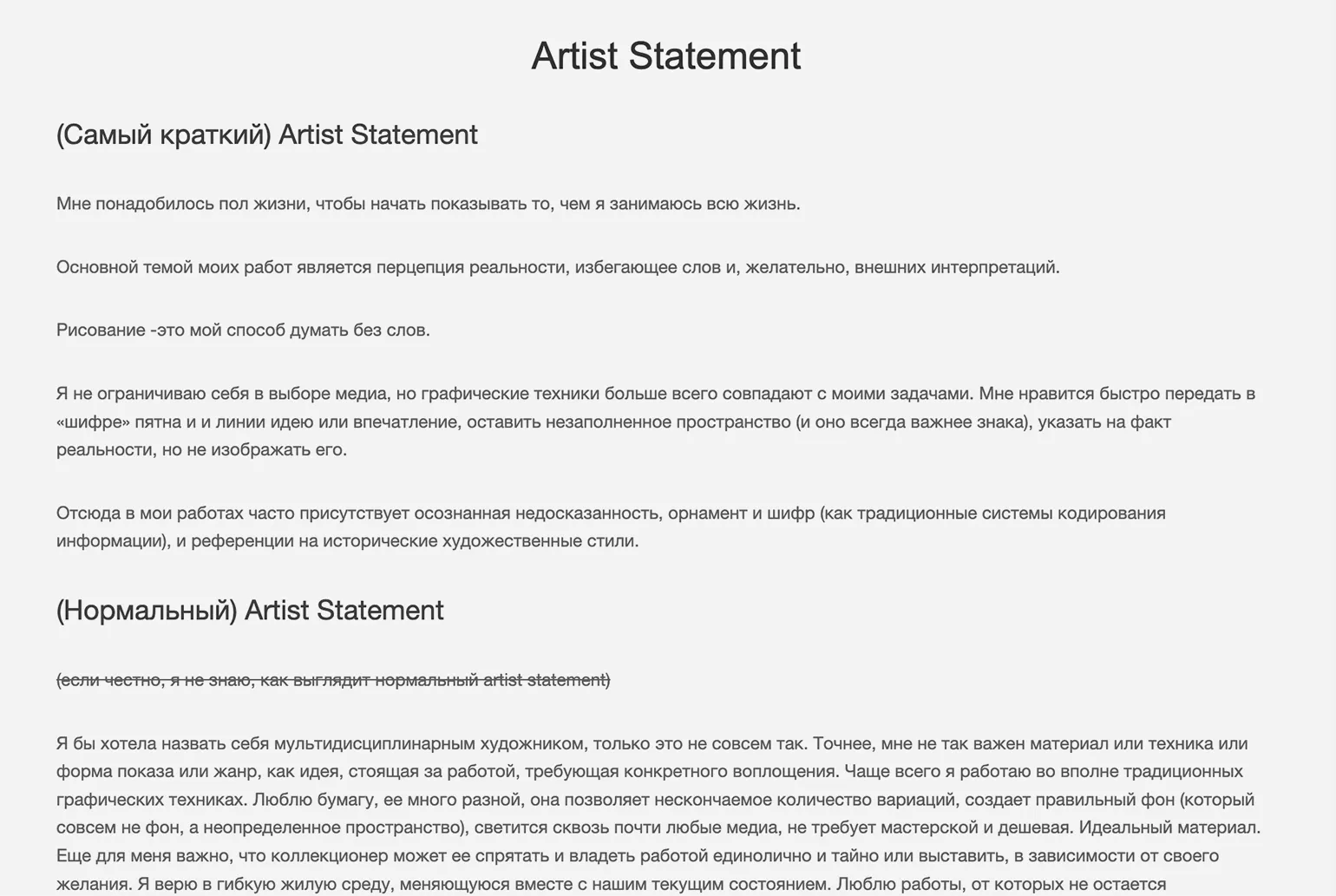
An Artist Statement, or artist statement, is an author's text in which the artist shares their thoughts on their work. In this document, they describe the ideas, key themes, and motifs of their works, and also focus on the techniques and materials used, especially if they play an important conceptual role. This statement helps viewers better understand the artist's intentions and perceive their work more deeply.
The word "statement" can be used to refer to the text accompanying a photo series by a specific author. In this context, it represents a description of an individual work. In contrast, an Artist Statement is a text that encompasses all aspects of an artist's work, their philosophy, and artistic intentions. Such a text allows for a deeper understanding of the author's approach to art and reveals their individuality.
Why an Artist Statement
An Artist Statement helps viewers, curators, gallery owners, art historians, and potential buyers better understand the meaning of an artist's works and their cultural context. This text reflects the intentions and ideas that the artist has put into their works, allowing for a better understanding of their philosophy and artistic concepts. A properly composed Artist Statement fosters a connection between the works and their audience, making art more accessible and understandable.
Creating an Artist Statement is an important stage for the artist themselves, as it facilitates a deep understanding and conceptualization of their work. This document helps articulate the ideas and intentions behind the artwork, as well as formulate a unique artistic position. An Artist Statement not only serves as a tool for self-expression, but also plays a key role in establishing a connection with audiences and critics, allowing them to better understand the artistic intent and context of the work.
Well composed An Artist Statement is an essential tool for promoting yourself in the art scene. It helps artists clearly articulate their ideas and approaches, making their work more accessible to viewers and critics. A well-written statement not only attracts attention but also facilitates professional connections and increases your chances of participating in exhibitions and projects. A compelling Artist Statement highlights the uniqueness of the artist and their work, which in turn increases visibility and recognition in the art market.
An Artist Statement is often required when submitting an application for an open call. Juries reviewing numerous portfolios can evaluate works quickly and superficially. A well-written Artist Statement will help your work stand out from the crowd and attract the attention of the jury, prompting them to take a closer look. A well-written Artist Statement not only highlights the individuality of your style but also demonstrates your conceptual depth, which can significantly increase your chances of success in competitions.
Where the Artist Statement is used
- On the artist's personal website.
- When applying for educational programs; This is especially relevant for European art schools.
- In business communication with collectors, curators, gallery owners, festival organizers, art critics and the media.
- In applications for festivals, competitions, grants.
- When preparing any presentations about your work.
Telegram channel for photography lovers. Here you will find inspiration, shooting tips, discussions of technique and image processing, and the opportunity to share your work with like-minded people. Join our community and dive into the world of photography with us. Receive the latest news, participate in competitions, and expand your knowledge of photography.
If you are interested in a variety of literature, subscribe to our resource. We present the works of talented Russian authors, monitor international literary competitions, and share creative advice from professionals. Discover new facets of literature and get inspiration from the best in their field.
Key Mistakes When Writing an Artist Statement
When writing an Artist Statement, artists often make a number of mistakes. Firstly, many of them do not pay sufficient attention to the clarity and distinctness of their thoughts. The text must be understandable and accessible to a wide audience. Secondly, there is often a lack of connection between the artist's personal experience and their work. It is important to show how life events and experiences influence the creative process and the development of artistic style. It is also important to avoid overly complex language and terminology, which can be intimidating to the reader. Furthermore, some artists do not emphasize the process of creating their works, which is also important for understanding their art. Finally, it is important to remember that the Artist Statement is not only a description of the works but also an opportunity to share your thoughts and ideas, making it an important element in the artist's presentation. Many young artists believe that their art does not require textual accompaniment. They believe that viewers, curators, art critics, and buyers should intuitively understand their work. However, this attitude often leads to works going unnoticed and not finding their place in exhibitions or sales. Text can serve as an important tool for creating context and understanding. A well-written description helps viewers more deeply understand the artist's intentions and better perceive their work. A proper interpretation can significantly increase interest in a piece of art and facilitate its successful sale on the art market.
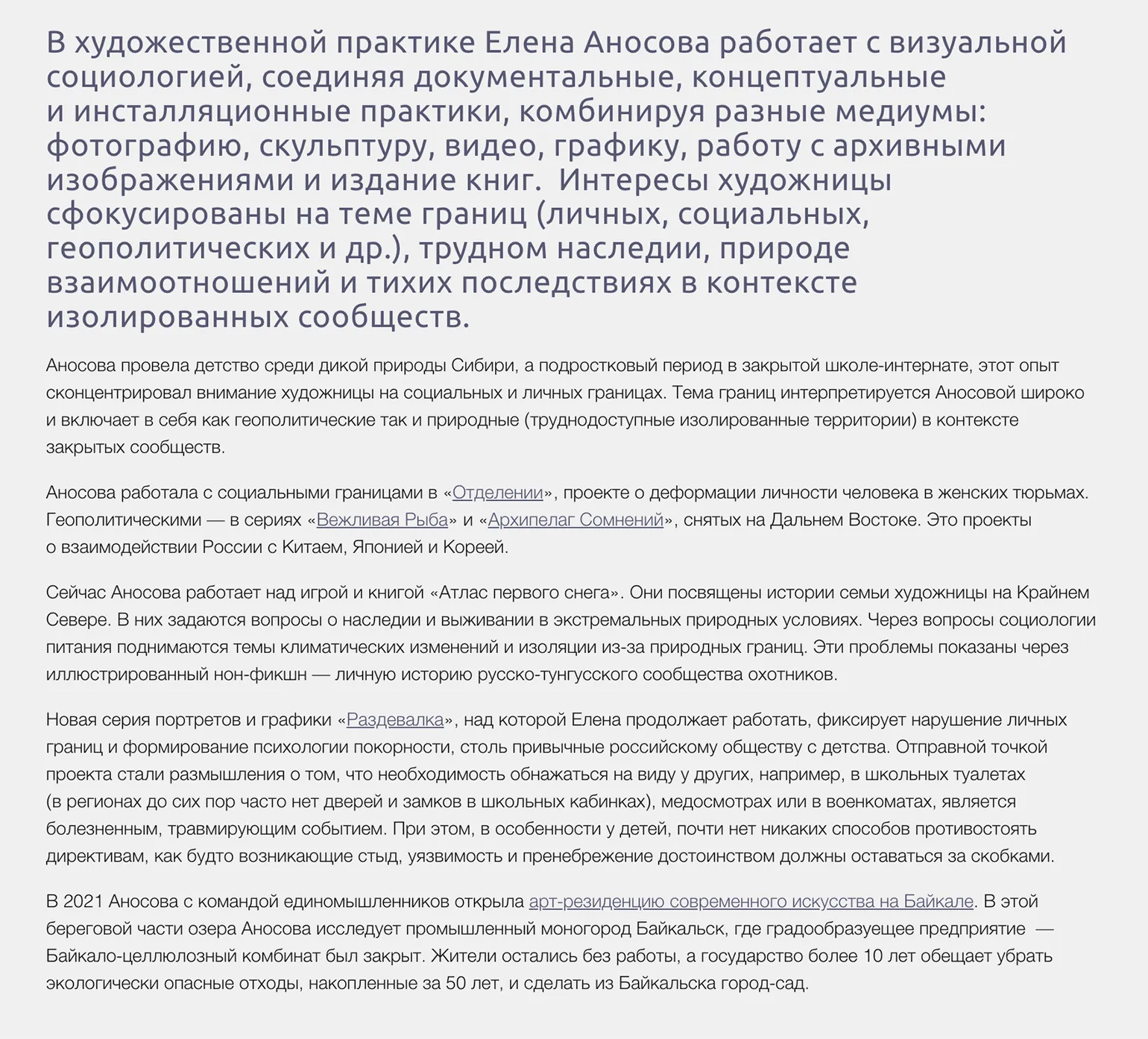
An artist's confession is a revelation in which they share their fears and experiences. Although many of these emotions are not reflected in their work, they shape their inner world. In contrast, an Artist Statement is a marketing tool that helps the artist introduce their work and concept to a wider audience. This text serves to build a brand and draw attention to the art, rather than to provide deep introspection.
Most artist statements begin with the phrases "My art explores..." or "In my work, I explore...". Such formulaic expressions and clichés give the text a faceless and inexpressive character. To attract attention to your art, it is important to avoid stereotypical formulations and create unique, personalized descriptions. This will better convey the essence of your work and make it more memorable for the audience.
The text requires significant revision to make it more interesting and meaningful. It's important to avoid repetition and emphasize key points. To improve readability and engage readers, use varied sentence structures and deeper topic development.
Optimizing text for SEO involves using keywords and phrases that match user queries. This will help increase page visibility in search engines and attract your target audience.
Also, consider the structure of the text, highlighting important points and making them more prominent. It's important to create a logical flow of information that's easy to digest. Try to draw conclusions and summarize so readers can better absorb the material and understand its value.
Thus, the goal is to create high-quality, informative, and engaging text that will meet the interests of the audience and the requirements of search engines.
Insincerity can lead to a loss of trust and understanding. It's important to avoid trying to please the public at any cost. Be genuine and talk only about topics that truly excite you. This will help you maintain your individuality and avoid disappointment when interest in a particular topic wanes. Sincerity in content creates a deep connection with the audience and promotes trust.
Avoid using complex and specialized terminology in your Artist Statement. Even a highly educated viewer isn't required to understand neuroscience, robotics, IT, or other fields that interest the artist. The main goal of the Artist Statement is to convey your idea to the audience, not confuse them. Strive for clarity and specificity in your description to make your text accessible and understandable.
Sometimes there are universal texts that can be adapted to any photographer's project. For example, statements such as "My art explores the influence of mythology on the formation of identity" can form the basis of your Artist Statement. This text should reflect your uniqueness and creative approach. It is important that it not only conveys your ideas but also resonates with your audience. This approach will help establish a deeper connection with viewers and demonstrate your individuality as an artist.
Comparing your artwork to that of other artists can be useful for increasing understanding and developing your own style. However, it is recommended not to mention other artists' names when describing your work, unless your work is an homage. Focus on the uniqueness of your approach and the expression of your own ideas. This will help create a more authentic image and attract attention to your work, as well as improve search engine results.
Comparing your own work to literary or musical works is inappropriate. Each form of creativity has its own unique characteristics and context. Literature and music develop according to their own laws, and their evaluation requires specific criteria. It is important to understand that each work, whether text or music, reflects the individual style and approach of the author, which makes such comparisons inappropriate. It is best to evaluate your work in the context of its own development and goals, without trying to compare it to other art forms.
An artist independently creates an Artist Statement, which is an important element of their artistic practice. While you can ask a friend or editor to review the completed text, you should not ask a critic or curator to write it for you. An Artist Statement should reflect the author's personal thoughts and views, as well as their unique style and concept of creativity. This allows the viewer to better understand the artistic intent and context of the work.
How to Write an Artist Statement
Keep the following goals in mind:
- tell a viewer of any skill level about your art;
- write a text that is easy to read and easy to translate — for participation in international projects, it will need to be translated into English;
- write a text of at least 200 characters, excluding spaces — sometimes competitions for artists limit the length of the Artist Statement.
Start by sitting down and writing about your work as it comes to mind. Don't be afraid to form individual phrases, even if they are unrelated. This process will help you identify key ideas and thoughts that can be developed later. The main thing is not to limit yourself, allowing the creative flow to flow freely.
Step 2. Consider how your art relates to the main directions. Define what you do and what your goals are. It is recommended to study the work of photographers who seem creatively close to you. By analyzing their approaches, you will be able to gain a deeper understanding of your own work. However, it is important to remember that copying the texts or opinions of art critics is unacceptable.
Step 3. Describe your medium. If you practice documentary photography, create installations from photographs, or are a photobook artist, share this information. Clarify how your style and approach to work influence the perception of your works. Talk about the techniques and materials you use and the story you want to convey to viewers through your work. This will help better understand your creative practice and attract attention to your art.
Describe the key themes of your work. In practice, many authors intuitively focus on two or three fundamental themes. Look at your projects from an external perspective: what are they telling you? If you're having trouble answering this question, consult with a curator or critics you trust and who understand your work well. Their opinions can help you see your art in a new light. However, the decision whether to take this opinion into account or not is yours.
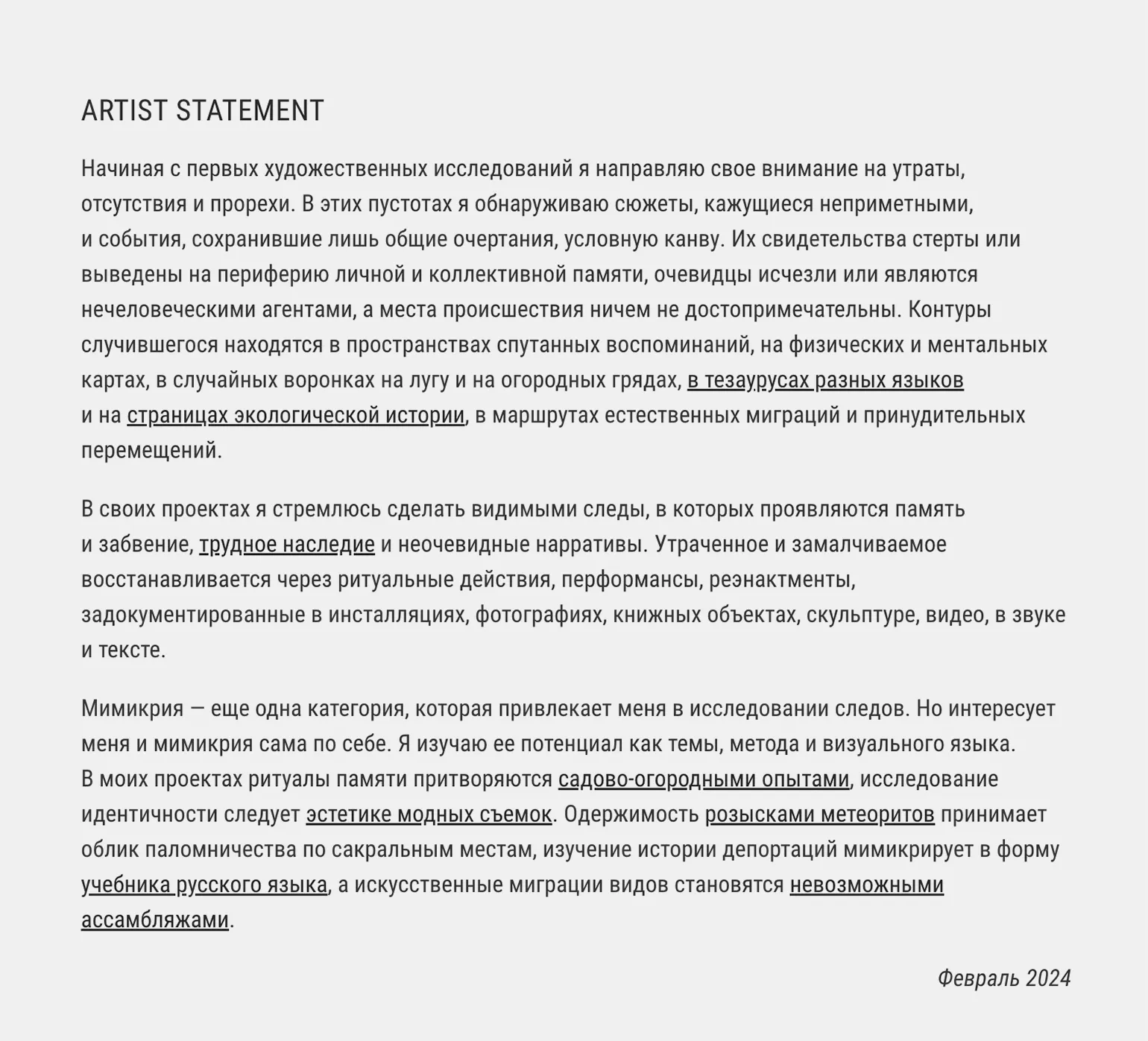
Step 5. If the choice of tools for completing your work is key, for example, you prefer to shoot exclusively on film, explain Why you made this particular choice. Highlight the advantages of film photography, such as the unique image texture, color rendition, and the emotional atmosphere it creates. This will help readers understand your creative position and the value of your approach.
It is important to understand that the right information and its presentation play a key role in how users perceive your content. To achieve maximum effectiveness, it is necessary to consider SEO elements. This includes using relevant keywords, optimizing titles and meta tags, and creating unique and high-quality content. You should also pay attention to the structure of the text to ensure it is easy to read and understand for the audience. Clear and consistent presentation contributes to better perception and retention of readers. Don't forget the importance of updating information to keep it relevant and interesting.
Throughout our creative lives, we create many works, and each of them helps us better understand ourselves and our art. Therefore, it is important to periodically update and refine your artist statement. Your development should be reflected in this document. If you wrote your first Artist Statement five years ago and have created new work since then, now is a great time to reread and rethink your writing. Updating your Artist Statement will not only help you recognize changes in your creative work, but will also make your work more attractive to audiences and potential curators.
Profession Photographer
You will learn how to take professional photos from scratch. Learn how to organize a shoot, process footage, and manage models and a team. Find your style, build an impressive portfolio, and start making money doing what you love.
Find out more