Contents:
One of the key themes of avant-garde photography in the early USSR was the formation of a "collective body" of the new society. To achieve this, it was necessary to "mortify" individual bodies, which symbolized the rejection of personal identity in favor of collective interests. This desire reflected the political and social changes of the time, emphasizing the importance of unity and cohesion in the new society. Avant-garde photographers used a variety of artistic techniques to convey this idea, creating images that illustrated the transition from individualism to collectivism.
With permission from the publishing house "New Literary Review", we present an excerpt from the chapter "Soviet Photo Avant-garde", written by art historian and art critic Andrei Fomenko. This chapter is part of the book "The Soviet Twenties," which serves as an introduction to the visual practices of the 1920s, including fine art, architecture, photography, and film.
A Telegram channel for photography enthusiasts. Here you will find inspiration, shooting tips, and discussions of various techniques and styles. Join a community of photographers, share your work, and receive feedback. Stay up-to-date on new photography trends and improve your skills.
If you're interested in the diversity of literature, subscribe to our resource. We publish the work of talented Russian authors, follow international literary competitions, and share helpful creative tips from practitioners. Learn more about the literary world and discover new facets of creativity.
A Telegram channel for photography enthusiasts. Here you'll find inspiration, shooting tips, discussions of technique, and the exchange of experiences. Join our community to share your work and receive feedback. Learn about new photography trends and develop your skills with us.
If you're interested in learning about the diversity of contemporary literature, subscribe to our resource. We present the work of talented Russian authors, cover important international literary competitions, and share creative life hacks from practitioners. Stay with us and dive into the world of literature with us.
Monstrous Bodies
In his artistic practice, Alexander Rodchenko often contradicts his own declarations, which are written in the spirit of factographic realism. In his programmatic article "The Paths of Modern Photography" (1928), he defends the advantages of "unexpected" angles, arguing that they most accurately reflect our perception of reality. In contrast, the desire to adhere to the "correct" point of view leads to staging, as a result of which the subject is removed from its natural environment and transferred to a neutral space, where it can be photographed according to the canons of classical perspective. As Rodchenko wrote: "It is not the photographer who goes with the camera to the object, but the object goes to the camera, and the photographer poses it according to the canons of painting." However, in Rodchenko's own work, various techniques, including "angle," are often employed without any realistic basis. This highlights the non-obligation of traditional rules. The most striking example is a series of photographs of pioneers, taken from various angles—top-down and bottom-up. Critics have noted that this series illustrates an extreme case of "staging," a practice Rodchenko himself condemned. Critic Leopold Averbakh, one of the leaders of the Russian Association of Proletarian Writers (RAPP), also commented on this, emphasizing the complexity and contradictions of Rodchenko's approach to photography. This topic continues to be relevant in discussions of artistic language and methods in photography.
He photographed the pioneer, positioning the camera at an angle. The result, instead of a typical portrait, was something strange—a creature with one enormous arm, distorted, and noticeably out of symmetry.
Without further ado, one can say that these words accurately describe Rodchenko's work. His works demonstrate a unique approach to the development of a visual language that has left a significant mark on art. Rodchenko actively experimented with form and content, which allowed him to create original works reflecting the spirit of the times.
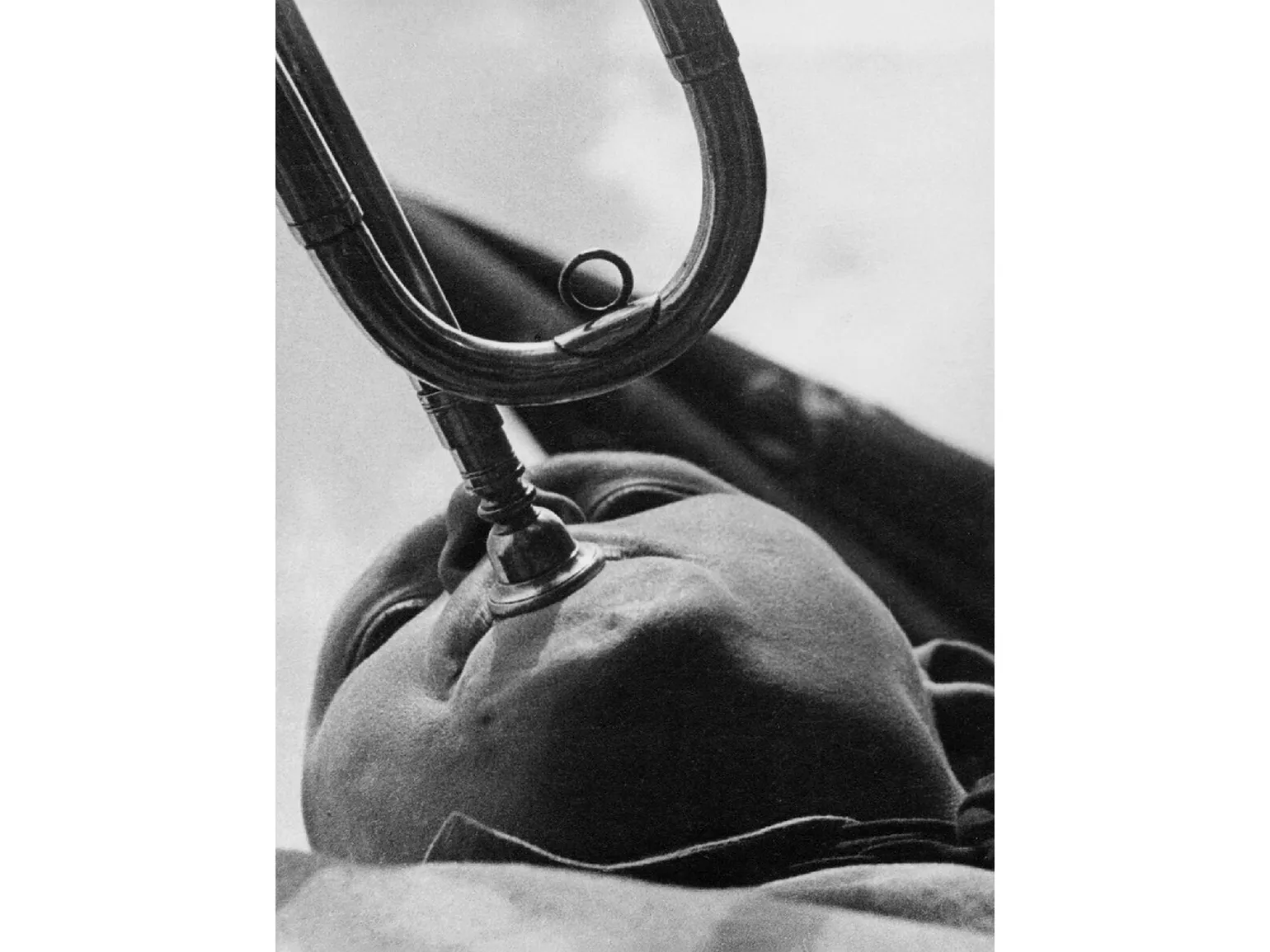
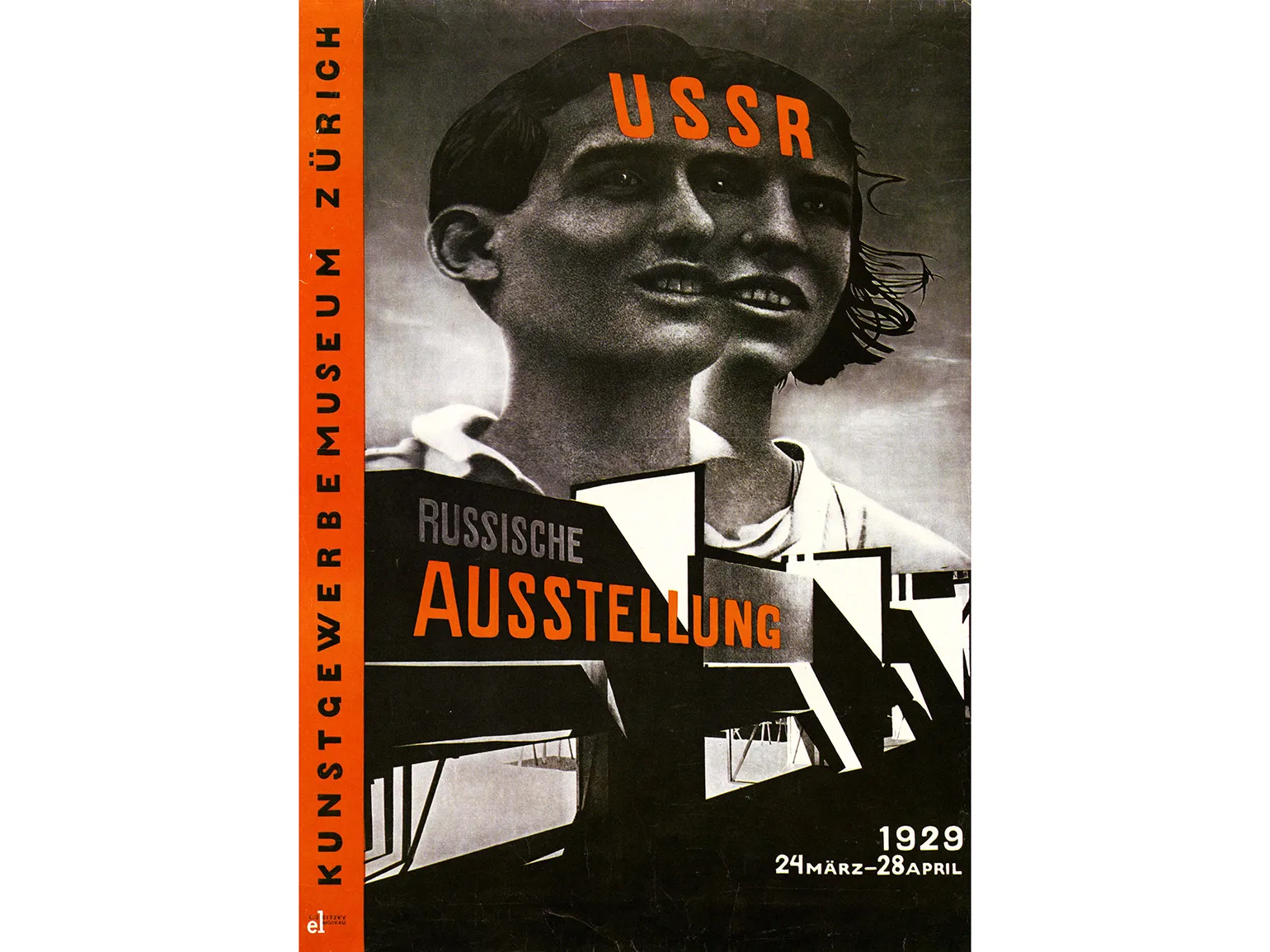
In the Soviet photo avant-garde of the late 1920s — The mid-1930s saw numerous examples of bodily deformations, the sadistic dismemberment of the human body, and the construction of new, "superhuman" structures from its parts. A key aspect is the blurring of boundaries between the organic and the inorganic, man and machine. Thus, in his posters, Klutsis creates the image of a collective body from fragments, while Lissitzky, in a sketch for a poster for the "Soviet Exhibition" in Zurich (1929), uses double exposure to combine a male and female face, eliminating sexual distinctions and restoring a primal bipolar unity reminiscent of Plato's "primordial humans." Rodchenko, in turn, transforms the body of a diver into a kind of flying machine, devoid of anthropomorphic features.
According to Boris Groys, the avant-garde's interest in bodily metamorphoses was a logical continuation of their desire to experiment with reality. In their view, the transformation of the body presupposes overcoming the limits it imposes. However, the source of this resistance should be sought not in nature itself, but in infinite creativity, similar to the element of fire, as discussed by Heraclitus of Ephesus. Objects, being an alienated form of fire's existence, cause it to extinguish. The task of the avant-garde is to rekindle this flame, to resume the process of creation, which requires destroying what has already been created.
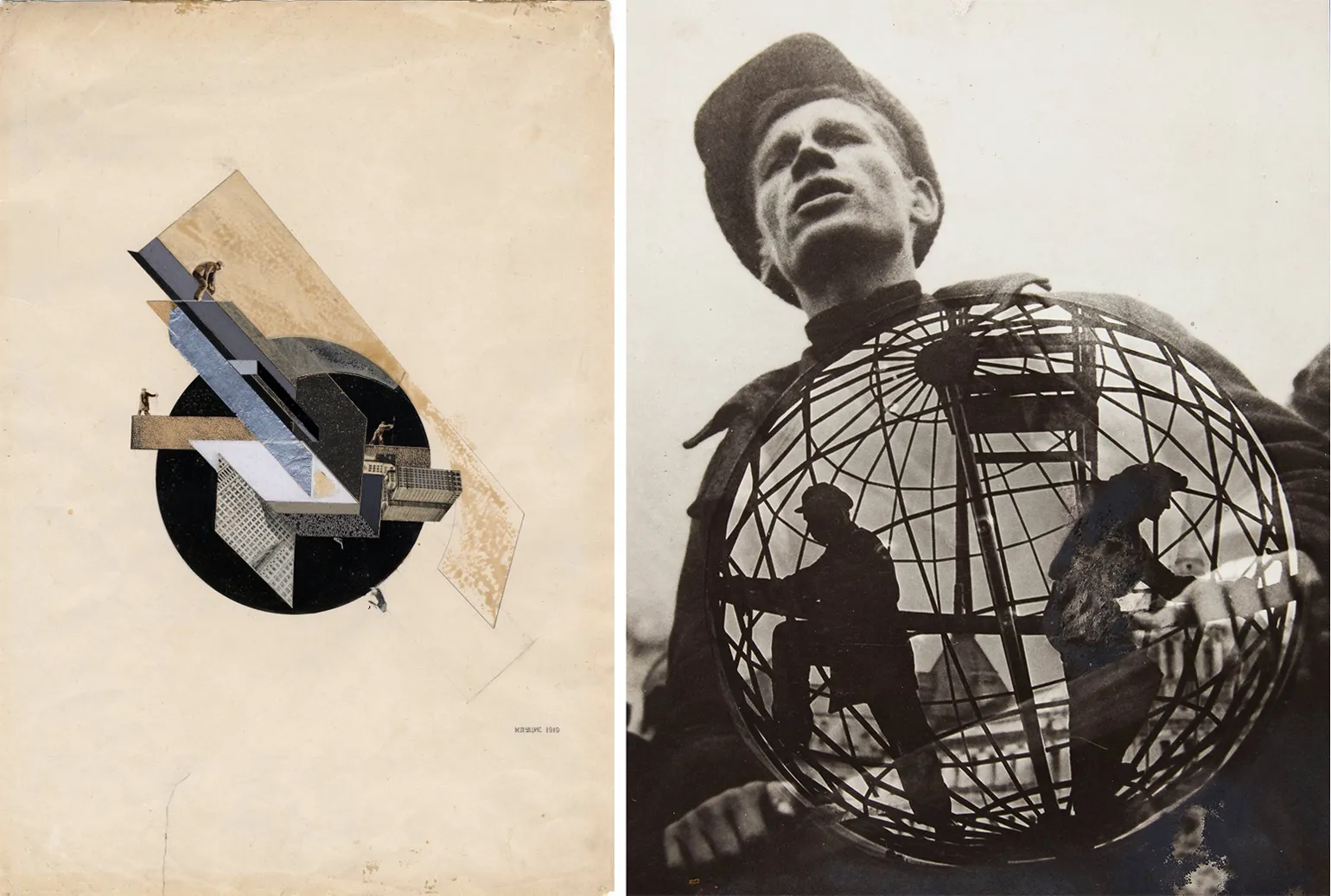
One of the most significant examples of corporeal de/construction is Lissitzky's photomontage, used to decorate the Soviet pavilion at the International Hygiene Exhibition in Dresden and to design its booklet in 1930. This work is close in theme and composition to Klutsis's "Dynamic City." The plot of both works centers on the presentation of the future world, depicted as a globe with a grid of parallels and meridians. Unlike Klutsis's early work, where the terrestrial sphere remains closed, in Lissitzky's work it becomes completely transparent. The globe is associated with an industrial structure created by two workers located within it. Lissitzky uses the method of multiple exposure to combine the various details. The construction culminates in the head of a third worker, significantly larger in scale, transforming the world-construction into a human or superhuman body that penetrates the viewer's consciousness. This triple metaphor of the universe, corporeality, and technology also symbolizes art as a process of life-building that ultimately erases the boundaries between nature and culture.
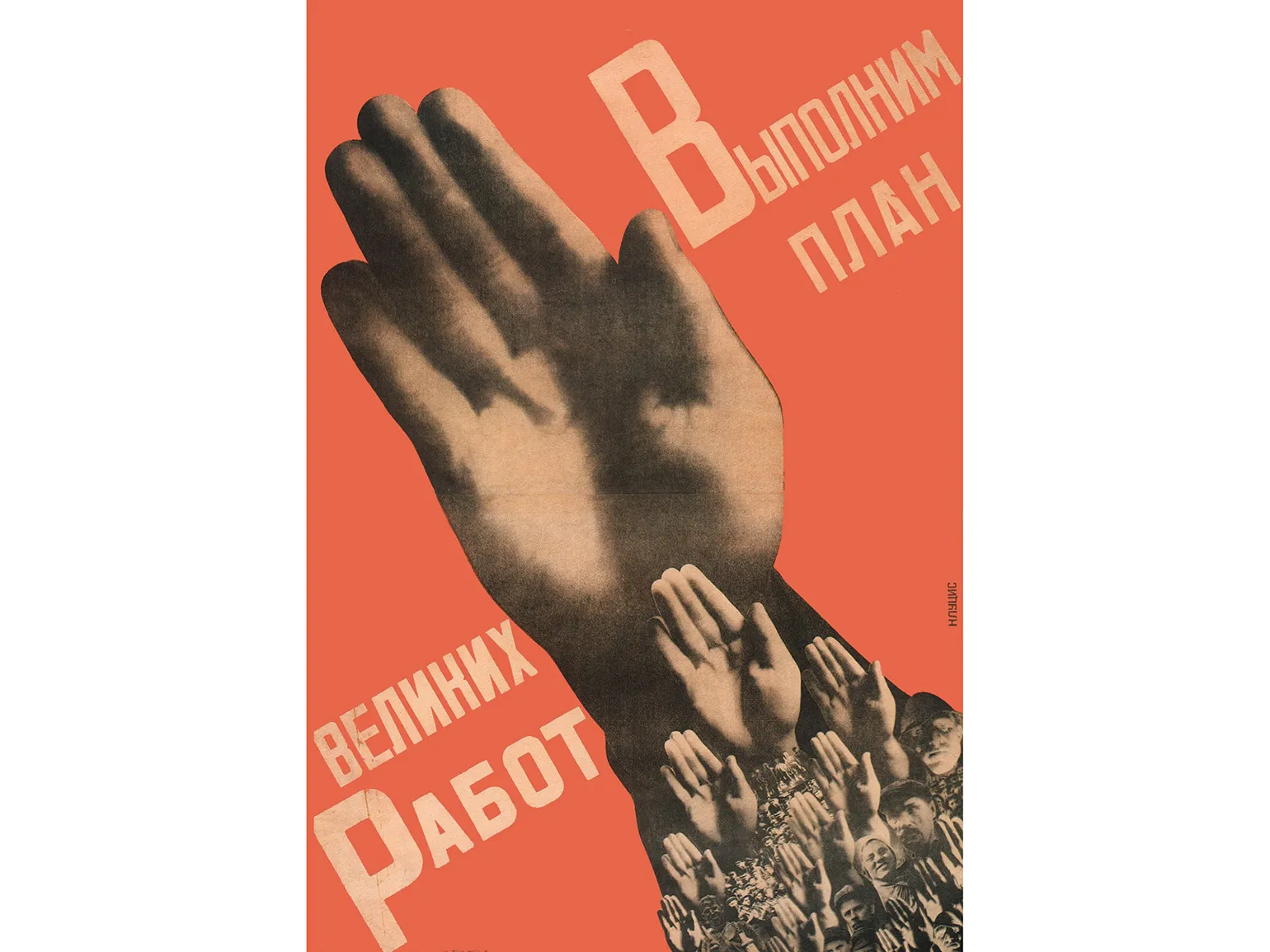
The birth of the collective body of proletarian society became a key theme of Soviet avant-garde photography, in which the method of montage acts as its symbol. The construction of this collective body is carried out through fragmentation, crushing, and subsequent reassembly, which can be seen as a violation of the integrity of the photograph and, ultimately, of the bodies depicted in it. In Klutsis's photomontage "Let's Fulfill the Plan of Great Works" (1930), dozens of identical hands raised in a single gesture suggest the destruction of the boundaries of the individual organism, which also serves as an updated, post-suprematist version of "Dynamic City." Constructivist manipulations of the photographic image are analogous to initiation rituals: the acquisition of a new, more perfect social or supra-social body is possible only after the destruction of the original individual body. The memory of this process is preserved in the form of scars, marks, and tattoos, symbolizing the denial of primary corporeality. The negative effect of the "montage of facts" serves as an equivalent to these scars. Thus, another explanation can be offered for why the authorities repressed the avant-garde: exposing the artistic device simultaneously revealed violence, reminding us of the victims and controlling it.
Avant-garde art, striving to depersonalize and liken man to a machine, displayed a more totalitarian spirit than the art of actual totalitarianism itself. The latter cannot be so consistent and overt, preferring to disguise the mechanisms of its work. It returns to man what was destroyed by political revolution and the artistic avant-garde—everyday life, traditions, and familiar symbols of the human, simultaneously transforming them into its own ideologemes. It is no coincidence that "pastoral" motifs occupy an important place in the culture of Stalinism. It was precisely this "human, all too human" that the avant-garde artists encroached upon, which led to the exclusion of their art from the public sphere. In Stalinist art, including the late works of Rodchenko and Klutsis, the image of an organically holistic, "symmetrical" body comes to the fore, often combined with natural motifs. In a dehumanized society, the need arises for humanistic art, capable of restoring man's connection with his humanity.
To ensure text optimization for SEO, it is important to use keywords and phrases that are relevant to the topic. You should also improve the readability and structure of the text.
I suggest the following version of the text:
Read also:
This section provides additional materials that may be useful for a deeper understanding of the topic. You will find articles, research, and recommendations to help expand your knowledge and improve your practical skills. Be sure to review the suggested materials for a complete understanding of the subject under consideration.
Rodchenko: A Revolution in Photography
Alexander Rodchenko became one of the key figures in the history of photography and 20th-century art. His works radically changed the concept of photography as an artistic movement. Rodchenko actively experimented with composition, perspective, and technical possibilities of shooting, which allowed him to create a unique visual language.
In his photographs, Rodchenko sought to capture the dynamism and energy of urban life. He used unconventional perspectives and shooting angles, which gave his works a special expressiveness. These innovative approaches made him one of the founders of constructivism in art and also had a significant influence on the further development of photojournalism.
Rodchenko not only took photographs, but also actively studied the theory of photography, emphasizing its importance as a mass media and an instrument of social transformation. His ideas about an "unbiased view" of reality and the use of photography to change public consciousness remain relevant today.
During his career, Rodchenko created many iconic works that are now considered classics. His work inspires contemporary photographers and artists, and his legacy continues to influence the development of visual art. The revolution he brought to photography opened up new horizons for self-expression and perception of the world around us.
Profession Photographer
You will learn to take professional photos from scratch. You will learn how to organize shoots, process frames, manage models and a team. Find your style, build an impressive portfolio, and start making money doing what you love.
Find out more