Contents:
In this material, we consider the key aspects of the topic, covering the main issues and important points. We provide up-to-date information that will help readers better understand the subject of discussion. The text contains useful tips, recommendations, and practical examples that make the material valuable and informative for a wide audience. We strive to provide readers with quality content that meets their needs and satisfies their interest in the topic under consideration.
- What is a portfolio review;
- Who needs it and why;
- How to get to a review;
- How to get the most out of a review.
What is a portfolio review?
A portfolio review is a process of professional analysis of an art portfolio. Reviewers are experienced artists and curators who evaluate the author's work, provide feedback, and share their impressions. This format allows you to receive valuable recommendations that can help improve the quality of your work and increase your chances of success in the creative field. A portfolio review is an important step for artists looking to establish themselves and grow their careers.

Learn more:
Creating a Photography Portfolio: A Step-by-Step Guide
A portfolio is an essential tool for photographers, showcasing their style, skills, and uniqueness. A well-designed portfolio can help attract new clients and stand out from the competition.
The first step in creating a portfolio is choosing a theme. Determine which genres of photography interest you most: portraits, landscapes, weddings, or commercial photography. Focus on your strengths and the work you enjoy most.
The second step is selecting your work. Include only the highest quality and most diverse photographs in your portfolio. Make sure they reflect your style and technique. It's optimal to choose 15-20 images so as not to overwhelm visitors.
The third step is creating a visually appealing design. Consider how best to present your work: use a consistent design style, including fonts and a color palette. This will create a cohesive impression of your portfolio.
The fourth step is adding descriptions. Add brief information to each image describing the concept, location, and technique. This will help clients better understand your work and approach.
The fifth step is optimizing your portfolio for search engines. Use photography-related keywords in titles and descriptions. This will increase your portfolio's visibility in search engines and attract more potential clients.
The sixth step is constant updating. Regularly add new work and remove outdated ones. This will show that you are actively developing and always have something new to offer.
By following these recommendations, you can create an effective portfolio that will attract attention and help you successfully develop your photography career.
Why do artists need portfolio reviews?
Feedback for authors is an important and complex task that requires a separate fee, notes photographer and teacher Natalia Ershova. Portfolio reviews serve this purpose, giving authors the opportunity not only to showcase their photographs but also to talk in detail about their projects, ask questions to experts, and receive valuable feedback. This format fosters the development of artists and enhances the quality of their work, allowing them to better understand audience needs and market demands. Portfolio reviews are becoming a key tool in the professional growth of photographers and creative professionals.
It is important for artists to invest their time and resources in professional reviews for several reasons. Firstly, receiving constructive criticism allows them to improve the quality of their work and identify its strengths and weaknesses. Secondly, reviews can help establish connections with other art professionals, opening up new opportunities for collaboration and exhibitions. Furthermore, expert feedback can increase an artist's visibility in the marketplace, attracting new audiences and potential buyers. By investing in reviews, an artist not only develops their skills but also strengthens their position in the art community.
Reviewers will provide an analysis of your portfolio's strengths and weaknesses, as well as recommendations for improvement. For example, they may suggest which photo project to include first and which opening shot to attract the attention of gallery owners or competition jurors. This will help highlight your best work and create a compelling first impression of your work.
When an artist spends a long time working on a project, their perspective can become limited. This leads to difficulties in objectively evaluating their work, as they are not always able to see it from the perspective of a viewer. Reviewers, seeing the work for the first time, are able to notice details that may have escaped the artist's attention. They help determine whether the work is perceived as intended and identify any gaps in meaning or excesses of information. This outside perspective is especially useful during the creation stage, when it is important to receive feedback to further improve the project.
A fresh perspective from people not involved in the subject matter is vital to the photo editing process. Photographers often strive to preserve every detail, considering it significant, which can make it difficult to objectively evaluate the material. During a joint discussion, it becomes clear whether a story is ready for publication or requires additional shooting to complete it, notes photo editor Svetlana Sofyina. This approach contributes to the creation of higher-quality content that is better received by the audience.
Feedback from curators and experts provides valuable perspective on your work. Their impressions and questions serve as excellent material for self-reflection. Reflecting on interactions with reviewers helps the author understand their place in the artistic context and a deeper understanding of the concept of their art. The feedback received can serve as impetus for further development and refinement of creative ideas, as well as contribute to the creation of a more coherent and expressive artistic vision.
Reviews from critics play an important role in the development of artistic practice. They can reveal unique aspects of your work that you yourself have not noticed. This provides an opportunity to rethink your work and determine future directions. Feedback from professionals can inspire new ideas and help you make decisions about the future of your art.
Portfolio reviews are a unique opportunity to establish yourself in the art world and attract the attention of art directors and curators. Participating in such an event allows you to showcase your creative work, which can lead to invitations to exhibitions or competitions. A professional portfolio plays a key role in building your reputation and expanding opportunities in the art world.
Review sessions, where several artists present their portfolios, are an excellent opportunity to meet fellow artists. These events facilitate networking, which can lead to joint projects and collaborations in the future. Participating in review sessions helps expand your professional network and exchange ideas, which is an important aspect of developing an artist's career.
A Telegram channel for photography enthusiasts. Here you will find inspiration, shooting tips, discussions of technique and the work of famous photographers. Join our community to share your creativity and receive useful recommendations for improving your skills. Learn about new trends in the world of photography and develop your skills with us.
If you want to learn about the diversity of literature, subscribe to our resource. We regularly publish the works of talented Russian authors, follow global competitions, and share creative life hacks from experienced practitioners. Discover new literary horizons with us.
How to get to a review
Portfolio reviews are an important part of the parallel programs of photo festivals and exhibitions. Participation is usually possible through an open competition, which may be free or require an entry fee. The selection process allows photographers to showcase their work and receive valuable feedback from photography experts. This is an excellent chance for aspiring and experienced authors to expand their horizons and establish professional contacts.
You can follow international photography competitions on platforms such as PhMuseum, Picter, and LensCulture. These resources provide up-to-date information on competitions, events, and opportunities for photographers around the world.
In Russia, photography reviews are regularly held by institutions such as FotoDepartment, GES-2, the Zotov Center, and the Multimedia Art Museum. It's convenient to follow announcements of open calls through these organizations' social media channels or photography blogs. For example, the Telegram channel "Behind the Curtain" publishes an up-to-date list of open calls monthly, allowing photographers to stay up-to-date on important events and opportunities to showcase their work.
How a Portfolio Review Works
Portfolio reviews can be held online, allowing experts to analyze the author's work digitally and communicate with them via video. The main advantage of this format is the ability to interact with an expert regardless of geographic location. This creates a unique opportunity to gain experience and advice from international curators and professionals in the field. The online format also facilitates a more flexible schedule and simplifies the process of exchanging opinions on works, which can significantly improve the quality of feedback.
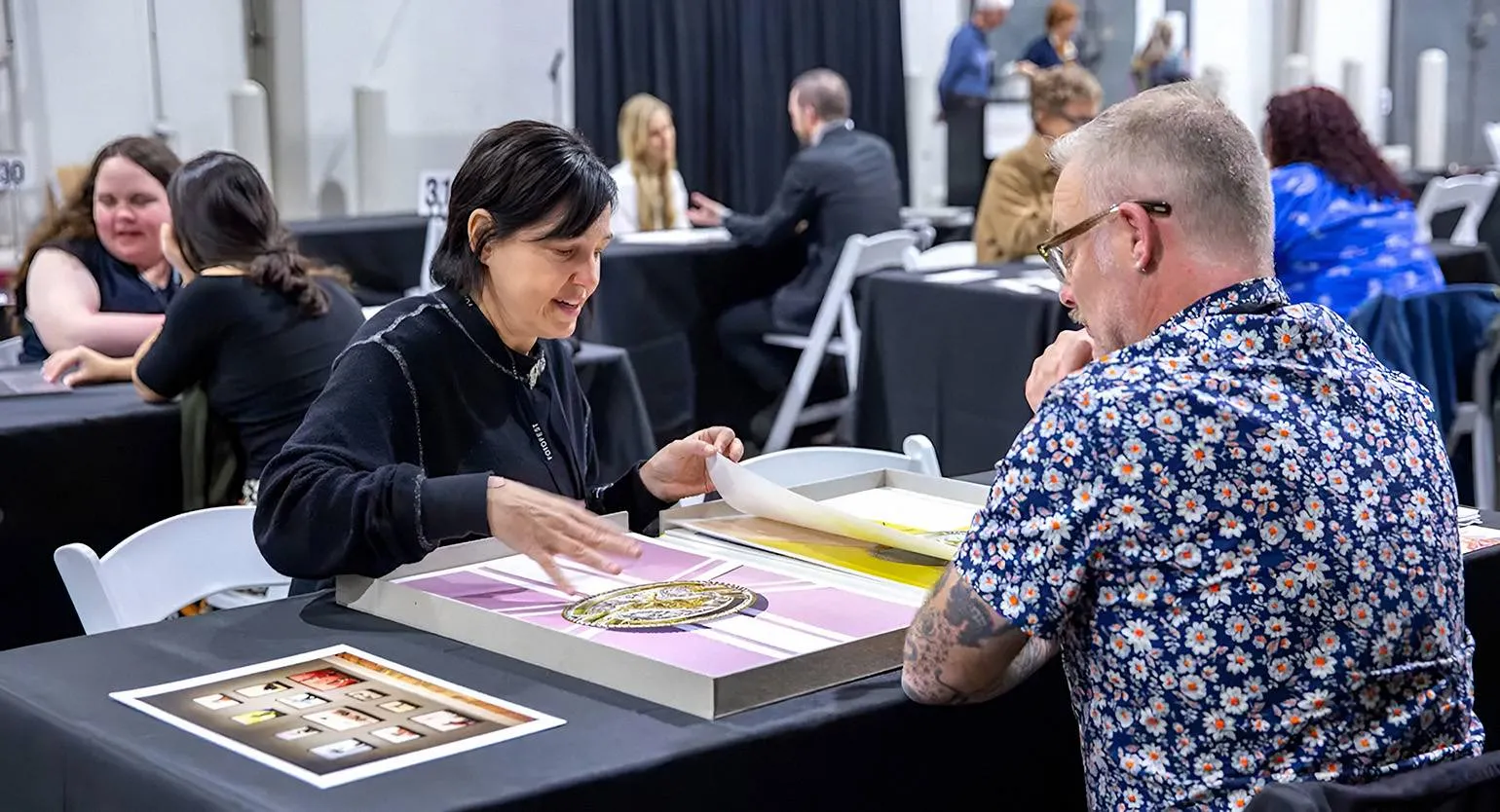
An offline review is a live meeting with reviewers, to which the artist brings a printed portfolio. This format allows curators to evaluate works in their physical format, which creates a unique opportunity for a more in-depth analysis and discussion of the submitted images. An offline review helps establish direct contact between the artist and industry professionals, which can significantly increase the chances of further collaboration and career development.
The review process often involves several experts and many artists. In such situations, a discussion with one reviewer can last only 10-15 minutes. The artist's primary goal is to make a strong impression on the reviewer in this short time and receive the most informative feedback. An effectively prepared approach to presenting your material can significantly improve the quality of criticism received and enhance your future work.
In previous articles, we discussed how to create a portfolio that effectively showcases your skills as an artist. In this text, we will focus on the key aspects to consider when conducting a review. Pay attention to the structure of your work to ensure it is logical and consistent. It is also important to highlight your strengths and achievements, emphasizing the uniqueness of your approach. Keep your target audience in mind and adapt the content to their interests. This will help make your review more appealing and persuasive.
During meetings with clients, every detail matters. The quality of the print and the way your work is presented play a key role in the successful perception of your photographs. As photographer Natalia Ershova emphasizes, attention to these aspects can significantly impact the impression and trust of potential clients. Proper presentation demonstrates your professionalism and helps establish strong relationships with clients.
Natalia recommends adhering to a certain structure during meetings. This structure helps make discussions more productive and organized. Start by clearly setting the meeting objectives so that all participants understand what will be discussed. Then move on to identifying topics for discussion, focusing on priority issues. It is also important to allocate time for each topic to avoid the meeting dragging on. The final stage includes summarizing and determining next steps, which will help participants clearly understand their tasks after the meeting. Following this structure, you can make your meetings more effective and improve communication within the team.
- Start with a short introduction about yourself and the general direction of your work.
- Show project after project, starting with the strongest. The optimal number of projects in a portfolio is three.
- Listen carefully to the reviewer and write down their comments.
- Don't be afraid to ask questions. This is important for your further development.
- At the end of the meeting, thank the reviewer for the feedback and ask for their contact information.
- After the review, write down in detail all the expert's suggestions and your thoughts that arose during the conversation. This will help you later consider the expert's recommendations and decide whether to follow them.
Expert Advice
When developing an SEO strategy, it's important to consider several key aspects. First, conduct regular keyword analysis to determine which ones are most relevant to your target audience. This will help you create content that will attract more visitors to your site.
Second, optimize your meta tags and page titles. They should contain your primary keywords and be attractive to users to increase click-through rates.
Also, don't forget about your internal and external linking strategy. Internal links help improve site navigation, while external links increase your website's authority in the eyes of search engines.
Finally, regularly updating content and adapting it to mobile devices play a crucial role in maintaining search rankings. By following these recommendations, you can significantly improve your site's visibility and attract a larger target audience.
Textured and matte paper easily absorbs finger oils. It is recommended to use white gloves to ensure your photographs retain their original appearance over multiple viewings. Be sure to bring gloves for both yourself and the reviewer. This will not only emphasize your professionalism but also demonstrate respect for your work. This approach will help create a positive impression and increase the chances of a successful outcome.
Reading is an important part of our lives and plays a key role in self-development. It not only broadens our horizons but also improves critical thinking skills. The importance of reading cannot be overestimated, as it contributes to the development of analytical skills and helps to better understand the world around us. Reading books, articles, and other texts enriches our vocabulary and develops our imagination. In an information society where access to knowledge has become easier, it is important to choose quality sources of information and develop a reading habit. Regular reading can also increase concentration and improve memory. Therefore, by devoting time to books and useful materials, we invest in our future and personal growth.
How to Write an Effective Resume
Writing a resume is an important step towards employment. A well-written CV can significantly increase your chances of landing the position you desire. It is important to consider several key aspects.
Start with a clear structure. Include contact information, a brief description of your professional goal, work experience, education, and skills. Use clear headings and highlight key points so the employer can quickly find the information they need.
In the professional experience section, list not only company names and job titles but also specific achievements. Use active verbs and quantitative indicators to demonstrate your successes. For example, instead of "Increased sales," it is better to write "Increased sales by 20% within a year."
Your education should also be presented clearly and concisely. List educational institutions, specialties, and years of study. If you have additional certificates or courses, it is also worth mentioning.
Don't forget about skills. List both professional and personal qualities that could be useful in the new position. Make sure they match the job requirements.
It is important that your resume is neatly formatted. Use a single font and maintain a consistent style. Avoid grammatical errors and typos, as they can leave a negative impression of you.
At the end of the document, you can add references or links to your profiles on professional networks, if appropriate. Remember that a resume is your personal marketing tool that should arouse the interest of the employer and distinguish you from other candidates.
Photographer Profession
You will learn how to take professional photos from scratch. You will learn how to organize shoots, process frames, manage models and a team. Find your style, build an impressive portfolio, and start making money doing what you love.
Find out more