
Contents:
- The emergence of a photographer's copyright
- Model release: what it is and how to write it
- Consent to the processing of personal data
- Shooting a child or teenager
- Children under 7
- Children from 7 to 14 years old
- Children from 14 to 16 years old
- Children from 16 to 18 years old
- Shooting in the style nude
- Posting photos on photo stocks and photo banks
- The hero asks not to publish his photo
- The hero asks to delete the published photo
- The hero's use of his photos
The emergence of the photographer's copyright
When creating a photograph, the author automatically receives copyright to it. This is provided for by Article 1257 of the Civil Code of the Russian Federation. According to this article, the author of a work of art, including a photograph, is the person listed as the author, unless other evidence is presented in court. This means that to protect their legal interests, a photographer only needs to confirm their authorship of the photograph; no further legal action is required.
A photographer's copyright encompasses both moral rights and exclusive property rights. Moral rights include the right of authorship, which implies recognition of the photographer as the creator of the work. In addition, the photographer has the right to use their name or pseudonym when publishing or otherwise using the photograph. Exclusive property rights grant the photographer the right to use the image at their own discretion: to reproduce, publish, exhibit, and distribute it in various formats. Protecting photographers' copyright is important for preserving their creativity and ensuring fair compensation for their work.
As a general rule, unless the contract between the photographer and the model specifies otherwise, the photographer has the right to dispose of their photographs at their own discretion. This means that the photographer can use the images for commercial purposes, exhibit them, or publish them in a portfolio without obtaining additional permission from the model. However, it is important to remember that in some cases, special provisions may apply that limit these rights. Therefore, it is always worth carefully reviewing the terms of the contract to avoid misunderstandings in the future. Properly drawn up agreements between the photographer and the model will help protect the interests of both parties and ensure the legal use of the images.
- from Article 1229 of the Civil Code of the Russian Federation, which secures the copyright holder's right to use the result of their intellectual activity in any way that does not contradict the law;
- from Article 152.1 of the Civil Code of the Russian Federation, which determines that the consent of the citizen depicted in the photograph is not required if he or she posed for a fee.
Concluding an agreement between the photographer and the model is an important and advisable step. Such an agreement guarantees the protection of the interests of both parties and establishes clear terms of cooperation. In the event of a breach of the agreement, having a contract will help ensure legal protection and simplify the dispute resolution process, including possible litigation. Thus, concluding a contract serves as a reliable tool for minimizing risks and ensuring transparency in the relationship between the photographer and the model.
A Telegram channel for photography lovers. Here you will find inspiration, tips on shooting and editing images, as well as information about new trends in the world of photography. Join our community to share your work, receive feedback, and learn from the pros. We discuss various techniques, equipment, and best practices to help you improve your skills and create unique photographs.
If you want to discover how diverse literature can be, subscribe to our resource. We publish works by talented Russian authors, follow global literary competitions, and share creative life hacks from professionals. Discover new ideas and inspiration in the world of literature.
Model Release: What It Is and How to Write One
The concept of "model release" and similar legal categories does not exist in Russian legislation. However, this term is used to refer to an agreement governing commercial photography. The parties to this agreement are advertising agencies or independent photographers and models. A model release plays an important role in protecting the rights of all parties involved, ensuring the legality of the use of models' images in advertising materials. This agreement avoids legal disputes and ensures that models' images are used in accordance with their consents. Concluding contracts without taking into account the specifics of Russian legal regulation can lead to their invalidity. Understanding the legal nature of a model release is an important step in preventing such problems. A thorough understanding of its features will help ensure the legal validity of the agreements entered into, which is especially important in a context of constantly changing legislation. This agreement concerns the provision of services by a model for participation in a photo shoot. This document is a contract for the provision of services for a fee in accordance with Article 779 of the Civil Code of the Russian Federation. During the shoot, photographs are created, which are subject to copyright. Therefore, the contract must take into account the specifics of the legal relationship between the parties in the context of intellectual property. It is important to include provisions in the agreement that protect the rights to the created images and determine the procedure for their use.

The mixed nature of the agreement causes difficulties in clearly regulating model releases under law. This makes it difficult to understand and apply the legal norms related to the use of images and personal data for commercial purposes. The need for clear rules and standards is becoming increasingly important to ensure the protection of the rights of both models and the companies using their images.
To ensure that a photographer can publish images in which their model is the main subject without the risk of legal problems, the following must be included in the contract:
- Purposes for using photographs: where and in what order the photo will be used (online, in print, at an exhibition).
- Type of use: for example, commercial or non-commercial, advertising, editorial.
- Terms and territory of use: during what period and in what countries the image may be used.
- Assignment of rights: the subject’s consent to the transfer or limitation of rights to the image.
- Remuneration (if provided): indicate the amount of the fee or make a note about the absence of payment.
When drawing up any contracts, including a model release, two copies of the document must be made. Each copy must contain the date and place of conclusion of the contract, as well as full details of the parties, including passport details and the address of a legal entity or the place of residence of an individual. Both parties must sign at the end of the document. This will ensure the legal force and protection of the interests of all parties to the agreement.
Consent to the processing of personal data
The image of the subject includes his or her personal data, such as appearance and individual traits. To improve the photographer's safety, consent to the processing of personal data is an important tool. This document must specify:
- the purpose of processing personal data (publication of the photograph);
- processing methods (storage, publication, etc.);
- data processing period (how long the photo will be stored and used).
Photographing a child or teenager
When organizing filming and using photographs involving minors for commercial purposes, it is necessary to take into account legislative restrictions aimed at protecting the physical and moral development of children. In particular, Article 6 of the Federal Law "On Advertising" prohibits depicting minors in dangerous situations and avoiding the development of an inferiority complex associated with their unattractive appearance. Compliance with these standards not only protects children's rights but also helps create a positive company image by demonstrating social responsibility and respect for children's psyche. Therefore, it is important to carefully plan content and approach the selection of images with due regard for ethical and legal requirements.
To organize a photo shoot, whether commercial or amateur, and to use the resulting photographs without violating the rights of minors, the photographer must adhere to certain rules. First, it is necessary to obtain the consent of the legal representatives of the minor participants. This may be parental consent or permission from a guardian, which must be in writing.
Second, it is important to consider the age and comfort of the children during the photo shoot. The photographer must create a safe and comfortable atmosphere so that children can relax and express themselves naturally in front of the camera. Themes and settings that may cause discomfort in minors should also be avoided.
Furthermore, it is necessary to pay attention to the use of photographs. The photographer should discuss in advance with parents or legal representatives how and where the photographs will be used. This may include social networks, advertising materials, or exhibitions. Compliance with these recommendations will help avoid legal problems and ensure the protection of the interests of minors.
- Use photographs strictly within the agreed terms, avoiding their distribution without additional permission.
- Ensure the security of storage and processing of photographs, excluding unauthorized access to them.
- Obtain written consent from parents or legal representatives for shooting and / or subsequent use of the child's image.
Let's analyze each age category in more detail.
Children under 7
In Russia, photographing children under 7 has its own peculiarities related to the law. Children at this age lack legal capacity, meaning that all actions on their behalf can only be performed by parents, adoptive parents, or other legal representatives. This includes the need to obtain consent for photography and the subsequent use of the resulting images. Parents must be aware of their rights and responsibilities, as well as how the photographic material will be used. Properly formalizing consent for photography will help avoid potential legal consequences and protect the child's interests.
According to Article 9 of the Federal Law "On Personal Data," the processing of personal data of incapacitated persons is permitted only with the consent of their legal representatives. This provision emphasizes the importance of protecting the rights of incapacitated citizens and the need to obtain permission from their guardians or parents before carrying out any actions related to the processing of their personal information.

Children from 7 to 14 years old
Civil legislation expands legal capacity For persons aged 7 years and over, which allows them to carry out minor everyday transactions without the consent of their legal representatives. However, children aged 7 to 14 do not have the right to independently decide on their participation in filming. This restriction is due to the need to protect the interests of minors and ensure their safety in various situations, including participation in media projects.
Children aged 14 to 16
From the age of 14, teenagers who have successfully completed basic general education and passed the OGE may be involved in light labor. This requires the written consent of one of the parents and guardianship authorities, as provided for in Article 63 of the Labor Code of Russia. This opens up the possibility of teenagers participating in various projects, including filming for modeling agencies. Such work not only helps develop professional skills but also provides the opportunity to earn money, which is important for developing responsibility and independence in young people.
If a 14-year-old teenager continues his education, he can work only in his free time.
If one of the parents is against concluding an employment contract with a teenager who has not yet reached the age of 15, it is necessary to take into account the opinion of the minor himself, as well as the opinion of the guardianship and trusteeship authority. This is important for protecting the rights and interests of the child during the employment process.
Children from 16 to 18 years old
From the age of 16, teenagers have the right to sign employment contracts independently. However, the law strictly prohibits the employment of persons under 18 years of age in cases where working conditions may negatively affect their health and moral development. Therefore, it is important for photographers to carefully select the subject of their shoots and consider the length of the shoot to ensure a safe environment for young models.
Teenagers aged 16 to 18 have the right to independently decide whether to participate in a photo shoot. However, to use the results of this shoot, the photographer must obtain the consent of their legal representatives. This ensures the protection of minors' rights and compliance with copyright and personal information laws.
Children aged 16 and over have the right to independently manage their income and exercise copyright to works of art in accordance with Article 26 of the Civil Code of the Russian Federation. This means that teenagers aged 16 to 18 can independently engage in photography, acquiring all the corresponding rights and obligations. Thus, young photographers can develop their skills, enter into contracts for the provision of services, and manage their income without the need to obtain consent from legal representatives. This opens up new opportunities for creative expression and professional growth in the field of photography.
Nude photography
Nude photography requires a high degree of caution and professionalism from the photographer. It is important to take into account criminal liability for the distribution of pornographic materials, which can result in a fine or imprisonment for up to 6 years under Article 242 of the Criminal Code of Russia. It is also important to be mindful of the consequences associated with the dissemination of information that could be harmful to the health and development of minors. Photographers should carefully select models, shoot conditions, and use images to avoid legal issues and ensure the safety of all participants.
The legal definition of the term "pornography" is contained in the Federal Law "On the Protection of Children from Information Harmful to Their Health and Development." This law aims to protect minors from the negative influence of information, including pornographic materials, which can harm their mental and physical development. It is important to understand that this definition plays a key role in the legal regulation of children's access to such information and ensures their protection in the digital space.
Photographs that do not depict genitals are not considered illegal content. For example, photographs of topless models are also not considered pornographic materials.
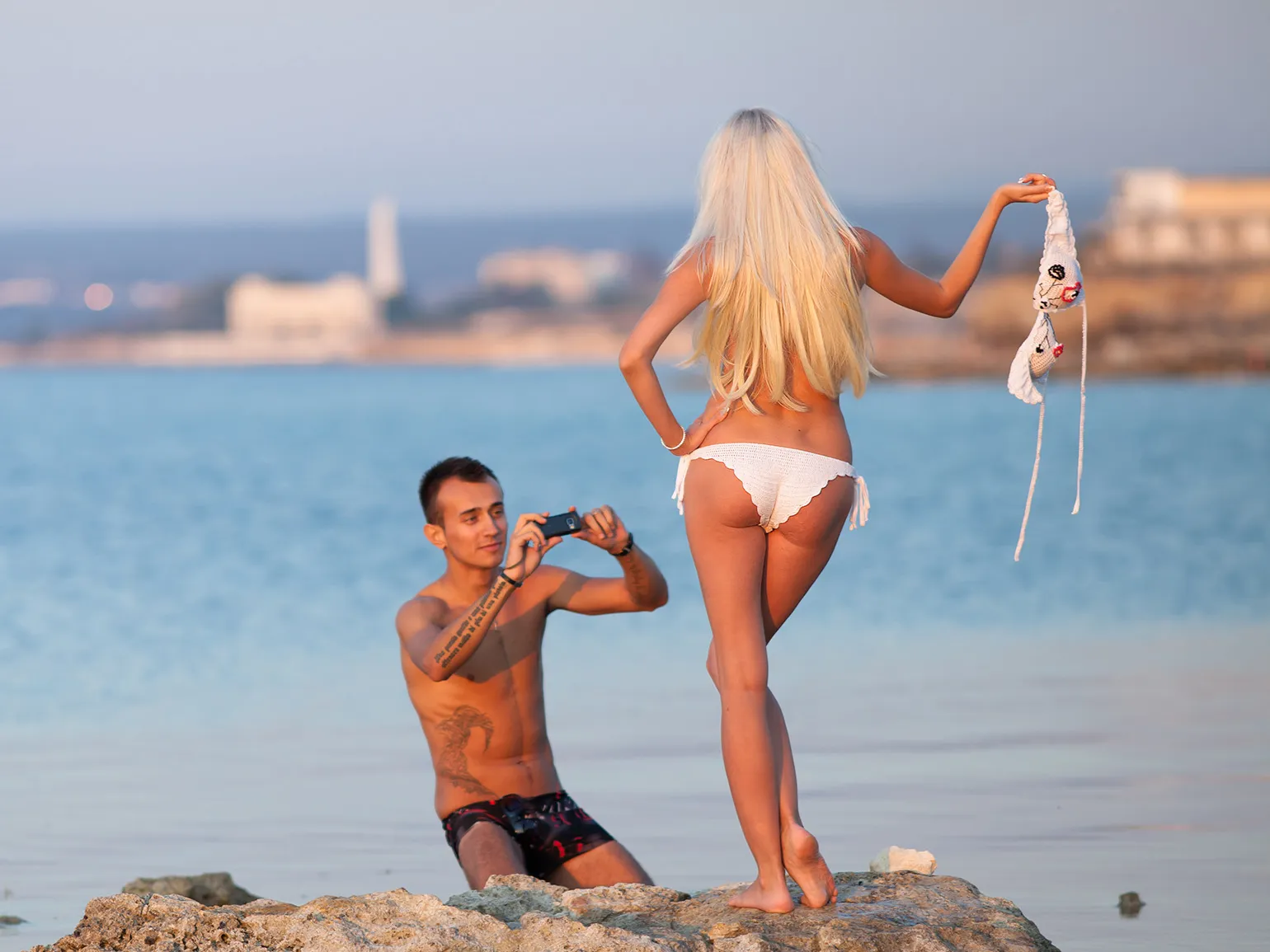
The Large Law Dictionary specifies that images are not classified as pornographic if they have artistic or scientific value. This provision may be confirmed or refuted by a specialized expert artistic commission. Thus, the assessment of the artistic value of an image plays a key role in its legal classification.
If a photograph depicts the groin area, this must be justified by the artistic value of the image. The aesthetic significance of the image is determined by the intent and skill of the photographer.
Despite the confirmed artistic value of nude photographs, their publication must be accompanied by an 18+ label. This requirement also applies to the organization of photo exhibitions where such works are presented. Proper labeling helps avoid misunderstandings and protect minors from inappropriate content.
The use of photographs created during erotic photo shoots is subject not only to moral and ethical standards, but also to ethical principles. Erotic images require special attention to issues of consent, respect for the personality of the models, and adherence to boundaries, both physical and emotional. These aspects play a key role in creating a safe and comfortable atmosphere for all participants in the process. Ethical guidelines in erotic photography help prevent exploitation and ensure the protection of models' rights, which is an important aspect of contemporary art.
The model posed as a playful nurse, but it is important to take into account the provisions of Article 5 of the Federal Law "On Advertising." This law prohibits the use of images of medical and pharmaceutical workers in advertising materials, except when advertising concerns medical services, personal hygiene products, or is intended exclusively for medical and pharmaceutical professionals. Such restrictions are important for ethical compliance and consumer protection, so advertisers should be careful when choosing images for their campaigns.
Posting Images on Photo Stocks and Photo Banks
Photographers have the right to publish portraits of models on photo stocks and photo banks. However, it is recommended to obtain written consent from the model, especially if they are the main subject of the photograph. A model release should include a clause consenting to the commercial use of the image, specifying the specific platforms on which it will be posted. This will not only protect the rights of both parties, but also ensure the legality of future use of the image.
According to Article 152.1 of the Civil Code of the Russian Federation, the consent of the subject is not required in the following cases: if the filming was conducted for a fee, in public places accessible to the public, as well as at public events such as meetings, conventions, conferences, concerts, performances, and sporting competitions. This provision allows for video recording and photography without the prior consent of the participants, which simplifies the content creation process and ensures its availability to a wide audience.
The subject requests that their photo not be published
The subject's consent for the publication and commercial use of their image is usually provided in a model release. This document provides legal protection for both content creators and models themselves, confirming that they consent to the use of their images for various purposes, including advertising and marketing. A model release is important for maintaining copyright and avoiding potential legal disputes in the future.
To ensure your own protection, it is recommended to include in your model release a clause compensating the photographer for any damages in the event of a cancelled shoot or publication of its results. According to Article 15 of the Civil Code of the Russian Federation, a claim for damages can be filed in court even if the contract does not include a corresponding clause. However, it is best to include this clause in advance to avoid potential disputes in the future.
A model release should specify the possibility of revoking consent to the shoot and the consequences of such a decision. For example, the model may have the right to revoke consent, but this may require the photographer to return the advance or reimburse the costs associated with the shoot. This is an important aspect that helps establish clear terms of cooperation and protects the interests of both parties.
These steps will define the boundaries of acceptable model behavior and minimize the likelihood of the model refusing to publish photos after the shoot.
The Subject Requests Removal of a Published Photo
If a subject requests that their photo be removed after publication, there are several steps you can take. It is important to respect their wishes and consider removing the image from the site or other sources. It is also necessary to notify the audience of any changes made to avoid misunderstandings. Keep in mind that respecting image rights and respecting people's wishes increases trust in your content and improves your reputation.
It's important to carefully review the terms of the signed agreement. If the agreement contains a clause confirming the subject's irrevocable consent to publication, the photographer reserves the right to continue using the photograph at their own discretion. This is important to take into account in order to protect the rights of both parties and comply with the terms of the agreement.

If the contract does not contain a clause on the right to use the image, but the model posed for a fee, the photographer has the right to use this image at his own discretion. In this context, it is important to take into account Article 152.1 of the Civil Code of the Russian Federation. This article waives restrictions on privacy for those who posed for money. After receiving compensation for a shoot, the model loses the right to retract the publication and other guarantees related to the protection of privacy and reputation. Including the fact that the service was provided for a fee in the contract activates this civil law provision, allowing the photographer to use the resulting images without further consent.
If the contract specifies the right to revoke consent, but the photographer still received payment for the shoot, it is possible to attempt to negotiate compensation for damages without going to court. Otherwise, a claim can be filed in court. In such situations, the law gives the photographer more leeway than the model. It is important to consider all the circumstances and carefully prepare arguments to protect your interests.
In the case of gratuitous posing, the model has the right to demand the removal of photographs from publications, as well as retract previously published images.
The subject's use of their photographs
According to Russian law, photographs are considered objects of copyright. This means that the photographer, being the author of the photograph, has the right to set the terms of transfer of images to the subjects and determine the rules for their use. Proper registration of copyright in photographs helps protect the interests of the photographer and ensure compliance with its terms.
The photographer is not obligated to transfer their photographs to the subject unless provided for in the terms of the contract. If the subject requests photographs from the shoot, and the contract does not contain any clauses regarding the transfer of photographs, the photographer has the right to refuse to fulfill this request.
The photographer has the right to set restrictions on the use of their photographs. This means that the author of the photograph can determine for what purposes and in what way their work will be used. Restrictions may apply to commercial or non-commercial use, as well as publication in certain media or on the Internet. Compliance with these conditions is important for copyright protection and ensuring fair compensation for creative work. It is always necessary to obtain the photographer's permission before using their image to avoid infringement and possible legal consequences.
- Prohibit third parties, including the subject of the photographs, from publishing images in the media.
- Allow the subject to use the photographs only for personal, non-commercial purposes, such as storing them in a family archive.
- Agree on mandatory attribution upon publication, if permission for such publication is granted.
All these aspects can be detailed in the contract.
The photographer has the right to prohibit post-processing of their photographs. Alterations to original photographs can be regarded as interference with their intellectual activity. Therefore, it is important to include a prohibition on post-processing in the contract with the model or client. This will help protect copyright and preserve the creative reputation of the photographer. Properly formatted terms of cooperation will ensure that the work will be presented in the form intended by the author.

Read also:
Portfolio for a photographer: a step-by-step guide
Creating a portfolio for a photographer is a key stage in career development. A well-designed portfolio helps attract clients and demonstrate your level of skill. There are several aspects to consider when creating your portfolio.
First, choose your best work. Your selection of photographs should reflect your style and specialization. These could be portraits, landscapes, wedding shots, or commercial photography. Make sure each work is of a high standard and showcases your skills.
Second, structure your portfolio. Divide your work into categories so that potential clients can easily find what they need. For example, create separate sections for portrait, product, and reportage photography.
Third, add descriptions to each photograph. Brief texts will help explain the concept, shooting technique, and context of the work. This makes the portfolio more informative and appealing.
Don't forget about image quality. All photographs should be high-resolution and properly adjusted. Optimizing images for the web is also important so that they load quickly on the site.
Finally, consider the platform you will use to host your portfolio. This could be a personal website, specialized photo platforms, or social media. Make sure the platform you choose makes it easy to share your work and reach new audiences.
Creating an effective portfolio takes time and effort, but a well-designed collection of works will help you stand out from the competition and attract the clients you want.
Profession Photographer
You will learn to take professional photos from scratch. Learn how to organize a shoot, process footage, and manage models and a team. Find your style, build an impressive portfolio, and start making money doing what you love.
Find out more