Contents:
The right to
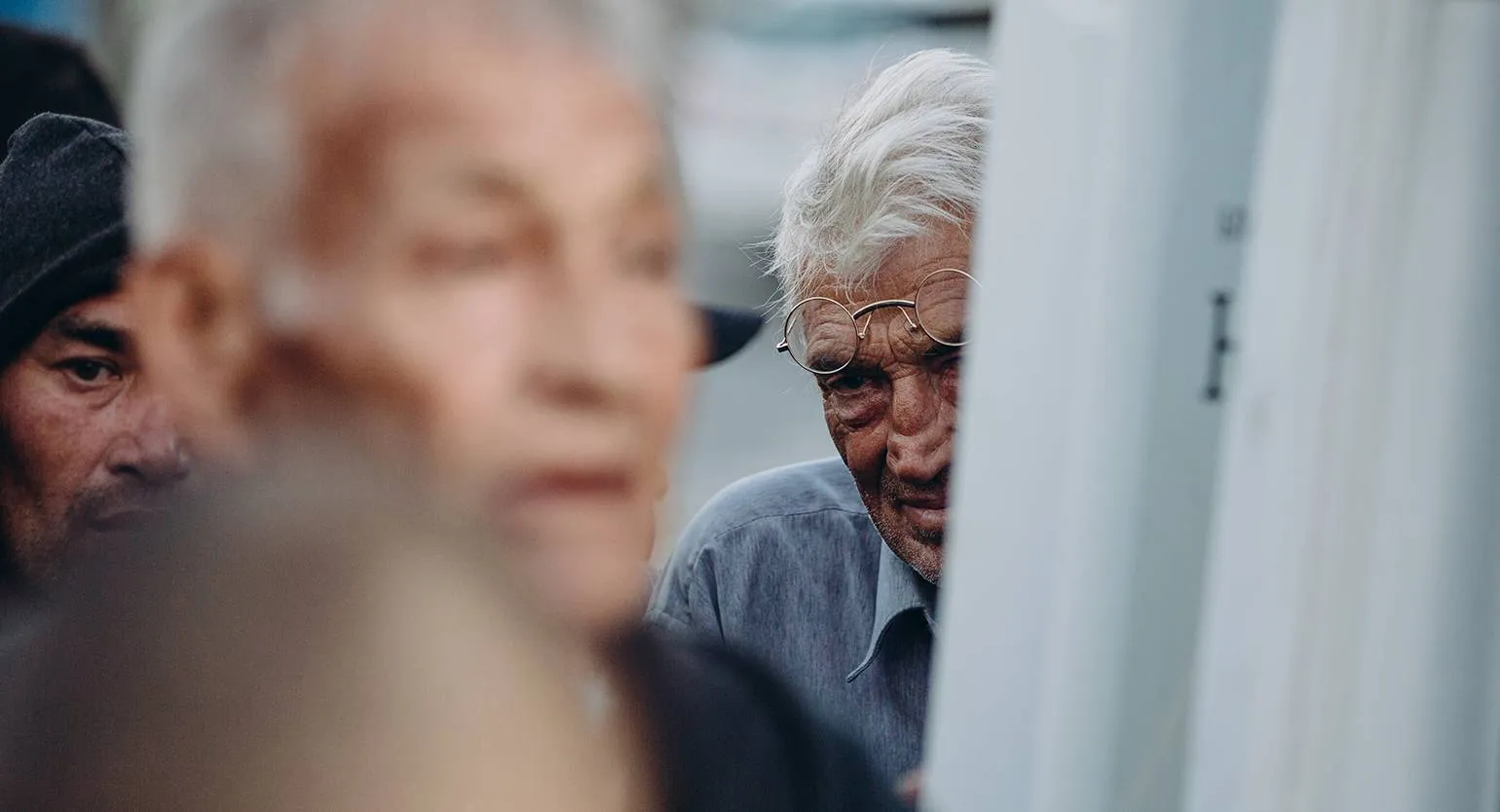
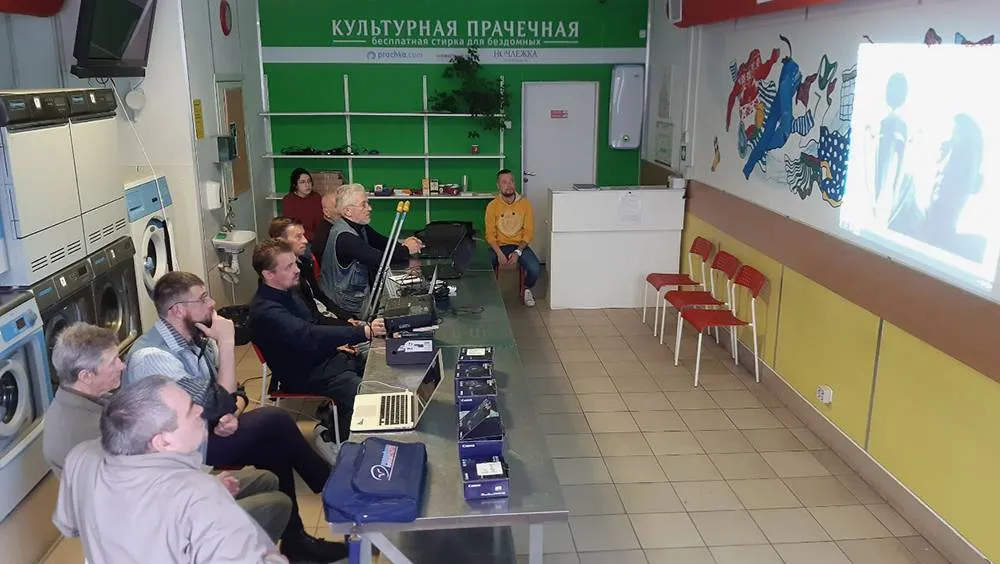
In 2021, the charity "Nochlezhka" implemented a large-scale participatory project called "City - Approach - Human." As part of this project, shelter clients had the opportunity to learn photography from professional photographers Pavel Volkov and Yuri Molodkovets. Participants not only mastered the basics of photography but were also able to capture their lives and surroundings, which helped improve their self-perception and increase social engagement. The project became an important step toward integrating people with homelessness into society and provided them with a unique platform for self-expression.
We sought to understand how people with homelessness perceive the city and its public spaces, says Ksenia Solodova. We approached Canon with the idea for the project and received the necessary equipment for photography and printing. While this approach is not new and has existed since the 1970s, it is reflected in the Photovoice movement, which enables people from vulnerable groups or residents of certain areas to express their thoughts and feelings through images. This method combines elements of art therapy and active participation in social life. Using visual means, we draw the attention of the media and government agencies to important social problems, which contributes to their solution.
Initially, the project was presented in the format of publications, after which the St. Petersburg Manege proposed organizing an exhibition.
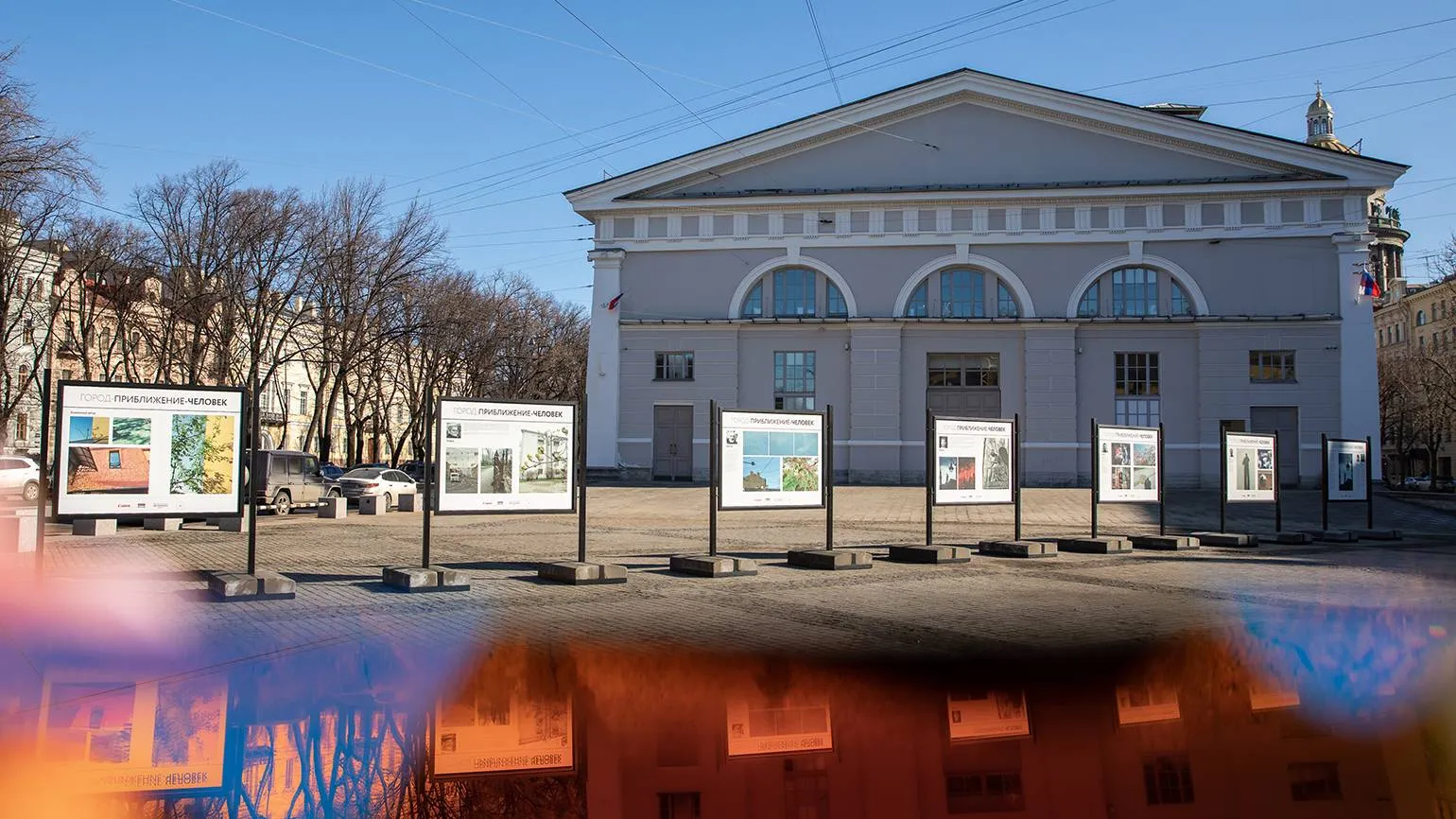
At the exhibition, we were able to convey our message to the audience much more vividly, as it was unique – it featured photographs taken by homeless people. Ksenia notes that this project sparked a conversation about homeless people as artists, whose art is no less impressive than that of other city residents. We sought to emphasize that homeless people also have the right to self-expression and artistic expression.
During interviews with the workshop participants, mostly men aged 40–60, I noticed that photography holds significant significance for them. They lived through the boom of Soviet photography circles and were part of this passion. Memories of their past experiences are important to them, and this aspect plays a role in their rehabilitation. Photography becomes not only a means of self-expression but also a tool for reconnecting with the past.
The Nochlezhka Project was invited to participate in a group exhibition at the Wende Museum in the United States, featuring works by disadvantaged and marginalized individuals. This exhibition provides a unique opportunity to highlight the challenges faced by vulnerable groups and raise awareness of social justice and equality. Nochlezhka's participation in such a significant event highlights the importance of art as a means of expression and support for those who often remain outside the public eye.
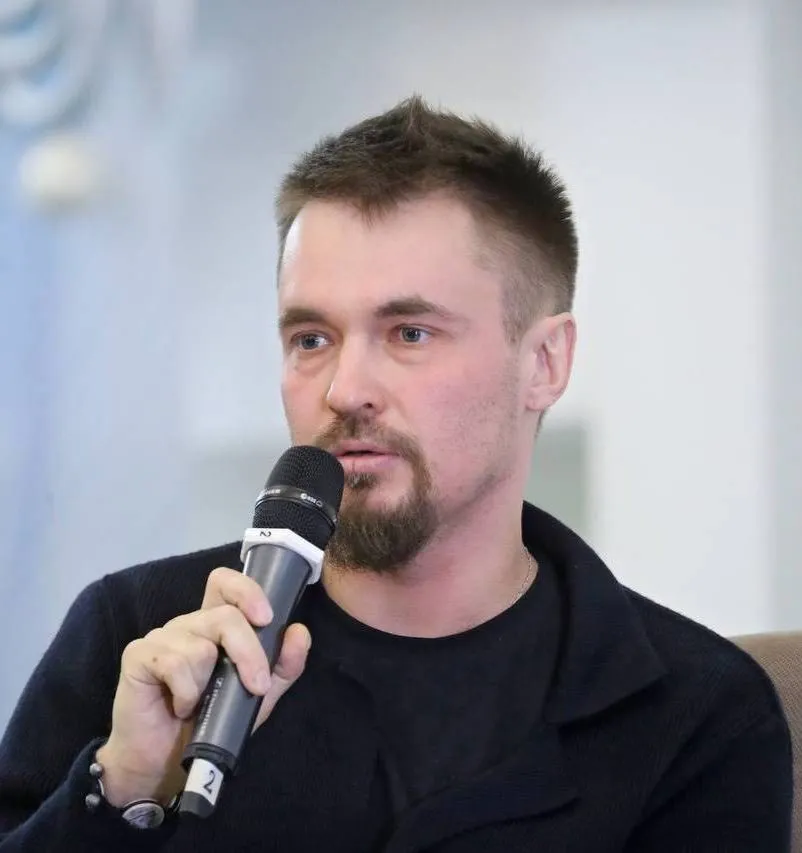
Pavel is a professional photographer and experienced teacher. His photo projects have received recognition and have been published in such well-known publications as The Washington Post, The New York Times, and the BBC, as well as in a number of Russian media outlets. Pavel is a prizewinner and finalist in numerous international and Russian photography competitions, which attests to his high level of skill and unique perspective on the world through his camera lens.
At the workshop, I noticed no difference between the homeless and those with housing. This was the key feature of the event. The participants, like everyone else, responded to my stories with interest and engagement. After the lecture, we went for a walk around St. Petersburg, where the workshop participants photographed passersby, streets, and various beautiful objects. This shared activity helped create an atmosphere of unity and mutual understanding, and emphasized that every person, regardless of their life circumstances, has a desire for beauty and art.
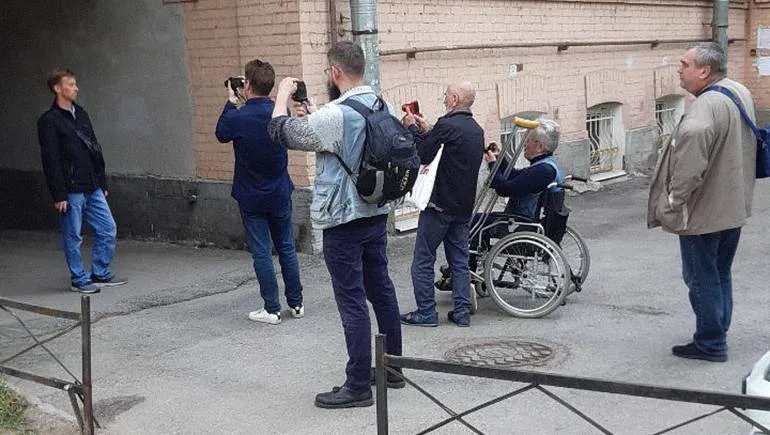
Today, a camera has become an integral part of every smartphone. However, many of us rarely stop to notice and capture the world around us. When we find time dedicated exclusively to photography, a new perception of reality emerges. People who visit familiar places often see them differently, discovering the richness of visually simple objects. This new perspective on everyday things allows for a deeper understanding of the beauty and diversity of the world around us.
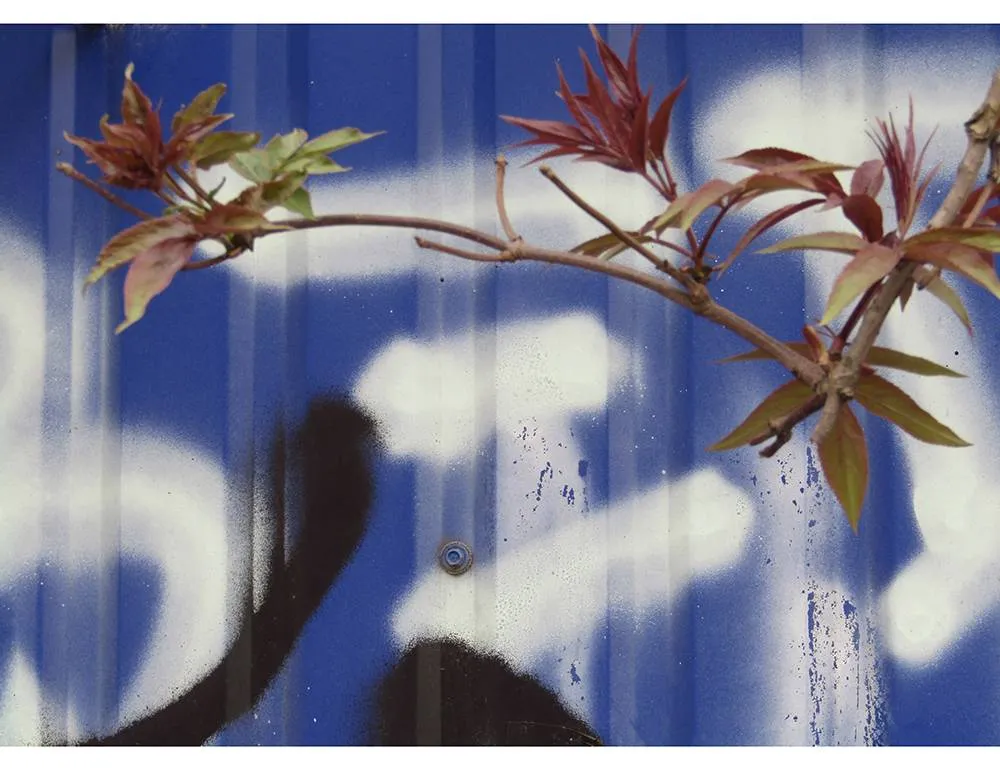
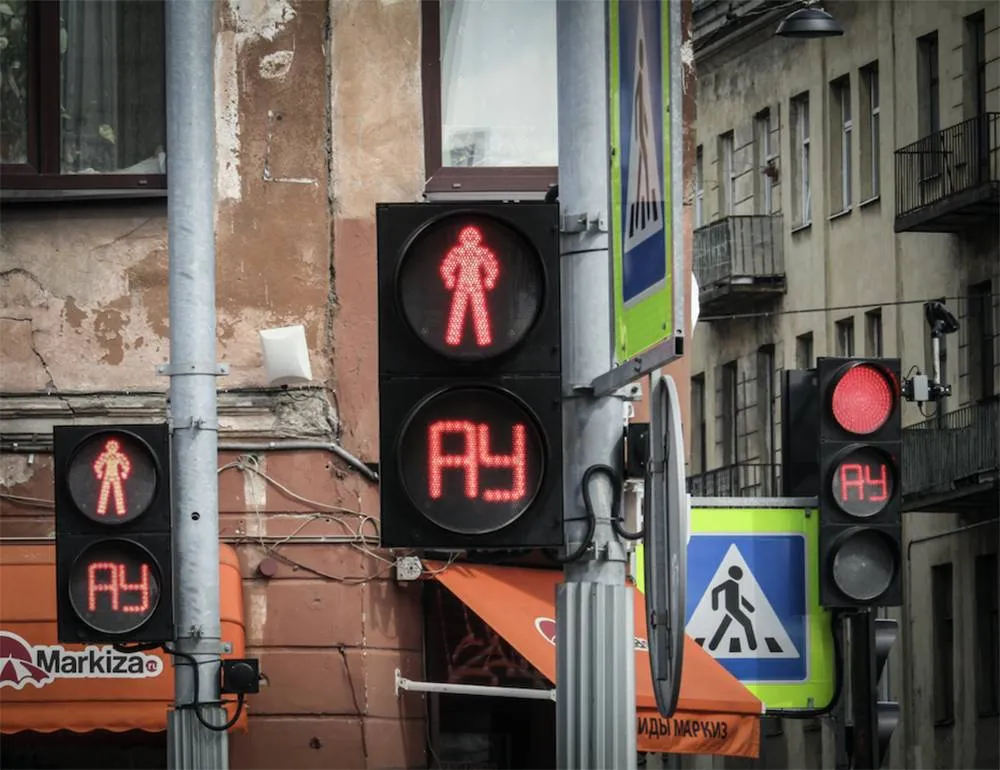
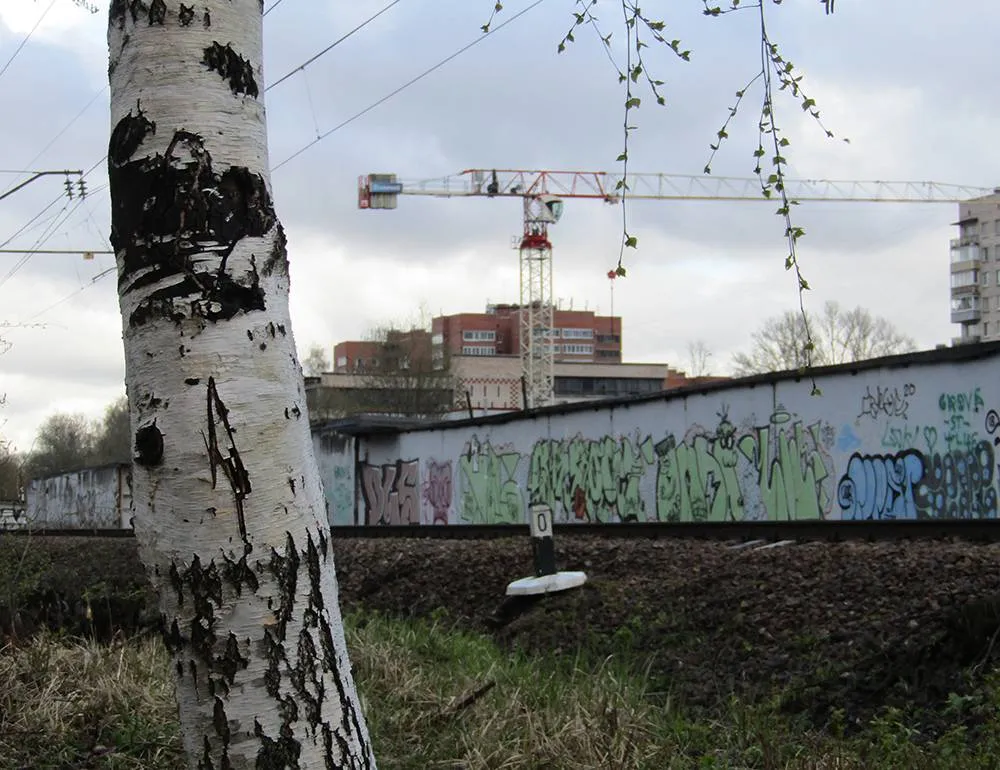
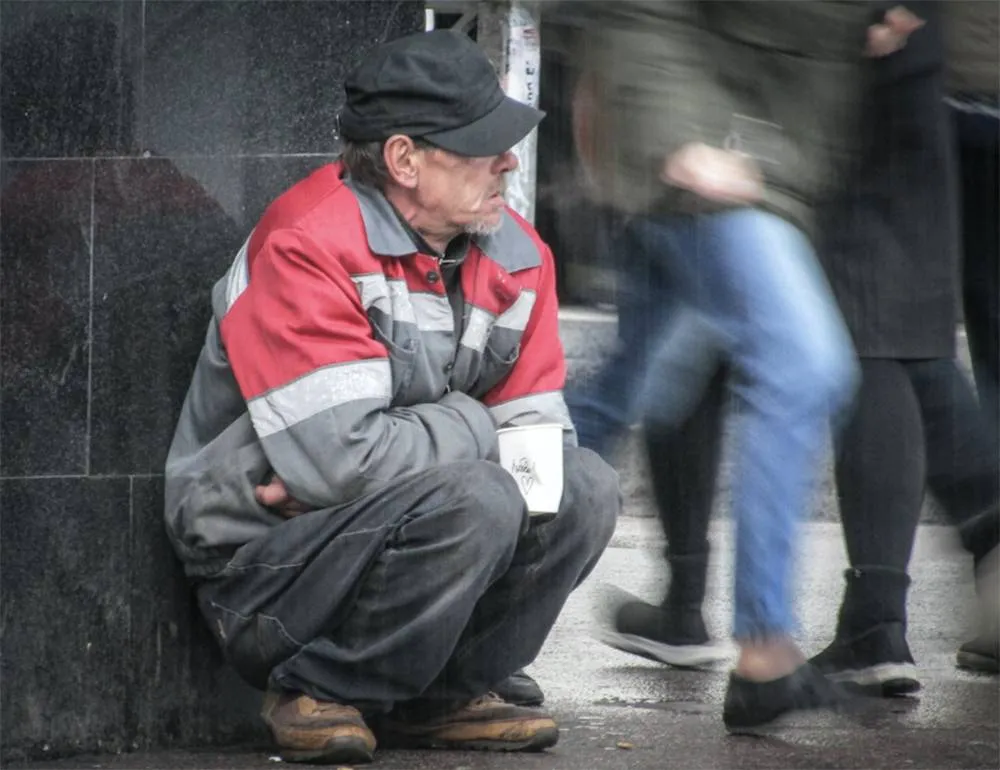
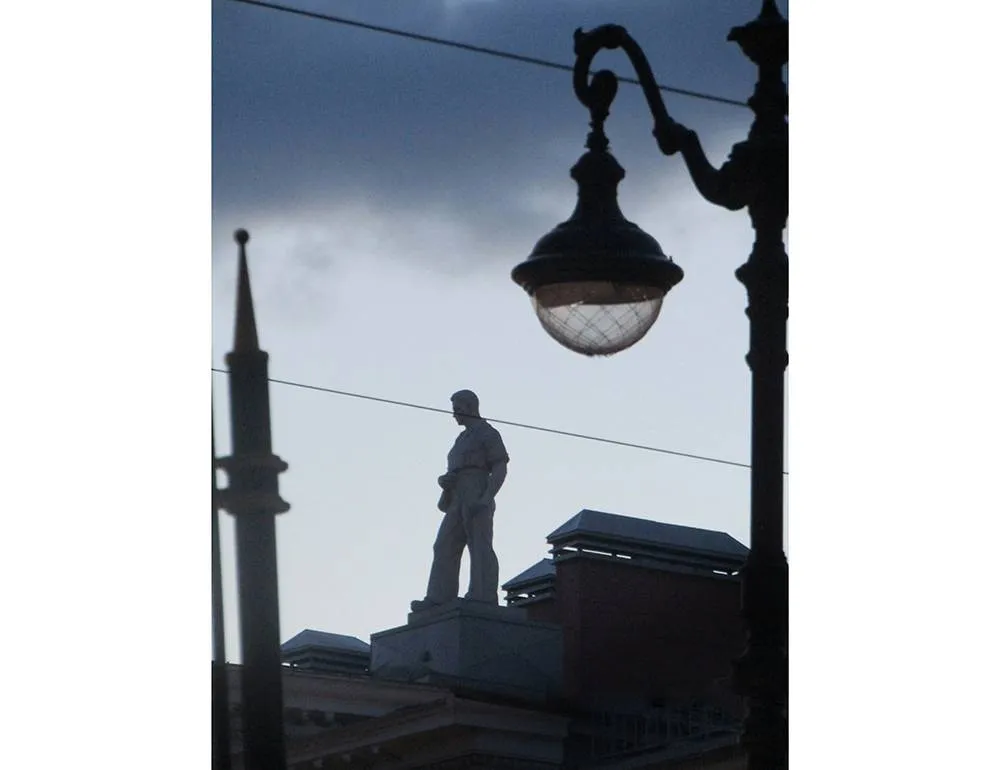
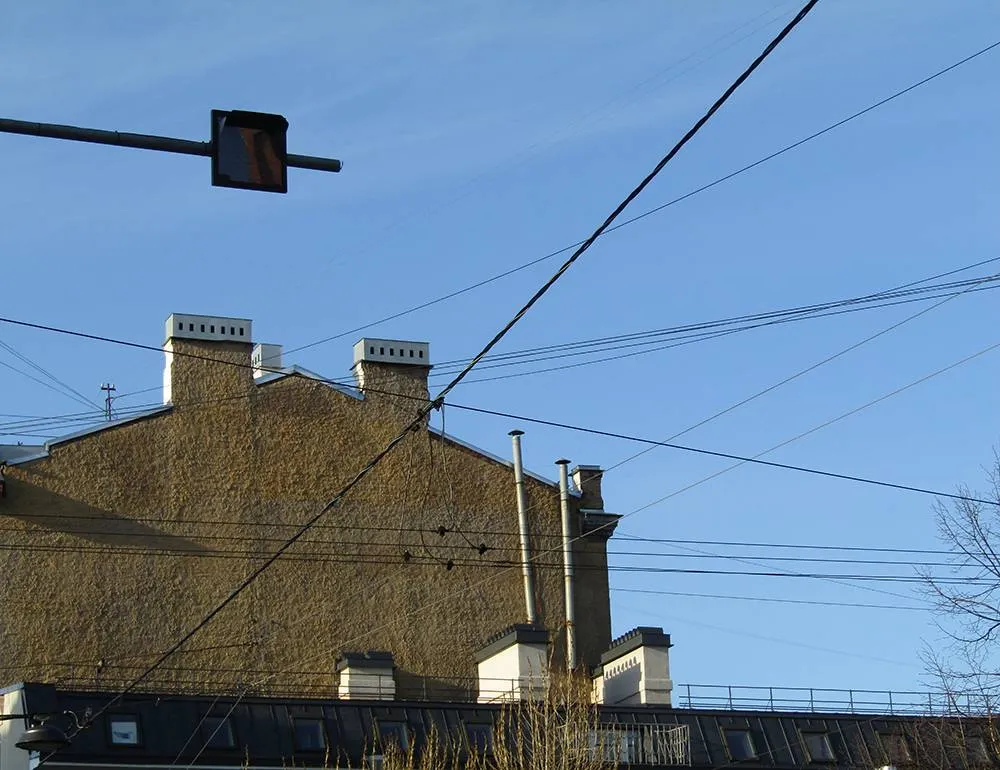
Art is a source of creation. A person's immersion in a creative environment activates their inner feelings and awakens the deepest aspects of the soul. This interaction with art can enrich the personality and inspire new achievements.
The master class has become a new format for interacting with homeless people for me. My work with Nochlezhka began earlier, when I was photographing for various publications. I photograph a variety of social projects, covering more than just homelessness. It's important for someone to highlight the lives of these people. We're often shown only idealized images: walking through central Moscow, we see holiday posters and a festive atmosphere. However, reality has another, less attractive side, and it needs to be illuminated so that viewers realize what kind of society and world they live in.
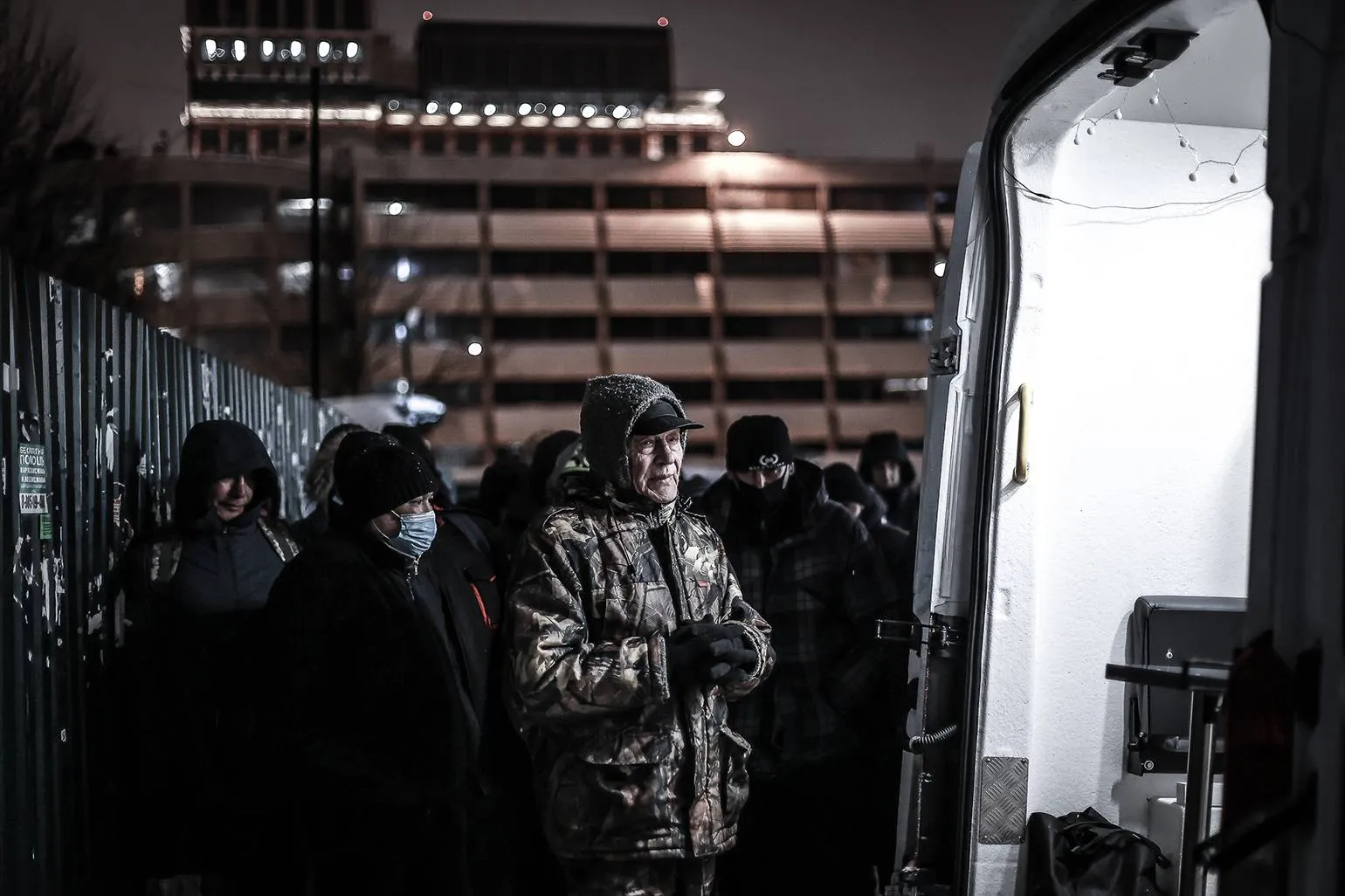
When shooting in the Night Bus, I worked in the winter or late autumn period, focusing on creating an atmosphere of discomfort, so that To convey the harshness of the situation these people found themselves in. The photographs capture people struggling to find food despite the cold, darkness, and adverse conditions. These images emphasize that for them this is one of the few opportunities to get food.
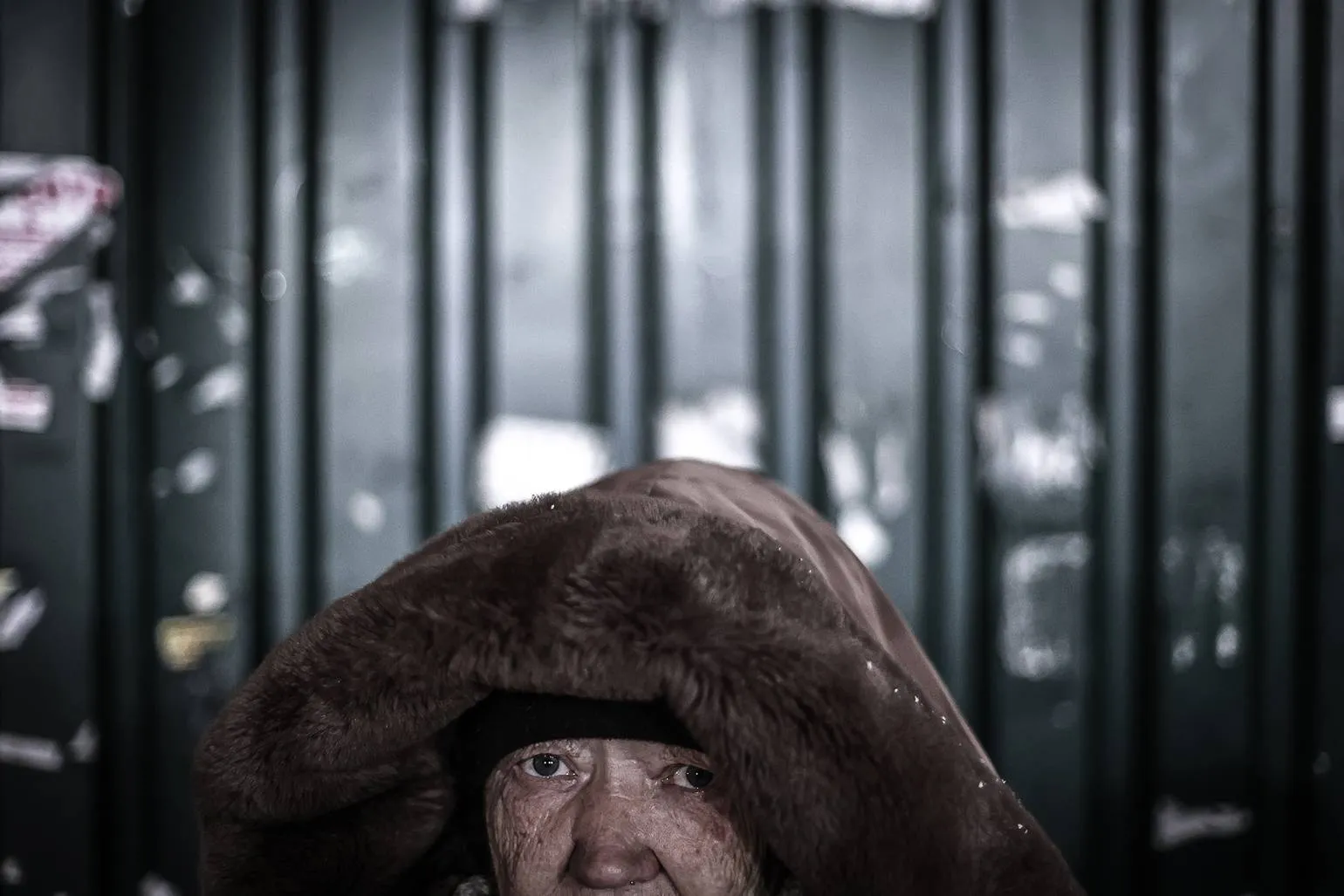
My passion for photography began with simple curiosity. Over time, I realized that with the help of this skillful discipline you can not only capture moments, but also make a difference in the world around you. Photography has become a powerful tool for self-expression and a means of conveying emotions, allowing me to talk about important issues.
"Does this person want to be photographed?"
"Nochlezhka" focuses not only on helping the homeless but also on shaping public attitudes toward them. Much of the organization's work is focused on combating stereotypes, including visual images associated with people on the streets. Nochlezhka strives to develop a culture of photography as a means of awareness and understanding of the problem of homelessness, in order to change public perceptions and increase empathy for this category of citizens.
In the media, this problem is often depicted through stock photos depicting people in vulnerable situations, such as lying on benches. Photographers rarely consider whether the person actually wants to be depicted in this context. Using such images, including those of amputees, is manipulative and perpetuates clichés. Ksenia Solodova emphasizes the importance of respecting the personal story and dignity of each person, which should be a priority in visual storytelling.
At Nochlezhka, we strive to collaborate with authors who are willing to establish horizontal and respectful relationships with their subjects. We believe that such relationships contribute to a deeper understanding and transmission of each hero's story, which, in turn, enriches the content and makes it more meaningful to the audience.
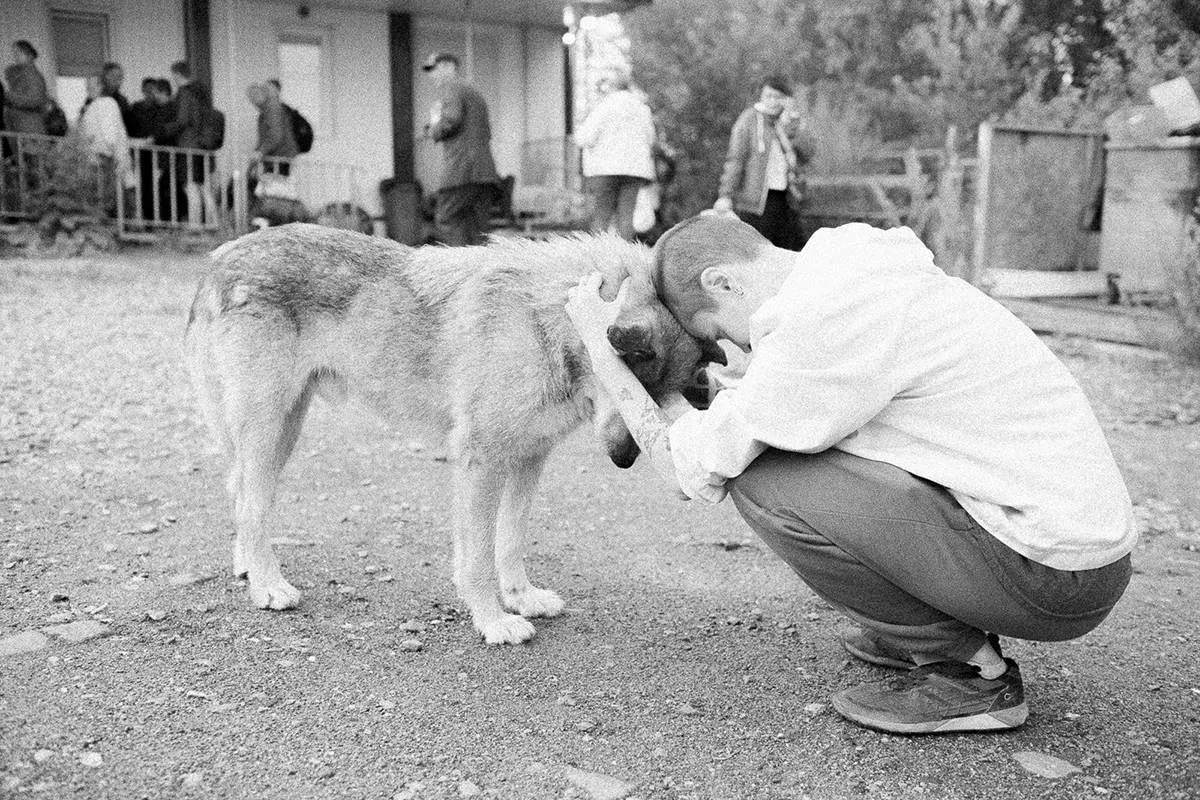
Photographer Svetlana Bulatova is the author of reports on the Points She has written about warming up the homeless on the "New Tab" platform and volunteering on the Night Bus on the "Takie Dela" website. Her work highlights important social issues and draws attention to the lives of people in difficult situations. Svetlana has distinguished herself not only as a photographer but also as a writer in her publications. Ksenia emphasizes the importance of photographers sharing their impressions and experiences. Svetlana is deeply immersed in the topic and has a long-standing partnership with the Charity Hospital and other non-profit organizations. She actively develops the connection between photography and philanthropy, giving lectures and working with various publications and foundations. Svetlana is an important mediator in the culture of interaction between NGOs and photographers, and also shapes this culture in society.
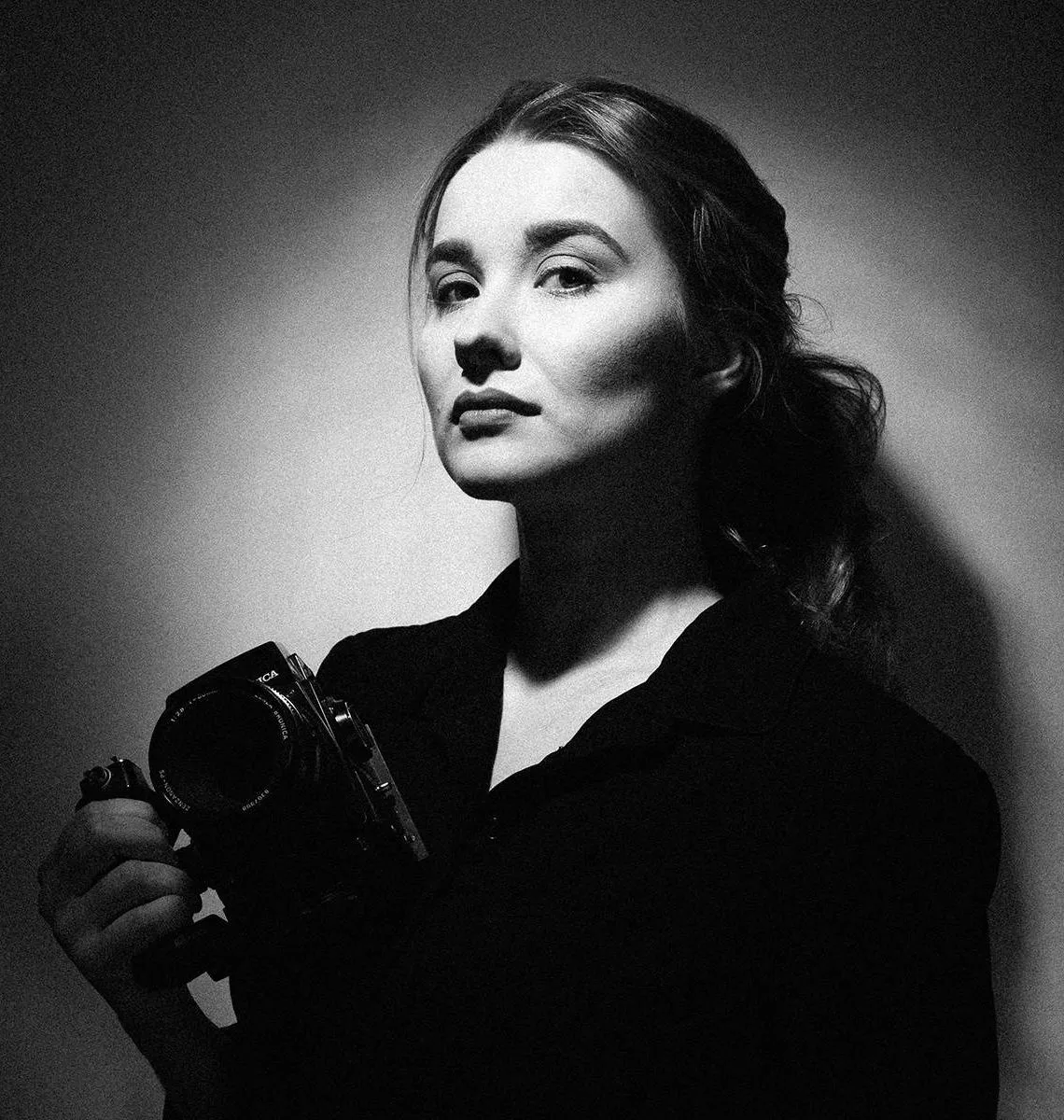
An independent documentary photographer with experience working in Eastern Europe. I am a member of the board of trustees of the international organization Women Photograph, which supports women photographers. My work has been published in such well-known publications as National Geographic, Reuters, British Journal of Photography, Bloomberg and others. My approach to photography is based on a deep understanding of human stories and cultural contexts, which allows me to create unique and memorable visual narratives.
Documentary photography allows us to communicate the important topic of homelessness to viewers. Ignoring this problem does not contribute to its resolution. We use visual stories to raise awareness and draw public attention to the complex issues surrounding homelessness.
Some people may decline to be photographed, and I always respect their decision. As a documentary photographer, I strive to spend as much time as possible with the subjects of my stories. While volunteering for the Night Bus, my time distributing hot meals was limited, as we were expected at another location. To compensate, I tried to go on the buses whenever possible, which allowed me to meet my subjects again and continue the conversation. This allows for a deeper understanding of their stories and experiences, which is an important part of documentary photography.
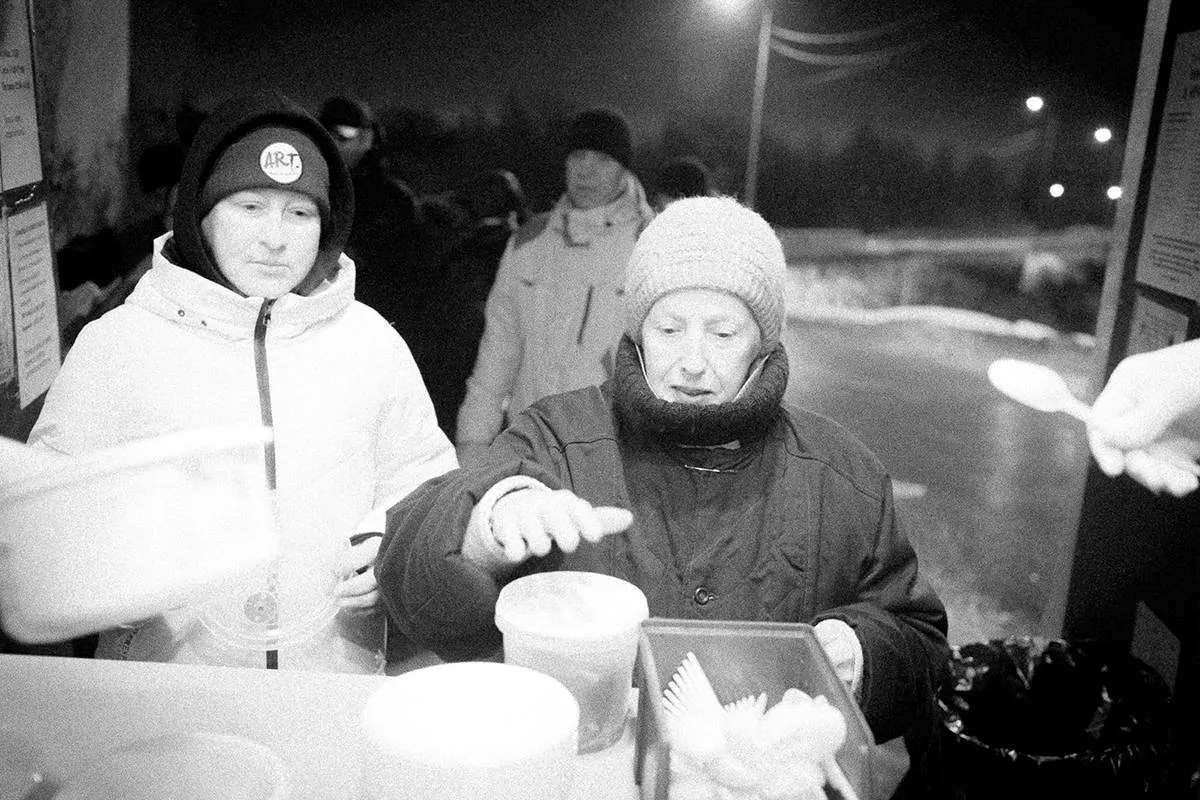
Gaining volunteer experience turned out to be important and valuable for me. I wanted to create material that would hold the reader's attention until the very end. In my work, I focused on aspects of the lives of homeless people, such as the high mortality rate in this group, which continues to grow every year, as well as the factors that contribute to this. I described how homeless people try to survive the cold season and find access to drinking water. It was also important for me to introduce the Nochlezhka team, including the staff and volunteers who make daily efforts to help these people. Supporting charitable foundations like Nochlezhka is an important aspect of social responsibility. These organizations provide systemic assistance to those in dire need. Each Nochlezhka project plays a significant role in the lives of homeless people, offering them not only temporary shelter but also the opportunity to return to a full life. I am sincerely grateful to Nochlezhka for the opportunity to be part of this important cause, which brings real benefit to society and helps people in difficult situations.
The person who stands next to you at the bus stop and doesn't give themselves away
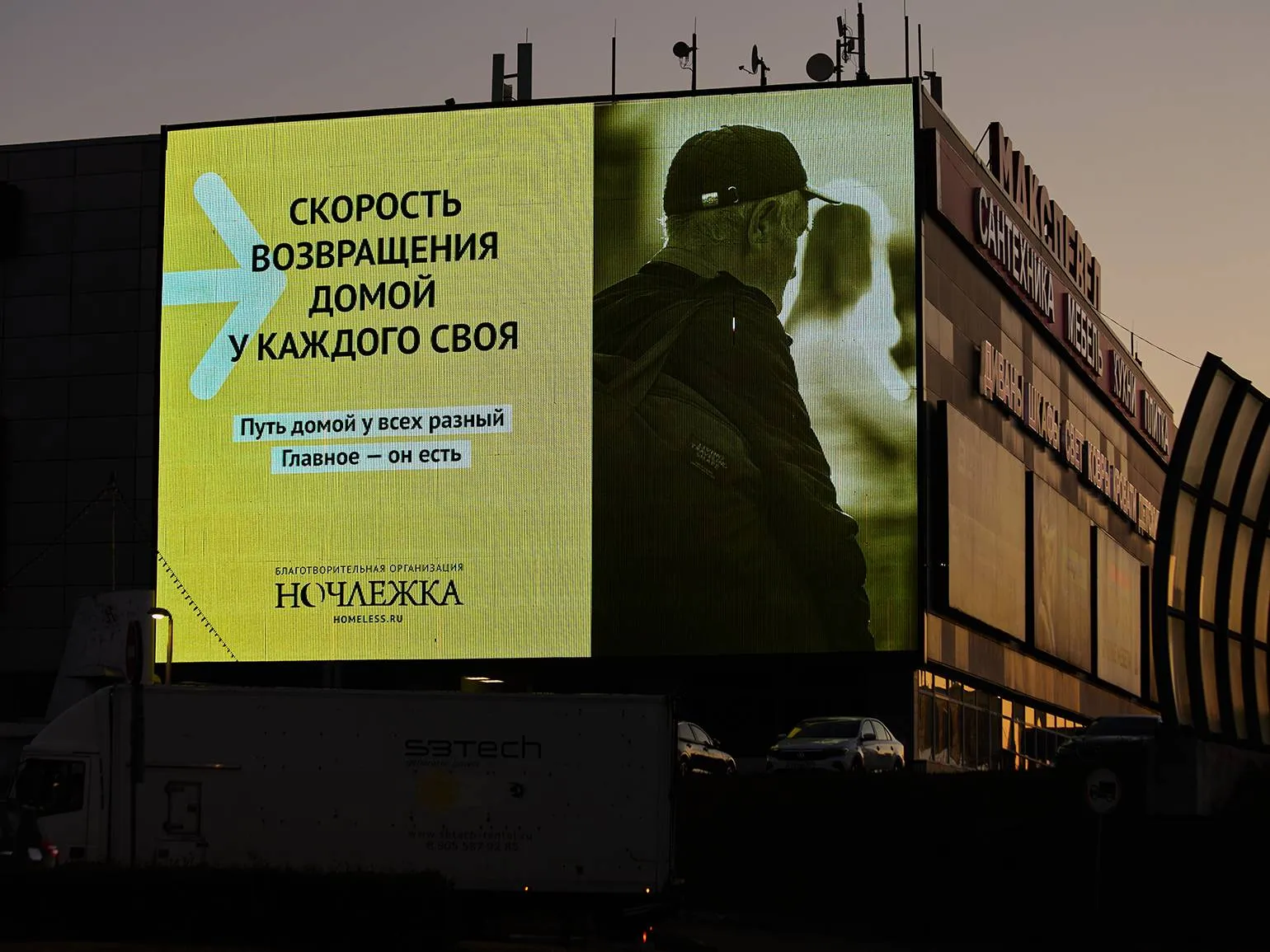
In the summer of 2022, Nochlezhka launched a social advertising campaign called "Different Paths Home." Outdoor screens located along the Third Ring Road in Moscow featured photographs of Nochlezhka clients sharing their stories of returning home. This campaign aims to draw attention to the problems of homeless people and support their desire for a normal life.
We don't always use photography in social advertising, but when we do, it's important for us to present an image of a person who is not associated with homelessness. Ksenia Solodova emphasizes that our goal is to associate stylish and attractive images with Nochlezhka, so that people understand that homeless people can look diverse. We strive to change the perception of homeless people by showing them in a positive light and emphasizing their human dignity.
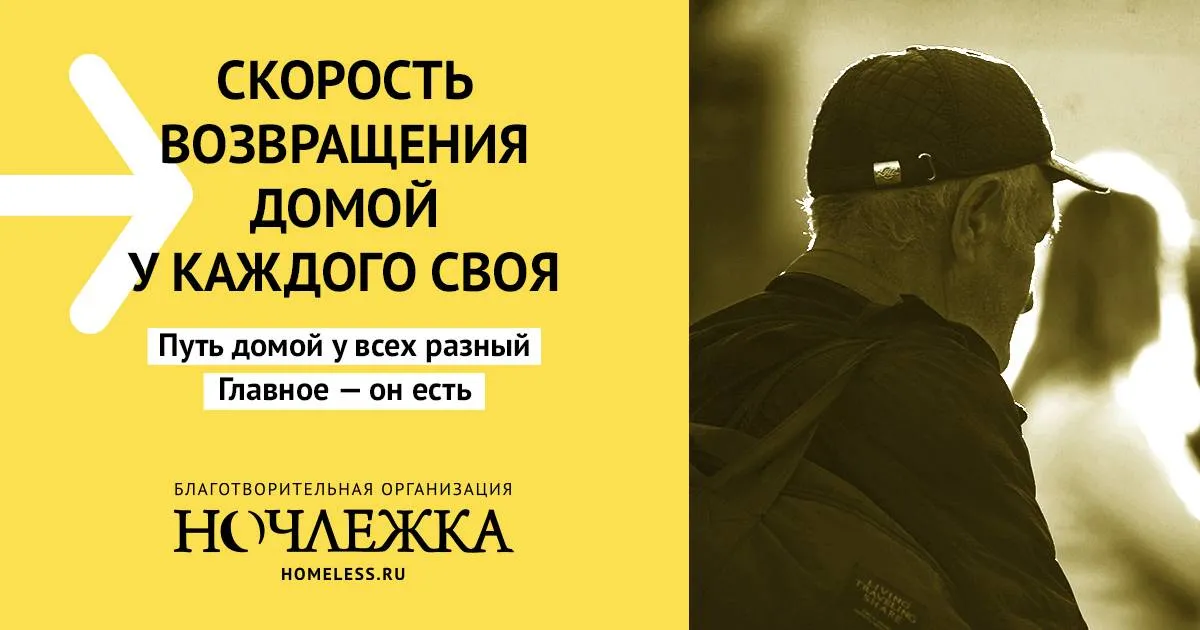
Many people think they understand the essence of homelessness based on encounters with unkempt or drunk people on the streets. However, they often don't realize that some of these people may have been living on the streets for a long time. In fact, most homeless people are inconspicuous and may appear like ordinary citizens, making the problem of homelessness less visible to society. It's important to recognize that homelessness affects a wide range of people and requires greater understanding and attention to the social aspects of this phenomenon.
The "Different Ways Home" campaign features photographs by various photographers, among whom Katya Zykova stands out. She is not only a talented photographer, but also an active volunteer for the charity organization "Nochlezhka".

Sports photographer and founder of a running community.
The photo used on the banner is shot in backlight, which I especially like. The Nochlezhka bus arrives in the evening at Three Stations Square. On a summer evening, the sun is starting to set at this time, creating the classic golden hour. The frame creates an interesting contrast between the ordinary subject and the beautiful golden light. The photograph depicts an elderly man in a cap with a backpack, heading somewhere. We don't know whether he's waiting for a train to go to his dacha or intending to spend the night on a bus, but his backpack contains all his belongings. This versatility in the subject's image helps bridge the gap between him and the viewer. There's a stereotype of homeless people as unkempt and often intoxicated. However, this is far from the truth. Anyone standing next to you at a bus stop and not revealing their situation can find themselves in difficult life circumstances.

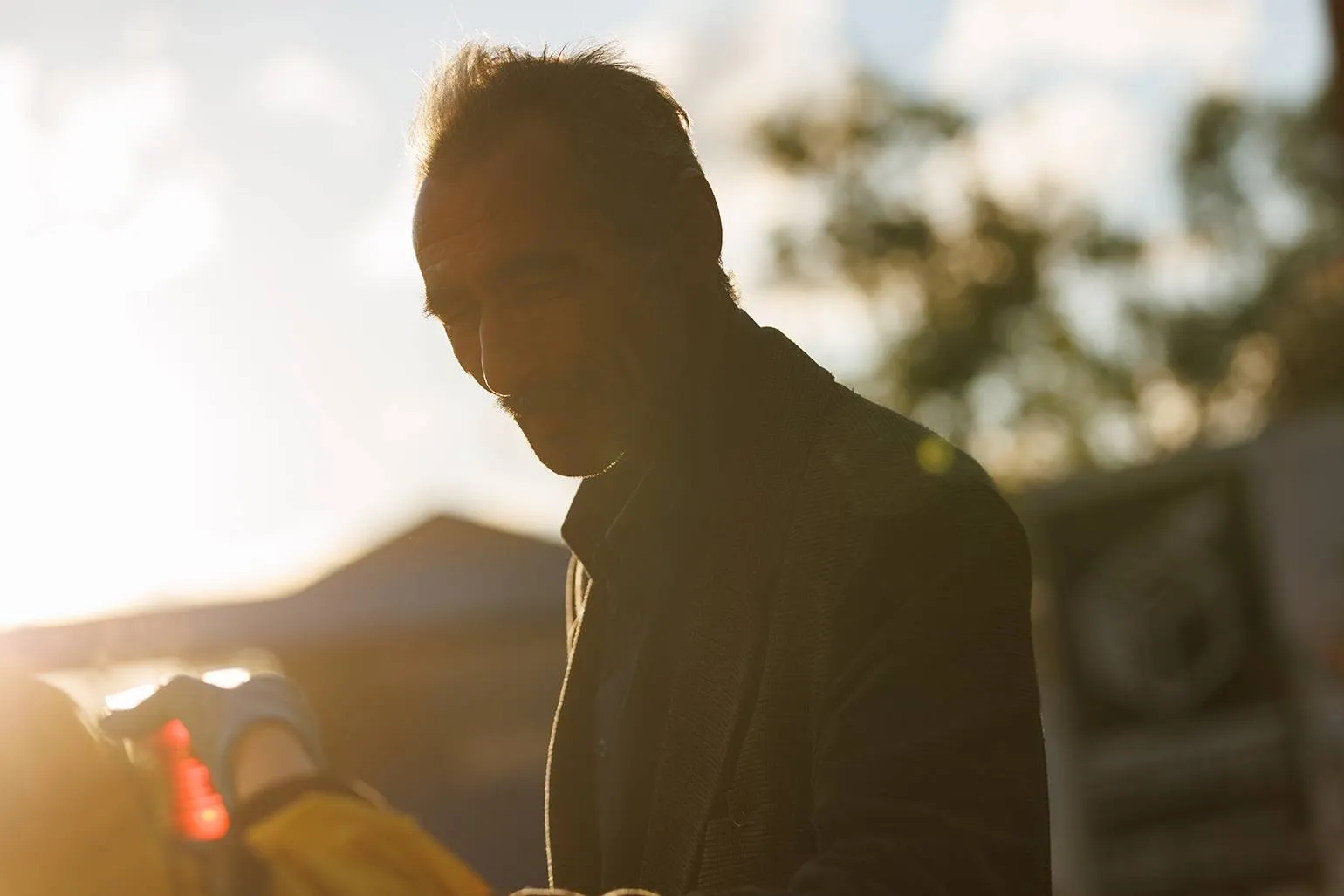
At my first shoot for "Nochlezhka," I remembered a wonderful old man in a hat — intelligent and neatly dressed. "Nochlezhka" has its own specific slang, and the term "domestichesky" refers to people who are not homeless, but are facing financial difficulties. These people come to the Night Bus because they don't have enough money for food. This grandfather was one of those "homeless." He sang in the church choir, but due to the COVID-19 pandemic, his activities were stopped, and he was unable to return to his usual work.
The homeless people's reactions to the photographer vary. My work with lenses that allow me to shoot from two to three meters away allows me to do this discreetly. I always ask in advance who is willing to be photographed and who would prefer to remain in the shadows. There have been cases where people approached me with requests to delete photos: some were aggressive, while others were simply worried about loved ones seeing them. When a person doesn't have control over their own life, it deprives them of a sense of agency. The ability to refuse to be photographed is an important step toward regaining a sense of support and control over one's life.
Since 2014, I have been actively involved in systematic assistance, supporting charities with regular payments. In 2021, I began volunteering professionally when Nochlezhka began organizing an exhibition featuring photographers from various fields. This introduction to the project led to a friendship with the staff, and I began attending their events and taking up photography.
This reflects a manifestation of civic commitment and humanity, as well as love for the people who work at Nochlezhka. Fundraising is always difficult, especially when it comes to adults, who, in the social paradigm, are perceived as having "their own fault" for their situation. However, this project evokes deep feelings in me and an understanding of the importance of supporting those who need help.
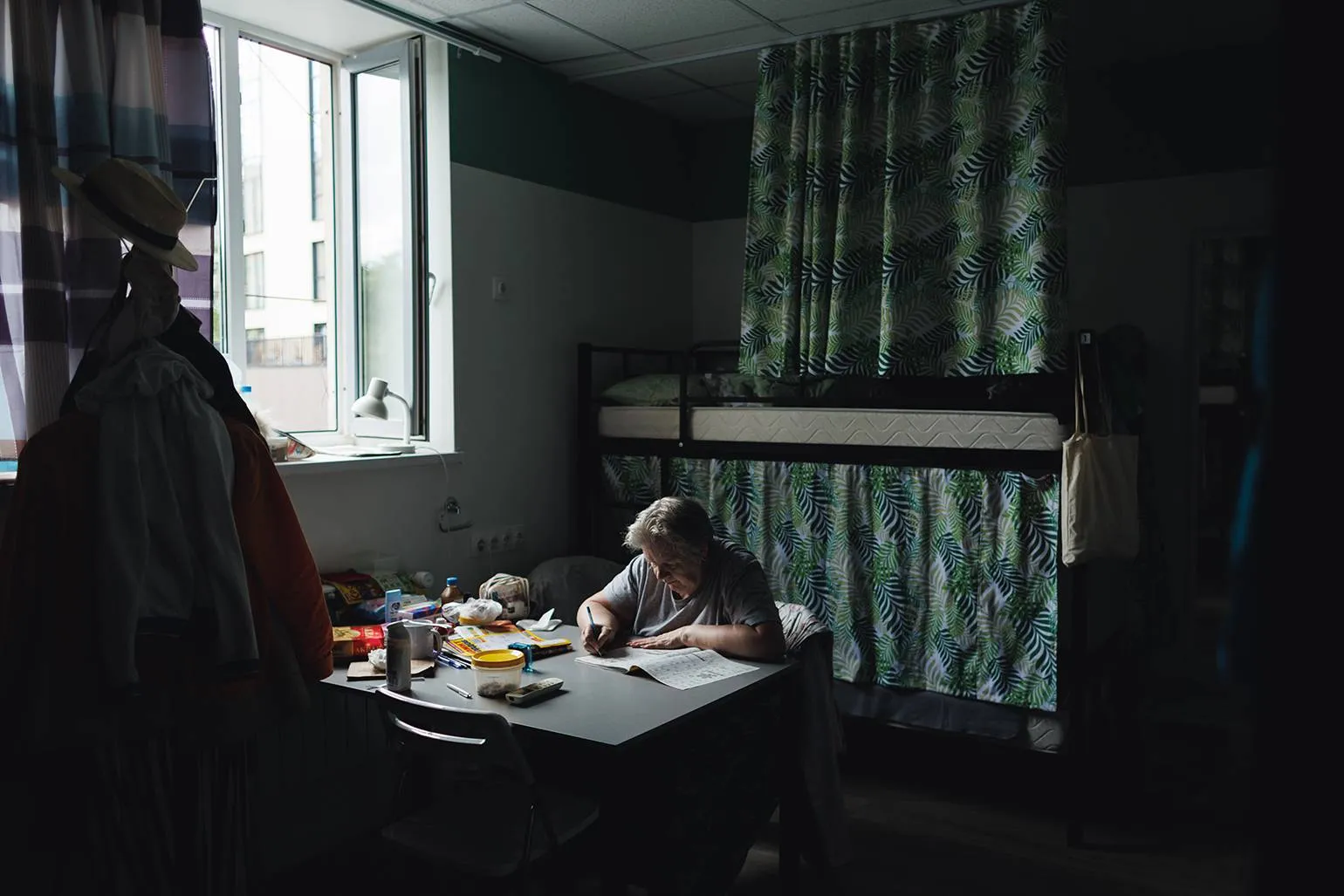
After February 2022, photography as a tool for supporting non-profit organizations (NPOs) played an important role in strengthening my inner meanings. It demonstrates that humanitarian ideas are still alive, and that people are willing to devote their time to helping others. It also reflects civic engagement and grassroots activism, which are becoming especially relevant in today's context. Photography captures moments of solidarity and support, showing how important it is to unite in difficult times to achieve common goals. This work has fundamentally changed my perception of the role of photography in helping people. I stopped believing that support should manifest itself in vivid, memorable moments, when a person stands in front of tanks in a square. This is no longer relevant: people continue to document war, but it does not lead to change. Photography is not a magical solution or a divine decree, but a tool that helps people do their work. I do not view my work in an NGO as artistic expression or the creation of art. It is routine, everyday work that helps others fulfill their tasks aimed at helping. Every day, step by step, I contribute, even if it seems insignificant. It's important to remember that every brick we lay restores our agency, no matter what happens in the future.
"By helping others, you help yourself"
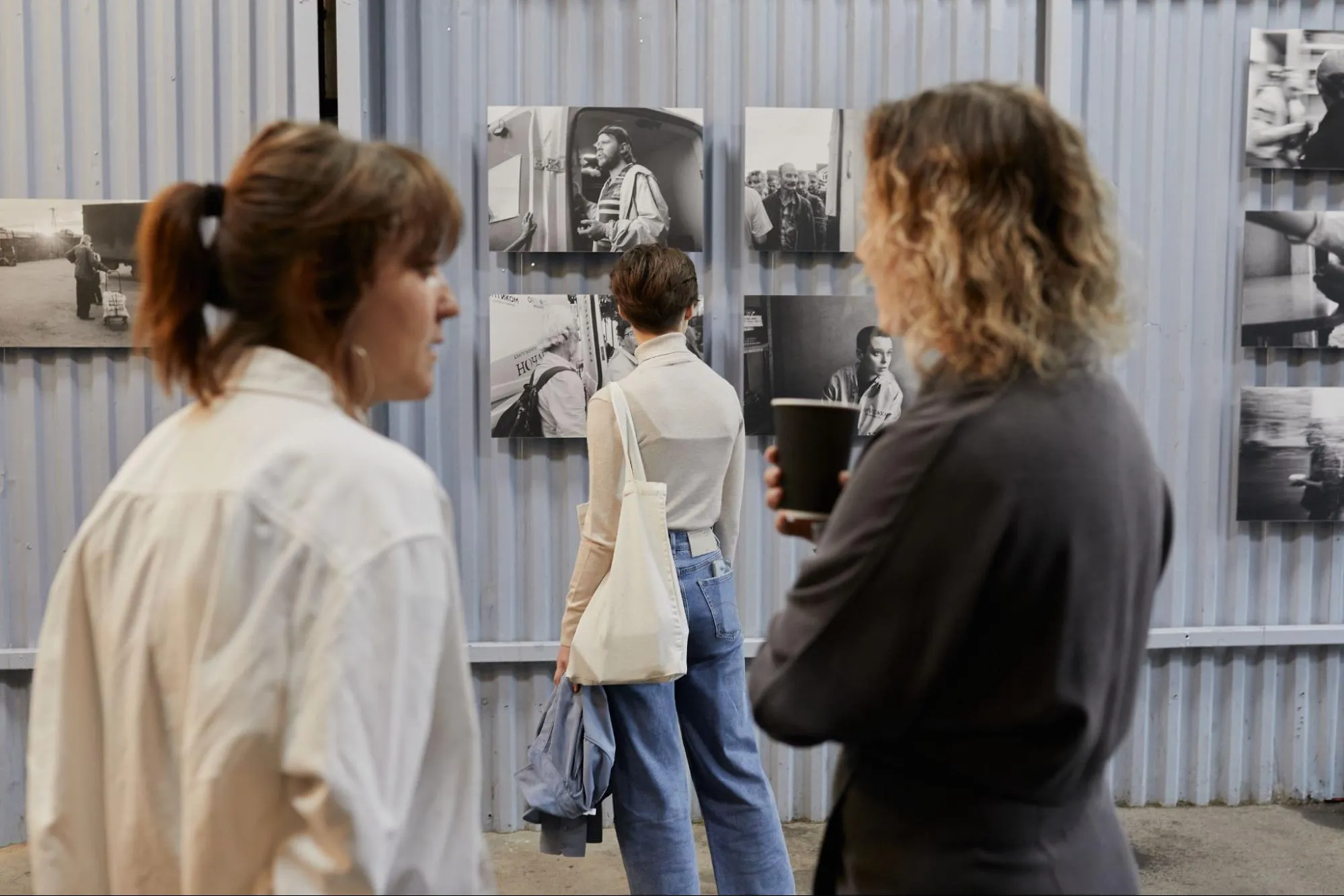
In 2023, the charity Nochlezhka, together with the production company Stereotactic, presented an exhibition entitled "The Power of the Insignificant." The exhibition included 27 black-and-white photographs capturing moments taken during the Night Bus's journeys. This exhibition offers a unique perspective on everyday life and the importance of little things that often go unnoticed. The photographs capture not only the atmosphere of traveling through the city at night, but also the profound human stories behind each frame. The project emphasizes the importance of social responsibility and support for vulnerable groups.
Alexey Krupnik, a photographer and advertising director, began his career at Nochlezhka in Moscow as a volunteer. Gradually, he began taking a camera with him on field trips to capture the moments that inspired him.
Ksenia Solodova shares her impressions of Alexey's story, in which he describes how a year of volunteering at Nochlezhka became an important step in overcoming difficult times. Alexey notes that in moments when it seems he can't change anything, he was helped by the "power of the insignificant." This concept implies that even small efforts can yield tangible results in situations where it is possible. Volunteering became for him not only a way to help others, but also a source of inner strength and confidence.
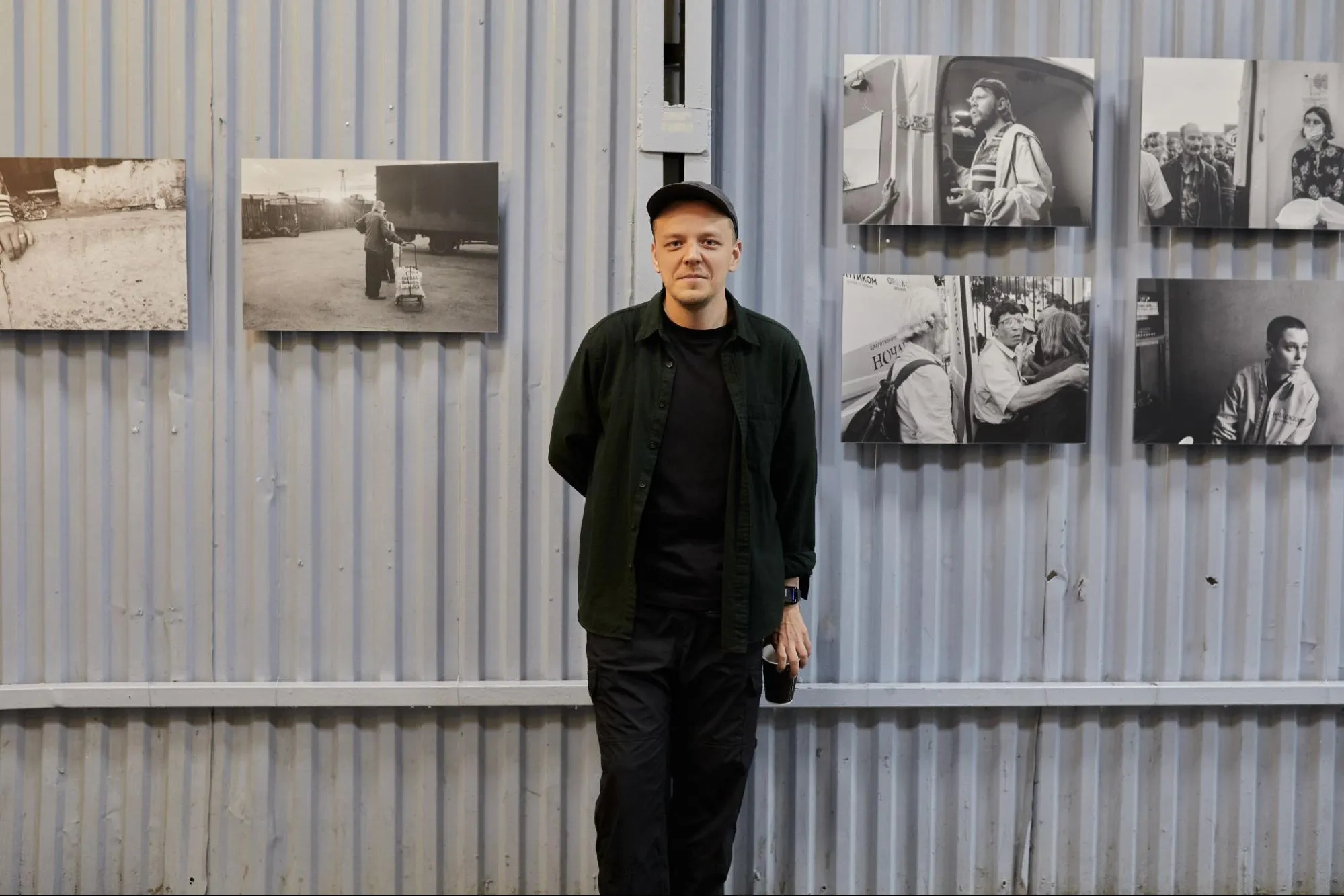
The text inspired me to search for photographs of Alexey in our archives, and I discovered that These are truly talented shots. Later we met and learned that Alexey is a well-known Moscow director of advertising and music videos. He has worked with artists such as Zemfira and many other stars. I suggested that he organize an exhibition called "The Power of the Insignificant," which would reflect the idea that by helping others, we thereby help ourselves.
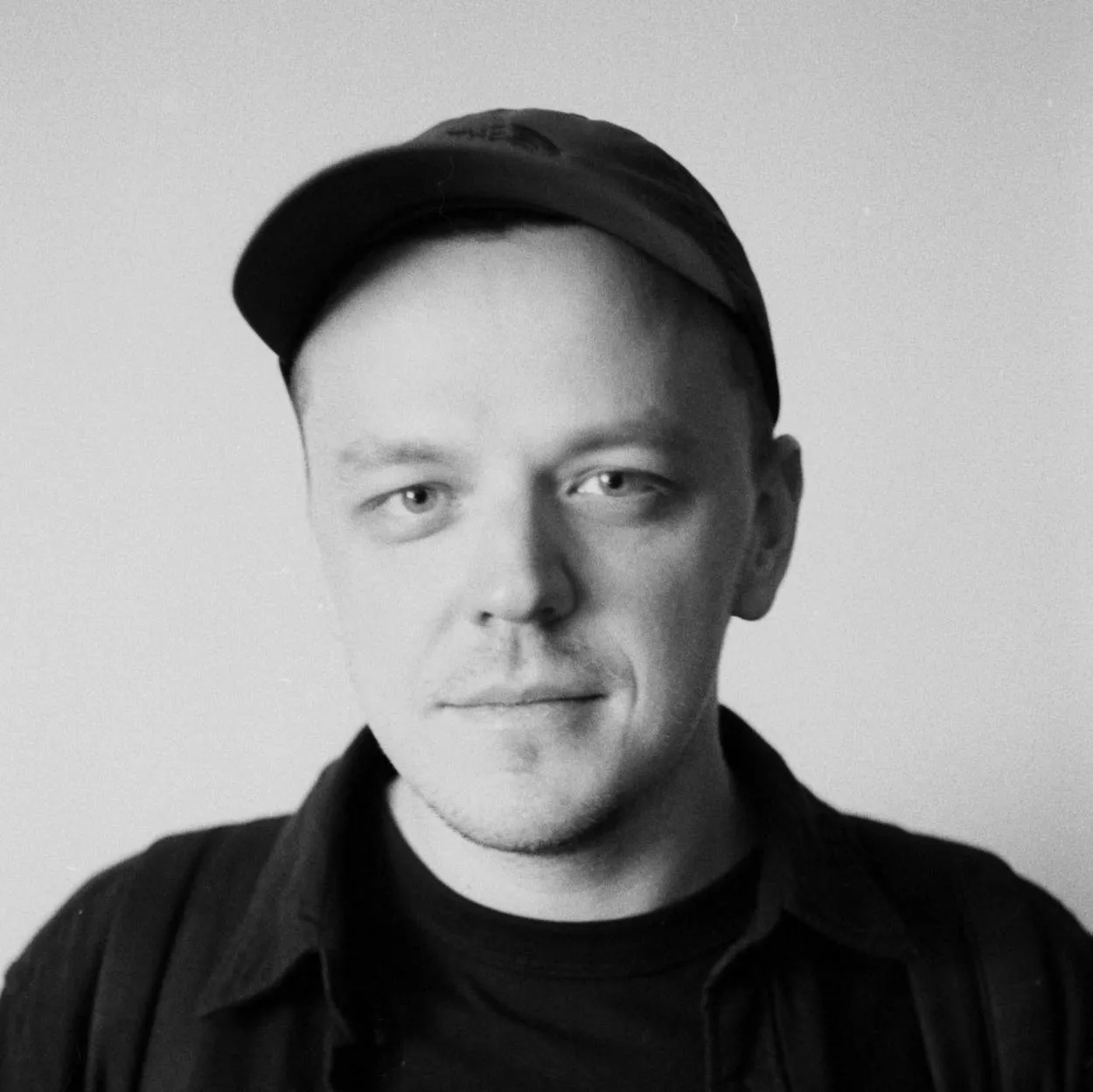
Advertising director and professional photographer. I specialize in creating high-quality advertising content that attracts attention and shapes brand image. My background in photography allows me to accurately convey my clients' ideas and values through visual imagery. I work with both large and small companies to help them stand out in the market. My goal is to create creative and memorable advertising materials that promote business growth and increase brand awareness.
The exhibition includes photographs emphasizing the importance of volunteerism. The main goal is to show participants that their work is valuable and meaningful, and to document this process through art. We strive to convey to viewers that volunteerism not only changes the lives of others but also leaves a mark on history.
The exhibition was an interesting collision of two worlds: professionals from the advertising production company where I work and volunteers from the organization "Nochlezhka." This interaction created a unique atmosphere where creativity and social responsibility came together in one space.
After the events in Ukraine began, I had a desire to justify my stay in the country. I started thinking about volunteering for projects where I could be useful and at the same time find something interesting. I've been subscribed to Nochlezhka for a long time, and I wanted to contribute by directly participating in the organization's activities, rather than just helping out on the computer. My first experience was exciting: the unknown bred anxiety. It was a winter day, just as the first snow had fallen. We rounded a bend and saw a long line of a hundred people waiting for food. The driver warned me that I would have to "stand on the spoons." I didn't immediately understand what this meant—it was about distributing spoons. However, on this trip, which was an exception, we were given forks instead of spoons. I was handed a large bag with forks of different colors: black, gold, and transparent. The line was chaotic; many people looked embittered from hunger. It was important to keep them at bay, and next to me happened to be a homeless man who was helping Nochlezhka. I still remember someone in line asking for a specific fork—gold or black. It was a touching moment and showed the importance of human connection, even in difficult situations.
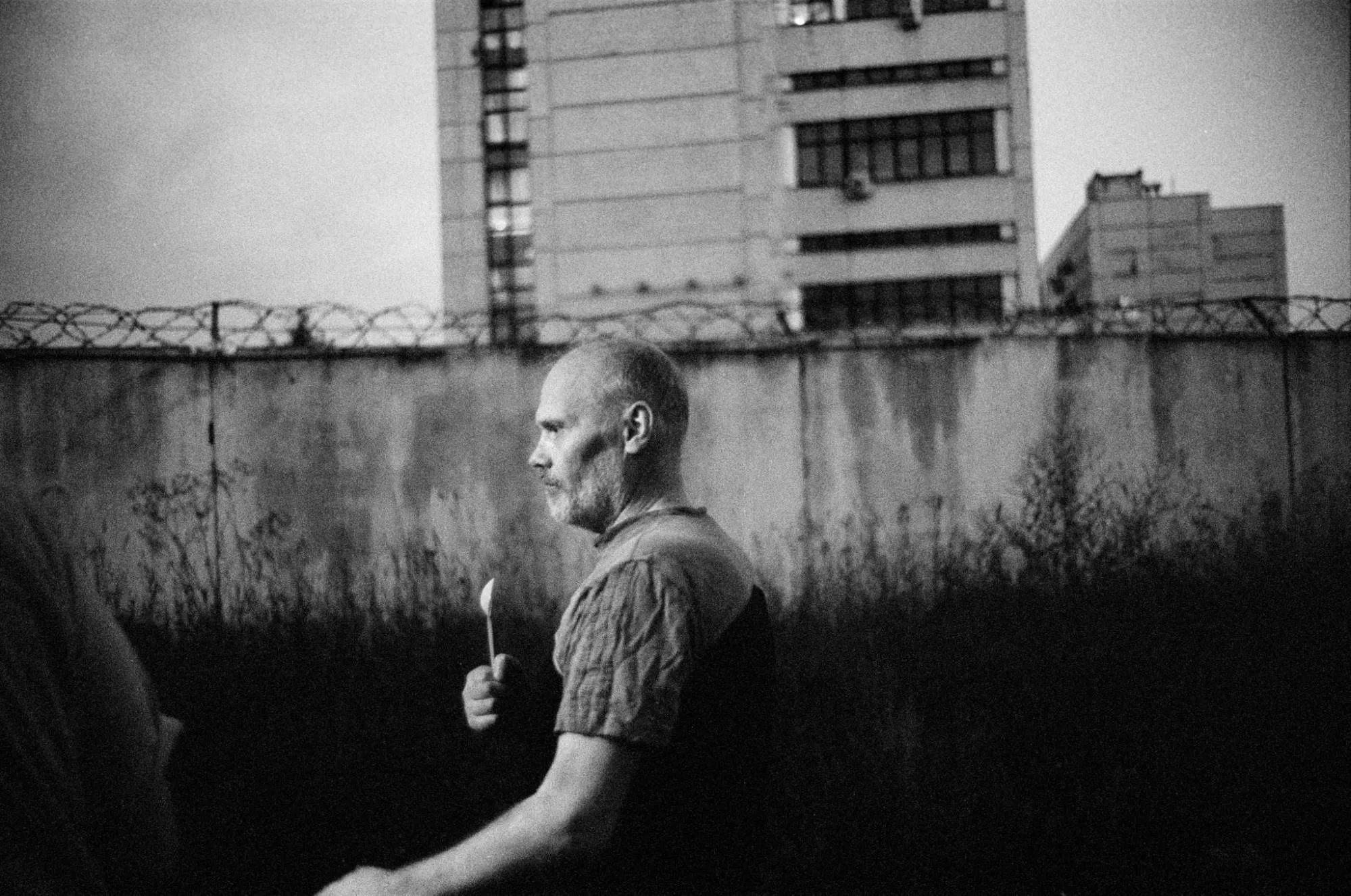
Going on a flight brings a sense of meaning and importance. At such moments, you become acutely aware that many volunteers help others not only for their own sake, but also to resolve their own internal conflicts. This experience becomes not only a noble cause but also a means of personal growth and self-discovery. At the beginning of my photography journey, it was easier for me to find subjects, but with each new trip, this became increasingly difficult, as the images repeated themselves. At the time, I was taking a documentary photography course with Sergey Maksimishin, which prompted me to reflect on the boundaries of what is and is not acceptable in this genre. I became more attentive to the feelings and experiences of my subjects. At first, I was captivated by the process itself, and I didn't always pay attention to the reactions of those around me. Over time, I realized the importance of treating the subjects of my photographs with care, which has become a key aspect of my work.
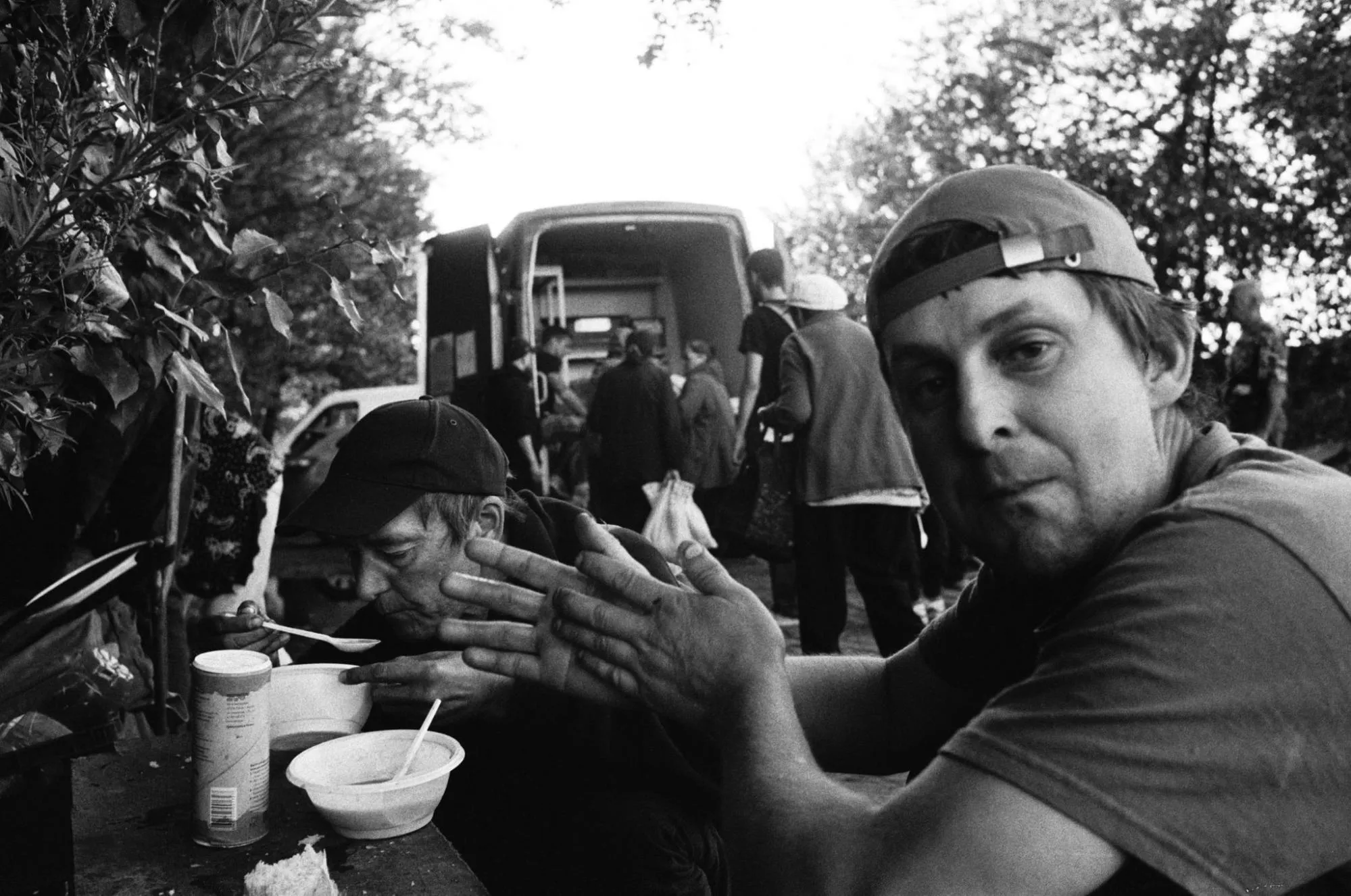
Currently, I continue to explore the topic of homelessness through the prism of photography. I became interested in capturing the places where the homeless spend the night. Finding people willing to let me into their world and pose for a photo shoot proved challenging. However, some homeless people agreed to share their experiences with me, allowing me to see how they survive the winter nights. I spent time with them on a commuter train, and the result was a story called "Surviving the Night." This work not only shows their daily lives but also raises important questions about homelessness and social justice.
What are these people like?
Ksenia Solodova notes that when people visit them, they often say: "You are so young, beautiful, and cheerful. How do you manage to work with the homeless?" This underscores the importance of changing stereotypes about the homeless and philanthropists. In our country, non-profit organizations are often represented in the media through images that show only one side of the problem, for example, photographs of a homeless person receiving a bag of groceries. This approach can be demeaning to both those who need help and those who provide it. We need to change the perception of charity, emphasizing respect and humanity.
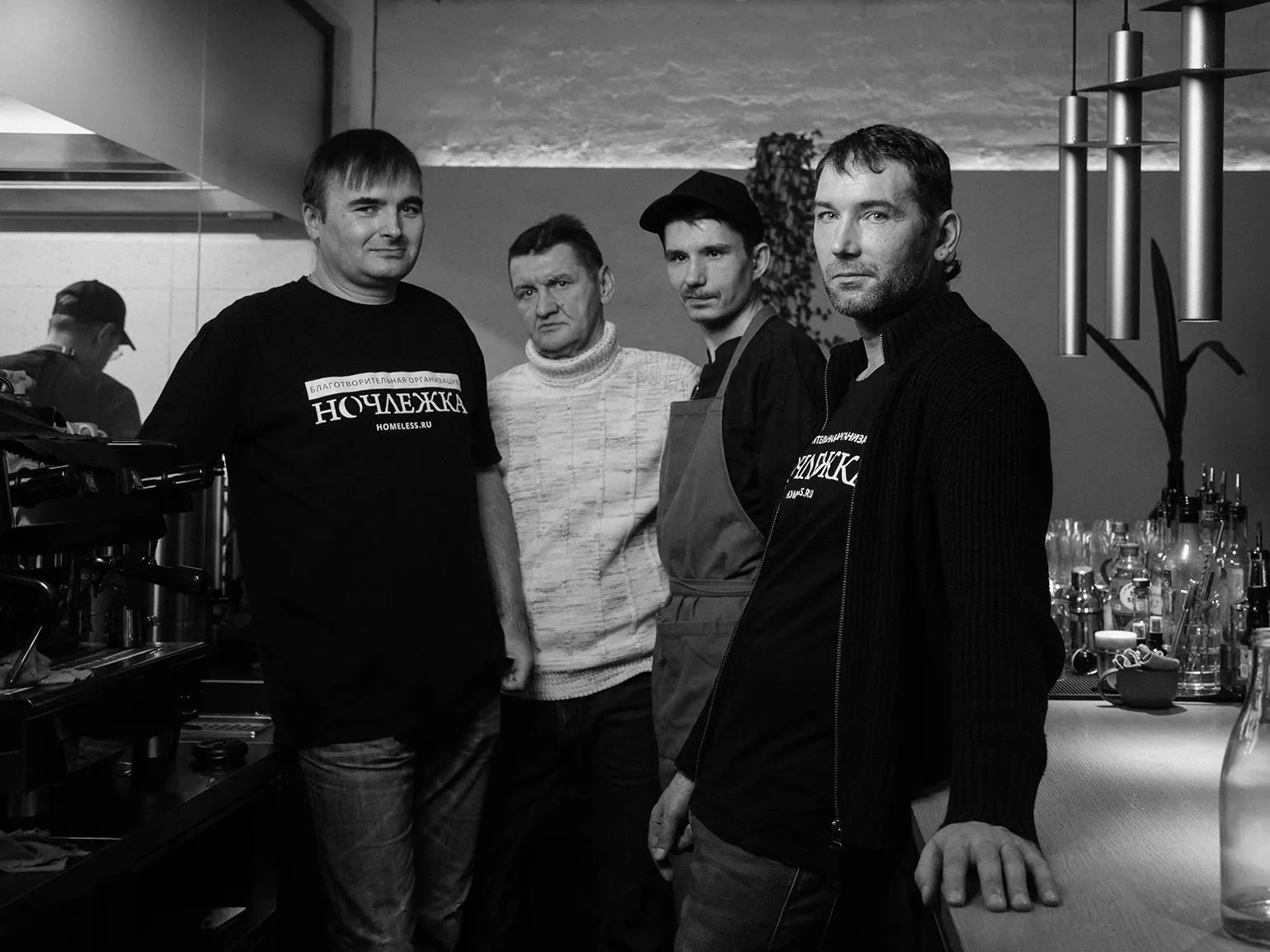
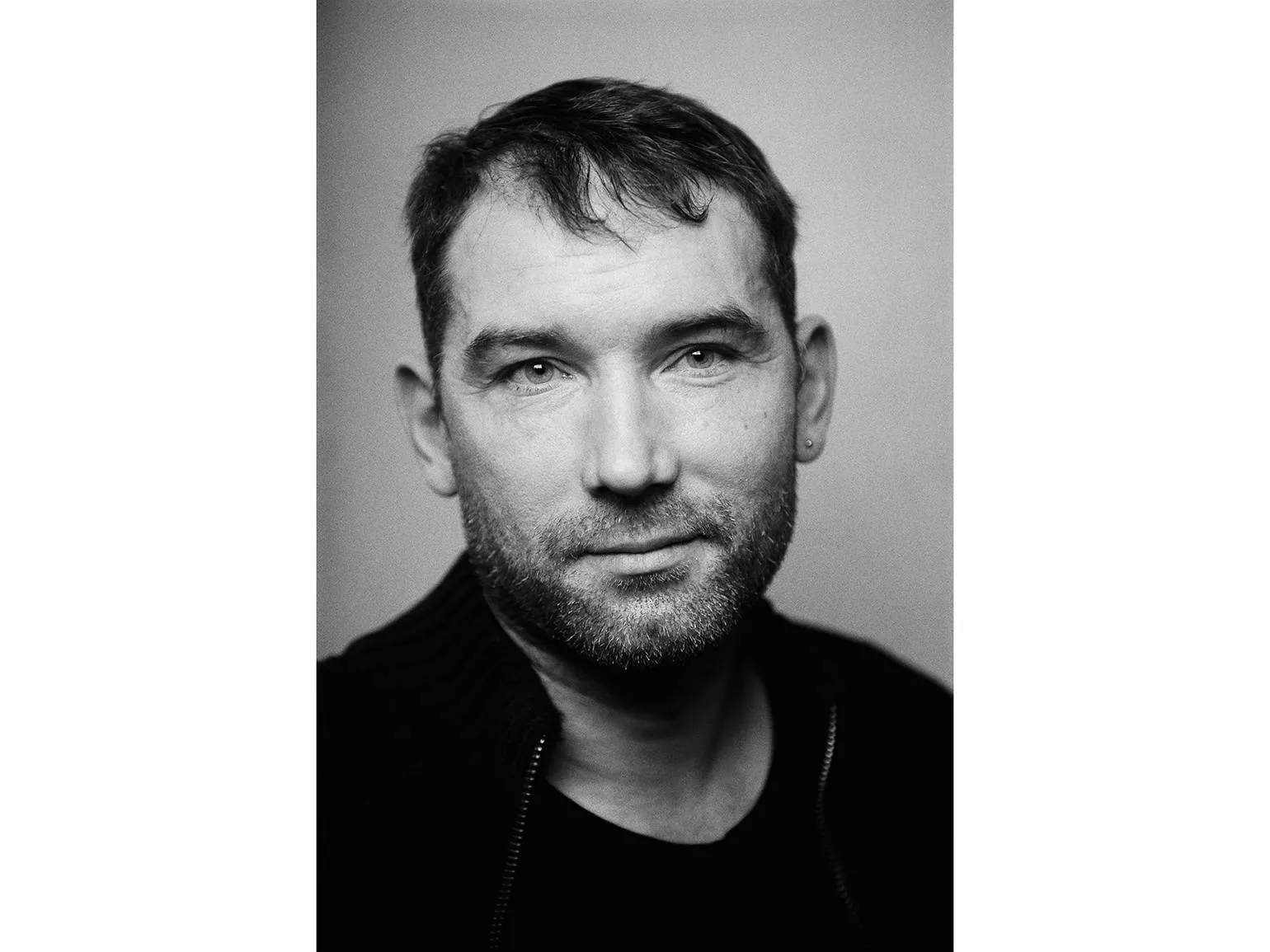
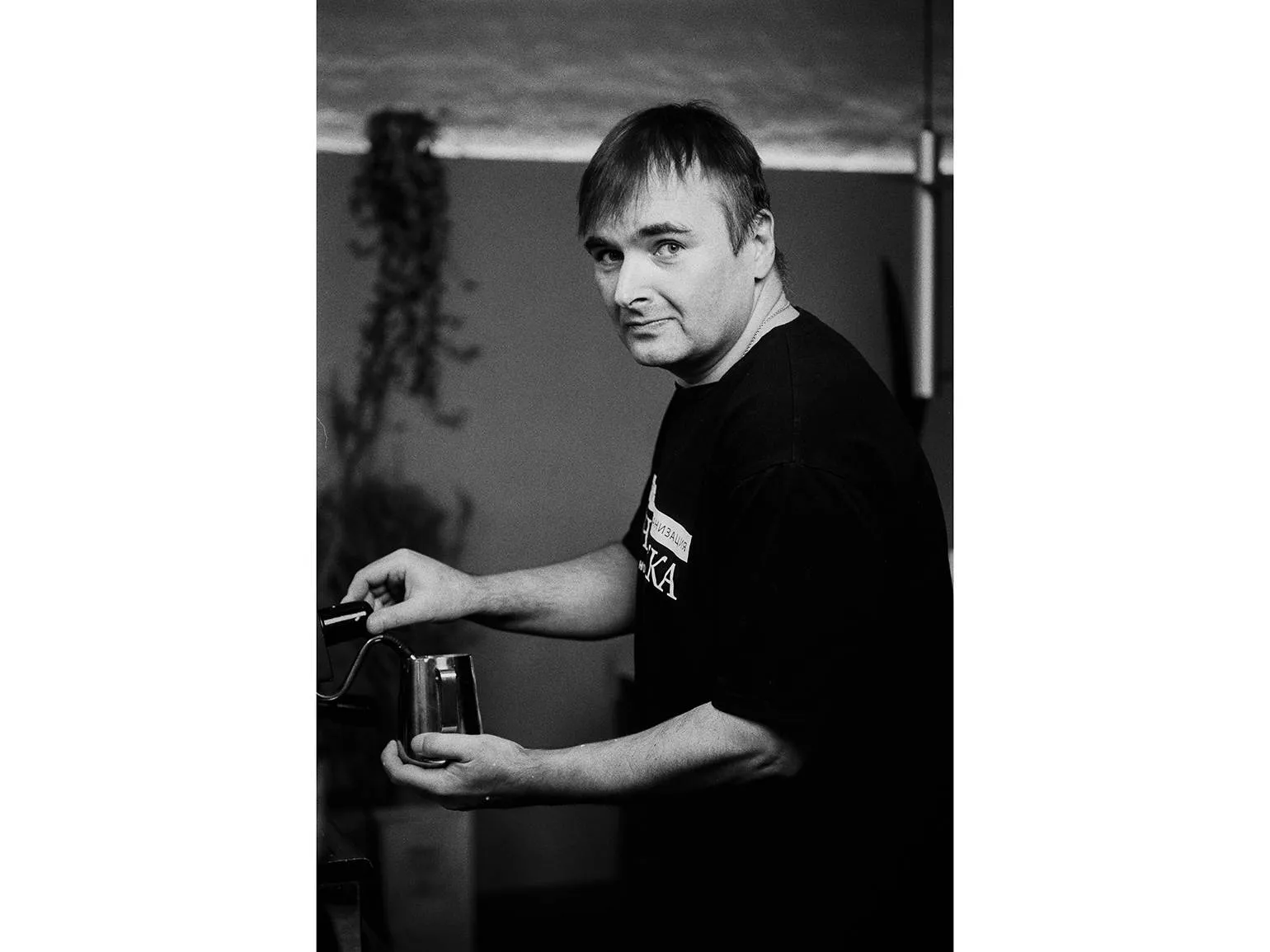
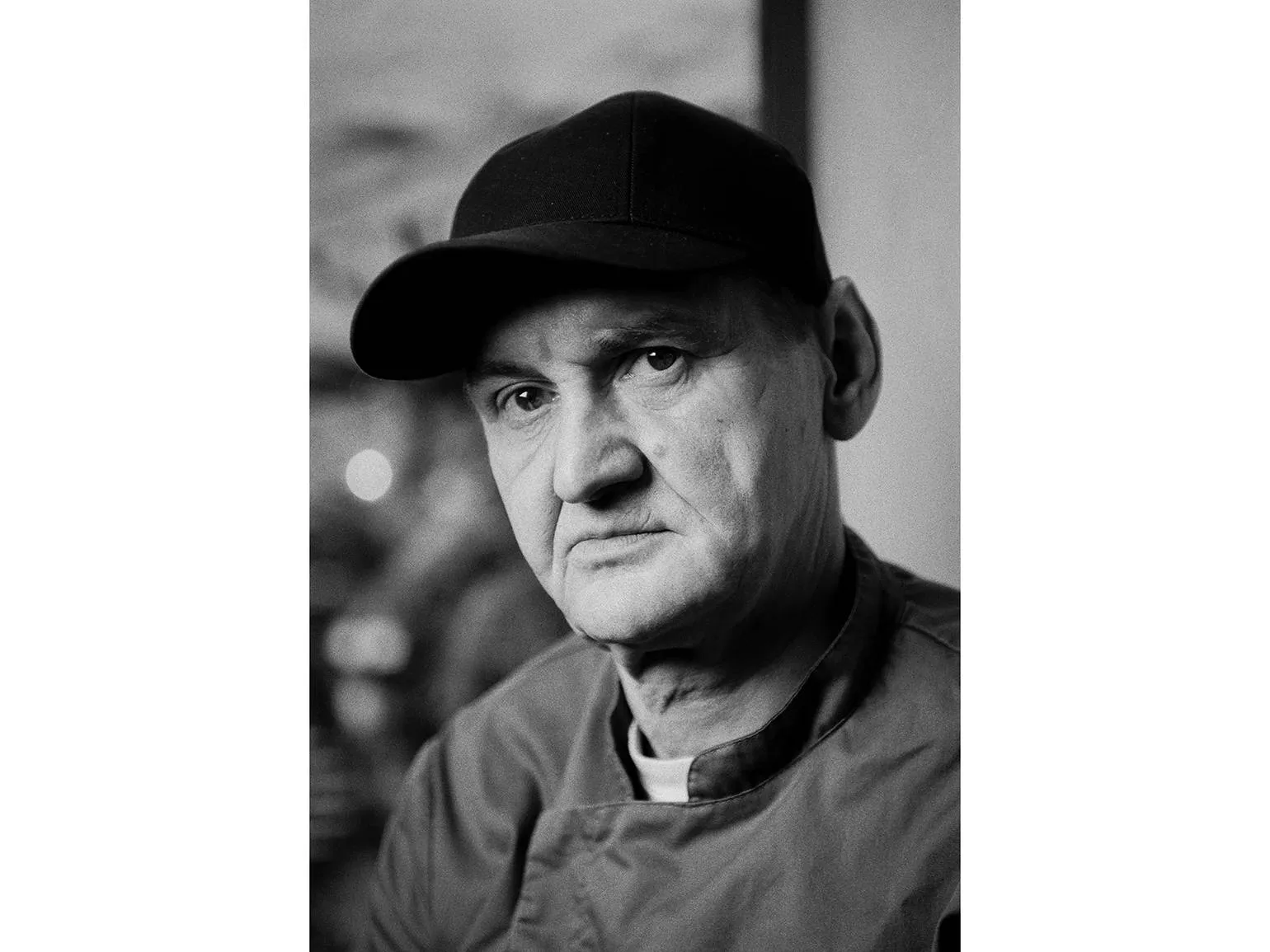
Photographer Maria Pavlovskaya first learned about Nochlezhka while photographing employees of the closed employment project "Entrance from the Street." She subsequently photographed people with homelessness to create public service announcements and banners. Recently, Maria offered her assistance to the Nochlezhka team by capturing them at work. Through these photographs, she shared insights into the organization's inner workings and those who work there on social media.
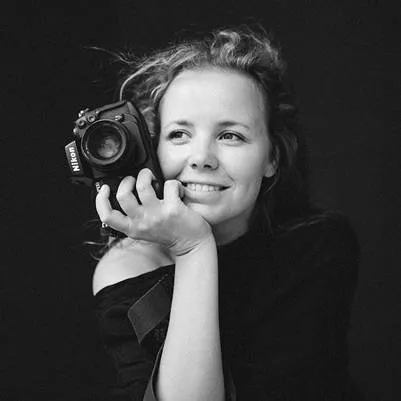
A portrait photographer, a member of the Union of Photo Artists of Russia, actively participates in international and Russian exhibitions. Specializing in creating expressive and memorable portraits, she brings a unique style to each photo shoot. Her professional approach and creative vision allow her to capture the individuality of each client, making her work highly sought after in the photography market.
I admire the work of Nochlezhka: their openness, the right tone, and humanity create an atmosphere of trust, and their lack of arrogance is inspiring. I decided to reciprocate and support this organization by raising awareness among my audience. Many of them, like me, were previously unfamiliar with this topic. Nochlezhka does important work, helping people in difficult situations, and I want more people to learn about their work and be able to contribute to this support.
While photographing the Nochlezhka team, I noticed that several formerly homeless people had been given the opportunity to work for this organization. This is an impressive example of how they become part of a team made up primarily of young and successful people in their twenties. This interaction contributes to the creation of a unique atmosphere where experience and life stories combine with the energy and ambitions of youth. Such initiatives not only help formerly homeless people integrate into society, but also enrich the team with new views and understanding of life.
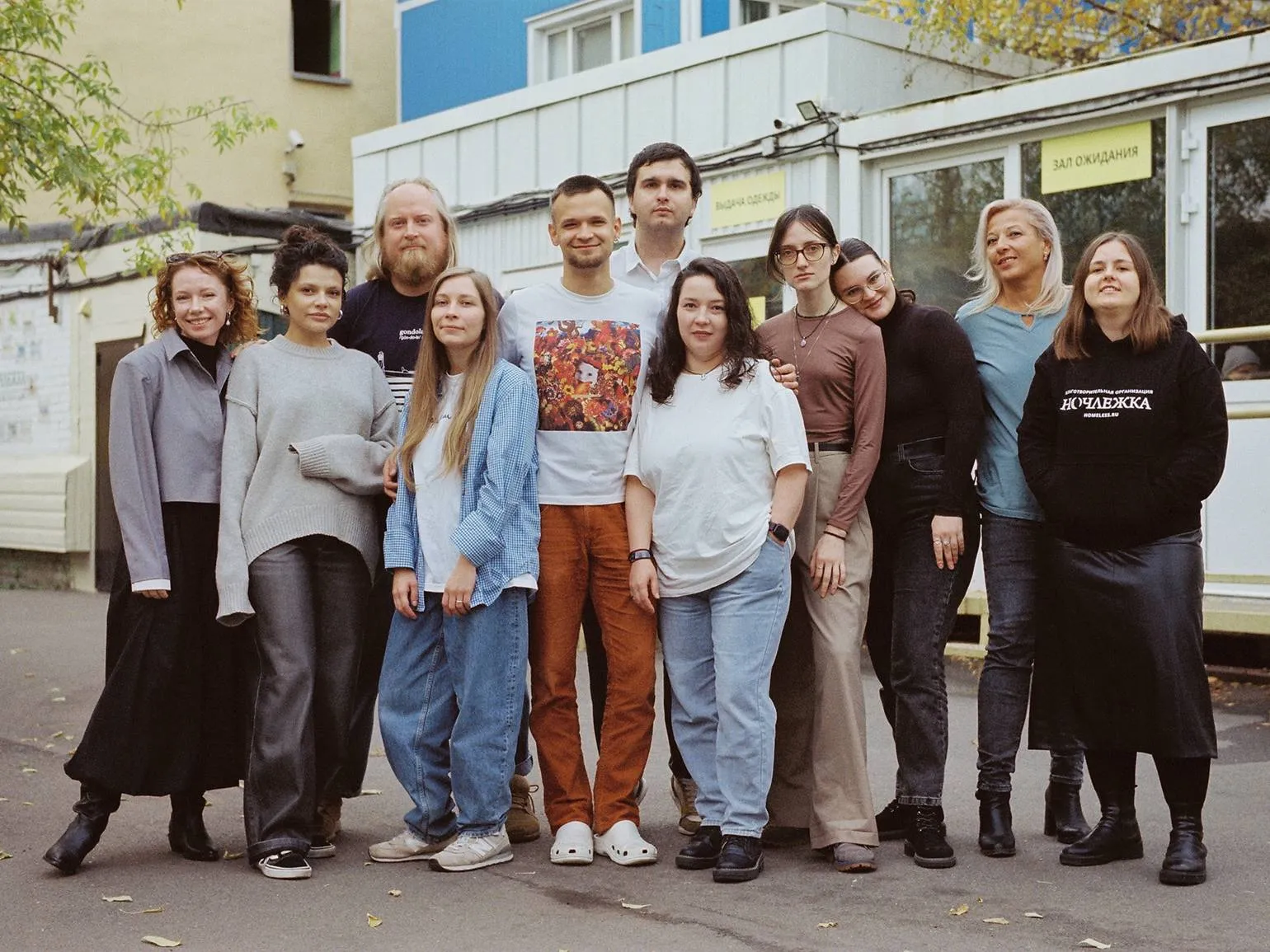
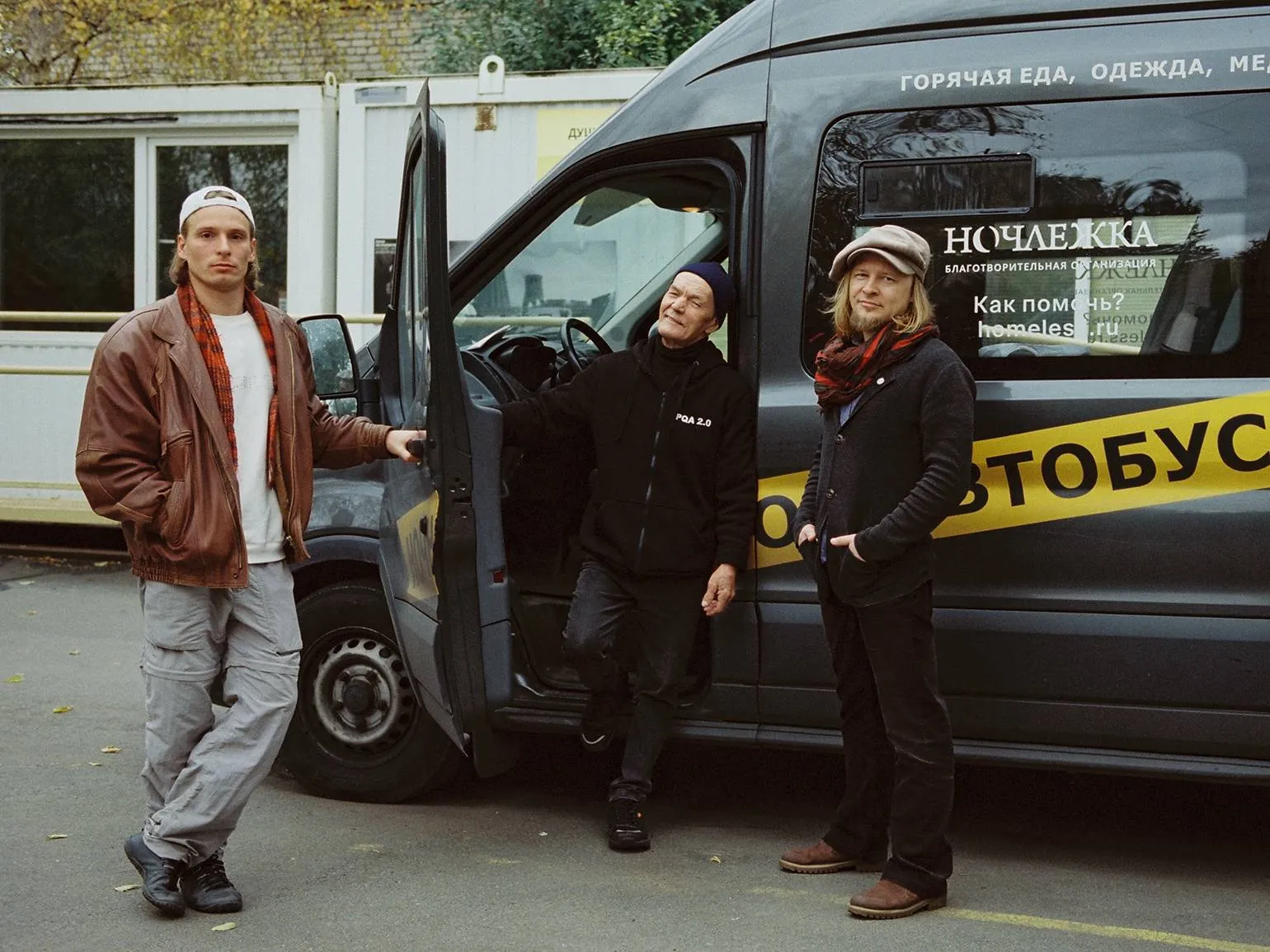
The Nochlezhka team impresses with its humor and positive atmosphere. There is no place for seriousness, fear, or horror here. When it comes to such a complex and painful topic as homelessness, the staff communicates in the most simple and modern way, with appropriate jokes. The office is decorated with humorous stickers and quotes, creating a cozy atmosphere. This demonstrates that the team truly enjoys working together and has a genuine interest and compassion for homeless people. This approach not only helps them better understand the problem but also creates a warmer and more inviting atmosphere. Homeless people are often withdrawn and reticent during photo shoots. They prefer to maintain their distance, and this feeling involuntarily spreads to other participants. I noticed that I began to censor my own words, fearing asking inappropriate or offensive questions. This can hinder the establishment of trusting communication and understanding of their situation. It is important to find an approach that creates a more comfortable atmosphere for dialogue and the disclosure of their stories. My approach to photography is based on naturalness and sincerity. I strive to capture people as they are, without forcing poses or expecting smiles. My goal is to create an atmosphere in which everyone can open up and show their true emotions. I know how to frame shots and direct poses, but I always leave room for individuality. Thus, each photograph becomes a reflection of the personality, and not a staged image.
Art has a powerful force, but it can manifest itself only when basic human needs are satisfied, according to Maslow's pyramid. It's important to understand that only after providing physical comfort, safety, social connection, and recognition can a person truly appreciate and engage with art. This underscores the importance of fostering conditions for personal growth and self-expression through artistic practice. When basic needs are met, art becomes not only a source of inspiration but also a means of deep self-knowledge and social transformation.
One of the key challenges of homelessness is its invisibility. By featuring homeless people in photographs, we give them the opportunity to share their stories. These images help draw public attention to the challenges faced by people in difficult life situations. Visual stories of homeless people not only raise awareness but also foster a deeper understanding of the causes of homelessness and the need for social support.
Often we encounter people on the street whom we tend to look away from, believing they might be a source of trouble. However, paying attention to them can be the beginning of an important process. By focusing on a person and viewing them as a unique individual, we automatically begin to reduce their "depersonalization." This simple practice of mindful perception can have a healing effect. During shoots, I observe that people crave attention, wanting to be viewed with kindness and understanding. In such moments, the process of interaction becomes more important than the end result, opening up new horizons for mutual understanding and empathy.
Working with Nochlezhka is of great interest to me, because it allows me to look at the problem of homelessness from a human point of view. Like many others, I used to adhere to the stereotypes that existed in my family. We thought that begging for money on the street was shameful: "Go to work. They are all drunks, drug addicts, marginalized people." However, I now understand that homelessness has many causes, and not all of them are related to addiction. Understanding this helps break down stereotypes and see the people behind the labels attached to them.
I have long wanted to express my position on homeless people. We encounter them on the street every day and often don't know what to do: help or ignore them? If we decide to help, then the question arises of how exactly to do it. Giving money can be risky, as it can be used for other purposes. I learned that an effective way to help is distributing informational leaflets from charities such as Nochlezhka. Also, if possible, you can offer the homeless hot soup or tea during the cold season. The main thing is not to give money. By following this simple algorithm, you can get rid of the fear of homeless people and begin to discuss this important topic without shame and bias.
As a photographer, I strive to consolidate my work in the visual world. In this regard, I am doing photography for Nochlezhka. I hope that in the future I will be able to continue this activity, as well as inspire people to donate and overcome their fear of this topic.
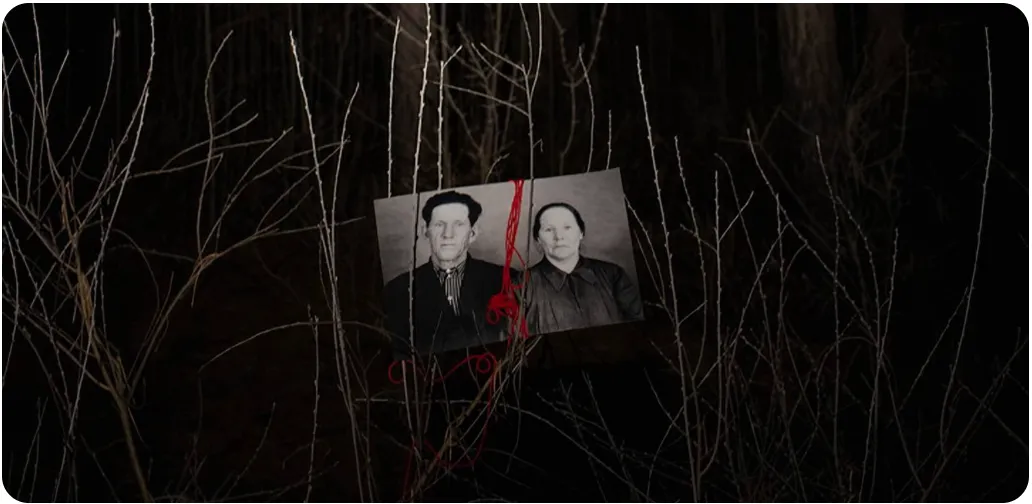
Reading is an important aspect of our lives. It not only develops thinking, but also enriches our inner world. Books, articles, and blogs provide us with access to new ideas and knowledge. Regular reading helps improve writing skills and expand your vocabulary. Reading also reduces stress and improves concentration. If you want to develop your mental abilities and enjoy new stories, start reading today. Do it every day, and you'll notice positive changes in your life. "Ancestral Syndrome": Natalia Shulgina's photo project, dedicated to liberating ourselves from collective trauma, explores the impact of historical events on modern generations. In this project, the author uses photographs to visualize and understand the emotional and psychological consequences passed down through generations. Natalia Shulgina aims to draw attention to the importance of understanding the past and its impact on personal identity and mental health. The photo project emphasizes the need to overcome inherited trauma and find paths to healing and restoration. Shulgina's works become a kind of mirror, reflecting internal conflicts and the desire to free oneself from the burden of historical memory.
Profession Photographer
You will learn to take professional photos from scratch. You will learn how to organize shoots, process frames, manage models and a team. Find your style, build an impressive portfolio, and start making money doing what you love.
Find out more